
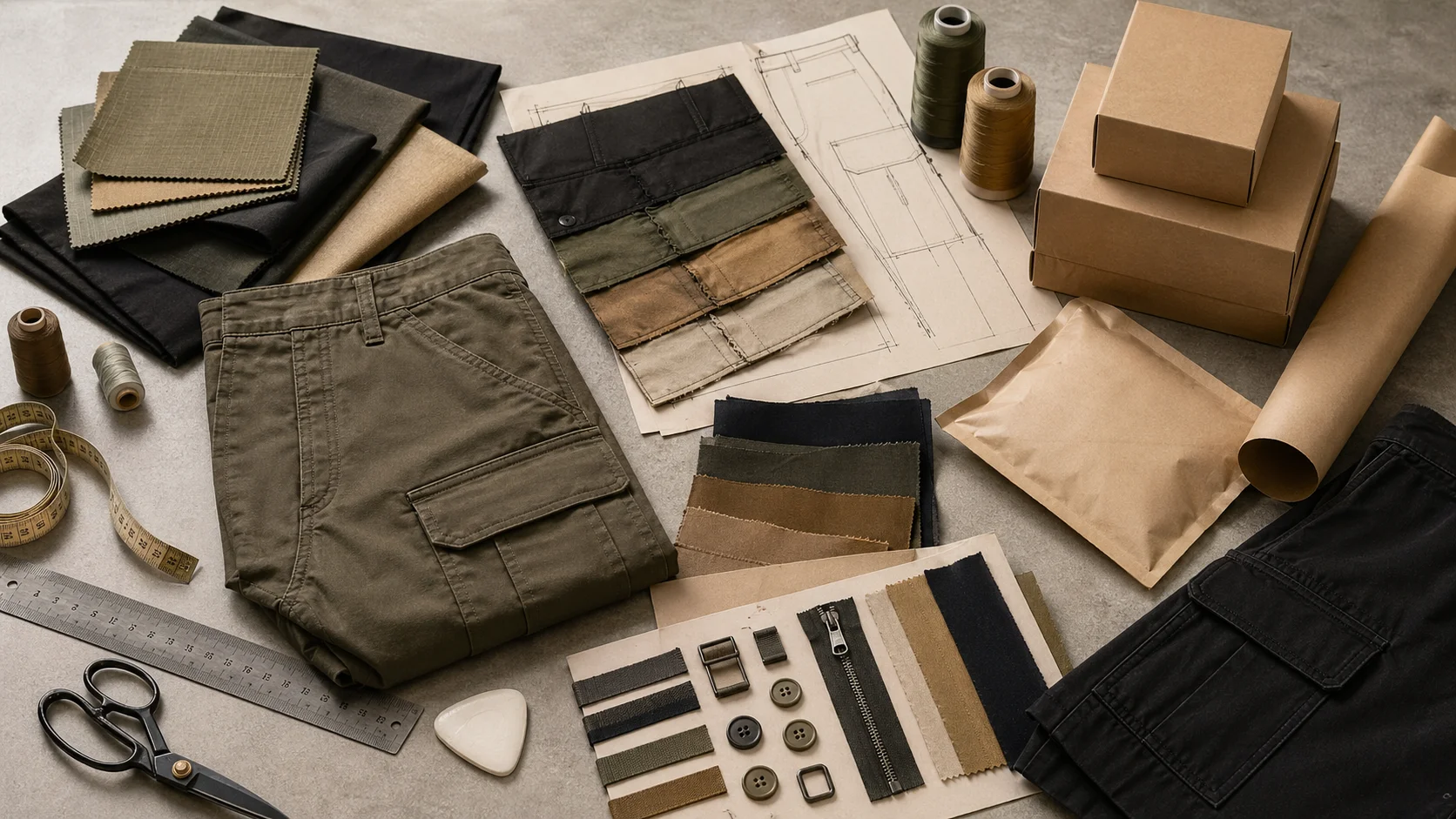
Clothing Launch Box Inserts with checks for samples, fit, MOQ, QC evidence, pricing terms, and delivery risk.
Fast answer: Clothing Launch Box Inserts: Message, Cost, ROI, and Packing should be judged by production evidence, not by a generic sourcing promise. The buyer needs sample proof, cost breakdowns, QC checkpoints, and delivery buffers in writing.
Ask for recent sample photos, measurement tolerances, fabric or print test assumptions, decoration test notes, packing examples, and a named inspection checkpoint. These details show whether the team can repeat an approved sample at bulk volume.
Separate garment cost, decoration, labels, packaging, sampling, testing, freight, and rush charges. When every cost line is visible, it becomes easier to reduce colorways, adjust size depth, or reserve more time for sampling.
The first 30 seconds can make a garment feel like a find or a forgettable return. That is exactly why branded inserts for clothing launch boxes matter more than many founders expect. In 200-plus factory visits across China, Portugal, India, Bangladesh, Vietnam, Turkey, Italy, and the U.S., I kept seeing the same pattern: the garment itself might be excellent, but presentation decides whether it feels like a $28 basic or an $88 premium purchase.
Seen on a hanger, a 220 GSM cotton tee looks ordinary. Set it on acid-free card with a neatly folded insert, and the same shirt suddenly reads like a more deliberate product. No magic. Just presentation discipline. A $0.12 card can do more for perceived quality than a $4 outer box when the box is already dented, scuffed, or too large for the item.
Factory-floor details change this perception in ways shoppers never see directly. In Shenzhen, a packer can slide a tee into a rigid mailer with a branded belly band in under 20 seconds. In Leicester, I saw a knitwear run where a recycled insert with a single-color logo and care note made a mid-price sweater look closer to boutique retail. In both cases, the insert worked because it framed the garment before touch. That matters most for launch boxes, where the customer is still deciding whether the brand is worth remembering.
Mass-market polybagged orders send a message of speed and cost control. Premium boxed orders signal restraint, even when the insert cost is small. I have seen brands spend $1.80 on a rigid box and skip the insert, then wonder why the unboxing felt empty. The box alone is a shell. The insert carries intent. It tells the shopper how to handle the product, what fabric they are holding, and why it exists in the first place.
Early customers are your least forgiving audience. They bought before there were reviews, before there was social proof, and often before the size chart was refined. A launch box insert can lower anxiety immediately by clarifying fit, fabric, and care in one page instead of five scattered emails. For private label clothing, that is not decoration. It is risk management.
A good insert earns its place by doing at least three jobs: telling the brand story, answering product questions, and reducing avoidable support load. I have seen care cards, size notes, QR codes, authenticity messages, and sustainability claims all live together on a single 90 x 140 mm card without feeling crowded, as long as the hierarchy is sharp and the copy is disciplined.
Last year I worked with a brand that sold 1,200 units of a French terry 320 GSM hoodie. They added a one-card fit guide with chest width, body length, and wash instructions. Returns tied to “too small” dropped from 11.4% to 7.2% in the first six weeks, and customer service tickets about shrinkage fell by 31%. That is the sort of result that gets ignored when people treat inserts as garnish.
For direct-to-consumer brands, shoppers expect utility. For luxury, they expect restraint and material honesty. Marketplace orders sit somewhere else entirely; the customer may have no emotional attachment, so the insert has to be efficient, not lyrical. A QR code to authentication or registration can work well there, while a limited-drop brand may benefit from a numbered card, a short designer note, or a wash reminder that avoids confusion.
The thing nobody tells you: a well-written insert can outperform a more expensive outer box in perceived value. I have seen a $0.18 folded care card raise the “this feels premium” response more than a $2.40 rigid box when the box carried too much visual noise and the insert was the only part with useful information.
This is also where sustainability claims either build trust or blow it up. If you say recycled paper, say the percentage. If you say organic cotton, say the certification and the scope. Data from OEKO-TEX and Textile Exchange both show how much buyers now look for traceable material claims, not vague virtue signaling. I have seen brands lose credibility over a green leaf icon and nothing else.
Material choice changes more than texture. It changes weight, recyclability, print sharpness, and the chance that the insert survives shipping without curling. I have handled launch inserts made from 300 GSM recycled stock, 350 GSM premium uncoated paperboard, 280 GSM kraft, and coated cards with a matte laminate. Each one sends a different signal. Each one has a different production bill.
Recycled stock usually wins for brands trying to balance cost and credibility. It prints well for one- to two-color jobs and keeps the message clean, though the fibers can look slightly rough under heavy ink coverage. Kraft has an honest, earthy feel, but it can mute small typography and make pale colors disappear. Premium paperboard feels expensive because it resists bending and lies flat in a box, yet it can add 12 to 25 grams per insert, which matters if you ship 15,000 orders and every gram affects freight.
Foil, embossing, and spot UV are not automatically better. I have seen brands spend $0.48 extra per unit on foil and embossing only to create a card customers treated like trash because the messaging was weak. On the other hand, restrained finishes can be elegant. A blind emboss on 400 GSM stock, paired with one-color black type and generous white space, often outperforms loud metallic effects for premium basics and minimalist streetwear.
Low-ink options deserve respect. Soy or water-based inks on uncoated stock are easier to recycle than heavy lamination, and they often look more deliberate than overdesigned glossy cards. If you are building private label clothing, the insert should match the garment category. A 230 GSM jersey tee does not need a gold foil sermon. A technical outer layer or tailored blouse may justify more finish, but the message still has to earn the embellishment.
Factory teams will be blunt here, and that helps. They will tell you if a folded leaflet cracks at the score line, if a spot UV panel shifts 2 mm off-register, or if a die-cut window makes the stack unstable during packing. Those comments save money. I have seen a beautiful card fail because it bent inside a box that was 8 mm too tight.
Cost depends on quantity, print method, finish, and how much setup your supplier has to absorb. For 250 pieces, a simple two-sided digital print insert on 300 GSM stock might run $0.55 to $1.20 each before freight. At 2,500 pieces, that can fall to $0.18 to $0.42. At 10,000 pieces, offset printing with a die-cut can drop below $0.12 per unit if the artwork is locked and the color count stays at one to three.
Small runs are where setup fees hurt. Plates, cutting rules, proofing, and press calibration can add $150 to $600 before the first insert is printed. That is why digital printing often wins at launch. It keeps minimums low, handles late-stage edits more easily, and avoids the waste of a 5,000-unit misprint. If the launch is uncertain, paying $0.28 more per unit is cheaper than storing dead inventory for nine months.
Domestic production can be faster and cleaner on communication, especially for 500 to 2,000 pieces, where a 5- to 7-day turnaround is realistic. Overseas production usually wins on unit price once you pass 3,000 to 5,000 pieces, but lead times stretch to three to four weeks, sometimes five if there is finishing or paper sourcing delay. Quality control is also more variable unless you approve a hard proof and check the first 100 units.
I think of insert spending in three buckets. Spend more when the garment price is above $75, the product has fit risk, or the box is part of a launch event. Keep it minimal when the order is under 200 pieces, the item is commodity basics, or the packaging already has strong visual identity. For a capsule knitwear drop, a $0.22 insert can be justified. For a 3-pack of socks sold on promo, it usually cannot.
Cost also changes by category. Inserts for a fitted bra from custom bra manufacturing often need more care and fit language than a loose tee, while babywear inserts tied to custom baby clothing manufacturing may need safety, wash, and compliance notes that add copy length and proofing time. Those details affect layout, and layout affects cost.
Design should make the customer work less, not more. The best branded inserts for clothing launch boxes use a clear hierarchy: logo, one sentence of brand positioning, the product benefit, then care or sizing details. That sequence works because the eye finds the promise first and the instructions second. Dense brand essays read like packaging trying too hard.
Shorter copy usually performs better. A 24-word brand note with one strong line can carry more confidence than a 120-word paragraph. In factory reviews, I often see teams flag three risks: type under 7 pt, contrast that disappears on textured stock, and folded pieces that split at the spine. The first two are design problems. The third is a production problem that becomes a brand problem.
Typography should match the garment. Sharp sans serif for technical wear, humanist serif for heritage basics, and a restrained grotesk for streetwear work better than trendy decorative fonts that age badly. I have also found that one image or one texture swatch is usually enough. A foldout with four product shots can feel like a catalog, not an insert.
For launch campaigns and influencer gifting, the insert can do more if it is modular. A top card can hold the campaign message, while a second card carries care and QR code details. That format works especially well for private label clothing drops with three sizes or fewer, because the copy can be customized by SKU without redesigning the entire pack.
Space planning matters. A two-panel card folds cleanly in a launch box. A three-panel leaflet risks creasing and misalignment. If you want a premium feel, let the paper breathe. Leave 12 to 18 mm of margin around critical text. Use one focal point. And do not force every claim onto one insert just because the box has room.
When you are working with a manufacturer, factory, or supplier, ask for the sample on the same stock and print method you plan to use in bulk. That custom approval step is especially important for wholesale and bulk programs sourced from China, because paper tone, trimming, and folding can shift between production lines.
A realistic timeline runs 10 to 21 days from brief to delivery, depending on quantity and finish. Day 1 to 3 is brief and copy lock. Day 4 to 6 is layout and pre-press. Day 7 to 10 is sampling and approval. Day 11 to 18 is production. Add 2 to 4 days for freight if the order is domestic, or 7 to 14 days for sea or consolidated export.
Rush production is possible, but it is expensive in more ways than the invoice shows. A 72-hour turnaround can add 15% to 35% to the cost and often removes the chance to catch a color shift or trim issue. Standard lead time gives you room to catch errors before 5,000 inserts are printed wrong. I prefer the slower option unless a launch date is immovable.
Pre-production checks should be non-negotiable. Check color proofing against the garment tone, not just the brand palette. Confirm trim accuracy to within 1 mm on the die line. Test fold consistency by folding 20 samples, not 2. Scan every barcode with a real phone camera. If the insert includes compliance language, check it against market-specific requirements before print, not after.
Late copy changes are the fastest way to burn money. So are vague dielines and missing export text. I have seen a brand delay a launch by 11 days because the legal footer changed after approval. I have also seen a wholesale run reprinted because the QR code linked to the wrong landing page. These are avoidable mistakes. They are also very common.
In cut-and-sew categories, the insert should mirror the production logic of the garment itself. A tailored item from cut and sew manufacturing deserves the same discipline in packaging that it received on the line: measured, checked, and signed off before volume starts.
Ask your supplier whether the factory can provide an ISO-style inspection sheet or a documented final check. If they cannot, add your own quality checklist before shipment. For brands comparing vendors, that extra control is often the difference between a clean launch and a costly reprint.
The cleanest rollout is small. Test one SKU, one region, or one campaign first. I usually recommend 500 to 1,000 units in the pilot so the sample is large enough to read but small enough to fix if the message misses. Track repeat purchase rate, return rate, support tickets, and social mentions against a control group with plain packaging.
Run an A/B test with one variable at a time. Compare matte stock against kraft. Compare a care-first message against a brand-story-first message. Compare a QR code insert against a plain card with no code. If a version lifts repeat purchases by 4% and lowers support tickets by 18%, you have evidence, not guesswork.
Rollout sequence matters. Brief. Sample. Test. Revise. Scale. That order keeps waste down and makes the insert part of the launch plan, not an afterthought. For apparel brands shipping 800 to 20,000 units a season, that discipline saves money and protects margin.
If you are sourcing internationally, ask for benchmark references and confirm how the supplier handles production changes. Trade guidance from the U.S. Commercial Service at trade.gov can also help you understand import timing, documentation, and supplier due diligence when shipping packaging components across borders.
Strong launch teams document every version of the insert so the next order is easier to repeat. That is especially important for branded inserts for clothing launch boxes when you want the same quality across wholesale replenishment, bulk reorders, and seasonal updates.
They explain the product, reinforce the brand, and cut customer confusion after checkout. The strongest versions combine care notes, sizing guidance, QR codes, and a short brand message on one or two cards.
For 250 units, expect roughly $0.55 to $1.20 per insert for simple digital print. At 2,500 units, pricing often falls to $0.18 to $0.42, while 10,000-unit offset runs can go below $0.12 per unit before freight.
Standard production usually takes 10 to 21 days from brief to delivery. Rush jobs can be done in 3 to 5 days, but they cost more and raise the risk of color, trim, or barcode errors.
Yes. Clear fit notes, fabric descriptions, and wash instructions reduce avoidable returns and support tickets. In one hoodie launch I worked on, returns tied to sizing dropped from 11.4% to 7.2% after a better insert was added.
Start with one SKU and one market. Lock the copy, produce 2 or 3 sample versions, test them against a control group, then scale the version that improves repeat purchase rate and lowers customer service volume.