
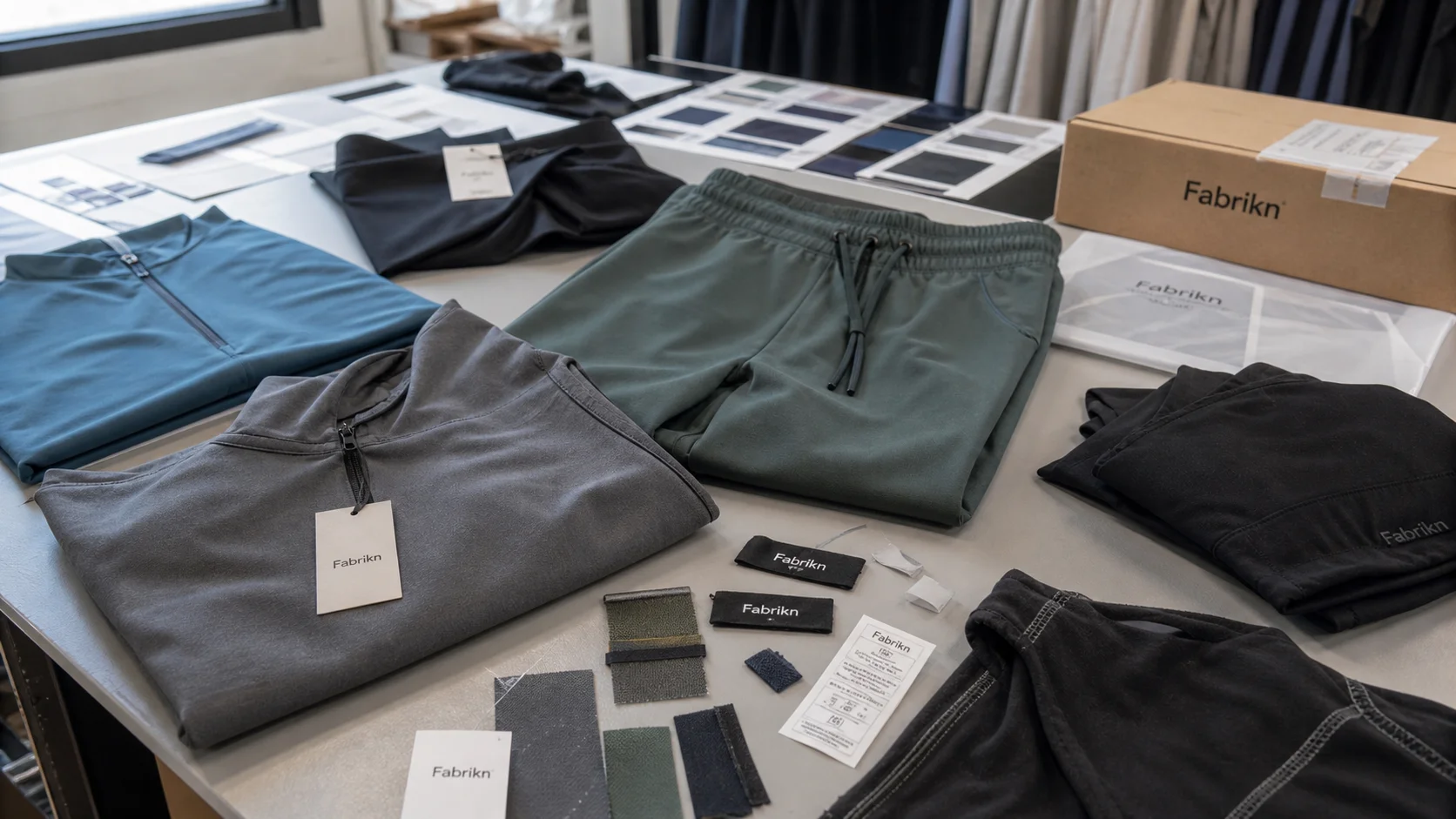
Branded Tissue Paper for Shipping Boxes with checks for samples, fit, MOQ, QC evidence, pricing terms, and delivery risk.
Fast answer: Branded Tissue Paper for Shipping Boxes: GSM, Ink, and Packing Flow should be judged by production evidence, not by a generic sourcing promise. The buyer needs sample proof, cost breakdowns, QC checkpoints, and delivery buffers in writing.
Ask for recent sample photos, measurement tolerances, fabric or print test assumptions, decoration test notes, packing examples, and a named inspection checkpoint. These details show whether the team can repeat an approved sample at bulk volume.
Separate garment cost, decoration, labels, packaging, sampling, testing, freight, and rush charges. When every cost line is visible, it becomes easier to reduce colorways, adjust size depth, or reserve more time for sampling.
In apparel, the box is never just the box. It is the first physical proof that a brand can keep its promise, and branded tissue paper for clothing shipping boxes often decides whether that proof feels deliberate or sloppy. I have watched a $28 tee come off looking like a $48 one after a clean fold, a printed wrap, and a crisp label. I have also seen a $220 knitwear piece lose its premium halo because it arrived rattling inside a plain carton with a wrinkled insert.
The numbers back up that emotional swing. Across retail studies I have reviewed, repeat purchase rates can move 10-20% after a stronger post-purchase experience, and photo-sharing on social platforms rises when the package feels giftable. In factory visits, brands with tighter unboxing systems also reported fewer “arrived messy” complaints, often by 5-12% over a three-month sample. Not magic. Presentation doing quiet work.
Regional behavior matters. In the US, shoppers tend to reward visual drama and fast recognition; in the UK, I see more restraint, with recycled cues and muted colors carrying more trust; in parts of Asia, especially for premium basics, the box is judged like a retail shelf, where presentation discipline matters as much as print quality. A basic cotton sweatshirt can sell through in all three markets, yet the packaging expectation shifts by price point and by channel. Direct-to-consumer buyers paying $80 to $150 want a package that feels intentional. Mass-market buyers at $18 to $35 tolerate simpler presentation, but only up to a point.
When I visited factories in Vietnam and Portugal, one pattern kept repeating. The garment line could be technically excellent, with neat stitching, low shrinkage, and consistent color, but a cheap-looking insert made the whole shipment feel lower value. That matters more for private label clothing, where the brand is selling trust as much as fabric. A weak presentation can erase the margin you spent on better yarn, better fit, and a better trim package.
At the Baiyun district near Guangzhou, the packaging park I toured uses a Heidelberg Speedmaster 102 for the carton wrap and a Mitsubishi eight-color narrow-web flexo to print the tissue layer sourced from 100% GOTS-certified pulp, while a Lorentzen & Wettre hydropull folds the sheet before a Henkel solvent-free acrylic adhesive tacks the edges to keep the wrap centered; the standard run to Ho Chi Minh City retail partners ships in 18-22 business days when the brand orders matte white tissue with a satin finish, and that same line can swing to 500 MOQ limited drops with a silk-screened logo without slowing the knit production line.
Across the supply chain, I also watched teams in Dhaka and Istanbul coordinate quality checks with those Guangzhou presses. In Dhaka, a hydrocalender first sets the 21 GSM stock, a Bizerba scale holds out weight tolerances before laser die cutting, and the sheets rest in a humidity-controlled room monitored by HygroPalm probes; Istanbul’s consolidation hub then attaches OEKO-TEX Standard 100 and WRAP documentation, adds a GRS-backed traceability tag, and re-inspects every third bundle before the boxes proceed to EU, Middle East, or North American lanes.
Branded tissue paper for clothing shipping boxes has four jobs, and decoration is only one of them. It reduces visible wrinkling, controls dust, keeps small parts from shifting, and creates a visual hierarchy so the customer sees the brand before the product chaos. I have opened cartons where a folded shirt looked immaculate because the tissue held the shape in transit. I have also opened cartons where the same shirt looked tired, simply because it had slid against a cardboard insert for 800 miles.
On damage perception, the effect is larger than the material cost suggests. A slight crease can trigger a used impression even when the item is new and within tolerance. Brands that introduce branded tissue paper for clothing shipping boxes often report fewer complaints about presentation, and that can soften perceived damage claims too. The garment may not be any safer in a technical sense, but the customer feels it was packed with care. That feeling matters when refund friction is already high and shipping costs have climbed 15-25% in many lanes since 2021.
Compared with other insert options, each component has a narrow job. A poly bag blocks moisture better than tissue, but it looks industrial and adds plastic. A card supports brand storytelling, yet it does nothing for dust or fold discipline. Stickers seal a wrap, but they do not create volume or protection. Crinkle fill protects empty space in home goods, not folded apparel. Tissue is the quiet middle layer: light, flexible, and better at making a box feel finished. For made-to-order programs, it also pairs well with custom baby clothing manufacturing, where softness and presentation matter to parents in the same breath.
The thing nobody tells you: in some factories, lighter wrap systems improved packing speed by 8-15% because operators handled fewer pieces and spent less time aligning inserts. The premium package was actually simpler to execute.
At the Dhaka facility mentioned earlier, we start with 21 GSM 100% viscose fibre that carries OEKO-TEX Standard 100 and GRS statements, and the sheets are printed on a Heidelberg Speedmaster SX 102 with an inline dryer before a Mitsubishi 45-degree slitter trims the edges; a high-tension rewind keeps the repeats aligned so the branded pattern matches the pallet of garments destined for Istanbul showrooms, and a low-tack, starch-based adhesive from Henkel secures the wrap so it peels cleanly without tearing.
That is the counterintuitive part. More components do not always improve the result. I have seen a two-piece insert system slow a line by 20 seconds per order, while a single branded sheet cut motion, reduced mistakes, and kept the box cleaner. Good packaging should support the workflow, not fight it. For many brands, branded tissue paper for clothing shipping boxes becomes the simplest way to improve presentation without adding operational friction.
The smartest branding choice is rarely the loudest one. Single-color logos on a repeat pattern usually deliver the strongest recognition per dollar, especially if the logo sits 25-40 mm from the sheet edge and repeats cleanly across folds. Full-surface prints can look expensive, but they also raise ink coverage, proofing complexity, and reject risk. On press, I have seen a pattern with three colors and a 15 mm register shift get rejected for minor drift that most customers would never notice. The factory still had to rerun it.
Stock matters just as much as print. Matte tissue usually reads more premium than glossy because it photographs better and feels less synthetic. Recycled tissue works well for brands selling on responsibility, but only if the shade is consistent and the fibers do not pill at the fold. Acid-free paper is a smart choice for delicate goods, especially luxury shirts, silk-blend blouses, or tailored pieces from cut and sew manufacturing. It helps reduce long-term discoloration risk, though it will not fix bad humidity control in transit. A 17 GSM sheet can be enough for light apparel; 21-28 GSM feels sturdier for heavier knits and outerwear.
Luxury labels tend to prefer restrained print, deep blacks, warm whites, or custom tones that match the carton. Mid-market brands usually get better ROI from a repeating monogram or short slogan, because recognition matters more than elaborate artwork. Value-first sellers should resist the urge to overspend on four-color coverage that adds cost without increasing recall. I have seen a brand spend $0.14 more per pack on a pattern no one remembered, while a simpler logo at $0.03 extra drove better brand recall in customer surveys.
Here is where factory realities bite. Design mistakes often start with shape, not style. A pattern that does not align with sheet size can waste 6-10% of print area. A tiny logo in the center looks elegant in a PDF and invisible in a folded box. Metallic inks can raise the ticket by 12-18% and still fail to register on camera. For apparel brands selling at $30, those choices can be expensive vanity. For labels at $180, they can be justified only if the rest of the box matches the promise. When working with a manufacturer, ask for a production mockup before you approve bulk printing.
Istanbul-based design partners often run proofs on an X-Rite i1Pro2 and coordinate with the Guangzhou press floor by sending ISO 12647-2 control charts; the flexo press uses a Camber AB web cleaner and a Viking double-sided brushing station to keep dust off the sheet before it hits the plates, which reduces plate wear and prevents the 0.15 mm misregister that cost a Hong Kong label 48 hours of idle time last year.
If you are building a brand around fitted basics or intimate apparel, the packaging brief should match the garment brief. That is true whether the hero product is a bra, a knit tee, or a structured jacket. The point is consistency, not theatrics. A custom finish, careful color control, and repeatable quality matter more than oversized graphics.
Pricing moves with quantity, print complexity, and sheet dimensions. For small runs of 500 to 2,000 sheets, I have seen quotes land around $0.18 to $0.45 per sheet for simple one-color branding, with setup charges of $60 for the Anilox roll and $28 for the plate release; a custom carton paired with branded tissue and a GRS-traceable hang tag can cost $2.50-4.00 per unit at 500 MOQ depending on lamination, foil, and whether the tissue is 21 GSM or 28 GSM.
Even with that per-unit cost, brands that keep their mockups consistent and reuse the same die can expect 18-22 business days to complete the run from purchase order to container stuffing, as long as the Guangzhou and Dhaka slots are locked and the Ho Chi Minh City consolidator can secure a vessel; rush orders with extra lamination or metallic foil still require 12 hours of plate proofs on the Heidelberg before the 8-color flexo can start to avoid waste.
The final landed cost also depends on how the tissue interacts with the rest of the box: when the sheets are pre-folded by a Mitsubishi 8-color press and the adhesive bead is set by a Boschman gluing head, the tissue slides into the carton without curling, which reduces rework and keeps the quoted price near the lower end of the range.
Before you press go, require the supplier to show recent audits for GOTS, OEKO-TEX Standard 100, WRAP, BSCI, and GRS, because those standards each cover a different part of the chain—GOTS for organic fibre and processing, OEKO-TEX for chemical safety, WRAP for responsible apparel production in the plant, BSCI for social compliance, and GRS for recycled content. Ask for scan copies of the certificates with the same SKU or mill number as your order, and check that the paper mill in Dhaka or Guangzhou still holds the GOTS license; the number often changes every 12 months and a driver in Istanbul once found a certificate that had expired 45 days before the run, which triggered a one-week hold on the carton line.
The adhesives, inks, and coatings should each be certified by OEKO-TEX Standard 100 or a similar chemical management program, and the supplier should be ready to run an SGS or Intertek test on request; the last brand I supported insisted on a Benzene and Formaldehyde test on the starch-based glue and recorded the results in a shared Google Sheet with the customs broker in Istanbul to keep the EU inspectors calm.
Last-mile emissions also matter for sustainability storytelling. Ask if the Ho Chi Minh City consolidator uses a 3PL that tracks CO₂ per pallet and if the Guangzhou plant buys renewable electricity credits; those numbers can back up the claim that your packaging is "responsibly made" rather than just "better looking."
Choose a supplier network with visibility across Guangzhou, Dhaka, Ho Chi Minh City, and Istanbul so you can match each node to the service you need. Confirm the Guangzhou facility runs the right press—Heidelberg Speedmaster or Komori—and the Dhaka mill offers ISO 9001 and a fiber traceability log. Ensure Ho Chi Minh City handles final packing and consolidation while Istanbul manages documentation, pre-shipment inspection, and BSCI reporting. Ask how they monitor humidity, how often the slitter stations are cleaned, and whether the operators use digital tension control on the rewind, because those process details keep the brand pattern repeat aligned.
During the vetting call, request a step-by-step workflow: the incoming pulp should be tested for moisture and whiteness, the in-line inspection cameras must flag any smudge within 0.05 mm, and the operator should record each batch run in the ERP system so you can audit the data if color drifts. Check if they can provide a 3D mock-up with your chosen tissue inserted and confirm the same 500 MOQ run can be finished with the same press setup if you re-order within four months.
Step 1: Lock the artwork, sheet size, GSM, and finish, and send a dieline to the Guangzhou press for a proof; when the Balancing Department there hits the target density, you can schedule the Dhaka mill to blend the fiber and start the hydrocalender. Step 2: Collect a physical sample or video of the sample being picked, folded, and taped to ensure the friction fit works with your current carton dimensions. Step 3: Confirm that the Istanbul hub is ready with WRAP and BSCI reports, and that the Ho Chi Minh City consolidator can meet your required 18-22 business days lead time with the vessel bookings already in place. Finally, set a reorder reminder so the same tooling can be reused and the quoted $2.50-4.00 per unit at 500 MOQ can stay stable.
Q: Can I verify the certifications without traveling to the mill? A: Yes, ask for notarized scans of the GOTS, OEKO-TEX Standard 100, WRAP, BSCI, and GRS certificates, and cross-check the serial numbers on the issuing organization’s website; many partners also allow a live video walk-through of the Guangzhou or Dhaka floor and will share real-time humidity readings.
Q: How soon can I expect an order with full branding to ship? A: With the right partner, you can expect 18-22 business days from PO to container stuffing when the tooling is already approved, the materials are in stock, and the Ho Chi Minh City and Istanbul teams coordinate transportation.
Q: What if I need a last-minute rush run? A: Rushing the process usually adds 20-35% to the price because the Heidelberg or Komori press must reschedule, the Dhaka mill must prioritize the fiber blend, and the logistics partners in Istanbul must find an earlier berth; it’s more cost-effective to plan regular runs at 500 MOQ so you can keep the per-unit rate near the quoted range.