
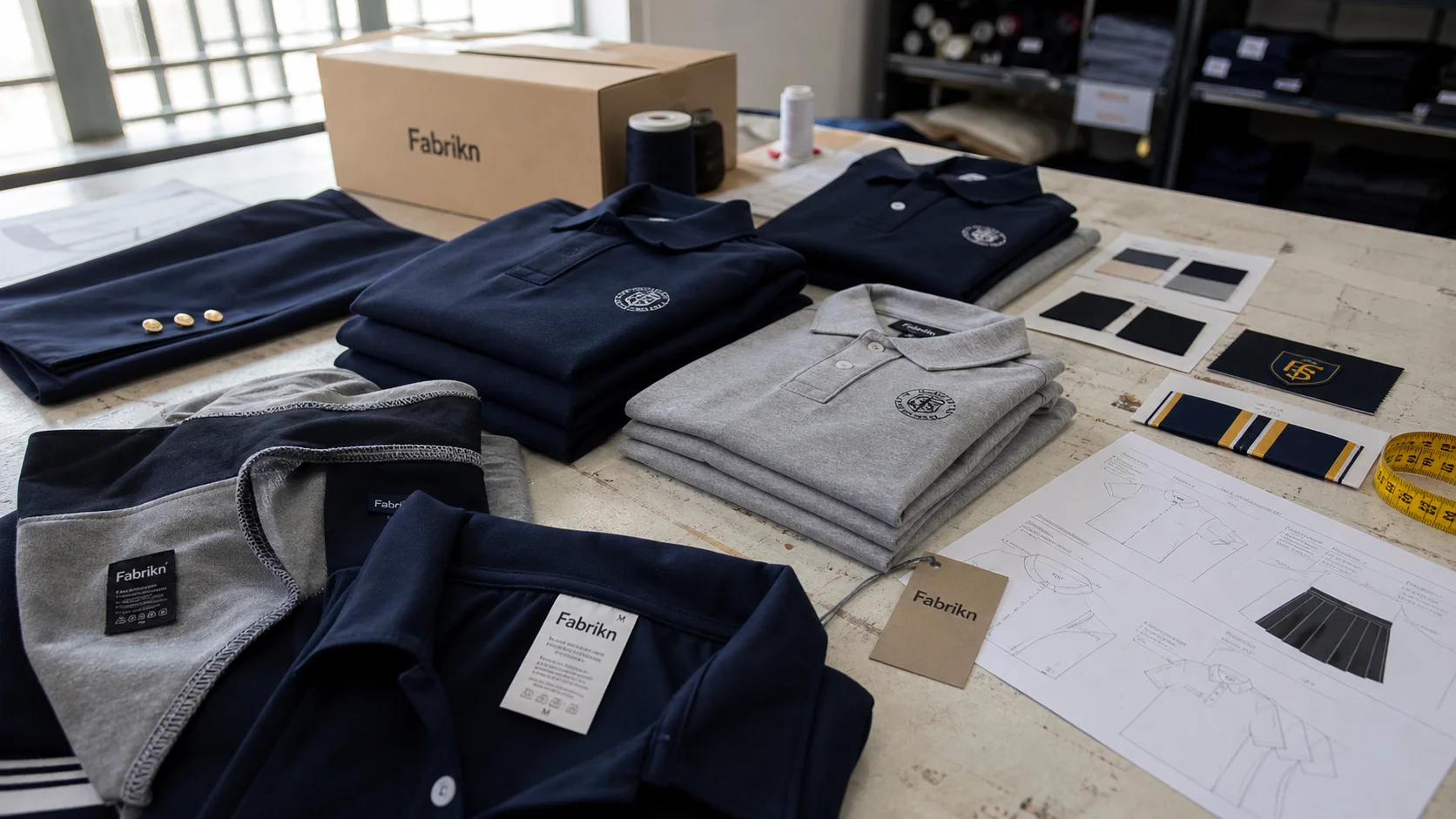
Bulk Garment Production for Wholesalers with checks for samples, fit, MOQ, QC evidence, pricing terms, and delivery risk.
Fast answer: Bulk Garment Production for Wholesalers: Costs, MOQ should be judged by production evidence, not by a generic sourcing promise. The buyer needs sample proof, cost breakdowns, QC checkpoints, and delivery buffers in writing.
Ask for recent sample photos, measurement tolerances, fabric or print test assumptions, decoration test notes, packing examples, and a named inspection checkpoint. These details show whether the team can repeat an approved sample at bulk volume.
Separate garment cost, decoration, labels, packaging, sampling, testing, freight, and rush charges. When every cost line is visible, it becomes easier to reduce colorways, adjust size depth, or reserve more time for sampling.
Wholesale programs often unravel before the first carton leaves the dock. I have seen the same story repeat in factory after factory: a sample gets approved, then the bulk order reveals a fabric that shrinks 7%, seams that pop at 18 pounds of force instead of 24, or a fit that drifts by 1.5 cm after washing. That is where bulk garment production for wholesalers quietly wins or bleeds cash, usually before anyone notices. For a wholesale buyer, the sample stage is where risk stops being theoretical.
Bangladesh, Vietnam, Portugal, and China all have strong apparel hubs, but the better-run plants never lead with speed. They open tech packs, tolerance sheets, and wash reports. The weaker ones push a fast handloom sample in 3-5 days and hope the buyer skips lab dips, shrinkage checks, and size-set approval. Fast sampling can feel cheap at $18-$35 per style, but a re-cut on 5,000 units can erase $8,000-$20,000 in margin in one stroke.
Think of sample approval as a pilot run, not a formality. If the bulk order includes French terry 320 GSM, ask for fabric test results, colorfastness data, and shrinkage after three wash cycles. If the style uses embroidery or applique, confirm stitch density and backing stability before you approve the prototype. I have seen brands lose fill rate because a polished sample hid production risk.
A disciplined sampling process protects more than quality. It improves repeat-order odds because retailers hate surprises, especially when a 1,200-unit replenishment arrives with 4% defects and late deliveries. Better factories document every tolerance, so they can repeat the same garment six months later with fewer deviations. That matters. A lot. For wholesalers, the sample stage is not a cost center; it is margin insurance. For guidance on specs and testing language, I often cross-check standards from AATCC, ISO, and sustainable textile references from Textile Exchange.
Cost in wholesale apparel is rarely about labor alone. A 500-unit order in one color and one fabric can undercut 2,000 mixed units because the manufacturer buys yarn, trims, and cartons in a cleaner batch, then runs the line with fewer changeovers. In bulk garment production for wholesalers, simpler production planning usually means better pricing. I have seen a basic jersey tee at $2.40-$3.10 per piece jump to $3.80-$4.60 once the order splits across four colors, two neck trims, and three size runs. Same product. Different chaos.
For woven shirts, the math changes again. A plain poplin shirt with a simple patch pocket may land at $6.50-$8.20, while a hoodie in 320 GSM fleece can sit at $9.50-$14.00 because of heavier fabric, rib trim, kangaroo pocket construction, and more sewing minutes. Tailored shirts are often deceptively expensive. Even when labor is cheap, machine time, pressing, fusible interlining, and collar accuracy add cost fast.
MOQ matters because it determines how much waste a supplier can absorb. If a supplier asks for MOQ 500 pieces per color, and you want 6 colors at 120 each, you are paying for short-run inefficiency somewhere in the chain. Those costs show up as higher fabric rates, extra marker waste, and setup fees for print screens or embroidery heads. A screen print can add $0.35-$0.90 per piece; embroidery may add $1.20-$3.50 depending on stitch count.
Regional pricing can mislead buyers. In parts of South Asia and China, hourly labor may be 25%-40% lower than in nearshore factories, yet landed cost may be similar once you add lead time, air freight, higher reject rates, and longer approvals. I have worked with brands that saved $0.70 per unit on sewing but spent $1.10 more on shipping and rework. The labor rate looked good on paper. The invoice told a different story.
Order consolidation is the quiet profit lever. Standard colorways, fewer SKU variations, and shared trims can cut material waste by 3%-8% and reduce setup charges by $150-$600 per style. This is where a clean product catalog helps buyers compare styles before they fragment an order into expensive little pieces. If your assortment is disciplined, your cost stack usually is too.
I ask the same questions on every floor, whether the factory is in Ho Chi Minh City, Tiruppur, or a China sourcing hub. How many lines are running today? What is the machine mix? Which styles fill each line? What is the inline QC checkpoint? If the answers are vague, I keep my wallet closed. A real manufacturer can usually name line capacity in pieces per day, show operator skill maps, and explain fabric sourcing relationships without theatrics. A broker may talk like a supplier, but a factory can show production in motion.
Specialization matters more than many wholesalers admit. A factory that excels at basics may turn out 15,000 jersey tees a week with low defect rates, but it may struggle with structured jackets, bonded seams, or heavy wash treatments. Fashion knit factories often have better stretch handling and binding know-how. Uniform plants usually care more about repeatability than trend details. Private-label collections need both consistency and flexibility, which is why private label clothing services should be judged on proof, not promise.
Red flags appear quickly on the floor. Vague lead times. No written QC process. Overpromised capacity like “yes, 50,000 units in 10 days.” Missing social compliance documents. No visible records for needle control, fire exits, or broken stitch audits. A factory that cannot show recent inspection reports or inline defect logs is asking you to trust a story instead of a system. I do not. For compliance expectations, I also review guidance from Trade.gov.
My request list is simple and non-negotiable: recent third-party inspection reports, inline defect rates by style, two reference customers, a real production calendar, and proof of fabric booking procedures. If the factory claims strong cut and sew manufacturing, ask to see an actual line balancing chart. A factory with 28 operators and 19 stations but only 12 active machines is telling you more than its sales sheet ever will. That gap is usually where delays begin.
The fastest programs I have seen still take time. A standard wholesale run in bulk garment production for wholesalers often looks like this: tech pack review in 2-4 days, sample development in 7-14 days, fabric booking in 10-21 days, cut-make-trim in 18-30 days, finishing and packing in 3-6 days, then shipping. If the factory is waiting on yarn-dyed fabric or custom labels, add another 7-14 days. Speed costs money. Sometimes a lot of it.
Air freight can save a launch. I have seen it rescue a retail drop by 9 days. But it can also crush margin, especially on heavier goods. Moving a 1,500-unit hoodie order by air can add $1.80-$4.50 per piece, depending on route and weight. Sea freight is kinder to margin, often lowering transport cost by 40%-70%, yet it adds 18-35 days, sometimes more if customs paperwork is messy.
Most delays are boring and predictable. Fabric dyeing gets held because the shade is 0.5 Delta E off target. Trims arrive 6 days late. Approval emails sit for 4 days while nobody signs off on a pocket placement. Customs paperwork stalls because carton counts and HS codes do not match. I have seen an order lose an entire retail window over a missing fiber content declaration.
The planning framework I use is anchored to sales dates, not factory optimism. Work backward from retailer delivery windows, then subtract 14 days for approval slippage and 10 days for freight variability. If you need stock on shelf by October 1, production should be locked by July or early August, not mid-September. Re-order windows matter too. A replenishment order that misses a 3-week selling spike is not a backorder. It is dead opportunity.
A 2% defect rate sounds harmless until you do the math. On 10,000 units, that is 200 flawed garments. If each one costs $7.50 landed, you have $1,500 tied up before you count freight, inspection fees, or markdowns. If 40% of those become returns or chargebacks, the pain compounds quickly. One small percentage can drain a wholesale account.
Good factories work in three gates. Pre-production inspection checks raw fabric, trims, and size specs before bulk cutting starts. Inline inspection catches construction drift while the line is active. Final inspection confirms packing, labeling, measurements, and presentation before shipment. Buyers should insist on AQL standards with written tolerances, because “looks okay” is not a quality system.
The testing checklist should match the product. For tees and fleece, I want colorfastness, shrinkage, seam strength, and pilling tests. For shirts, I check collar stability, button pull tests, and thread slippage. For metal trims or zippers, metal detection is smart when the product category demands it. Data from WTO trade reporting keeps reminding buyers that cross-border apparel flows are large and unforgiving, which is exactly why consistency matters.
Quality discipline saves wholesale accounts from chargebacks and markdowns. Retailers remember the shipment that arrived with 3% mismatched shades or crooked label placement. They also remember the one that did not. I have seen a buyer lose shelf space after two late fills and one 6% defect spike. That kind of damage is expensive to rebuild, and usually takes 2-3 seasons to repair.
The thing nobody tells you: a slightly higher sample fee of $60-$120 can be cheaper than a “cheap” $20 sample if it forces proper wash testing, shrinkage approval, and fit corrections before you cut 8,000 units.
I am skeptical of green labels that do not touch waste. A recycled hangtag does not save a buyer from dead stock, and a carbon story means very little if 18% of the order sits unsold in a warehouse. The dirtiest habit in wholesale is over-ordering by guesswork. A better size curve, based on actual sell-through, can reduce leftovers by 10%-25% without changing a single fabric spec.
Real waste reduction starts upstream. Fewer sample rounds mean fewer courier shipments, fewer prototypes, and less fabric consumed by dead-end revisions. Tighter forecasting lowers reserve inventory. Cleaner order consolidation reduces cutting waste because one spread can serve more units. Conventional versus certified fabric is a valid discussion, but the premium is justified only when the certification aligns with your selling price and the fiber performance is proven, not merely advertised.
In dyeing, water and energy use vary sharply. I have seen mills run low-liquor dyeing systems that cut water use by 20%-40% compared with older methods, while others still waste heat through poor batch planning. Packaging is another easy win. Reduce polybags by 1 unit per garment, remove unnecessary tissue, and switch carton dimensions to fit load planning. That can cut freight volume by 2%-5% on some programs. For packaging strategy, I often point buyers to clothing packaging solutions that match retail requirements without overpacking every piece.
Here is what most people miss: some smaller factories waste less material than large ones because they run simpler lines and change styles less often. I have seen a 60-operator plant with 12 active styles produce less end-of-roll waste than a 180-operator site juggling 39 styles. Simplicity is not glamorous. It is efficient. For certification references, many teams also review OEKO-TEX.
Start with your tech pack. Before you send it out, lock fabric composition, GSM, measurements, stitch details, labels, packaging, and carton counts. Then request quotes from at least 3 factories, but compare them on the same spec sheet. I have seen a 14% price gap disappear once the buyer normalized fabric weight, MOQ, and shipping terms. Price without structure is a trap.
In week one, ask every factory for sample timelines, MOQ by color, and bulk lead time by style. In week two, inspect sample quality against a size chart and a wash test. In week three, narrow the field to 2 suppliers and negotiate pricing tiers, defect allowance, lead-time penalties, fabric reservation, and re-order terms. If one supplier will hold yarn for 21 days and another will not, that is real value.
By week four, decide on cost, speed, and compliance together. Do not choose the cheapest quote if it hides 30-day delays or poor inspection records. Do not choose the fastest if it forces air freight on every shipment. Last year I worked with a brand that saved $0.55 per unit by consolidating colors from 5 to 2, then used the margin to fund stronger testing. That is a better trade than chasing the lowest sticker price.
Document everything before the purchase order: approved sample, tolerance sheet, payment milestones, and re-order windows. Confirm MOQ, production slot, and contingency dates in writing. Then revisit your forecast and reserve capacity before peak season, because good factories fill calendars 6-10 weeks ahead. If your volume depends on wholesale replenishment, hesitation is expensive. Confirm the numbers, lock the slot, and keep the re-order path open.
It is the process of manufacturing apparel in larger quantities for resale, usually with a defined MOQ, approved samples, and scheduled production slots. Orders commonly start at 300-500 pieces per style, though some factories require 1,000 or more for custom fabrics.
Basic tees can land around $2.40-$4.60 per piece, while hoodies often run $9.50-$14.00 and woven shirts $6.50-$8.20, depending on fabric, trims, and decoration. MOQ, wash treatments, and shipping can move the final landed cost by 15%-35%.
A standard cycle often takes 4-8 weeks after sample approval, not counting shipping. Sampling can take 7-14 days, cut-make-trim 18-30 days, and sea freight another 18-35 days depending on route and customs.
Many factories start at MOQ 300-500 pieces per color for basics and 500-1,000 for custom or decorated styles. If you need multiple colorways, the true MOQ rises quickly because each color adds setup, fabric booking, and packing costs.
Yes. The biggest savings usually come from better forecasting, fewer sample rounds, tighter size curves, and fewer SKU variations. In many cases, reducing over-ordering saves more money than switching to a recycled fabric alone.