
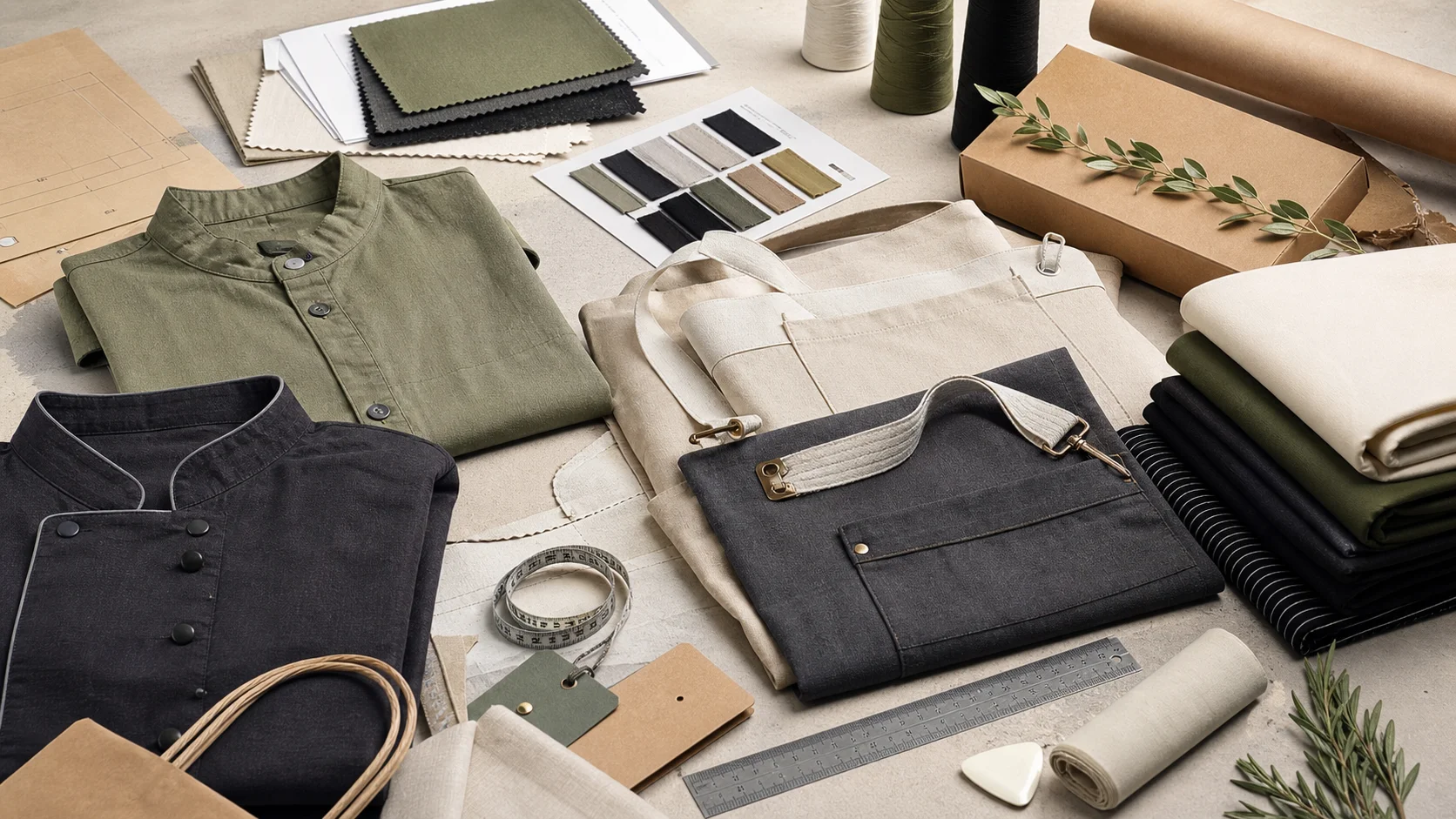
A focused outline for municipal teamwear buyers evaluating bulk uniforms with heat transfer, covering garment selection, transfer durability, compliance...
Bulk Heat Transfer Uniforms for Municipal Buyers - Fabrikn production reference
Municipal buyers rarely purchase uniforms as simple apparel orders. In most cases, they are managing a public procurement process, balancing budget control, image consistency, wearer comfort, replacement cycles, and documentation requirements at the same time. That gets even more specific when the brief calls for bulk uniforms with heat transfer decoration for municipal teamwear buyers. The decoration method affects appearance, durability, reorder flexibility, and compliance risk, so it should be evaluated early rather than treated as a finishing detail.
Heat transfer is often selected because it gives municipal departments a practical middle ground between clean branding and manageable order economics. It can be a strong option for parks teams, sanitation crews, transport support staff, public works units, event teams, maintenance staff, community outreach groups, and other departments that need clear identification across mixed garment types. It also suits programs where logos, department names, reflective elements, or staff numbering need to be applied consistently on different garments without rebuilding a full embroidery or screen print setup for every variation.
From a sourcing standpoint, the appeal is straightforward. Heat transfer can support fast logo application, sharp detail, smaller repeat orders, and cleaner placement across polos, softshells, tees, fleece, high-visibility garments, and lightweight outerwear. The tradeoff is that not every transfer is suitable for industrial wear conditions, aggressive laundering, heavy abrasion, or heat-sensitive fabrics. Buyers that skip specification work at the start often end up with cracking graphics, peeling edges, color mismatch, or poor adhesion on coated fabrics.
That is why municipal procurement teams should treat heat transfer uniforms as a technical buying category, not just a branding project. The right sourcing approach starts with garment end use, laundry conditions, logo complexity, replacement frequency, and sustainability goals. Once those are clear, the supplier can align fabric, trim, transfer type, application temperature, and inspection controls accordingly.
For buyers comparing sourcing structures, it also helps to review a supplier’s production support model, development process, and customization capabilities before issuing a large order. A useful starting point is the overview of services available for apparel development and bulk production support.
Municipal teamwear programs usually need one thing above all else: consistency at scale without making every reorder slow and expensive. Heat transfer decoration fits that need well when the artwork is standardized and the garment mix is broad.
Embroidery still has a place in some civic uniform programs, especially for formal shirts, outerwear, or premium presentations. Screen printing also remains relevant for large single-style runs. Yet many municipal buyers move toward heat transfer when they need sharper graphic detail, lower setup friction across multiple SKUs, or easier application of names, codes, and role identifiers.
The biggest purchasing advantage is operational flexibility. A municipality may need 2,000 polos, 800 fleece jackets, 600 rain shells, and later a top-up order of 150 mixed units for new staff. In that situation, a heat transfer system can simplify branding across product types. That matters for departments with seasonal staffing changes or rolling replacement schedules.
The key judgment point is durability. If the garments will be exposed to frequent industrial washing, rough mechanical abrasion, fuel residue, or high-heat drying, the buyer should not assume all transfer constructions perform equally. Premium polyurethane transfers, reflective transfers, silicone-like raised transfers, and low-temperature application films all behave differently in wear and wash conditions. The decision has to be matched to actual use, not just visual preference.
Heat transfer uniforms work best in municipal categories where visual identification is important but the garment program still needs comfort, mobility, and efficient replenishment. That makes them particularly useful in teamwear-style municipal orders rather than highly specialized PPE-led categories.
Common use cases include:
Heat transfer is less ideal when garments face constant scraping, high contamination, or repeated harsh industrial wash cycles unless the transfer system has been tested for those conditions. For heavy-duty workwear, buyers should ask whether the logo area has passed wash, peel, and abrasion performance checks after full application to the actual bulk fabric. Lab data on transfer film alone is not enough.
Another good fit is mixed-gender and extended-size municipal teamwear. When the same logo needs to appear across men’s, women’s, unisex, tall, and plus-size garments, transfer placement can be standardized with fewer appearance issues than some stitched methods. That does not remove the need for placement specs. A chest logo that looks balanced on a medium polo can sit too high on a 5XL garment if grading and application templates are not planned carefully.
Municipal bulk uniform orders often begin with a core assortment rather than a single garment. A practical program may include polos, T-shirts, fleece layers, softshells, and caps or bags, with heat transfer branding adapted to each surface. The best sourcing discussions define the program in modules:
Typical MOQ ranges depend on style complexity, fabric availability, color count, and whether the garments are fully custom cut-and-sew or stock blanks with transfer application. For custom municipal teamwear, many suppliers will quote starting MOQs around 300 to 500 pieces per style/color, with total program volumes often needing 1,000 pieces or more to hold pricing efficiently. For simpler stocked garments with custom transfers, MOQs can be lower, sometimes around 50 to 150 pieces per style, though artwork setup and size breaks still affect cost.
Buyers should be careful with very low MOQ promises on custom programs. Low opening quantities may look attractive in procurement review, but unit costs usually rise quickly, and color continuity on future reorders can become harder to manage if fabrics are substituted later. That is not always a deal-breaker. It simply means the municipality should decide whether flexibility or long-term cost stability is more important.
A well-scoped brief normally includes:
When the order involves sustainable sourcing targets, buyers should also specify preferred recycled content, traceability expectations, restricted substance standards, and packaging limits from the start. That prevents re-quoting later.
In bulk uniforms with heat transfer, fabric and decoration should be specified together. Problems usually happen when buyers approve a fabric for hand feel and color, then apply a transfer system that was designed for a different surface or cure temperature.
For municipal teamwear, common base fabrics include:
Each fabric type changes the transfer decision. Polyester can be vulnerable to dye migration, especially on dark red, navy, and black shades if the transfer barrier is weak or heat settings are wrong. Softshells and coated rainwear can be heat-sensitive, which means low-temperature application may be necessary. Stretch fabrics need transfers that can elongate without cracking. Textured pique surfaces can affect adhesion and edge clarity.
Buyers should ask for these technical points in the specification sheet:
Trim selection also matters more than many tenders acknowledge. If garments use recycled zipper tape, contrast neck tape, reflective piping, or hook-and-loop patches, these elements can affect pressing access during transfer application. A chest pocket seam, heavy placket, or raised panel can interfere with a clean press. The artwork area needs to be considered during pattern and trim layout, not after bulk cutting.
From a purchasing perspective, simple artwork usually performs better long term than oversized decorative applications. Municipal uniforms are not fashion merchandise. Large full-back transfers can look effective for visibility, but they also create more risk of peel or cracking over repeated wash cycles, especially on lightweight knits. If the department only needs identification, a smaller high-contrast mark is often the better procurement choice.
Municipal buyers should not move from digital mockup straight into bulk production. A structured approval path reduces most avoidable failures.
A typical sample sequence looks like this:
The most important stage for heat transfer programs is the decorated pre-production sample on the actual bulk-intended fabric. That sample should be checked for appearance, hand feel, adhesion, edge finish, distortion after pressing, and color migration risk. If the logo sits on a stretch fabric or textured knit, request the exact transfer construction to be used in production rather than a substitute sample film.
Sample timing depends on development complexity and fabric sourcing. A simple stocked-garment program with standard transfers may move through samples in 2 to 4 weeks. A custom uniform program with pattern development, color matching, and multi-style approvals may require 4 to 8 weeks or longer before production can start. Buyers working under fiscal deadlines should build this into the tender calendar. Rushing approvals is one of the fastest ways to create bulk claims later.
If a municipality needs branded garments for public-facing departments, it is also worth confirming whether the transfer surface will remain stable after the first wash. Some glossy finishes look sharp in sample form but lose their appearance quickly in use. That is not always a technical defect; it may just be the wrong finish for the job.
For organizations needing help aligning development, production, and communication steps, the supplier contact process should be clear and easy to document. Buyers can usually start that review through a direct inquiry page such as contact-us.
Municipal procurement teams often ask for a single lead time number, but bulk uniform production rarely works that way. Lead time depends on fabric availability, custom dyeing, sample approvals, transfer sourcing, production slot capacity, inspection timing, and shipping method.
For planning purposes, a reasonable commercial range might look like this:
Order Type Typical MOQ Typical Lead Time Main Variables Stock garments with standard heat transfer 50 to 150 pieces per style 3 to 6 weeks Blank stock depth, artwork approval, application schedule Custom teamwear, simple fabric program 300 to 500 pieces per style/color 6 to 10 weeks Fabric booking, sampling, color confirmation Custom multi-style municipal program 1,000+ total pieces 8 to 14 weeks Multiple fits, trims, transfer types, inspections, freight modeThose ranges are not guarantees. Peak seasons, holiday closures, raw material delays, and approval revisions can extend them. Buyers should also ask whether lead time starts from purchase order date or from final sample approval date. The distinction matters.
Price tradeoffs are usually centered on five factors:
The most cost-efficient option is not always the best value. A lower unit price may come with weak reorder support, inconsistent logo application, or limited control over transfer durability. In municipal buying, replacement continuity often matters as much as opening cost. A supplier that can support repeated buys with stable specifications may be the stronger long-term choice even if the first order is not the cheapest tender line.
Bulk uniforms with heat transfer are not unusually risky, but the failure points are easy to predict. The problem is that many of them only become visible after packing or after first use if inspection is too light.
Common risks include:
Inspection should cover both garment construction and transfer application. A practical inline or final inspection checklist should include logo position measurement, adhesion rub check, wash-test reference review, size assortment accuracy, carton marking, and garment appearance under natural and artificial light. If the order includes reflective transfers, buyers should confirm reflectivity requirements and whether appearance changes are acceptable after washing.
One useful control is a peel-check protocol after pressing cooldown on a defined sample percentage during production. Another is a post-wash verification on a retained sample from the bulk lot. These are not expensive steps, but they catch preventable errors early.
Direct purchasing judgment: if the logo is mission-critical for public identification, do not accept a bulk program that relies only on visual approval of an untouched sample. Require evidence that the full decoration system was applied to the actual garment and checked after wash exposure relevant to the intended use.
Because this category sits within sustainable fashion, the buying discussion should go beyond recycled fabric claims. Municipal uniform sustainability is usually strongest when durability, reorder stability, and end-of-life planning are considered together.
Recycled polyester and more responsible cotton options can support procurement goals, especially in polos, tees, fleece, and lightweight outerwear. Yet a garment is not automatically more sustainable if the transfer cracks, the fabric pills quickly, or the department has to replace units too often. Useful lifespan is one of the most practical sustainability metrics in uniforms.
Municipal buyers should ask for:
Heat transfer itself deserves a sustainability review. Some buyers focus only on the garment fabric and ignore the decoration materials, adhesives, and replacement implications. A slightly cheaper transfer with poor wash durability creates waste faster. By contrast, a transfer system that lasts through the expected wear cycle can support both value and sustainability goals.
There is also a procurement tradeoff between mixed-material complexity and recyclability. A garment with multiple laminated panels, reflective films, and decorative transfer layers may perform well in use but be more difficult to process at end of life. That does not mean buyers should avoid specialized construction. It means they should balance functional need against material complexity and select only the features that the department genuinely needs.
For buyers reviewing supplier positioning and values before tender engagement, the company background at about-us can help frame the conversation around production approach and sourcing priorities.
Municipal teamwear buyers usually have three broad sourcing routes: local decorators using stocked garments, trading partners coordinating offshore production, or manufacturers supporting custom development and bulk execution. Each route can work, but each suits a different procurement objective.
The right choice depends on whether the purchase is a one-time event, a department rollout, or a repeat annual contract. For many municipal buyers, the most sensible route is a hybrid structure: custom core garments for main volume, with controlled reorder pathways for smaller departmental replenishment.
When evaluating suppliers, ask practical questions:
A polished sales presentation is not enough. Municipal buyers need process clarity. The supplier should be able to explain where fabric comes from, how logos are approved, when bulk starts, what inspection checkpoints are used, and how reorders are matched to original production. If those basics are vague, the risk usually appears later in inconsistent deliveries.
In practical terms, bulk uniforms with heat transfer are a strong municipal teamwear option when the program is specified carefully. They offer sharp branding, flexibility across garment types, and solid reorder potential. The best results come when decoration method, fabric choice, wear conditions, and sustainability targets are aligned from the start. That is the difference between a smooth public-sector uniform program and a tender that looks fine on paper but creates replacement problems six months later.
Get a free quote from Fabrikn — your trusted B2B clothing manufacturer with 10+ years of experience. MOQ as low as 200 pieces.
Get a Free Quote →They can be, provided the transfer type matches the fabric and actual use conditions. Municipal buyers should ask for wash-performance and adhesion checks on the fully decorated garment, especially for polyester, stretch fabrics, and outerwear.
For stocked garments with applied transfers, MOQs can start around 50 to 150 pieces per style. For custom programs, 300 to 500 pieces per style/color is a common opening range, with larger multi-style programs often totaling 1,000 pieces or more.
Simple stocked-garment orders may take around 3 to 6 weeks after approval. Custom municipal uniform programs more often run 6 to 14 weeks depending on sampling, fabric development, number of styles, and shipping method.
Not in every case. Heat transfer is often better for detailed logos, lighter garments, reflective elements, and mixed-SKU programs. Embroidery may still be preferable for certain formal or heavier uniform categories. The right method depends on appearance, durability needs, and budget.
Durability, responsible fabric sourcing, restricted substance compliance, and reorder stability matter more than marketing claims alone. A uniform that lasts through its intended service cycle is usually the stronger sustainability result.