
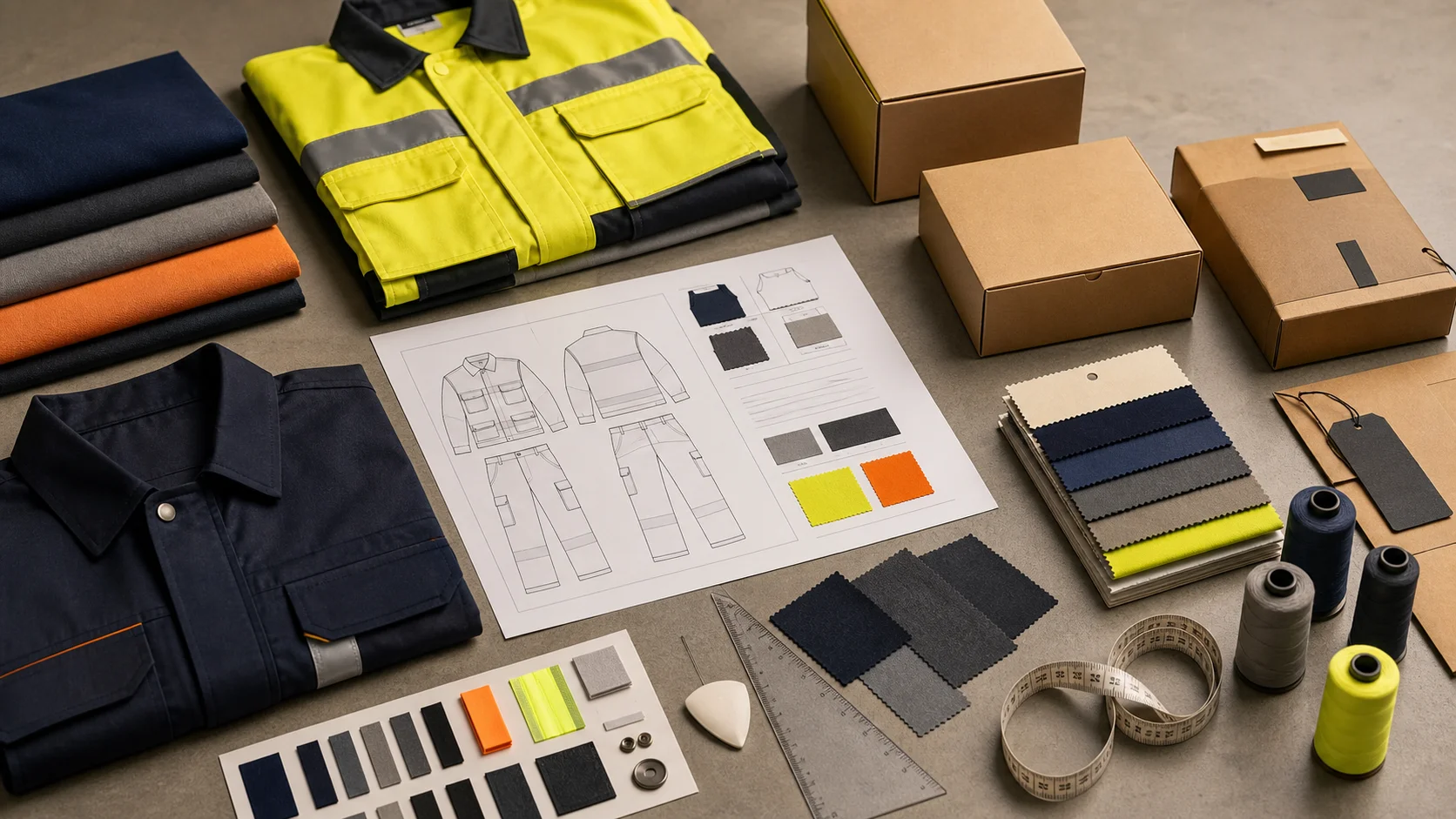
Bulk Polo Shirt Manufacturer Overseas with checks for samples, fit, MOQ, QC evidence, pricing terms, and delivery risk.
Fast answer: Bulk Polo Shirt Manufacturer Overseas: Costs, Quality, Risks should be judged by production evidence, not by a generic sourcing promise. The buyer needs sample proof, cost breakdowns, QC checkpoints, and delivery buffers in writing.
Ask for recent sample photos, measurement tolerances, fabric or print test assumptions, decoration test notes, packing examples, and a named inspection checkpoint. These details show whether the team can repeat an approved sample at bulk volume.
Separate garment cost, decoration, labels, packaging, sampling, testing, freight, and rush charges. When every cost line is visible, it becomes easier to reduce colorways, adjust size depth, or reserve more time for sampling.
I once watched a $4.10 polo turn into an $8.60 headache. Labor looked cheap on the quote sheet, but in a 5,000-piece order it made up less than 15% of landed cost after freight, duty, cartons, and rejects were counted. That is where the bulk polo shirt manufacturer overseas decision usually begins.
China, Vietnam, Bangladesh, and Peru do not compete on sewing minutes alone. Fabric access, finishing quality, lead time, and how many problems a bulk polo shirt manufacturer overseas can solve before a carton leaves the dock matter just as much. In China, fabric sourcing often moves faster and trim procurement tends to be broader. Vietnam usually stays steadier on stitching and packing discipline. Bangladesh can hit aggressive prices on cotton basics, but production planning has to be tighter because a 3- to 4-week delay can cascade fast. Peru sits in a narrower lane: excellent pima cotton, smaller runs, higher fabric costs, less scale.
Brands, sports teams, hospitality groups, and private-label sellers go offshore for three practical reasons. Scale comes first. A factory cutting 20,000 pieces a week spreads overhead better than a domestic shop handling 500-piece batches. Decoration options matter too. Flat knit collars, tonal embroidery, silicone badges, enzyme washes, and recycled yarn blends are easier to source in volume. Then there is fabric access. A 220 GSM combed cotton pique in navy, a 180 GSM recycled polyester golf knit, or a French terry 320 GSM hybrid is usually simpler to source through export supplier networks than from a local maker with limited mills.
When I visited factories across eight countries, the clearest advantage was not price. It was range. Overseas sourcing teams could quote 8 yarn-dyed colors, 4 placket constructions, and 2 embroidery placements in a single morning. Their weak spots were obvious too: communication lag, shade inconsistency between dye lots, and carton accuracy that slipped when packing changed at the last minute. A 10-minute labeling mistake can turn into 200 mispacked pieces and a $600 relabeling bill.
The core argument is simple. The cheapest FOB is rarely the cheapest landed. Domestic sourcing may look expensive at first glance, but once you model air freight, duty, rework, and missed delivery windows, the gap narrows faster than most buyers expect.
FOB, EXW, CIF, and landed cost are not abstract terms. They decide whether a 5,000-piece program clears margin or eats it. A typical quote for a midweight cotton polo might break down like this: fabric at $1.35 to $1.85 per piece, cut-and-sew at $0.95 to $1.35, collar rib at $0.22 to $0.40, embroidery at $0.35 to $0.90, packing at $0.10 to $0.22, and inspection at $0.08 to $0.18. Add ocean freight at $0.25 to $0.85, duty at 8% to 18% depending on country of origin and HS code, plus inland delivery at $0.12 to $0.35. Suddenly a $4.20 FOB shirt can land at $7.80 to $9.40.
That spread shifts with order size. At 1,000 pieces, a bulk polo shirt manufacturer overseas may quote $5.10 FOB because setup time, marker making, and trim purchases are spread thin. At 10,000 pieces, the same shirt may fall to $3.60 FOB if fabric is booked in one lot and embroidery runs in a single batch. Standard colors improve unit economics faster than custom dye lots, and stock collars move faster than fully custom flat knit trims.
Several components influence cost more than buyers expect. Yarn type matters: ring-spun cotton usually costs more than open-end cotton, and recycled polyester often carries a premium of 8% to 20%. GSM affects both handfeel and freight; a 200 GSM pique is cheaper to ship than 240 GSM. Collar construction changes labor too. A structured stand collar with reinforced placket stitching takes longer than a basic two-button sport polo. Decoration method matters as well. A 10,000-stitch embroidery logo might add $0.45, while a multi-location print can add $0.70 to $1.10 depending on setup.
Here is what most people miss: the first sample quote is often bait. I have seen sample fees refunded only if the buyer places 3,000 pieces or more, while revision charges of $35 to $80 per round quietly pile up. Underquoted freight is another trap. A supplier may quote sea freight at $0.22 when the market is closer to $0.62, then ask for a top-up after booking. If you want a cleaner benchmark, compare private label clothing services against cut and sew manufacturing so you can see which line item is truly driving cost.
One more check helps. Ask for the quote in FOB and CIF side by side, then normalize it into landed cost using your own duty rate and domestic drayage. That exercise catches a lot of shiny numbers before they reach procurement approval. For broader sourcing benchmarks and trade guidance, review U.S. Trade and tariff resources and Textile Exchange standards for preferred fibers.
Most polo failures start with specs, not sewing. A 1 cm measurement drift on chest width sounds tiny until it hits 5,000 units. Then come fit complaints, uneven size ratios, and returns that cost more than the shirt margin. I have seen a run where the shoulder point moved 1.2 cm and the brand had to discount 800 pieces by 30%.
The fabric tests buyers should request are basic but non-negotiable: pilling, colorfastness, shrinkage, and GSM tolerance. For cotton pique, I ask for shrinkage below 5% after wash and colorfastness at least 4 on the grey scale. For performance polos, ask for moisture-wicking data and check that the fabric keeps its recovery after 20 wash cycles. According to AATCC, ISO, and OEKO-TEX certification guidelines, small deviations in wash performance can expose poor fiber selection before production locks in.
Factory audits tell you even more. Needle control matters because broken needles create safety risks and inconsistent seams. Inline inspection should happen at least every 50 to 100 pieces on a 5,000-piece order. Rework rates above 3% deserve scrutiny. Packing discipline is another tell: if the team cannot keep 3 sizes in the right ratio during a 200-piece pilot pack, they will not handle a full carton matrix cleanly.
Smaller specialist factories often beat larger exporters on detail. A 120-worker plant with one dedicated polo line may keep collar roll tighter than a 600-worker factory juggling hoodies, tees, and workwear on the same floor. Bigger factories can be faster, sure, but speed without discipline creates shirt-to-shirt variation, especially in embroidery placement and button spacing.
Customers notice the details first: collar roll, button strength, and placket symmetry. If the collar flips after one wash, the shirt feels cheap even when the fabric cost $1.80 per piece. If the embroidery sits 8 mm off center, retail buyers notice immediately. I also ask for a sample washed three times, because a shirt that looks good on day one can still collapse after the third cycle.
Country choice is not a moral judgment. It is a fit question. China usually offers the widest fabric and trim access, with lead times of 25 to 45 days and MOQs starting around 500 to 1,000 pieces for standard programs. Vietnam often runs 30 to 50 days, with MOQs near 800 to 1,500 pieces, and its stitching consistency can surprise buyers who assume lower price equals lower control. Bangladesh can price aggressively at $2.80 to $4.20 FOB on simpler polos, though lead times of 35 to 60 days are common. India is strong on cotton, yarn quality, and knit fabric diversity, but speed can stretch to 40 to 70 days. Peru is the premium outlier, often $7.50 to $14.00 FOB for smaller runs of pima cotton, with lead times that reflect both scale and fabric sourcing.
I have seen a mid-priced Vietnamese manufacturer deliver tighter stitch density than a cheaper supplier elsewhere. Not luck. Cleaner line layout, fewer style changes, better operator training. India can win on cotton handfeel and long-staple yarn quality, yet still lose to Vietnam on delivery speed because spinners, knitters, and dye houses do not always align as neatly.
Use case changes the best sourcing country. Premium retail polos reward cotton quality, dye consistency, and better collars, which pushes buyers toward China, Peru, or higher-end Indian mills. Promotional polos care most about price and repeatability, so Bangladesh and parts of China work well. Sportswear favors Vietnam and China for technical knits, recycled yarns, and embroidery control. Uniform programs often need the broadest color matching and the best size consistency; those jobs are usually safest in wholesale programs with factories that have strong QA and documented shade controls.
Dyeing and recycled yarns are a separate decision. China and India usually have broader dye-house access. Vietnam is strong on assembly and finishing. Bangladesh can be price-competitive on bulk basics but may need tighter oversight on color tolerance. Language access also matters. A factory with a bilingual merchandiser can save 2 weeks of back-and-forth. Port congestion is not theoretical either; a 5-day delay in a busy shipping window can turn into 12 days when cartons miss a vessel cutoff.
For buyers building a private-label program, start with a short list that matches your price point and quality target, then compare against actual fabric swatches rather than only the quotation. If the goal is a premium line, browse our product catalog for custom polo shirt options to see how fabric weight, collar type, and decoration change the final product mix.
Due diligence should start with paperwork, not promises. Ask for a business license, export records from the last 12 months, compliance certificates, and two or three customer references that match your volume. For larger orders, request audit reports, test reports, and a list of machinery tied to polo production: collar knitting, embroidery heads, automatic cutting tables, and steam pressing lines.
Then confirm whether you are speaking to a factory, a trading company, or a hybrid operation. Factories can usually show production floors, line supervisors, and inline QC boards. Trading companies often have polished samples and fast replies but cannot explain where fabric is knitted or who controls the dye lot. Hybrid teams can be useful if they manage the supply chain well, but they need clearer accountability.
Red flags appear fast in audits. No inline QC board. Vague fabric origin. Refusal to share shrinkage or pilling reports. Sample timelines that change from 7 days to 21 days without explanation. I also watch the table where final packing happens. If cartons are not labeled by size ratio and color code, the factory is asking for mispacks.
Before deposit, lock in sample checkpoints: strike-off approval for logos, size set review across at least 3 sizes, lab dips for each color, stitching sample approval, and packaging mockup. A 1-piece sample is not enough. You need a 3-piece set washed and measured after 24 hours, because one good shirt proves almost nothing.
I like a small trial order because it exposes response time. Place 100 to 300 pieces, ask for a packing photo, and track how long the team takes to answer a simple measurement question. If they reply in 2 hours during sampling but vanish for 4 days after deposit, you have your answer. Fast communication is not a luxury. It is a risk filter. If you need a starting point for a verified supplier conversation, get a custom quote from our team and compare the response quality as carefully as the numbers.
Start with a spec sheet that forces clarity. Define fabric composition, GSM, yarn count if known, collar construction, placket type, embroidery size, size range, carton count, and target delivery date. Then request 3 quotes in the same currency and the same incoterm. I usually normalize everything to landed cost per piece so the bulk polo shirt manufacturer overseas quote, freight, duty, and inland delivery all sit on one page.
A useful comparison template should include currency, incoterms, carton count, decoration method, sample fee, revision charge, and payment terms. If one factory quotes EXW and another quotes FOB, the numbers are not comparable until freight is added back. A 5,000-piece order can move by $0.40 per unit just because one supplier includes carton compression and another does not.
Payment structure depends on trust and volume. For a new supplier, 30/70 is common: 30% deposit, 70% after inspection or before shipment. For larger orders, an LC can protect both sides if the bank paperwork is clean. Milestone payments work well on complex programs: 20% deposit, 30% after fabric approval, 50% after final inspection. On a $28,000 order, that sequencing reduces exposure if a lab dip fails or a shipment slips.
Timing matters more than many buyers admit. Chinese New Year can take 2 to 4 weeks out of factory calendars. Monsoon shipping slowdowns can add another 7 to 10 days in some lanes. Holiday peak periods can double booking pressure on containers and trucks. I have seen a buyer save $1,200 by moving a summer polo program forward by 18 days and avoiding peak freight.
Choose the bulk polo shirt manufacturer overseas that matches your risk tolerance, not the one that flatters your spreadsheet. If your budget is tight and speed matters, accept a simpler fabric and stronger inspection. If quality and brand image matter more, pay for better yarn, tighter QA, and a supplier with real export discipline. Pick the factory that can prove its numbers, not the one that only offers the loudest quote.
For a basic cotton polo, expect roughly $2.80 to $4.50 FOB in lower-cost countries and $4.50 to $8.50 FOB in higher-cost or premium programs. Landed cost often lands 40% to 90% higher once freight, duty, and inland delivery are included. Decoration, GSM, and order size move the number fast.
Most orders take 25 to 60 days after sample approval, depending on fabric availability and factory load. Add 7 to 21 days for shipping, customs, and domestic delivery. Chinese New Year, monsoon delays, and peak-season vessel shortages can extend that timeline by 1 to 3 weeks.
Request the business license, export records, compliance certificates, fabric test reports, and customer references. For larger orders, ask for a factory audit, line photos, and packing specifications. A real factory should also share a tech pack checklist and sample approval timeline in writing.
Yes, and that is often where overseas suppliers are strongest. Private label programs usually need custom neck labels, woven tags, embroidery, or specialty packaging, and those are common at MOQs of 500 to 1,000 pieces. Good factories can also manage color matching across 3 to 12 shades.
China and Vietnam usually offer the broadest mix of speed and capability, especially for repeat programs with clear specs. If the order is small and complex, choose a manufacturer with strong sampling and communication even if the price is $0.30 to $0.70 higher per piece. That difference is cheaper than fixing a failed shipment.