
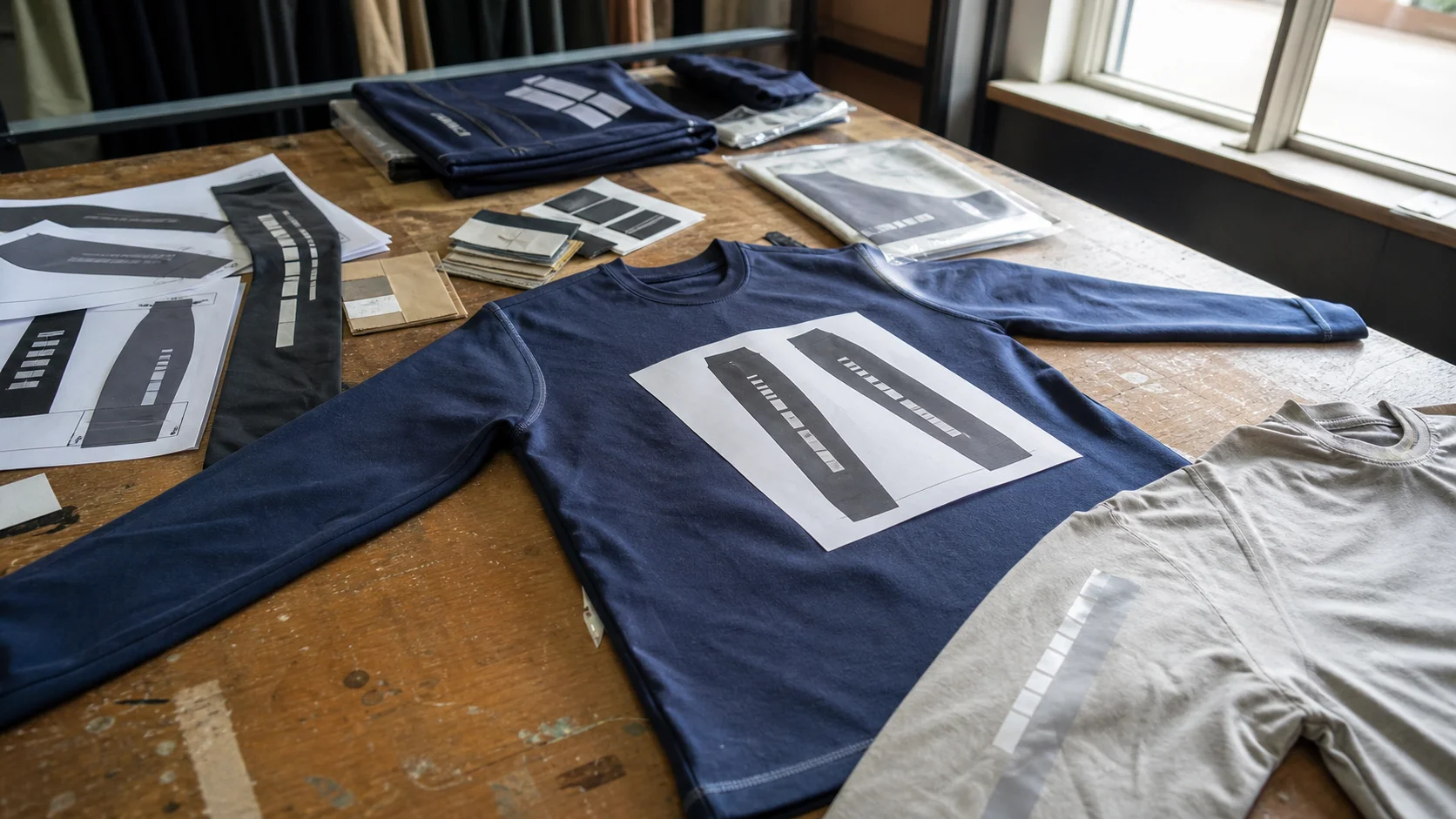
A 2500-word SEO outline for transport hub buyers ordering bulk sleeve print maps, focused on placement compliance, safety markings, artwork controls, durability, and production proofing.
Sleeve Print Map Compliance Checklist for Buyers - Decoration & Printing manufacturing guide
Bulk sleeve print map compliance sounds like a narrow production detail until a transport hub uniform program reaches rollout. At that point, a misplaced sleeve logo, a distorted route map, an unreadable safety icon, or a reflective print that fails wash testing can delay distribution across terminals, depots, lounges, logistics counters, and passenger-facing service teams.
For transport hub buyers, sleeve decoration is rarely just branding. It can carry wayfinding cues, department identification, emergency role markers, contractor status, security zoning, night-shift visibility, or campaign messaging. The risk is that sleeve prints are small, curved, frequently stretched, and exposed to heavy abrasion from bags, radios, scanners, barriers, and outerwear. A print map that looks acceptable on a flat digital mockup can fail once applied to real garments in bulk.
This checklist is written for B2B buyers sourcing decorated apparel at scale, especially for airports, railway stations, bus terminals, ports, logistics hubs, transit authorities, and facility service providers. It focuses on practical controls: artwork placement, garment sizing, print method selection, fabric compatibility, compliance records, sample approval, production tolerances, inspection points, and procurement tradeoffs.
Use it before issuing a purchase order, before approving a pre-production sample, and before releasing a bulk sleeve print run. Buyers who need support coordinating decorated uniform development can also review Fabrikn’s apparel manufacturing services or contact the team through Fabrikn contact page.
Transport hub apparel has a different risk profile from standard promotional clothing. The wearer may be visible to passengers, drivers, contractors, emergency teams, inspectors, and facility managers. A sleeve print may need to remain readable in motion, under artificial lighting, in crowded platforms, or during night operations. If the map or mark supports role recognition, poor execution becomes an operational problem rather than a cosmetic flaw.
Compliance here does not mean one universal law for every sleeve print. It means the buyer has defined the requirements, checked them against intended use, and controlled the supplier’s execution. The checklist should cover artwork rights, color standards, garment safety requirements, wash durability, placement accuracy, labeling, packaging, and consistency across sizes.
The main issue is repeatability. One approved sample is not enough if bulk production spans multiple garment sizes, print operators, fabric lots, or decoration lines. Sleeve decoration can drift easily because the sleeve panel is tapered, sewn in a tube, and not always easy to load on print equipment. Buyers need measurable print maps, not only visual mockups.
A compliant sleeve print map is not a pretty artwork file. It is a controlled production instruction that tells the factory what to print, where to print it, how to verify it, and what variation is acceptable in bulk.
A sleeve print map may be required for several apparel categories used in transport environments. These include high-visibility jackets, softshells, polo shirts, T-shirts, sweatshirts, hoodies, security uniforms, maintenance tops, dispatch team apparel, volunteer garments, and contractor identification wear.
Common sleeve print applications include department names, terminal identifiers, route symbols, zone codes, event badges, QR or barcode references, reflective safety strips, map-style line graphics, emergency role text, and campaign graphics. Each use case needs a different compliance lens. A decorative campaign mark can tolerate more variation than a safety-critical role marker. A scannable code needs tighter print clarity than a simple logo.
Transport hub buyers should classify the sleeve print before sourcing. The category determines how strict the approval and inspection plan should be.
Use Case Typical Requirement Buyer Risk Brand or terminal logo Color and placement consistency Visible mismatch across teams Wayfinding or route map graphic Line clarity and scale accuracy Unreadable details after printing Security or access role text Legibility at working distance Operational confusion or misuse Reflective sleeve print Reflectivity, wash durability, adhesion Safety performance failure Barcode or QR code Scan performance after washing Failed digital verificationThe checklist below is the practical starting point for any buyer preparing a bulk sleeve print map order. It should be issued with the tech pack or purchase specification, not after sampling has already started.
This may feel heavy for a simple sleeve print. It is not excessive when the order involves thousands of garments moving through different transport hub teams. The cost of a missed detail usually appears at the distribution stage, when replacements are harder to schedule and wearer rosters are already fixed.
The artwork file and the print map should be treated as separate documents. Artwork defines what is printed. The print map defines where and how it appears on the garment. Buyers often approve artwork while leaving placement open to interpretation. That is where bulk variation starts.
For map-style sleeve graphics, line weight is one of the first checks. Thin route lines, small station names, dotted paths, arrows, and tiny icons can disappear after screen printing, transfer pressing, sublimation migration, or fabric texture interference. A line that looks crisp on a PDF may not survive on pique polo fabric or brushed fleece.
Buyers should request an artwork review against production limits. Practical minimums depend on method and fabric, but very fine details below 0.5 mm to 0.7 mm often need caution. Small text below roughly 5 mm height may become hard to read on sleeve curves, especially if the print sits near the elbow where fabric bends frequently.
A useful purchasing rule is simple: if the sleeve print must be noticed or read by another person, do not rely on a generic mockup. Require real garment measurement and wearer-view approval.
Fabric choice can make or break sleeve decoration. Transport hub uniforms often use polyester blends, cotton-poly polos, recycled polyester performance knits, high-visibility fabrics, waterproof shells, softshell laminates, fleece, and twill. Each substrate responds differently to heat, pressure, ink, stretch, abrasion, and washing.
Polyester can be prone to dye migration, especially with dark colors, fluorescent shades, or sublimated base fabrics. Cotton can absorb ink differently across lots and may shrink after washing. Softshell and coated fabrics can create adhesion problems if the print process is not matched to the surface. High-stretch sleeves can crack prints if the decoration does not elongate with the fabric.
Buyers should request fabric and trim details before confirming the decoration method. A vague description such as “polyester uniform shirt” is not enough for compliance control. The supplier should identify composition, weight, construction, finish, stretch, coating, and care label requirements.
Fabric Type Print Concern Buyer Control Cotton jersey Shrinkage, fibrillation, ink hand feel Pre-wash testing and print stretch check Polyester knit Dye migration, heat sensitivity Low-bleed inks or blocker layer Pique polo fabric Uneven surface and small text distortion Minimum line weight and strike-off approval Softshell Adhesion and heat press marks Compatible transfer and press testing High-visibility fabric Color contrast and reflective compliance Check applicable safety standard requirements Fleece Pile interference and edge definition Use suitable transfer or embroidery alternativeTrim also matters. Sleeve cuffs, reflective tapes, seams, pen pockets, radio loops, or access-card tabs may reduce the printable area. A print map that ignores trim placement can create production conflict. Buyers should ask for a blank garment photo or measurement sheet before approving sleeve artwork at scale.
No single print method is best for every sleeve map. The right choice depends on order quantity, artwork complexity, garment fabric, durability needs, color count, hand feel, compliance requirements, and budget. Buyers should avoid choosing only by unit price. The lowest-cost decoration can become expensive if the print fails wash testing or cannot hold fine route-map details.
Screen printing is suitable for larger volumes, spot colors, and repeatable branding. It can be cost-effective for bulk orders when artwork is not too complex and color count is controlled. Sleeve printing by screen can require special pallets or fixtures, and placement on tapered sleeves must be checked carefully.
Typical MOQs for screen-printed bulk apparel often start around 100 to 300 pieces per design, with better pricing at 500 pieces and above. Multi-color prints may need higher setup cost due to screens and registration work. For transport hub buyers, screen printing is a strong option for department text, simple route graphics, and consistent logo marks.
Heat transfers and DTF can handle detailed graphics, gradients, small batches, and multiple color designs without the same screen setup burden. They are useful for sleeve maps with complex line graphics or many colors. The main risks are edge lifting, cracking, heat press marks, poor stretch recovery, and inconsistent pressure on curved sleeve areas.
Typical MOQs can be lower, sometimes from 50 to 100 pieces, depending on garment sourcing and supplier policy. Unit cost may remain higher than screen printing at larger quantities. Buyers should request wash and stretch tests on the actual garment fabric, especially for operational uniforms washed frequently.
Sublimation can deliver sharp detail and durable prints on suitable polyester fabrics, especially when printing panels before sewing. It works well for all-over sleeve graphics, route maps, color-coded zones, and event apparel. It is less suitable for cotton and cannot print white ink. The base fabric color strongly affects the final result.
For cut-and-sew sublimation, MOQs commonly start around 100 to 300 pieces, though this varies by supplier and complexity. Lead time can be longer because fabric printing, curing, cutting, and sewing are integrated. Sublimation is a good choice when the sleeve map is part of the garment design rather than an added logo.
Reflective sleeve printing is relevant for night operations, ramp teams, yard staff, maintenance workers, and emergency support roles. The buyer must confirm whether the print is decorative reflective branding or part of a regulated visibility requirement. If it contributes to safety compliance, the garment may need to meet specific high-visibility standards in the destination market.
Reflective materials vary widely in brightness, wash durability, stretch, and hand feel. Sleeve placement near elbows can create cracking risk. Buyers should request reflectivity data, wash-cycle claims, and compatibility confirmation for the garment fabric.
Embroidery is not a print method, but it sometimes competes with sleeve printing for logos and role identifiers. It is durable and professional, though it is poor for detailed maps, tiny text, and large filled areas on lightweight sleeves. It can also feel bulky or restrict stretch.
For simple department marks, embroidery may be a safer long-term option than print. For map graphics or scannable codes, print is usually more practical.
Sleeve print placement must account for garment size grading. A print centered on a size M sleeve may sit too close to the cuff on size XS or too high on size 4XL if the same absolute measurements are used without review. Transport hub uniform programs often include a wide size range, so the buyer should define a size strategy early.
There are two common approaches. The first is fixed placement, where the print starts a set distance from a reference point across all sizes. The second is graded placement, where the distance changes by size to preserve visual balance. Fixed placement is easier to inspect. Graded placement looks better across extended sizes but requires stronger factory controls.
For bulk sleeve print map compliance, tolerances should be written in measurable terms. A typical placement tolerance may be plus or minus 0.5 cm to 1.0 cm for many apparel decorations, but critical identifiers may need tighter control. Large curved sleeves, stretch fabrics, and manual loading processes may require realistic tolerances. Setting impossible tolerances invites disputes rather than quality.
Control Point Typical Buyer Specification Inspection Note Distance from shoulder seam Example: 8 cm to print top edge Measure while garment is flat and relaxed Distance from cuff Example: 12 cm to print bottom edge Useful for long sleeves and jackets Sleeve centerline Print centered along outer sleeve Check twisting after garment is worn Print width Example: 6 cm logo width Confirm scaling by size if required Angle and orientation Readable from side or front view Important for role text and mapsBuyers should also check wearer posture. A sleeve print may look centered when the garment is flat but rotate backward when worn due to sleeve seam construction. For operational garments, approval photos on a mannequin or fit model are useful, especially for prints intended to be visible to passengers or security staff.
Sampling should not be treated as a formality. It is the buyer’s best chance to find print map errors before they become a bulk defect. A good approval process moves from artwork confirmation to strike-off, then to garment sample, then to size-set or pre-production approval.
Buyers should sign off samples with conditions clearly stated. Avoid vague approvals such as “approved with comments” unless the supplier confirms exactly what will change. If placement moves by 1 cm, artwork scales down by 5%, or ink changes from matte to gloss, the final approved record should reflect that.
For transport hub rollouts, a retained approval sample is valuable. The buyer keeps one sample, and the supplier keeps one matching sample. Bulk inspection then has a physical reference rather than relying on email images, which can distort color and scale.
MOQ planning should be handled before artwork is fragmented into too many sleeve versions. Transport hub buyers often want different sleeve marks for terminals, depots, contractors, departments, shifts, and seasonal campaigns. Each variation can create a separate setup, separate production batch, and separate inspection risk.
Typical MOQ ranges vary by garment, print method, and supplier. For blank-stock garments with heat transfer decoration, buyers may find workable minimums around 50 to 100 pieces per design. For screen printing, practical bulk pricing often starts around 100 to 300 pieces per artwork, with stronger economics at 500 pieces or more. For custom cut-and-sew sublimation or fully custom uniforms, MOQs may commonly range from 300 to 1,000 pieces per style or color, depending on fabric sourcing and production setup.
These figures are general sourcing ranges, not fixed rules. A supplier may accept lower quantities with surcharges, shared stock fabric, or simplified decoration. They may require higher MOQs for custom-dyed fabric, special trims, certified reflective materials, or multi-location delivery packing.
For simple sleeve decoration on stocked garments, production may be achievable in a few weeks after approval, depending on capacity and order size. For custom garments or safety-related prints requiring tests, a longer timeline is safer. Buyers should build in time for at least one sample correction. Skipping that buffer is a common reason bulk orders ship late or ship with known compromises.
A practical procurement decision is to reduce unnecessary version count. If ten departments can use the same sleeve map with a chest badge or removable ID system handling the difference, the order becomes easier to produce and inspect. If sleeve coding is operationally necessary, group the quantities carefully and lock the artwork list before production starts.
Sleeve prints fail in predictable ways. Most defects are not mysterious; they come from unclear standards, fabric incompatibility, rushed setup, weak curing, poor alignment, or inadequate inspection sampling. Buyers should define which defects are critical, major, and minor before production.
Inspection should include measurement and performance checks, not only visual review. A sleeve print can look acceptable in a carton but fail when stretched over the arm. Random checks should include different sizes, different cartons, and different production times if the order was printed over several shifts.
Inspection Point Recommended Check Risk Level Placement Measure from approved reference points High for role or map prints Color Compare to approved sample under consistent light Medium to high Adhesion Stretch, rub, tape, or wash check as applicable High for transfers Legibility Read from intended viewing distance High for transport operations Reflectivity Check supplier data and visual consistency High if safety-related Packing Verify size, department, and delivery labels High for multi-site rolloutAQL inspection can be useful, but it should not replace process control. If sleeve loading is wrong at the start of production, defects may repeat across hundreds of pieces. Buyers should require a first-off production approval, especially for large orders. That means the first decorated bulk pieces are checked and approved before the line continues.
A complete documentation pack protects both buyer and supplier. It reduces arguments and supports faster problem-solving if defects appear. For transport hub buyers, documentation is also useful when multiple stakeholders need to approve uniforms: procurement, operations, safety, marketing, facilities, and finance.
Version control is especially important. A buyer may send a revised sleeve map after internal review, while the supplier’s print team still works from the previous file. Every production file should carry a version number and date. Old files should be removed from active communication threads or clearly marked obsolete.
Buyers looking for manufacturing structure, sourcing coordination, and apparel development support can review Fabrikn’s company background to understand its role in apparel production support and supplier coordination.
Good purchasing is not about demanding the tightest standard on every point. It is about matching the standard to the real operational risk. A sleeve print used for short-term event volunteers does not need the same durability package as a maintenance uniform washed weekly for a year. A decorative logo does not need the same legibility rules as an emergency response identifier.
Buyers should decide where to spend money and where to simplify. If the sleeve print map has fine route detail, spend on better artwork preparation, strike-off testing, and the right print method. If the order has many small department versions, consider whether sleeve prints are the right place to hold all that variation. If a print is safety-related, do not treat it as ordinary branding.
The strongest buying position is a balanced one. Specify what matters, test what can fail, and simplify what adds cost without improving field performance.
The following buyer checklist can be copied into an RFQ, tech pack, or supplier onboarding document. It gives procurement teams a concise structure for controlling sleeve print map compliance before bulk production.
Checklist Area Buyer Question Required Evidence Use classification Is the sleeve print decorative, functional, safety-related, or identification-based? Written use case and risk level Artwork Are files final, scalable, color-specified, and version controlled? Approved vector file and color reference Print map Does the map define exact sleeve placement and orientation? Measurement diagram with tolerances Fabric Is the fabric compatible with the selected print process? Fabric spec and print compatibility confirmation Print method Does the method suit artwork detail, quantity, durability, and cost? Supplier method specification Sampling Has the buyer approved strike-off and pre-production sample? Signed approval record and photos Testing Has the print passed required wash, rub, stretch, adhesion, or reflectivity checks? Internal or third-party test results as required Bulk control Will first-off production pieces be checked before full run? First-off approval process Inspection Are defects classified and tolerances agreed before shipment? AQL or inspection checklist Packing Are goods packed by size, department, hub, or rollout phase? Carton marks and packing list formatFor transport hub buyers, sleeve print map compliance is a control system. It starts with clear intent, moves through realistic artwork and fabric decisions, and ends with measurable inspection. The buyer should not approve bulk production until the supplier has proven that the print can be repeated on the real garment, across the real size range, with the agreed durability and appearance.
The most practical decision is to separate “nice to have” decoration from operationally important markings. Spend more control effort on the prints that passengers, safety teams, or supervisors rely on. Keep decorative sleeve art bold, simple, and production-friendly. Require samples that show real placement, not only digital mockups.
When order quantities grow, small sleeve print errors become expensive. A one-centimeter placement drift, a weak transfer edge, or a lost map detail can create rework, distribution delays, and stakeholder frustration. A disciplined checklist prevents those problems before garments reach the hub floor.
Get a free quote from Fabrikn — your trusted B2B clothing manufacturer with 10+ years of experience. MOQ as low as 200 pieces.
Get a Free Quote →A sleeve print map is a production instruction showing exactly where sleeve artwork should be placed on a garment. It normally includes artwork size, distance from seams or cuffs, orientation, left or right sleeve position, and acceptable tolerance.
Transport hub garments often carry role, department, safety, or wayfinding information. A checklist helps buyers control placement, legibility, durability, fabric compatibility, and packing accuracy before thousands of garments are produced.
For heat transfer or DTF decoration on stock garments, typical MOQs may start around 50 to 100 pieces per design. Screen printing often becomes practical around 100 to 300 pieces, with better pricing at higher volumes. Custom cut-and-sew or sublimated garments may require 300 to 1,000 pieces or more depending on supplier setup.
DTF, heat transfer, or sublimation can handle more detail than basic spot-color screen printing in many cases. The best choice depends on fabric, durability needs, color count, hand feel, wash requirements, and quantity. Buyers should approve a strike-off on the actual fabric before bulk production.
Many apparel programs use a tolerance around plus or minus 0.5 cm to 1.0 cm, but this depends on garment type, sleeve shape, print method, and operational importance. Critical role identifiers may require tighter control, while decorative graphics may allow more flexibility.
Not always. Buyers can use a fixed placement rule across sizes or approve graded placement by size. Extended size ranges usually need extra checking because sleeve length, width, and shape can change the visual position of the print.
The most common risks are incorrect placement, rotation, color mismatch, poor line clarity, cracking, peeling, dye migration, heat press marks, unreadable text, failed QR codes, and mixed packing. First-off production checks reduce the chance of repeated bulk defects.
Yes. Reflective prints should be checked for brightness, adhesion, wash durability, cracking, and compatibility with the base garment. If the reflective element contributes to regulated high-visibility performance, buyers should confirm the applicable standard and request supporting test evidence.
Buyers should approve final artwork, sleeve print map, fabric and trim specs, print method, strike-off, pre-production sample, wash or durability results where needed, inspection criteria, and packing instructions. Approval records should be dated and version controlled.
Buyers can reduce sleeve artwork versions, simplify map details, use stock garment colors, standardize placement across similar styles, and reserve stricter testing for operationally important prints. Cost cutting should not remove sample approval or fabric compatibility testing for daily-use uniforms.