
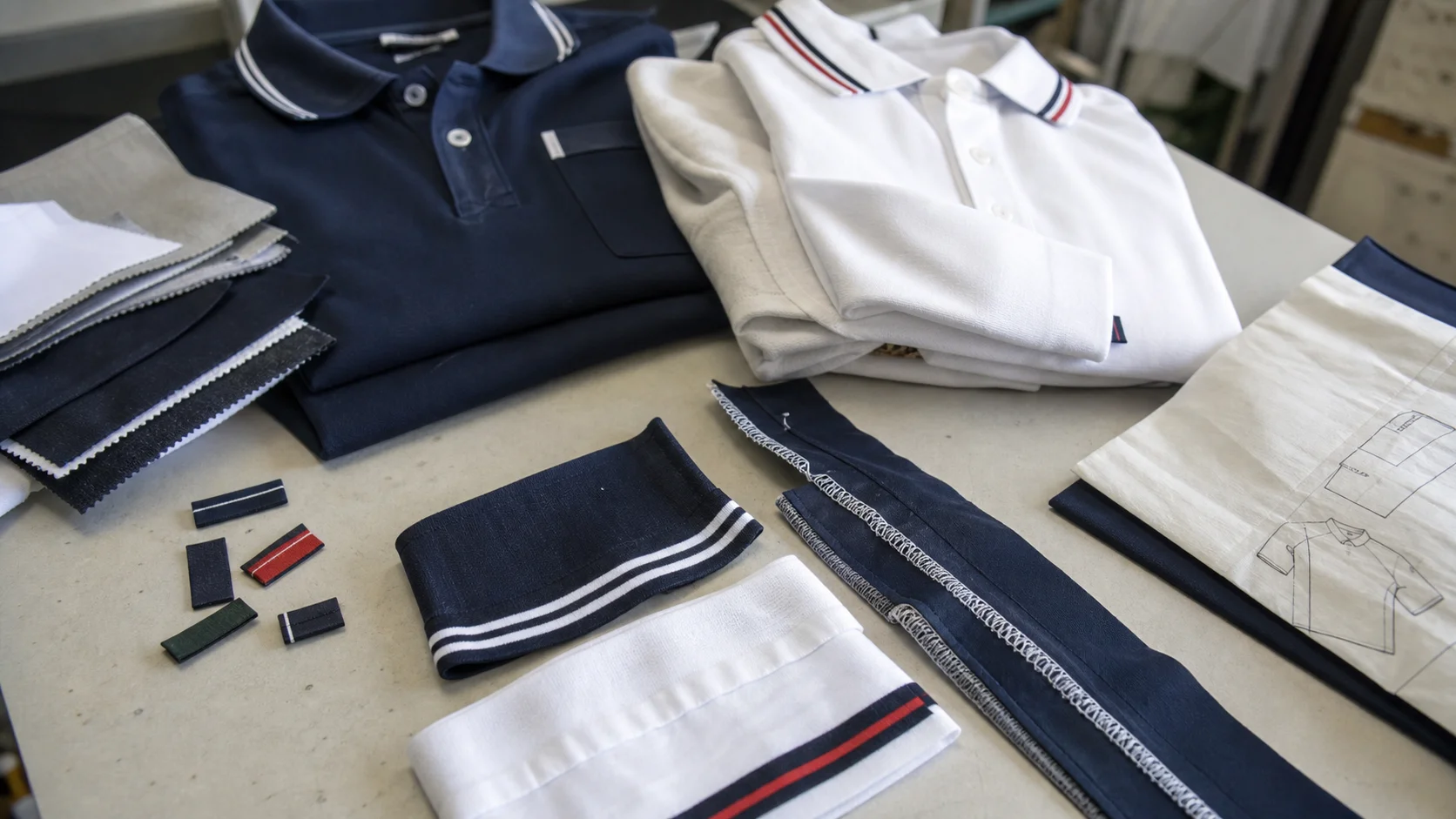
A 2500-word SEO outline for school operations teams evaluating micro embroidery tabs, seam construction, laundering durability, and approval criteria before ordering decorated uniforms or accessories.
Micro Embroidery Tabs: Seam Strength Review for Schools - Decoration & Printing manufacturing guide
For school operations teams, micro embroidery tabs look small on a garment, but they carry a larger sourcing question: will the decoration stay secure through repeated wear, laundering, storage, and daily handling by students? A tab may be used for house identity, year group marking, name personalization, club recognition, sports squad labeling, or a discreet brand detail on uniforms. The visual area is limited, yet the seam and attachment method still need to perform like the rest of the garment.
This review is written for buyers, uniform coordinators, procurement teams, and school operations staff who need a practical way to assess micro embroidery tab seam strength before approving bulk production. It focuses on garment durability, inspection risks, fabric and trim specifications, sampling steps, and sourcing tradeoffs. It does not treat embroidery as a purely decorative choice. For schoolwear, decoration must survive a demanding use cycle, and seam strength is part of that performance.
A micro embroidery tab is a small fabric or woven component carrying embroidered text, symbols, initials, color codes, or simple artwork. In schoolwear, it may be sewn into a side seam, inserted into a sleeve edge, placed near a hem, attached to a placket, or added as a small patch-like label. The size is often modest, commonly ranging from 15 mm to 50 mm wide depending on the design and garment type.
The word “micro” matters. Small tabs leave little room for error. If the artwork is too detailed, stitches can crowd. If the tab base is too soft, the embroidery can distort. If the attachment seam is too close to the tab edge, fraying or pull-out can occur. A tab may pass a quick visual review and still fail after repeated washing or student use.
School buyers often focus on the logo, color, or placement during approval. Those items are important, but they are not enough. The tab needs a stable base fabric, appropriate backing, controlled stitch density, secure edge finishing, and a seam construction suited to the garment fabric. A tab attached to a polo shirt behaves differently from a tab inserted into a blazer lining seam, sports top, fleece, sweatshirt, skirt, trouser waistband, or outerwear pocket.
For decoration and printing suppliers, micro embroidery tabs sit between branding, garment construction, and trim development. The best purchasing approach is to treat the tab as a component, not an afterthought. That means defining the tab specifications before bulk order placement, then checking actual stitched samples rather than relying only on digital artwork.
School uniforms are not worn gently. Students pull sleeves, tug hems, carry backpacks, sit on rough surfaces, wash garments frequently, and pass items between siblings. A weak tab seam can detach, curl, fray, or create a loose thread hazard. Even when the garment itself is acceptable, a failed tab can trigger complaints from parents and create extra workload for school offices or uniform shops.
Seam strength matters because small components are exposed to concentrated stress. A large embroidered badge spreads tension across a wider stitched field. A micro tab has a smaller attachment area, so the stress is focused along a short seam line. If the tab is placed in a high-movement area, such as the side seam of a polo or the cuff of a sweatshirt, the attachment needs enough margin and reinforcement to withstand repeated flexing.
Operations teams also need consistency. A school may accept a slightly different shade between production lots if it is controlled and documented, but loose tabs and seam failures are harder to defend. They look like poor manufacturing, even when the main garment fabric is suitable. For schools ordering across multiple sizes, year groups, and intake periods, quality variation becomes a practical administration problem.
Purchasing judgment: if a micro embroidery tab is used for identification, house allocation, or school branding, it should be tested and inspected as a functional trim. Treating it as a simple decorative add-on is where seam failures usually begin.
Placement affects seam strength as much as the tab itself. The same embroidered tab can perform well in one location and fail in another. School operations teams should review placement with the supplier during sampling, especially if the garment will be used for daily uniform rather than occasional events.
Side seam tabs are common on polo shirts, T-shirts, sweatshirts, and sports tops. They are discreet and easy to standardize. The main risk is pull-out if the tab is inserted into a stretch seam without enough seam allowance. On jersey fabrics, the seam expands during wear and washing. If the tab base does not flex or if the stitch line is too close to the edge, the fabric can pucker or the tab can distort.
Hem and cuff tabs are visible and tidy when executed well. They face more abrasion than buyers often expect. Students grip cuffs, roll sleeves, and rub hems against desks and sports equipment. A tab attached at a cuff should be checked for edge abrasion, stitch security, and comfort against the skin.
Tabs near plackets and collars can support house identity or premium uniform styling. These areas require clean sewing because the tab sits close to the face and is more visible. The seam should not twist the placket or pull the collar out of shape. Thicker tab bases can interfere with buttoning if placement is too close to the button line.
Pockets, jackets, fleeces, and outerwear can support stronger tab attachment because the base fabrics are often heavier. The tradeoff is bulk. If the tab is inserted into multiple fabric layers, the sewing line may become uneven unless the machine setup is adjusted. Heavy fabric does not automatically mean better seam strength; poor needle choice or inconsistent feeding can still damage the tab or garment.
Placement Typical Risk Buyer Checkpoint Side seam Pull-out on stretch fabrics Check seam allowance and stretch recovery after wash Cuff Abrasion and loose threads Review edge finish and hand feel Hem Curling or twisting Confirm tab stiffness against garment weight Placket Distortion near buttons Approve placement on size samples Pocket Bulk and uneven sewing Inspect stitching consistency across layersA reliable micro embroidery tab starts with specification discipline. School teams do not need to become textile engineers, but they should ask suppliers for enough detail to compare options and prevent preventable failures. The most important items are tab base fabric, backing, embroidery thread, edge finish, seam allowance, and attachment stitch type.
Common tab base options include woven polyester, cotton twill, poly-cotton twill, felt, canvas, grosgrain tape, or custom woven label base. Polyester bases usually offer good wash stability and color retention. Cotton and cotton-rich bases may give a softer, more traditional appearance, but shrinkage and edge fraying need closer control. Grosgrain can work well for small tabs because it has structure, though it may look too casual for formal uniform categories.
For schoolwear, the tab base should be compatible with the garment fabric. A stiff tab on a lightweight polo can scratch, curl, or pull the seam. A soft tab on a heavy fleece can collapse and make the embroidery look uneven. Buyers should request actual material swatches, not only artwork proofs.
Polyester embroidery thread is commonly preferred for school uniforms because it generally handles washing, abrasion, and colorfastness better than rayon in high-use garments. Rayon can offer a softer sheen, but it is not always the best choice for frequent laundering. Thread count, stitch density, and color matching should be confirmed before production.
For micro details, thread thickness is important. Fine lettering can close up if the thread is too heavy or the stitch density is too high. Small school crests and narrow initials may need artwork simplification. A good supplier should advise when a design is too small for clean embroidery rather than forcing the artwork into an impractical tab size.
Backing supports the embroidery during stitching and helps prevent distortion. Cut-away backing can improve stability, while tear-away backing may suit some firmer bases. Heat-seal backing can help control fraying or improve the back appearance, but it may affect hand feel and flexibility. School buyers should check whether backing edges are scratchy or visible after washing.
Micro tabs often fail at the edge before the embroidery itself fails. Edge options may include folded edges, heat-cut edges, overlocked edges, satin stitch borders, or woven selvedge edges. Heat-cut polyester can reduce fraying, but the edge may feel firm. Folded edges look cleaner and protect raw edges, yet they add bulk. Satin stitch borders look decorative but can become stiff on very small tabs.
Specification Preferred Control Point Risk If Ignored Tab base fabric Match stiffness to garment fabric Curling, distortion, poor comfort Embroidery thread Confirm fiber, color, and thickness Color fading, blurred details Backing Approve after wash and wear simulation Puckering, scratchy reverse side Edge finish Check fraying and bulk Loose edges, seam pull-out Attachment stitch Define stitch type and seam allowance Weak seam, inconsistent placementThe tab can be inserted into a seam, topstitched onto the garment, bar-tacked, folded over an edge, or combined with a label construction. Each method has a different durability profile. The right choice depends on garment fabric, tab size, desired visibility, production cost, and repair expectations.
A seam-inserted tab is placed into the garment seam during sewing. This gives a clean appearance because part of the tab is enclosed in the seam allowance. It can be strong when the seam allowance is sufficient and the fabric is stable. The risk is that the buyer may not see how much of the tab is actually captured in the seam. A narrow captured edge can pull out after washing or stretching.
For polo shirts and T-shirts, the seam should be tested for stretch and recovery. A tab inserted into a side seam should not create puckering. If the garment uses a high-stretch fabric, the tab may need a flexible base or a reinforced stitch area.
Topstitched tabs are sewn onto the garment surface. They are easier to inspect because the stitch line is visible. They can be repositioned more easily during development, and they may suit garments where seam insertion would disrupt construction. The tradeoff is appearance. Topstitching can look less integrated and may catch abrasion if the stitches are raised.
Bar tacks can improve security at tab ends, especially where pulling is expected. They are useful for tabs on sportswear, bags, jackets, or high-stress hems. The tradeoff is stiffness and visibility. On lightweight school polos, a heavy bar tack may feel bulky or create a hard spot.
Fold-over tabs wrap around an edge or seam. They can display embroidery on one side or both sides. They are visually distinctive but require accurate folding and alignment. If the fold is uneven, the tab looks cheap. If the tab is too thick, it can distort the garment edge.
Direct buying view: for daily school polo shirts, a clean seam-inserted tab with adequate seam allowance is usually the safest visual choice. For sportswear or outerwear, visible reinforcement may be worth the extra cost if the tab sits in a high-stress area.
A proper approval process protects both the school and the supplier. It reduces the chance of disputes after production and gives operations teams a clear standard for inspection. A digital mockup is not enough for micro embroidery tabs because it cannot show thread density, edge feel, seam capture, puckering, or wash behavior.
Start with artwork review. The supplier should confirm whether the crest, initials, house symbol, or text can be embroidered at the requested size. Very small lettering may need to be simplified or converted to a bolder form. Buyers should approve a realistic embroidery layout, not just a school logo file scaled down.
A strike-off is a sample of the embroidered tab before it is applied to the garment. This stage checks thread color, stitch clarity, base fabric, backing, and edge finish. It is useful for narrowing options, but it does not prove seam strength. A tab can look perfect as a loose component and still perform poorly once sewn into a garment.
The tab should be attached to the actual garment fabric or a production-equivalent sample. For school uniform programs, the safest approach is to approve the tab on the main garment category, such as polo, sweatshirt, blazer, fleece, or sports top. If the same tab is used across several garment types, each fabric group should be checked separately.
Wash testing does not need to be overly complex at the school approval stage, but it should be practical. A sample should be washed according to the garment care label, then checked for tab curling, color bleed, thread loosening, seam slippage, puckering, and edge fraying. For high-volume programs, several wash cycles are preferable before final approval.
The pre-production sample should represent the final confirmed material, embroidery thread, backing, tab size, placement, sewing method, and garment fabric. This sample becomes the reference for bulk inspection. School teams should keep a sealed or clearly documented approved sample for comparison when shipments arrive.
Minimum order quantities vary by supplier, decoration method, tab construction, and garment category. For micro embroidery tabs, buyers may see different MOQs for the tab component and the finished garment order. A supplier may accept a lower garment quantity if the tab is simple and uses stock base material, while custom base fabric or special thread colors may push the MOQ higher.
As a cautious guide, simple embroidered tabs may start around 100 to 300 pieces for sampling or small school batches, depending on the supplier setup. More efficient bulk pricing often begins around 500 to 1,000 pieces. Fully custom tabs with special base materials, woven structures, multiple color embroidery, or complex edge finishing may require 1,000 to 3,000 pieces or more. These are typical sourcing ranges, not fixed rules.
Schools ordering for one intake year may prefer lower MOQ flexibility, even if unit cost is higher. Larger school groups, academy trusts, or distributors may benefit from consolidated ordering because the decoration setup cost is spread across more units. The practical decision is not always the lowest unit price. It is the best balance between durability, inventory risk, and reorder consistency.
Order Type Typical MOQ Range Purchasing Note Sample tabs 10 to 50 pieces Useful for checking artwork and materials, often priced higher Small school batch 100 to 300 pieces Good for pilot programs or limited year groups Standard bulk run 500 to 1,000 pieces Better balance of setup cost and production control Custom trim program 1,000 to 3,000+ pieces More suitable for long-term uniform continuityCost drivers include stitch count, number of thread colors, tab size, base fabric, backing type, edge finish, attachment labor, placement tolerance, and inspection requirements. A very small tab is not automatically cheap. Micro embroidery can require careful setup, slower sewing, and more rejects if the artwork is detailed.
Schools should be careful with quotes that look unusually low. The supplier may be reducing cost through thinner backing, narrower seam allowance, lower stitch density, loose placement tolerance, or limited inspection. Those savings can disappear quickly if parents report failures after the first term.
Lead time depends on more than the embroidery machine schedule. It includes artwork conversion, tab material sourcing, sample development, approval time, garment availability, production slot, finishing, inspection, packing, and shipping. School operations teams should build in time for decision-making because delayed approvals can push production into peak season.
For a relatively simple micro embroidery tab on available garments, a development timeline may be around 2 to 4 weeks before bulk production, assuming artwork is ready and approvals are fast. Bulk production may add another 3 to 8 weeks depending on garment quantity, factory capacity, fabric availability, decoration complexity, and shipping method. Custom trim programs or new garment development can take longer.
Seasonality matters. School uniform demand often clusters around enrollment periods, summer preparation, and term starts. Suppliers may have tighter capacity during peak months. If a school wants new micro embroidery tabs introduced across multiple garments, the approval calendar should start well before the ordering deadline.
Teams planning wider uniform updates can review supplier capabilities through service information before requesting quotations. A useful starting point is the Fabrikn services page at https://fabrikn.com/services/, especially when comparing decoration, garment production, and finishing support under one sourcing workflow.
Micro embroidery tabs should be inspected at both component and finished garment stages. The main inspection risk is that a shipment may pass a general garment check while tab-specific issues are missed. Standard measurements and fabric checks do not always catch loose tab edges, poor seam capture, or embroidery distortion.
Before attachment, the tab should be checked for size, shape, color, thread trimming, backing, edge finish, and embroidery clarity. Tabs should be consistent from piece to piece. If the tab width varies, placement on the garment will also vary. If the edge finish is uneven, the tab may not sit flat after sewing.
During production, operators or line QC should check placement, seam allowance, stitch tension, skipped stitches, and puckering. In-line checks are important because tab errors can be difficult to repair once the garment is fully assembled. A tab caught too shallowly in a seam may not fail during packing, but it can fail later during wear.
Final inspection should include visual review and light manual handling. Inspectors should check whether the tab is straight, secure, smooth, and consistent with the approved sample. Loose threads should be trimmed without cutting into the seam. The reverse side should not scratch the wearer or create a bulky lump.
Inspection Point What to Check Failure Risk Tab dimensions Width, height, fold allowance Uneven placement and seam capture Embroidery clarity Lettering, crest detail, thread density Blurred identity or poor appearance Edge finish Fraying, melting, roughness Loose fibers and comfort complaints Attachment seam Stitch tension, seam allowance, skipped stitches Pull-out and seam weakness After-wash condition Curling, puckering, color change Early-life quality claimsInspection should also consider size range. A tab that looks balanced on an adult medium sample may look oversized on the smallest school sizes. Placement can shift visually across sizes if the grading rules are not defined. Operations teams should request size-set photos or samples when the tab placement is prominent.
For higher-risk orders, schools may ask the supplier about AQL inspection, in-line checks, and retained production samples. They can also request a simple pull check on tab attachments, though formal test methods should be agreed in advance. The goal is not to overcomplicate a small trim. The goal is to set a clear pass-fail standard before cartons arrive.
Seam strength can be reviewed through a mix of lab testing, supplier quality checks, and practical handling tests. Not every school order requires formal laboratory testing, but higher-volume programs and long-term uniform contracts should treat durability as part of product approval.
Formal testing may involve seam strength or seam slippage methods suitable for the fabric and construction. The exact standard should be selected by the supplier, testing lab, or buyer’s technical team based on the garment type. A lightweight knitted polo and a woven blazer do not behave the same way. Asking for the wrong test can create cost without useful insight.
Practical review can still catch many issues. Pull the tab gently in different directions. Check if the seam opens, the tab edge slips, the stitches crack, or the garment fabric distorts excessively. Wash and dry the sample according to care instructions. Then inspect again. If the tab curls sharply, feels rough, or starts to separate, bulk production should not proceed without adjustment.
Schools should avoid approving only one pristine showroom sample. A sample made slowly by a skilled sample machinist may not reflect bulk production unless the same method is documented. The pre-production sample should match the production setup, including machine type, stitch type, backing, operator instructions, and placement guide.
The best micro embroidery tab choice depends on the school’s priorities. If the goal is a premium, discreet identity detail, a seam-inserted woven or twill tab with restrained embroidery may be the right choice. If the goal is hard-wearing sports identification, a slightly larger reinforced tab may be safer. If the goal is very low-cost house labeling, embroidery may not always beat woven labels or heat transfer options.
Embroidery has strengths. It gives texture, permanence, and a higher perceived value than many flat decorations. It can align well with traditional schoolwear. It also has limits. Very fine details can blur, small text can become unreadable, and dense stitching can stiffen a tiny tab. Buyers should be willing to simplify artwork to improve durability and clarity.
For schools managing multiple suppliers, consistency is the main challenge. A tab produced by one supplier may not match another supplier’s thread shade, backing, or edge finish. If uniform items are split across vendors, the school should hold a central specification sheet and approved physical sample. Without that control, each reorder can drift.
If a school is still comparing decoration routes, supplier capability, or garment production planning, it may be useful to start a conversation through https://fabrikn.com/contact-us/. Buyers should share garment type, estimated quantity, artwork, placement idea, required delivery window, and any durability concerns from previous uniform orders.
Clear recommendation: approve micro embroidery tabs only after seeing them attached to the real garment fabric and washed at least once. A loose tab sample is useful, but it is not a seam strength approval.
Micro embroidery tabs are a good fit when the school wants a subtle detail with a stitched, durable appearance. They work especially well for house colors, discreet branding, club programs, premium uniform ranges, sports team editions, and small identity markers where a large crest would feel too dominant.
They are less suitable when the artwork is highly detailed, the delivery schedule is extremely tight, or the school needs frequent small reorders with many design variations. In those cases, woven labels, printed tabs, heat transfers, or direct embroidery may be more practical. The cheapest solution is not always the best, but the most decorative solution is not always the most operationally efficient either.
For long-term uniform programs, micro embroidery tabs can support brand consistency if the school locks the specification early. That includes tab dimensions, base material, embroidery thread references, backing type, edge finish, placement from seam or hem, attachment stitch, tolerance, and care instructions. The more repeat orders the school expects, the more valuable this documentation becomes.
School operations teams should also review supplier fit. A supplier that understands both decoration and garment construction is better positioned to prevent tab seam failures. Buyers can review company background and operating focus through https://fabrikn.com/about-us/ when assessing whether a sourcing partner is aligned with school uniform requirements.
A clear request for quotation should make the supplier’s job easier and reduce assumptions. Vague requests such as “small embroidered tab on polo” leave too much room for interpretation. A better request defines the garment, fabric, tab purpose, artwork, placement, quantity, delivery date, and durability expectations.
RFQ Item What to Provide Why It Matters Garment type Polo, sweatshirt, blazer, fleece, sports top, trouser, skirt Attachment method depends on fabric and construction Fabric details Fiber content, weight, knit or woven structure Controls stretch, seam tension, and tab compatibility Tab artwork Logo, text, colors, required size Determines embroidery feasibility and stitch density Placement Side seam, hem, cuff, placket, pocket, waistband Defines stress level and inspection tolerance Quantity Initial order and expected reorders Affects MOQ, pricing, and trim stock planning Testing expectation Wash review, pull check, lab testing if required Creates a shared durability standardSchools should also state whether garments are for daily uniform, sports, events, staff apparel, or retail sale through a school shop. Daily uniform requires more conservative durability decisions than one-off event apparel. Sportswear needs more stretch and abrasion review. Staff apparel may prioritize appearance and comfort over extreme student-use durability.
Before bulk production, the school operations team should have a clear answer to five questions. Is the artwork legible at actual tab size? Does the tab base suit the garment fabric? Is the attachment seam strong enough for the placement? Does the tab still look acceptable after washing? Can the supplier repeat the approved result across all sizes and future reorders?
If any answer is uncertain, slow down the approval. A small delay at sampling stage is easier to manage than a shipment of uniforms with weak tabs. The most common problems are not complicated: oversized artwork, poor seam allowance, mismatched stiffness, dense stitching, and limited wash review. Each can be corrected before bulk production if the buyer asks the right questions early.
Micro embroidery tabs can be a strong decoration choice for schoolwear when they are specified properly. They offer a neat, durable, and professional identity detail. The buying discipline is to treat them as construction-sensitive trims, not as simple decoration. For school operations teams, that distinction is what protects seam strength, parent satisfaction, and reorder consistency.
Get a free quote from Fabrikn — your trusted B2B clothing manufacturer with 10+ years of experience. MOQ as low as 200 pieces.
Get a Free Quote →A micro embroidery tab is a small fabric trim with embroidered artwork, text, initials, or color coding. It can be inserted into a seam or sewn onto a garment surface. Schools use it for discreet branding, house identity, sports programs, or uniform differentiation.
They can be strong enough if the base fabric, backing, edge finish, seam allowance, and attachment stitch are properly specified. The tab should be tested on the actual garment fabric and reviewed after washing before bulk approval.
The main risk is tab pull-out from narrow seam capture or poor attachment stitching. Other risks include edge fraying, puckering, curling, scratchy backing, and loose embroidery threads after laundering.
Typical small-batch MOQs may range from 100 to 300 pieces, while better bulk pricing often starts around 500 to 1,000 pieces. Custom trims may require 1,000 to 3,000 pieces or more depending on material and design requirements.
A digital mockup is useful for layout, but it should not be the final approval. Schools should approve an actual embroidered tab, then a garment-attached sample, ideally after at least one wash review.
Polyester embroidery thread is commonly preferred for schoolwear because it generally offers good wash durability and colorfastness. Final selection should consider the garment care label, artwork detail, color requirements, and supplier capability.
It may be possible, but each garment type should be checked separately. A tab that works well on a jacket may feel too stiff on a lightweight polo, while a soft tab may not sit cleanly on heavy fleece or outerwear.
Ask for tab size, base fabric, backing type, thread type, edge finish, attachment method, seam allowance, placement tolerance, sample approval process, MOQ, lead time, and inspection plan. These details reduce the risk of seam failure and inconsistent reorders.