
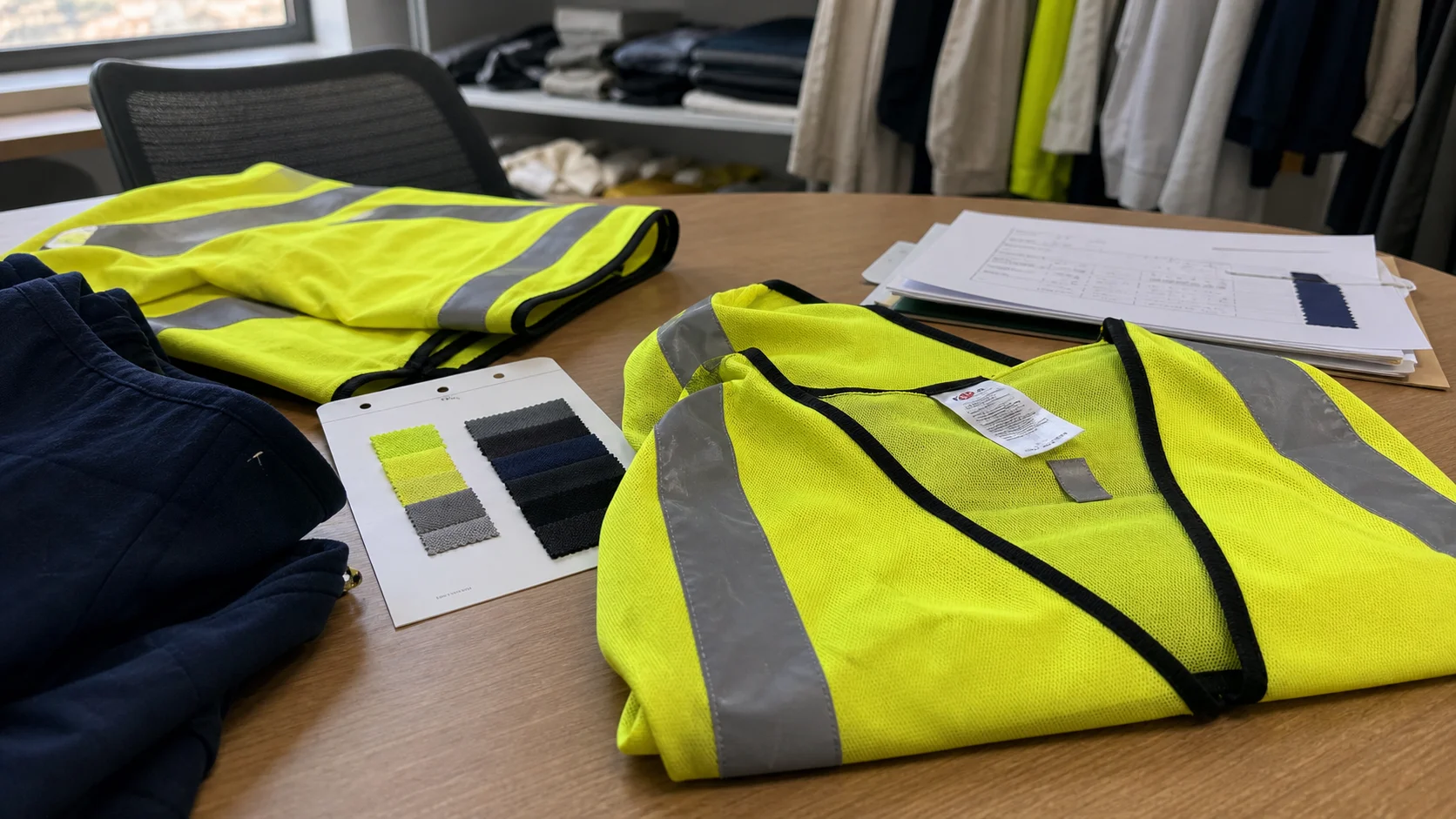
A sourcing-focused outline for evaluating reorder risks when buying safety vests for cleaning crews, including sizing gaps, ANSI visibility needs, logo decoration durability, lead times, MOQ pressure, and cost controls.
Safety Vest Reorder Risk Review for Cleaning Crews - MOQ, Cost & Sourcing manufacturing guide
Category: MOQ, Cost & Sourcing
A cleaning crew safety vest reorder risk review is not just an administrative purchasing step. It is a practical check on whether the next production run will match the previous order, arrive on time, meet visibility requirements, and stay within the buyer’s expected unit cost. Cleaning crews often work in locations where visibility matters: commercial buildings, parking areas, loading zones, event venues, retail back rooms, industrial corridors, and public-facing service areas. A low-cost vest can still create operational risk if the sizing changes, reflective tape peels, the color shifts, or the order arrives after a contract start date.
Reorders are often treated as easy repeat buys. That is where mistakes enter. Suppliers may change fabric lots, tape grades, zipper quality, hook-and-loop fasteners, print placement, packaging, or even size grading if the buyer does not lock the specification. The first order may have been approved by one procurement team, while the reorder is placed by another. In uniform programs, that gap can create mismatched garments across the same crew.
For cleaning companies, facility service providers, janitorial contractors, and distributors serving those customers, the reorder should be reviewed like a controlled production project. The buyer needs to confirm the safety standard target, garment construction, decoration method, MOQ, delivery schedule, stock buffer, inspection plan, and acceptable variance. The goal is not to overcomplicate a simple vest purchase. The goal is to prevent small sourcing assumptions from becoming expensive field problems.
A reorder is safest when the buyer treats the previous vest as a reference sample, not just a memory of what was ordered last time.
Companies managing multiple uniform categories can also benefit from a broader sourcing structure. If safety vests are purchased together with polos, work pants, aprons, jackets, or other crew apparel, a consolidated development and reorder process may reduce inconsistency. Buyers comparing supplier capabilities can review apparel production support through resources such as Fabrikn services, especially when the program involves more than one garment type.
Cleaning crews do not all need the same safety vest. A vest used by a night cleaning crew in a quiet office tower has different priorities than one used by a janitorial crew crossing a loading dock or servicing a large retail parking area. The reorder risk review should start with where the vest is worn, how long it is worn, and what conditions it faces.
Indoor crews may need lightweight, breathable vests that identify staff and improve visibility around building users. In this use case, branding, comfort, and easy laundering may be more important than heavy-duty construction. The risk is often overspending on a specification that is too rugged, or under-specifying print durability for frequent washing.
Exterior crews face higher visibility demands. These workers may be near moving vehicles, delivery vans, ride-share traffic, or maintenance equipment. Reflective tape quality, fluorescent color consistency, and compliance with the buyer’s required visibility standard become more important. A reorder that swaps reflective tape or changes garment color can create a real safety and compliance concern.
Cleaning teams working in warehouses, factories, or logistics areas may need vests compatible with site rules. Some facilities require specific vest colors by department or visitor status. Others require breakaway designs, ID pockets, or higher-visibility tape layouts. If the reorder does not match the site requirement, the crew may not be allowed to work until replacements are arranged.
Event cleaning crews need visibility and identification. Color coding can separate cleaning staff from security, maintenance, vendors, and volunteers. The sourcing risk is often timing: events have fixed dates, and late delivery can force expensive local purchases. Reorders for event crews should be placed with more schedule discipline than routine stock replenishment.
A cleaning crews safety vest reorder risk review should examine the full chain from specification to delivery. The most common problems are not dramatic. They are small changes that become visible only when the new vests are worn next to the old ones.
Risk Area Typical Problem Purchasing Judgment Fabric color Fluorescent yellow, orange, or lime shade differs from prior order Approve a new fabric swatch against the retained reference sample before bulk cutting Reflective tape Tape width, brightness, placement, or wash resistance changes Specify tape width, layout, and performance expectation in writing Sizing New run fits smaller or larger than previous order Keep a size spec sheet with garment measurements and tolerances Branding Logo print color, position, or size shifts Use approved artwork files and a placement diagram, not verbal instructions MOQ Supplier raises MOQ or charges more for small repeat orders Forecast usage and group replenishment to avoid uneconomic short runs Lead time Delivery misses crew onboarding or contract start date Build reorder triggers around stock levels, not emergency demand Packaging Sizes mixed poorly, cartons not labeled, site allocation becomes slow Request size breakdown labels and site packing instructionsThe biggest tradeoff is between speed and control. A buyer can often receive generic stock vests quickly, but customized safety vests need more approval points. If the cleaning crew only needs non-branded emergency stock, a generic safety vest from inventory may be acceptable. If the vest is part of a brand uniform or site compliance program, the reorder should not bypass sample approval and inspection simply to save a few days.
MOQ planning is central to reorder risk. Safety vests are simple garments compared with jackets or technical uniforms, but MOQs still vary by fabric type, color, customization, trim choice, and supplier model. A stock-based supplier may accept low quantities for blank vests. A cut-and-sew manufacturer producing custom color, custom tape layout, private labels, or printed branding will usually need higher volume to keep unit costs reasonable.
Typical MOQ ranges can look like this, although they should always be confirmed with the supplier before planning the purchase:
Small cleaning crews may not need 1,000 vests at once. That does not mean custom production is impossible, but the buyer should understand the cost tradeoff. A 100-piece reorder with custom print may carry setup charges, higher unit costs, and limited negotiation room. A 500-piece reorder may reduce the unit price, but it increases cash tied up in inventory and creates storage risk if staff turnover, branding, or contract requirements change.
A practical reorder quantity should be based on four inputs: active staff count, expected turnover, garment replacement rate, and contract pipeline. Cleaning crews often experience size imbalance over time. Medium and large sizes may move faster than small or 3XL sizes, depending on the workforce. Reordering the same size ratio every time can leave the buyer with dead stock. A better approach is to count remaining inventory by size before confirming the next size breakdown.
For active uniform programs, a buffer of 10% to 20% above current staff count is common for basic replenishment. That buffer may need to be higher if the company frequently starts new contracts, hires seasonal labor, or supports multiple sites. Buyers should be careful with oversized buffers when the vest includes a customer logo or site-specific wording. Branded inventory can become obsolete quickly if the contract ends or the logo changes.
Safety vest cost is shaped by more than fabric and stitching. Buyers should review each cost driver before assuming the reorder price will match the last invoice. Raw material prices, labor cost, exchange rates, freight conditions, and supplier workload can all affect the final quote. The more customized the vest, the more variables matter.
Common vest fabrics include polyester mesh, solid polyester, and sometimes lightweight woven polyester. Mesh is breathable and comfortable for indoor or warm conditions. Solid polyester can support sharper printing and may feel more substantial, but it can be warmer. Heavier fabric may look better and last longer, but it increases cost and may reduce comfort for cleaners working long shifts.
Reflective tape is not a place to hide cost reductions without approval. Buyers should specify tape width, color, placement, and performance expectation. Common tape widths include 2 inches or 5 centimeters, but the final choice should align with the applicable safety requirement and intended use. Lower-cost tape may look acceptable in a photo and perform poorly after washing or abrasion.
Hook-and-loop closure is common because it is inexpensive and easy to use. Zippers can give a cleaner look and better security but add cost and introduce a failure point if low-grade zippers are used. Snaps are possible but may be less convenient for fast changing. For cleaning crews, hook-and-loop is often practical unless the vest needs a more uniformed retail appearance.
Pockets, badge holders, radio loops, pen slots, and clear ID windows add utility but also increase sewing time and inspection points. If the crew only needs visibility and identification, too many features may be unnecessary. If the crew carries access cards, small tools, or task checklists, pocket placement should be tested during sample approval.
Screen printing is cost-effective for simple logos and larger runs. Heat transfer can work well for smaller branded orders and complex artwork, but durability depends on transfer quality and application control. Embroidery is less common on lightweight safety vests because it can distort mesh or add unnecessary cost, though it may be used on solid fabric panels. The buyer should match decoration method to wash frequency, fabric type, and brand expectations.
Safety vests are lightweight but can still take carton volume, especially if individually bagged or packed by site. Air freight may be acceptable for urgent small quantities, but it can erase savings on low-cost garments. Ocean or ground freight is better for planned replenishment. The safest cost decision is to quote product and freight together, not as separate afterthoughts.
A reorder should include a written specification sheet. It does not need to be complicated, but it must be specific enough that a supplier cannot substitute key materials without approval. “Same as last time” is not a specification. It is an invitation for interpretation.
At minimum, the reorder spec should include:
Cleaning crews may also need easy-care garments. Care instructions should be realistic. If the vest cannot tolerate common laundry practices, supervisors need to know before rollout. A vest that looks fine at delivery but fails after several washes is still a sourcing failure. Wash testing on a pre-production sample is a sensible step when the buyer expects frequent laundering.
Where safety standards apply, buyers should not rely on casual descriptions such as “high-vis style” or “safety color.” The purchase order should reference the required standard or buyer-specific requirement. Standards can vary by market and work environment. A supplier should be able to provide relevant documentation if the vest is sold as compliant. If documentation is unavailable, the buyer should treat the vest as visibility apparel, not certified safety apparel.
Sample approval is where reorder problems can be caught cheaply. Even if the previous order was successful, a new sample may be needed when the supplier changes material lots, production line, trims, artwork, or sizing. Buyers often skip this step to save time, then lose more time resolving defects after delivery.
The buyer should retain at least one approved vest from the previous order. This reference sample is used to compare color, tape layout, print placement, trim quality, sizing, and general construction. Photos help, but they are not enough for shade, handfeel, and reflective performance checks.
Before sewing a full sample, the supplier should confirm available fabric and trim. This includes fluorescent fabric shade, reflective tape, closure, labels, and packaging materials. If the original fabric is unavailable, the supplier should submit alternatives for approval before production planning.
A fit sample or size set helps confirm that the reorder matches expected measurements. For simple vests, buyers may only require one or two key sizes for approval. For programs with a wide size range, a size set is safer. The buyer should check chest width, length, armhole shape, shoulder width, and closure overlap.
A print or transfer strike-off should be approved before bulk decoration. This is especially important for logos, reflective wording, crew names, or site identifiers. The approval should check artwork size, color, edge sharpness, placement, and adhesion.
The pre-production sample should represent the final garment. It should use actual bulk fabric, actual trim, actual logo method, and final packaging where possible. This is the sample the buyer approves before cutting bulk fabric. If the supplier cannot provide a true pre-production sample, the buyer should understand what parts are still provisional.
Approval should be documented in writing. A simple email approval with sample photos, measurements, and noted exceptions is better than verbal confirmation. The purchase order should state that bulk production must match the approved sample within agreed tolerances.
Lead time depends on stock availability, customization, production capacity, approval speed, and freight method. Buyers should separate sample lead time, production lead time, inspection time, and shipping time. Treating lead time as one vague number leads to poor planning.
Order Type Typical Lead-Time Range Key Dependency Blank stock vest Several days to 2 weeks Inventory availability and domestic delivery speed Stock vest with simple logo 1 to 4 weeks Artwork approval, decoration queue, and order size Custom cut-and-sew vest 4 to 8 weeks or more Fabric sourcing, sample approval, production schedule, and freight Special trim or certified requirement 6 to 10 weeks or more Material testing, documentation, trim supply, and inspection requirementsThese ranges are only planning references. A supplier with available stock and open decoration capacity may ship faster. A supplier waiting for reflective tape, fabric dyeing, or artwork corrections may take longer. Public holidays, peak production seasons, and freight congestion can extend the schedule.
The safest reorder trigger is based on inventory level and expected consumption, not on the date when the last vest is issued. For example, if a cleaning company uses 80 vests per quarter and the full replenishment cycle takes six weeks, waiting until only 20 vests remain creates a high risk of stockout. The better approach is to set a reorder point that covers lead time plus a buffer for defects, hiring spikes, and approval delays.
Urgent reorders are possible, but they usually force compromise. The buyer may need to accept a higher price, substitute a stock style, reduce customization, or ship by air. In some cases, buying a temporary generic vest is the right move while the correct branded reorder is produced. That is not ideal, but it is better than delaying crew deployment or sending workers into visibility-sensitive areas without proper apparel.
Inspection is not only for complex garments. Safety vests can fail in several practical ways, and the defects may not be obvious from a supplier’s carton photo. A cleaning crew reorder should include inspection checks that match the risks of the garment.
For low-value garments, buyers sometimes avoid third-party inspection to save cost. That may be reasonable for a small domestic stock order from a reliable supplier. For larger custom orders, especially those shipped internationally or allocated to multiple sites, inspection is usually cheaper than sorting defects after arrival. The decision should be based on order value, customization level, past supplier performance, and consequences of failure.
Inspection should also check count accuracy. Short shipments are frustrating when the buyer has assigned vests to specific crews. Size substitution is another risk. A supplier may ship extra large sizes to compensate for missing mediums, but that does not solve the buyer’s operational problem. The purchase order should state whether substitutions are allowed. In most uniform programs, unapproved size substitution should not be accepted.
A short supplier questionnaire can prevent many reorder problems. Buyers do not need a long audit-style document for every vest order, but they should ask direct questions before confirming production.
The supplier’s answers should be specific. A response such as “same quality” is not enough if the order depends on reflective tape performance, exact shade, and consistent sizing. Buyers should request photos, swatches, sample measurements, and written confirmation where risk is meaningful.
Supplier fit also matters. Some suppliers are best for fast stock distribution. Others are better for custom uniform programs. A cleaning company that needs simple emergency safety vests may not need a full apparel manufacturing partner. A distributor serving multiple cleaning clients, or a contractor building a consistent branded uniform program, may need stronger development, documentation, and production control. Buyers who need help structuring a program can reach out through Fabrikn’s contact page to discuss sourcing requirements and next steps.
A controlled safety vest reorder does not need to be slow. It needs to be sequenced properly. The buyer should move from usage review to specification control, then sample approval, then production, then inspection and delivery. Skipping steps creates hidden risk.
Count vests by size, color, site, and condition. Note which sizes are moving fastest. Check whether damaged vests failed because of normal wear, washing, reflective tape issues, closure failure, or poor fit. This information should guide the reorder, not sit in a warehouse spreadsheet unused.
Ask whether the vest is still being used in the same environment. A cleaning crew may have moved from indoor office work to parking lot service or from day shift to night shift. If the risk environment changed, the reorder specification may need to change too.
Use a written spec sheet with fabric, trims, measurements, artwork, and packaging. Attach approved artwork and previous sample photos. If the buyer has a retained physical sample, reference it in the purchase order and use it during sample approval.
Ask for pricing at two or three quantity levels. For example, a buyer may compare 300, 500, and 1,000 pieces. The lowest unit cost is not automatically the best choice. The right quantity balances unit price, cash flow, storage, staff growth, and risk of obsolete branding.
Approve fabric, reflective tape, closure, logo, and sizing before bulk production. If timing is tight, prioritize the highest-risk items: reflective tape, color, logo placement, and size measurements. Do not approve bulk production from a photo alone if the order is large or compliance-sensitive.
Request basic milestone updates: material ready, cutting started, sewing underway, decoration completed, packing started, inspection scheduled, shipment booked. These updates do not guarantee success, but they help identify delays early enough to react.
Use a checklist based on the approved sample and purchase order. For larger orders, consider inspection before final payment or release. For smaller orders, at least request clear production photos, carton photos, and measurement checks by size.
After delivery, inspect a sample of cartons before distributing all vests. Ask supervisors for fit and durability feedback within the first few weeks. Good feedback improves the next reorder and helps separate supplier defects from normal wear.
The best reorder process is repeatable. Each cycle should leave better records for the next buyer, supervisor, or sourcing manager.
Safety vest reorders often come down to three purchasing priorities: low cost, fast delivery, and controlled specification. Buyers can sometimes achieve two of the three, but all three are harder when the vest is customized.
If cost is the priority, order a larger quantity, simplify the design, use available fabric, avoid unnecessary pockets, and plan freight early. If speed is the priority, use stock colors, reduce custom trims, approve artwork quickly, and consider local decoration. If control is the priority, allow time for samples, documentation, inspection, and supplier clarification.
For many cleaning crews, the best choice is a middle path: a standard high-visibility vest body with controlled logo placement and a sensible inventory buffer. This avoids overengineering while still protecting brand consistency and worker visibility. A fully custom vest makes sense when the buyer needs specific colors, site identification, private labeling, or a uniform program across many service categories.
Buyers should also consider whether the safety vest is part of a broader apparel identity. Cleaning crew uniforms often include shirts, pants, jackets, caps, aprons, or weather gear. When each item is sourced separately with different specifications and approval processes, inconsistencies grow. A more structured sourcing partner can help organize materials, decoration, size grading, and reorder records. Buyers evaluating supplier background and business fit can review Fabrikn’s about page for more context.
Some supplier responses deserve extra caution. A low price is not useful if the supplier cannot explain what changed from the previous order. A fast lead time is not reassuring if materials have not been confirmed. A sample photo is not enough if reflective tape, sizing, and logo durability are the main risks.
None of these signs automatically means the supplier is unreliable. They do mean the buyer should pause and clarify before releasing bulk production. The cost of delay at the approval stage is usually lower than the cost of receiving unusable inventory.
Before placing a cleaning crews safety vest reorder, buyers should confirm the following points:
A safety vest is a basic garment, but a failed reorder can disrupt crew readiness, brand appearance, and site compliance. The buyer’s job is to remove ambiguity before production starts. Clear specifications, realistic MOQ planning, sample approval, and inspection discipline are the most reliable tools for keeping the reorder under control.
Get a free quote from Fabrikn — your trusted B2B clothing manufacturer with 10+ years of experience. MOQ as low as 200 pieces.
Get a Free Quote →It is a purchasing review that checks whether a repeat order of safety vests will match the required specification, quantity, price, lead time, and quality expectations. It focuses on risks such as fabric changes, reflective tape substitution, sizing inconsistency, logo errors, MOQ changes, late delivery, and inspection failures.
Blank stock vests may be available from around 50 to 200 pieces. Branded stock vests often start around 100 to 300 pieces. Custom cut-and-sew vests commonly require 300 to 1,000 pieces or more, depending on fabric, color, trims, and packaging. These are typical planning ranges, not fixed rules.
Not every small reorder needs a full new sample, especially if it uses confirmed stock goods. A new sample is strongly recommended when fabric, reflective tape, sizing, decoration, supplier, or compliance requirements may have changed. Larger custom reorders should usually include pre-production sample approval.
Price increases can come from smaller reorder quantities, fabric cost changes, reflective tape upgrades, new artwork setup, higher labor cost, packaging changes, freight changes, or supplier capacity limits. Buyers should request itemized clarification when the reorder price differs from the previous order.
The reorder should be triggered before inventory becomes low. For stock branded vests, buyers may need several weeks. For custom production, 4 to 8 weeks or more is common, depending on sample approval, material availability, production scheduling, inspection, and freight. A buffer is important when new contracts or hiring spikes are expected.
Inspection should check fabric shade, reflective tape placement, measurements, logo quality, closure function, stitching, count accuracy, size ratio, labels, and packaging. For site-based distribution, carton labels and allocation accuracy should also be checked.
Generic stock vests can be acceptable for temporary use, emergency coverage, or crews without branding requirements. They may not be suitable when a client requires specific colors, logos, visibility standards, or uniform consistency. The purchasing decision should match the worksite risk and contract requirement.
The biggest mistake is assuming the supplier will automatically reproduce the last order without a written specification. Buyers should confirm fabric, reflective tape, sizing, decoration, MOQ, lead time, and inspection requirements before bulk production begins.