
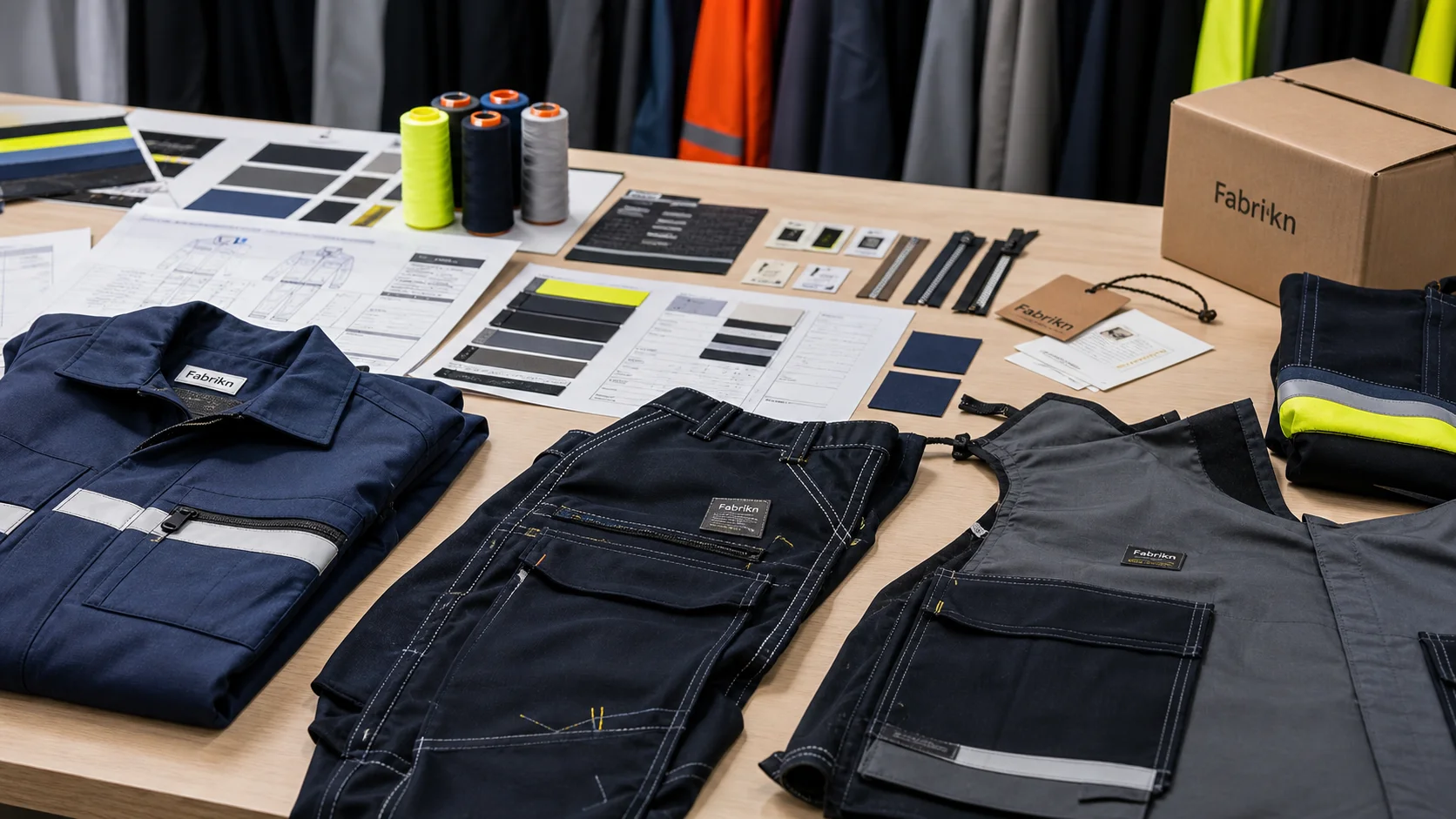
Ecommerce Apparel Box Inserts with checks for samples, fit, MOQ, QC evidence, pricing terms, and delivery risk.
Fast answer: Ecommerce Apparel Box Inserts: Message, Paper, Size, and Unboxing should be judged by production evidence, not by a generic sourcing promise. The buyer needs sample proof, cost breakdowns, QC checkpoints, and delivery buffers in writing.
Ask for recent sample photos, measurement tolerances, fabric or print test assumptions, decoration test notes, packing examples, and a named inspection checkpoint. These details show whether the team can repeat an approved sample at bulk volume.
Separate garment cost, decoration, labels, packaging, sampling, testing, freight, and rush charges. When every cost line is visible, it becomes easier to reduce colorways, adjust size depth, or reserve more time for sampling.
A box can promise luxury; the insert is what convinces the customer it was true. I have watched a $25 tee arrive looking cheap and a $180 knit set arrive looking expensive, all because the insert did the quiet work. For custom apparel box inserts for ecommerce brands, the first job is plain: stop movement before it turns into wrinkles, scuffs, or returns. Research from packaging groups and retailer testing keeps pointing to the same blunt fact: a better fit cuts damage, and damage drives returns. Even a 5% drop in return rate can move margins more than a prettier print ever will. That is why custom apparel box inserts for ecommerce brands are not decoration. They are protection, perception, and math.
First 10 seconds. That’s the window.
Buyers notice movement right away. They notice whether the garment slides, whether a necklace charm scratches the print, whether a folded collar lands with a hard crease. I have seen premium boxes open to reveal a wrinkled shirt because the pack-out left 18 mm of empty space on each side. Small error. Large cost. A loose tee can shift 2-3 cm during parcel handling, and that is enough to crush corners, loosen tissue, or smear a foil logo.
Factory visits make the hierarchy obvious. A clean paperboard insert from the right manufacturer often reads more luxurious than a thick box with sloppy tolerances. Structure does that. For a brand selling at $25, the insert has to stop wrinkling and keep the price point honest. At $75, it needs a tighter reveal, because buyers compare it with department-store packaging. At $180, the expectation gets almost museum-like: no scuffs, no movement, no visual noise. The box can be simple. The fit cannot.
Low-cost apparel often needs better protection than luxury pieces because it ships faster, in larger volumes, and with thinner margins for error. A $25 bodycon dress packed in a poly mailer may travel 800 miles with no problem, then fail on a 2-mile last-mile route because the fold lines were under tension. A $75 sweatshirt with heavy brushed fleece may look forgiving, yet it traps pressure marks if the insert is too rigid. A $180 silk blouse needs delicate support, but not bulk. I have seen brands use inserts to hold accessories in place, reduce accessory loss by 100%, and cut re-pack labor by 15-20 seconds per order. Small numbers. Real money.
According to World Trade Organization trade data, trade and logistics costs still shape what reaches the customer in sellable condition. That is why I treat custom apparel box inserts for ecommerce brands as both a protection tool and a brand signal. The best ones do both without shouting.
Paperboard is the workhorse for custom apparel box inserts for ecommerce brands. At 300-600 gsm, it holds folded tees, socks, and light accessories with clean edges and solid print quality. Corrugated inserts, usually E-flute or B-flute, bring crush resistance for bulkier knits or shipping boxes that may stack 6-8 high in transit. Molded pulp fits sustainability-led brands, especially for flat-pack subscription boxes, because it gives structure without a glossy look. Foam still shows up for fragile embellishments, though I see it less in fashion than I did 5 years ago. Fabric-wrap and sleeve-style supports work best for premium lingerie, scarves, and delicate sets that need a softer reveal.
Tees do not need the same support as beaded trims or heavy hardware. A folded French terry 320 GSM hoodie behaves differently from a lightweight rib tank. Underwear sets need containment, not compression. Accessories need separation, so metal clasps do not mark fabric during a 4-7 day transit cycle. In my visits to a factory in Vietnam and a supplier network in Portugal, the smartest pack-outs were usually the simplest: one insert, one fold path, one clear pocket for a care card.
Thicker is not always better.
I watched one brand move from 400 gsm paperboard to a rigid corrugated build, and damage claims went up because the insert stopped flexing with the garment. Extra stiffness created pressure points, then the carton had no room to absorb shock. Over-engineering can be a risk, not a safeguard.
For sustainability, molded pulp and FSC paperboard are usually easier to defend than laminated foam structures. For printability, paperboard wins. For die-cut flexibility, paperboard and corrugated both offer strong options, while molded fiber is more limited. In flat-pack shipping, the insert must fold or stack efficiently; in subscription boxes, quick assembly matters because labor can eat a 3-5% margin fast. If you are building wholesale programs or buying in bulk, the production setup should match the actual pack-out, not an idealized mockup. For a brand building custom bra manufacturing collections, I would choose softer edge control and smaller cavity sections than I would for outerwear.
Costs swing more than buyers expect. A low-complexity paperboard insert can land around $0.18-$0.45 per piece at 5,000 units, while a corrugated custom insert may sit near $0.35-$0.90 depending on flute, print, and die complexity. Molded pulp often starts higher at small runs, around $0.60-$1.20, then gets competitive at scale. Premium fabric-wrap or specialty inserts can jump to $1.50-$3.50 per unit fast. If your box is $4.00 to ship, that matters. If your item sells at $180, the same cost is easier to defend.
The setup line is where new brands get surprised. Dielines can cost $75-$250. Tooling for custom cutting may add $150-$600. Samples often run $25-$120 each, and rush sampling can add another $40-$80. A domestic supplier might deliver first samples in 7-10 days and mass production in 2-3 weeks. Offshore production usually takes 3-4 weeks for sampling and 5-8 weeks for bulk, then freight adds another 7-28 days depending on mode. That is the true clock.
I use a simple comparison frame before I sign anything:
MOQ matters more to startups than to established stores. A brand selling 300 units a month cannot absorb 10,000 inserts without storage costs and cash tied up for 6-9 months. A high-volume retailer may get a lower unit price, but only if the artwork stays stable and the forecast is real. I have seen brands pay more in storage than in manufacturing because they ordered 2 sizes too many and forgot assembly labor. Add 8-12 cents per insert for hand insertion, and the landed cost changes quickly.
Freight and setup charges can be half the story. A quote of $0.42 per unit may become $0.61 landed once you add cartonization, palletization, customs, and 1-2% damage allowance. For brands with full cut-and-sew programs, I often advise integrating the packaging brief with the garment brief. That is where cut and sew manufacturing helps, because the insert can be designed around actual fold dimensions, not guesses.
Apparel does not usually fail like glass. It fails quietly. A folded sleeve gets compressed. A zipper scratches a knit. A carton shifts inside the mailer, and the insert lets the product slide 15-20 mm on one side while the other side stays tight. That imbalance creates wrinkles, imprinting, and edge crush. In transit, vibration is constant. On a parcel route, a box may take hundreds of small jolts before it reaches the door.
Custom inserts stabilize the load by controlling movement. They hold the garment at the fold line, anchor accessories, and reduce carton shift in the outer shipper. On boxes I inspected in the UK and India, the most common failure was poor tolerance, not bad materials. A die cut that is 3 mm too wide sounds minor until a silk camisole slides into the void and arrives creased at the shoulders. Quality control should include drop tests from 76 cm, compression tests, and fit verification against the actual production garment, not the sample.
Moisture is the other hidden problem. A paper insert can survive normal humidity, but if it sits in a container at 70-80% relative humidity for 10 days, the board softens and loses recovery. That matters for premium shirting and knitwear because the product needs support at the exact moment the box opens. If the insert bends, the garment bends with it.
Better protection means fewer refunds, fewer replacements, and less carbon waste from reshipments. I have seen a 1.5% drop in damage-related returns save a mid-sized brand thousands of dollars per quarter, especially when each replacement includes outbound freight, labor, and another carton. The packaging looks small. The footprint is not.
Presentation often beats ink coverage. A restrained insert with a sharp fold, a crisp cavity, and one strong reveal can feel more expensive than a busy full-bleed graphic. I have seen this in the US and Italy alike. Buyers respond to control. They respond to a neat opening sequence, a garment that sits level, and a tissue layer that does not wrinkle at the corners.
North American brands tend to favor bolder logos, punchier color, and clearer callouts like size or fit. European buyers usually prefer quieter systems: off-white board, blind emboss, low-gloss finishes, and less text. In parts of Asia, especially in premium giftable apparel, the unboxing often leans toward layered reveal moments and more detailed paper engineering. None of these are wrong. They just sell different signals.
Design should serve the product. A clean insert can carry a thank-you note, sizing guide, QR code, or care instructions without crowding the field. I like QR codes that lead to fit videos or washing guidance, because they answer the two questions that generate the most post-purchase anxiety. I have also seen repeat orders improve when the insert makes re-packing easy, especially for returns and exchanges.
One brand I worked with moved from a printed insert with 7 messages to a plain board with one matte-black logo and one care card. Social sharing went up because the box looked calmer, not louder. That is the irony. Restraint photographs better. It also photographs faster, which matters when customers post in under 2 minutes.
For lingerie and intimates, I would keep the insert intimate and precise. For a line built around private label clothing, consistency across box, tissue, and insert matters more than any single printed flourish. Buyers read that consistency as quality.
Recycled content is not the same as recyclability, and recyclability is not the same as real-world recovery. A board may be technically recyclable, yet if it is heavily laminated or glued with hard-to-separate adhesive, local recovery rates can fall sharply. Data from Textile Exchange and OEKO-TEX shows the same pattern: simpler material systems travel better through recycling channels than mixed ones.
Plastic foam remains the weakest option for credibility. Virgin paperboard is better, but only if sourced responsibly and kept lightweight. Molded fiber can be strong on sustainability, though it may need more volume than paperboard for the same product hold. I have seen premium-looking inserts with metallic lamination, heavy coatings, and magnetic closures perform worse environmentally than plain FSC paperboard. Fancy is not automatically greener.
Factory red flags are easy to spot. Mixed materials that cannot be separated by hand. Thick gloss lamination. Foil on every surface. Adhesives that stay tacky after 24 hours. These features make recycling harder and often raise failure rates in the pack-out line because workers cannot fold or assemble them quickly. If a supplier cannot explain the end-of-life path in plain language, I walk.
My sourcing rule is simple. Ask for FSC-certified board where possible, recycled content claims with percentages, and no decorative layer that blocks recovery unless the value is genuinely needed. Ask for a moisture and compression test, too. Sustainable does not mean fragile, and it certainly does not mean vague. The best claims survive scrutiny from procurement, operations, and the customer who now checks every label.
Start with the garment, not the box. Measure folded dimensions, accessory count, fabric thickness, and weight. A 240 gsm tee and a 420 gsm hoodie do not deserve the same cavity. Then define the outer carton size, the target price, and the assembly method. I ask suppliers for product specs, shipment test expectations, artwork files, and a 6-12 month volume forecast. That removes guesswork fast.
Compare at least 2-3 vendors using the same criteria. Ask for the same material, the same print count, the same tolerance, and the same pack-out method. If one vendor quotes a faster lead time but cannot match the fit within 2 mm, that speed is false economy. Pilot runs are cheap insurance. A test batch of 300-500 units usually reveals where the insert flexes, where the fold marks land, and whether the assembly time is realistic.
I track four launch metrics: return rate, unboxing feedback, re-order consistency, and labor per pack. If return rate drops by even 1-2 points, the project may pay for itself. If customers praise the reveal but the insert takes 20 extra seconds to assemble, the design is wrong. That is the part many brands skip, and then they call me when the warehouse floor tells the truth.
If you need a quote, use the brief to get a free quote with exact dimensions, target MOQ, and shipment destination. Precision shortens the back-and-forth. It also gets you closer to the real landed cost before production begins.
They hold garments and accessories in place during shipping, reduce wrinkling and scuffing, and create a cleaner unboxing. In practice, they also help lower damage-related returns by 1-3% in many apparel programs.
Simple paperboard inserts often cost $0.18-$0.45 per unit at 5,000 pieces. More complex corrugated or molded options can run $0.60-$1.20, while premium builds can exceed $1.50 per unit depending on print, tooling, and freight.
Sampling can take 7-14 days domestically and 3-4 weeks offshore. Mass production usually takes 2-3 weeks domestically or 5-8 weeks offshore, not counting ocean freight, customs, or warehouse receiving.
Yes. Recycled paperboard and molded fiber are common options, and FSC-certified paper is widely used. The key is to avoid mixed materials, heavy lamination, and adhesives that reduce real-world recyclability.
Match the insert to the garment weight, fold size, accessory count, and shipping method. Test 2-3 samples, run drop and compression checks, and compare assembly time before placing a full order.