
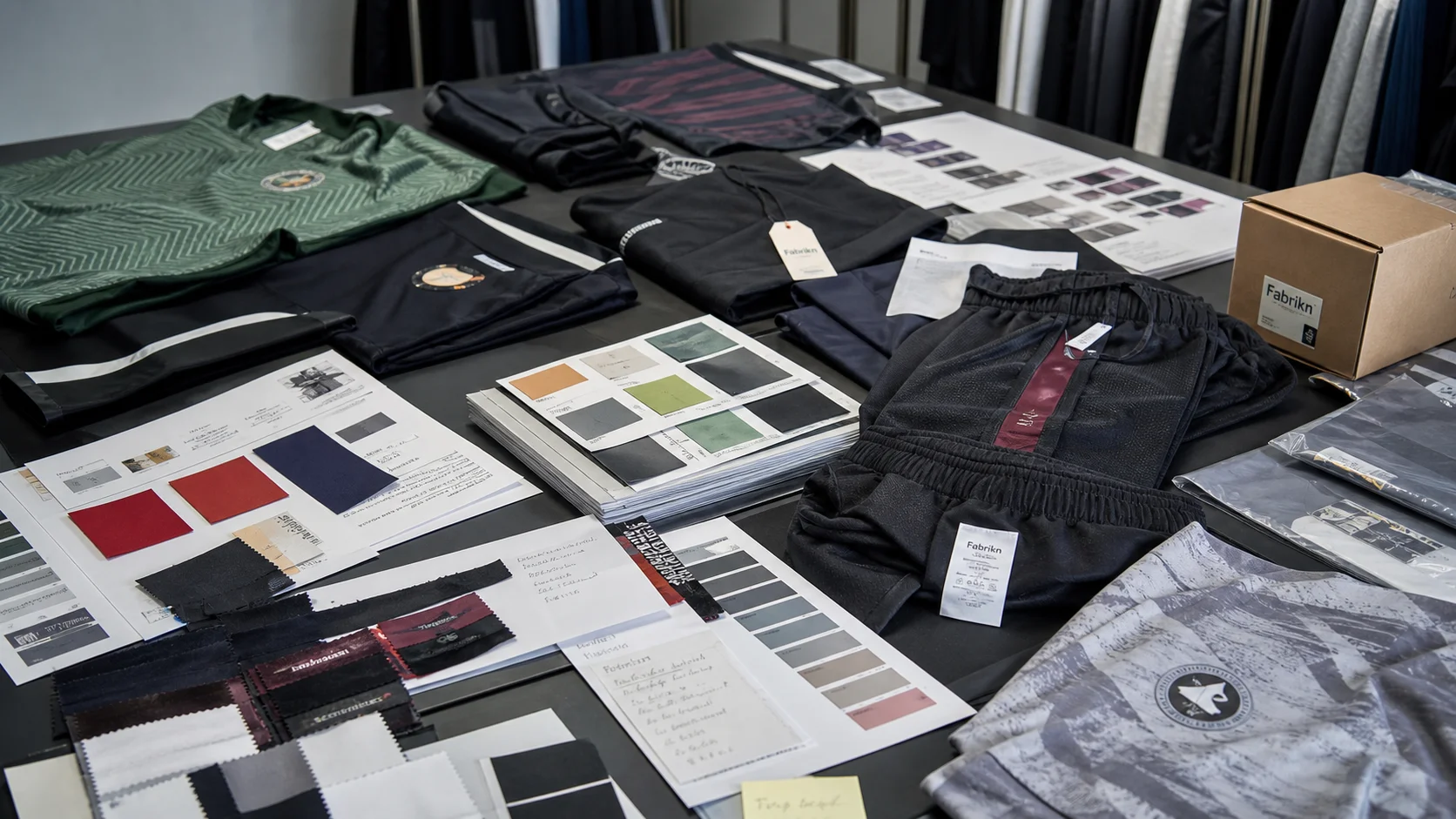
Foil-Stamped Hang Tags for Fashion Labels with checks for samples, fit, MOQ, QC evidence, pricing terms, and delivery risk.
Fast answer: Foil-Stamped Hang Tags for Fashion Labels: Paper, Foil, and MOQ should be judged by production evidence, not by a generic sourcing promise. The buyer needs sample proof, cost breakdowns, QC checkpoints, and delivery buffers in writing.
Ask for recent sample photos, measurement tolerances, fabric or print test assumptions, decoration test notes, packing examples, and a named inspection checkpoint. These details show whether the team can repeat an approved sample at bulk volume.
Separate garment cost, decoration, labels, packaging, sampling, testing, freight, and rush charges. When every cost line is visible, it becomes easier to reduce colorways, adjust size depth, or reserve more time for sampling.
Seven seconds is generous. In most stores, I have watched shoppers make up their minds in three. That is why custom foil stamp hang tags for fashion labels matter so much: the tag is usually the first tactile brand signal, and it arrives before the fitting room, before the mirror, before the sales pitch.
On factory visits across eight countries, I have seen the same pattern repeat. A mass-market tee on 250 GSM uncoated board with black ink alone can feel functional, almost disposable. Put the same logo on 400 GSM stock with a sharp gold foil hit, and the conversation changes. The garment has not changed. The perceived discipline has.
I have compared a $28 tee, a $120 blouse, and a $480 coat on the same table with buyers standing over them. The tee needs a clean, quick signal. The blouse can carry a slightly richer material story. The coat can justify a heavier board, maybe 600 GSM, with a deep emboss and foil edge detail.
Why does foil outperform size? Because foil is read as intent. A larger logo can feel loud. Heavier paper can feel mechanical. Foil catches light in a way the eye translates as care, even when the design is minimal. Last year I worked with a brand that switched from a 90 x 50 mm matte tag to a 70 x 90 mm tag with one gold foil line and a blind emboss. The tag cost rose by $0.11 on a 5,000-piece run, but the brand lifted perceived price by enough to protect full-price sell-through on a $96 knit.
The numbers vary by market. In luxury, a tag can quietly do the work of a miniature billboard. In entry premium, restraint matters more because buyers are already negotiating value mentally. A foil mark on a $28 tee should say “considered,” not “trying too hard.” That difference is not cosmetic. It is commercial.
The production chain is straightforward on paper and unforgiving on press. Artwork is prepared in vector format, usually as separate layers for print, foil, and emboss. The manufacturer or factory creates dies or plates, selects the paper stock, then runs foil stamping before die-cutting, drilling, and stringing. If the sequence is off by even 0.5 mm, fine type starts to look tired and registration suffers.
Paper choice determines how clean the foil reads. Coated stock gives the sharpest metallic edge because the surface is smoother and more predictable. Uncoated stock absorbs more, which can soften the image but also create a richer tactile feel. Textured papers can look beautiful, yet I have watched foil crack on heavily felted boards when the design used hairline serifs or tightly packed monograms. Recycled papers are excellent when the fiber mix is even, though fiber speckle can interrupt ultra-fine foil detail. Cotton blend papers sit in a sweet spot for brands that want a soft hand and a polished finish.
Foil itself is not one thing. Metallic gold and silver remain the most common, but matte foil, holographic foil, and tinted foil in deep green or navy can be strong for fashion labels that want restraint with a twist. Blind emboss pairs well with foil because the raised impression adds depth without adding ink density. I have seen a 300 GSM cotton stock with blind emboss outperform a busier multi-color tag simply because it felt more expensive in the hand.
Finishing decisions should be made with the garment, not the artboard, in mind. Rounded corners reduce wear in transit. Soft-touch lamination can make a tag feel lush, though it may reduce recyclability and slightly mute the paper’s natural texture. Spot UV creates contrast, but too much gloss next to foil can look overworked. Edge painting is useful for luxury labels that want a colored line visible from the rack, yet it adds cost and one more chance for inconsistency.
When I audit suppliers, I ask for press samples, not showroom mockups. Fine type under 6 pt, foil lines thinner than 0.25 mm, and intricate corner ornaments are the first things to fail. Ask for these practical checks before approving a run:
That discipline is the difference between custom foil stamp hang tags for fashion labels that support a collection and ones that quietly cheapen it.
Luxury labels can spend more because the garment margin can absorb it. I have seen 700 GSM duplex board, soft-touch lamination, and a two-pass foil process used on coats priced above $800. That works when the tag feels like part of the product story. For contemporary brands in the $90 to $220 range, restraint usually wins. A 350 GSM FSC board with one foil color and a clean emboss often tests better than a crowded metallic layout that tries to shout premium from across the room.
Entry-premium brands need discipline. A 250 to 300 GSM recycled board with one well-placed foil accent can create enough lift without pushing freight or insert weight higher than necessary. DTC brands often forget this. Ten grams per tag sounds trivial until you ship 40,000 pieces a month and the carton count rises. On a 3,000-unit test, I have seen weight differences of 1.8 kilograms in outgoing freight because the tag system was overbuilt.
Regional factory visits showed a pattern that buyer decks rarely capture. Some Asian converters, especially in China, handled complex foil work at 20,000 to 50,000 units with impressive consistency, provided the artwork was clean and the board spec was locked early. European printers often offered tighter minimums, sometimes 500 or 1,000 pieces, and stronger sustainability paperwork, but the unit price could run 18% to 35% higher for the same finished look. Neither is “better.” They suit different buying models.
Here’s what most people miss: a restrained design on better stock often tests stronger than an overloaded metallic look. I have watched buyers choose the simpler tag at a 62% rate in side-by-side shelf tests because it felt more honest, especially on brands already selling private label clothing and trying to avoid visual noise. If the product is strong, the tag should frame it, not fight it.
For sustainable material choices, recycled paper, FSC-certified stock, and cotton-based papers all work, but each changes the final feel. Recycled content can bring speckling. FSC stock signals sourcing discipline, though the tactile result depends on the mill, not the logo. Cotton paper creates a softer, more archival impression, which suits limited runs of 250 to 1,500 units. The best choice is the one that aligns with the garment price, the shipping model, and the story you actually sell.
Pricing breaks into five pieces: die charges, foil plates, paper stock, die-cutting, and assembly. Then freight arrives and spoils the tidy spreadsheet. A simple square tag with one foil color on 300 GSM board might carry a $35 to $120 setup fee depending on factory type, plus unit costs that drop sharply as volume rises. Add rounded corners, a custom shape, or hand-tied stringing, and the quote moves fast.
For 500 tags, many factories price aggressively because setup dominates the order. I have seen total landed costs land around $0.45 to $1.10 per tag, depending on region and finish. At 5,000 tags, that same format may fall to $0.12 to $0.28. At 50,000 tags, large converters can push it down further, often into the $0.05 to $0.14 range if the shape is simple and the foil coverage is modest. Specialty papers, multiple foil colors, and embossed relief can add 15% to 40%.
A practical comparison looks like this:
Hidden costs matter. Revisions can add another proof fee, often $15 to $50 per round. Hand-tying strings or safety pins can add $0.03 to $0.12 per unit. Freight can swing by 8% to 25% depending on carton density, and a 2-week delay can force air shipping that erases the savings from a cheaper supplier. This is where clothing packaging solutions planning becomes part of the buying decision, not an afterthought.
Margin impact is the real test. If a tag raises perceived value by even $2 on a $48 garment, the return is obvious. I would rather see a brand spend an extra $0.09 on a precise tag than save that money and lose the premium cue that supports full-price sell-through.
Supplier selection starts with proof, not promises. I ask for foil registration samples, board swatches, and at least one press proof before I trust a quote. Digital mockups are useful for layout. They are useless for metallic behavior. A silver foil on screen tells you nothing about how it will hit 320 GSM kraft paper under 4,000 impressions.
Strong factories answer four questions cleanly: What is the exact board weight in GSM? What is the tolerance on foil placement? What is the turnaround for a sample, usually 3 to 7 days? Can they show bulk photos from a run of 10,000 pieces or more? I also ask whether they source board in-house or buy it from a local mill, because inconsistency often starts there. For factories handling cut and sew manufacturing, tag control is usually better because they understand garment-level consistency.
Regional strengths vary. China, Vietnam, and parts of India tend to offer speed, flexibility, and better pricing at 5,000-plus units. Europe can be stronger on documentation and short runs. North American suppliers often communicate well, but prices may run 20% to 45% higher. None of this is abstract. It shows up in lead times, language clarity, and sample-to-bulk drift.
Buyer checklist for repeatable output across seasons:
Factories that resist those requests are telling you something. Listen.
Sustainability claims get muddy fastest at the finishing stage. Paper fiber can be recycled, but foil, coatings, adhesives, and strings complicate end-of-life. A tag printed on recycled paper is not automatically recyclable if it carries soft-touch lamination, a heavy plastic coating, or mixed-material inserts. The material story needs to be read component by component.
According to Textile Exchange, brands are under pressure to document preferred materials clearly, and that pressure extends to packaging. For paper-based tags, the cleanest route is usually recycled or FSC-certified stock, water-based inks, minimal adhesive, and a single foil accent rather than full-surface metallic coverage. Foil stamping itself is not the villain. Excess material complexity is.
I have seen European brands provide the strongest paperwork, especially when they already publish restricted substance policies and chain-of-custody claims. North American brands often communicate well on recycled content but can be looser on end-of-life language. In parts of Asia, the best factories now offer solid FSC documentation and traceability, though the quality varies more widely from one converter to the next. The documentation gap is narrowing, but only for buyers who ask.
Waste reduction begins before production starts. Shorter runs reduce dead stock. Right-sizing a tag from 80 x 140 mm to 70 x 120 mm can save board, foil area, and freight volume in one move. Limiting revisions also matters. Every changed proof creates make-ready waste, and I have seen that multiply when brands approve artwork late. The greenest tag is the one that balances longevity, material honesty, and restrained finishing.
That is a hard truth for brands that use sustainability as a gloss. A simple, well-made tag can outperform a loaded “eco” tag that mixes five materials and says very little. If you want the data trail to hold up, ask for certificates, material declarations, and the exact specification on the tag itself, not a marketing sentence on the carton.
Start with the garment, not the tag. Define price point, audience, and season volume before you request quotes. Then send one clean file set: logo vector, exact tag dimensions, paper preference, foil color, finish, quantity, ship date, and carton count. If you do that well, you can get a free quote without a week of back-and-forth.
Test two or three versions before locking your system. I would compare one restrained option, one slightly bolder foil option, and one sustainability-first version on recycled board. Check readability at arm’s length, foil shine under store light, hole placement, and whether the string or fastener rubs the garment. The best tag is the one that makes the product feel priced correctly, not the one that tries hardest to impress. If you want custom foil stamp hang tags for fashion labels that earn their keep, choose the version that looks inevitable the moment it’s on the rack.
For 500 tags, expect roughly $0.45 to $1.10 each once setup and basic finishing are included. At 5,000 tags, many orders fall to $0.12 to $0.28 per tag, while 50,000-piece runs can reach $0.05 to $0.14 depending on board, foil coverage, and die complexity.
Typical sample turnaround is 3 to 7 days, and bulk production usually takes 10 to 20 days after proof approval. Add 7 to 30 days for freight depending on air or ocean shipping and your destination.
Coated stock gives the sharpest foil edges, while uncoated and cotton papers create a softer, more tactile result. Recycled and FSC papers are widely used, but fine foil detail works best when the surface is smooth and the board weight is at least 300 GSM.
Yes, if you control the full spec. Recycled or FSC paper, water-based inks, minimal lamination, and one foil color are the cleanest choices. Mixed materials, heavy plastic coatings, and extra adhesives make recycling harder even when the paper content is high.
Ask for physical press proofs, exact GSM specs, foil registration tolerances, and sample-to-bulk consistency photos. A reliable supplier should quote clearly on MOQ, setup fees, turnaround, and freight, then provide repeatable output across 500-piece and 5,000-piece runs.