
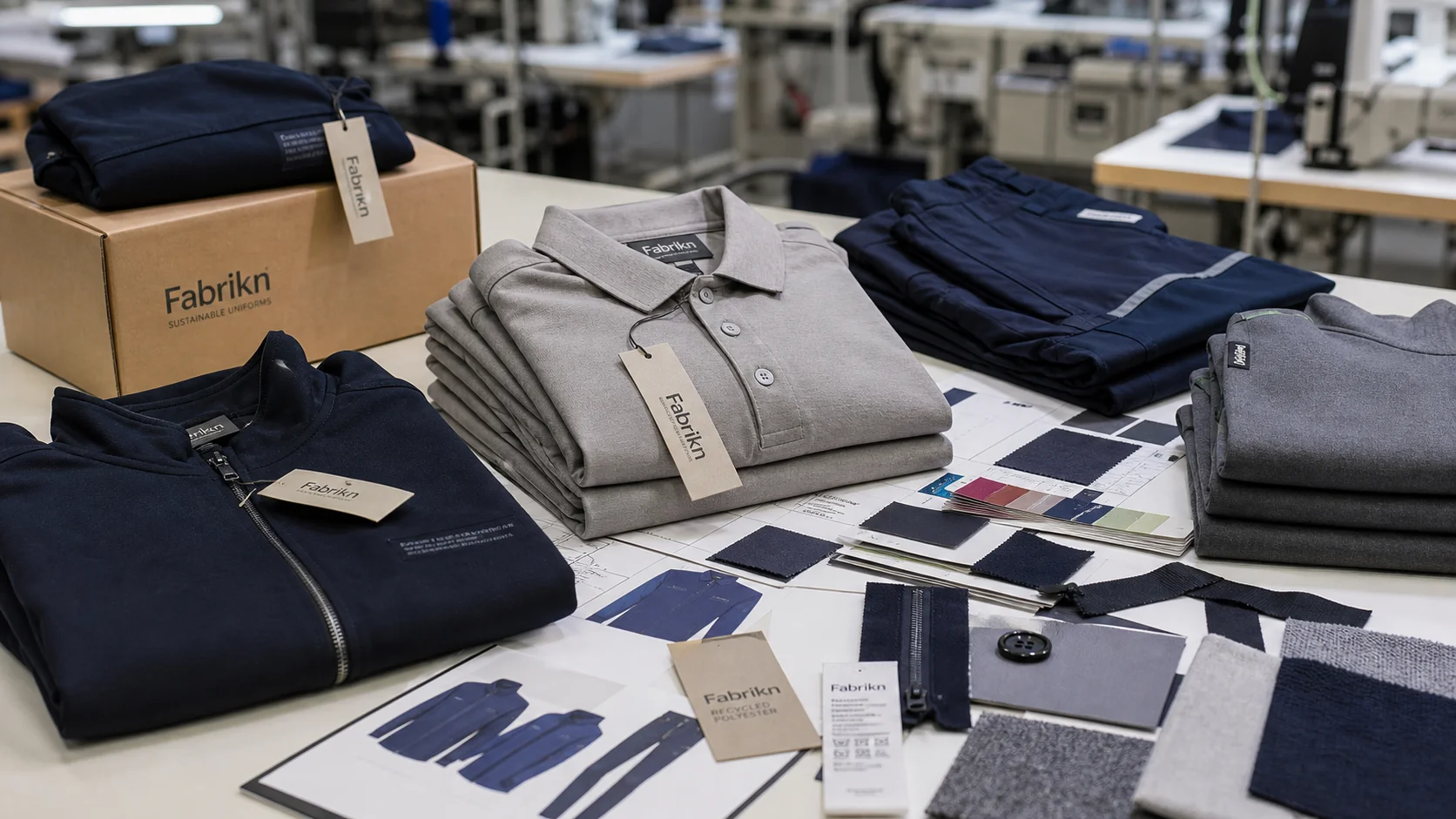
Fashion Ecommerce Mailer Boxes with checks for samples, fit, MOQ, QC evidence, pricing terms, and delivery risk.
Fast answer: Fashion Ecommerce Mailer Boxes: Board, Size, Print, and Unboxing should be judged by production evidence, not by a generic sourcing promise. The buyer needs sample proof, cost breakdowns, QC checkpoints, and delivery buffers in writing.
Ask for recent sample photos, measurement tolerances, fabric or print test assumptions, decoration test notes, packing examples, and a named inspection checkpoint. These details show whether the team can repeat an approved sample at bulk volume.
Separate garment cost, decoration, labels, packaging, sampling, testing, freight, and rush charges. When every cost line is visible, it becomes easier to reduce colorways, adjust size depth, or reserve more time for sampling.
A box can change how a customer judges a $38 tee before the tee is even unfolded. In custom mailer box packaging for fashion ecommerce, that first touchpoint can shape conversion, repeat purchases, refund perception, and whether the order gets filmed for social. For apparel brands, packaging is not a side note; it is the first physical proof that the brand can keep a promise.
During factory visits in Italy, Vietnam, Mexico, and China, the pattern kept repeating: brands that treat mailers as disposable almost always underinvest in retention. According to WTO trade data, cross-border goods still move through wildly uneven parcel networks, and that variance shows up fast in dented corners, crushed lids, and split seams. Damage may only hit 2% to 5% of orders, but the perception hit is larger. A customer who receives a battered box starts discounting the product inside.
Luxury labels in France and Japan tend to use compact mailers with precise folds, cleaner print, and tighter tolerances. Mid-market U.S. brands lean harder on visual drama, sometimes choosing oversized boxes that look expensive and travel badly. DTC brands in Southeast Asia often have better cube efficiency because fulfillment space costs more and air freight punishes every extra centimeter. Strange but true: the most expensive-looking boxes are not always the heaviest or most material-intensive. I’ve held premium-looking mailers made from 350 gsm paperboard wraps over smart corrugate, while a heavier 600 gsm build felt clumsy and cheap.
The thing nobody tells you: a slimmer, well-printed box can beat a thicker one if the closure works, the edges stay square, and the structure survives a 60 cm drop test. I’ve watched buyers choose “premium” by hand feel, then reject the same box after seeing it collapse in a carton stack of 12.
That is why custom mailer box packaging for fashion ecommerce belongs in the retention budget, not the miscellaneous supply line. If a box helps lift repeat orders by even 3% on a customer base with 20,000 annual orders, the payback can dwarf the gap between a $0.42 mailer and a $0.71 mailer. I’ve seen brands spend $15,000 on a photo shoot and $6,000 on packaging for the year. Backwards math.
A good mailer has one job: move apparel safely, quickly, and with enough polish that the customer feels the brand cared about the last mile. For shirts, the pack should hold a flat fold with minimal wrinkling. For knitwear, it needs to prevent compression marks on 280-320 GSM fleece or French terry. For denim, the structure must tolerate weight; a pair of 14 oz jeans can crush weak panels if the box is oversized. Swimwear and accessories need less depth, but they need better presentation because the product itself is lighter and easier to make look cheap.
Box dimensions matter more than many buyers admit. A mailer that is 15 mm too tall can add void fill, extra tape, and a surcharge from carriers who price by cube rather than weight. In my experience, a 30 x 23 x 4 cm format works well for tees and leggings, while heavier denim and outerwear may need 35 x 28 x 6 cm or a two-piece folding style. For brands shipping 500 to 5,000 orders per month, a 5 mm reduction in depth can save measurable freight costs across 12 months.
Presentation still matters. Clean edges. Strong closure. Ink that does not scuff when a sleeve brushes the lid. Tissue can elevate the moment, but it should not be the only thing holding the garment in place. Return-readiness matters too. If the box cannot be reopened without tearing, the brand pays twice: once in a frustrated customer and again in damaged resale value. This is where clothing packaging solutions should be planned with both the first delivery and the reverse flow in mind.
Regional packing habits are different enough to matter. European factories often pack slimmer and denser, using exact fold cards and lower void ratios. U.S. shipments, especially from suburban fulfillment centers, tolerate more air because warehouse labor is cheaper than redesigning the pack. In Asia, especially in export-oriented plants, cube optimization is stricter because shipping lanes are crowded and container economics are unforgiving. Better packaging is the one that fits the garment, survives the route, and arrives looking intentional.
Corrugated board still does most of the heavy lifting. E-flute is common for apparel because it balances print quality, foldability, and crush resistance; B-flute is thicker and better for heavier items or long-haul transit. Paperboard wraps can mimic rigid presentation at lower weight, especially when paired with a folded corrugate insert. Recycled content usually ranges from 30% to 100%, and FSC certification matters when brands want proof, not just claims. For sourcing claims around fiber content and preferred materials, I often cross-check against Textile Exchange guidance and certification language that buyers can actually audit.
Print method changes the economics fast. Digital printing works for short runs of 300 to 2,000 units and handles multiple SKUs without plate charges. Flexo and offset become more efficient at 5,000 to 50,000 units, especially when color consistency matters across seasonal drops. CMYK full-bleed graphics look sharp, but one-color line art often ages better because it hides scuffs and is less sensitive to registration drift. I’ve seen brands pay for a photo-realistic print only to discover that a simple logo on kraft looks more premium after shipping abrasion.
Finishes are where buyers can overspend. Matte coating gives a clean, modern look at a relatively modest cost. Soft-touch feels expensive, but it marks easily and can create recyclability friction depending on the coating system. Aqueous finishes are friendlier to recovery streams and usually lighter on cost than laminate films. Lamination gives the glossiest result, yet it often adds plastic complexity that recyclers dislike. For a premium box, a smart build might use 1-color print on 350 gsm paperboard, matte aqueous coating, and precise folding. That can photograph better than a thicker box with sloppy ink and heavy lamination.
Some of the best premium-feel mailers I’ve seen came from simpler board choices, not heavier materials. A factory in Guangzhou showed me a 3-layer E-flute build with disciplined print coverage and exact slotting that outperformed a thicker sample costing 18% more in material. Another plant in Portugal got the look right with a restrained palette, tight white space, and 2 mm tolerance on the lid. The box felt expensive because it was controlled, not because it was bulky. For brands that also need private label clothing services, packaging discipline should match the garment line, not fight it.
For buyers comparing production options, the right manufacturer, factory, and supplier will explain board grades, coatings, and lead times clearly. In custom mailer box packaging for fashion ecommerce, that transparency matters as much as price because quality failures are expensive to fix after bulk production.
Pricing follows four levers: volume, board grade, print complexity, and finishing. For low-volume orders of 500 to 1,000 units, plain stock mailers can land around $0.35 to $0.70 each, depending on size and freight. A one-color custom box in the same volume often runs $0.65 to $1.10. Fully printed premium boxes with coating, inserts, and special fold lines can hit $1.25 to $2.40 each at low volumes, especially if the supplier must make new tooling.
At mid-volume, usually 3,000 to 10,000 units, the unit cost falls quickly. A one-color custom mailer may drop to $0.42 to $0.78, while a premium full-print build may settle near $0.95 to $1.65. At 25,000 units and above, especially with standard sizes, the economics improve again because plates, sampling, and setup are spread across far more cartons. I’ve seen brands save 22% simply by standardizing two box sizes instead of six.
Hidden costs are where budgets break. Sampling can add $80 to $350 per round. Color matching may require 2 to 4 extra proofs. Freight is often priced by cube, so a box that looks inexpensive at the factory can become costly in transit if it ships flat but occupies too much pallet volume. Warehousing can add $4 to $12 per pallet per week in some markets, and long storage times create damage risk from humidity and edge crush. MOQ 500 is not cheap if your box design forces 2,000 units of inventory into a small warehouse bay.
The simplest comparison is this: plain stock mailers are cheap but generic. One-color custom boxes hit the sweet spot for many DTC brands, affordable enough to protect margin, distinctive enough to support retention. Premium fully printed boxes carry the highest image value and the highest risk if sales wobble. For brands planning seasonal capsules or rapid restocks, I usually recommend an initial pilot of 1,000 to 2,000 units before committing to 10,000. If production is tied to sewing schedules or trim sourcing, coordination with cut and sew manufacturing helps avoid mismatched packaging arrivals.
For wholesale and bulk ordering, the best pricing usually comes from a production plan that balances unit cost, storage, and freight. In custom mailer box packaging for fashion ecommerce, chasing the cheapest quote can backfire if China-based pricing does not include quality control, packing standards, or reliable reorders.
My pre-production checklist starts with board spec, die-line accuracy, and glue plan. Then I check print registration, folding memory, closure tension, and compression performance under stack load. A mailer should stay square after at least 12 hours under pressure, and the flaps should open cleanly without tearing the fibers. If the glued seam lifts at the corner after 20 to 30 open-close cycles, the supplier has not solved the structural problem.
QC also needs real numbers. Ask for drop-test results at 60 cm and 80 cm, compression data in kilograms, and a defect threshold below 2% for print misalignment, crushed corners, or warped lids. I ask factories to show wet-glue strength, because some boxes hold up fine in dry storage and fail after 48 hours in humid transit. If a supplier cannot explain board caliper, flute direction, and closure performance in plain language, I keep moving.
Regional differences matter. European suppliers are usually stronger on sample quality and color control, but lead times can slip by 3 to 7 days if paper stock arrives late. Vietnam and southern China often offer faster mass production, yet the sample-to-bulk color shift can be wider unless the buyer locks down approval standards. In the U.S., samples are often fast, 3 to 5 days, while unit costs climb once freight and domestic labor are included. I have seen great boxes from every region. I have also seen great photos hide weak glue.
My audit checklist is simple:
If you are comparing a China factory against a domestic factory, ask for the same quality standards, the same production notes, and the same sample format. That keeps custom mailer box packaging for fashion ecommerce decisions grounded in data instead of assumptions.
The timeline starts with a brief. You need box dimensions, garment type, target unit cost, print files, and the date the product must ship. A clean artwork handoff includes vector files, Pantone references, dielines in PDF or AI, and notes on fold direction. Sampling usually takes 7 to 14 days domestically and 14 to 28 days overseas. Mass production adds another 10 to 25 days, depending on board availability and coating method. If the supplier needs plates, add 3 to 5 days.
Seasonal planning should follow your merchandising calendar, not your warehouse mood. I usually recommend a 15% to 25% safety stock buffer for holiday volume, because packaging gets used faster than forecast when sell-through is strong. Capsule drops should be sized separately; a 600-piece run for a collaboration should not sit in the same bin as a 6,000-piece core line. Box storage also needs humidity control. Cardboard stored above 65% relative humidity can warp and scuff more easily in shipment.
For brands moving into higher-volume apparel launches, early coordination with a packaging partner matters as much as fabric approvals. It helps to align trims, labels, and carton sizes with order pacing, especially if your sourcing mix includes multiple factories and split shipments. A good start is to get a free quote before you finalize the pack schedule, because the quote often reveals whether your preferred size will force a costly tooling change.
My practical next steps are straightforward. Brief the box size using actual folded garments, not guessed dimensions. Prepare print-ready artwork in CMYK plus Pantone spot references. Order 2 to 3 pilot versions at 100 to 300 units if your assortment has multiple product categories. Then compare flatness, closing force, and shipping damage before scaling to 1,000 units or more. That sequence saves money and keeps launch week from becoming a scramble.
Before mass production, ask for a clear production calendar from the supplier and confirm the MOQ, tooling timeline, and reorder lead time. That extra step makes custom mailer box packaging for fashion ecommerce much easier to scale without stockouts.
The first metric is damage claims. If a box change cuts corner crush, print rub, or seam failure by 3%, that can be worth more than a fancier finish that customers notice once and forget. The second metric is repeat purchase rate by cohort. I like to compare customers who received the old box with those who received the new one over 60, 90, and 180 days. Social content matters too. Track tagged posts, stories, and unboxing mentions per 1,000 orders, not just raw likes.
To isolate packaging from product and marketing changes, run tests by region or product category. A/B test the box for knitwear in the U.K. while keeping tees constant in the U.S. Compare return perception on bundles versus single-item orders. If your returns team hears fewer comments like “packaging felt cheap” or “item arrived rumpled,” that is useful evidence, even if the comment rate only drops from 8% to 5%.
Do not trust vanity metrics alone. A box with a higher share rate but no lift in repeat orders may be just an expensive prop. A box that saves 3% in damage claims, protects margins on 10,000 annual shipments, and improves the post-purchase review score by 0.2 points can outperform one that simply looks luxurious in a studio shot.
That is the test I use after every packaging switch: does it pay for itself in fewer returns, stronger retention, or lower freight waste within 2 to 4 quarters? If the answer is yes, keep it. If not, refine the size, reduce the finish, or simplify the print.
For brands that want stronger sustainability claims, it is smart to verify materials and dyes through recognized sources such as OEKO-TEX or trade guidance from Trade.gov. That keeps the packaging story credible when customers ask about quality and compliance.
It is a branded shipping box designed for apparel, accessories, and small textile goods. The best versions protect products in transit, fit the garment tightly, and create a polished unboxing moment without adding unnecessary weight or void fill.
At 500 to 1,000 units, expect roughly $0.35 to $0.70 for plain stock mailers, $0.65 to $1.10 for one-color custom boxes, and $1.25 to $2.40 for premium fully printed options. At 10,000 units or more, unit costs usually fall by 20% to 35% depending on size and finish.
Domestic sampling can take 3 to 10 days, while overseas sampling often takes 14 to 28 days. Mass production usually adds 10 to 25 days, and new plates or tooling can add another 3 to 5 days.
Yes. A better fit, stronger closure, and more suitable board grade can reduce corner crush, scuffing, and seam failure. In many apparel programs, a well-sized box can cut visible damage by 2% to 5% compared with an oversized generic mailer.
Start with garment dimensions, monthly order volume, and your target unit cost. Then request 2 to 3 samples, approve one structure and one color proof, and test the box with actual folded products before placing a 1,000-unit or larger order.