
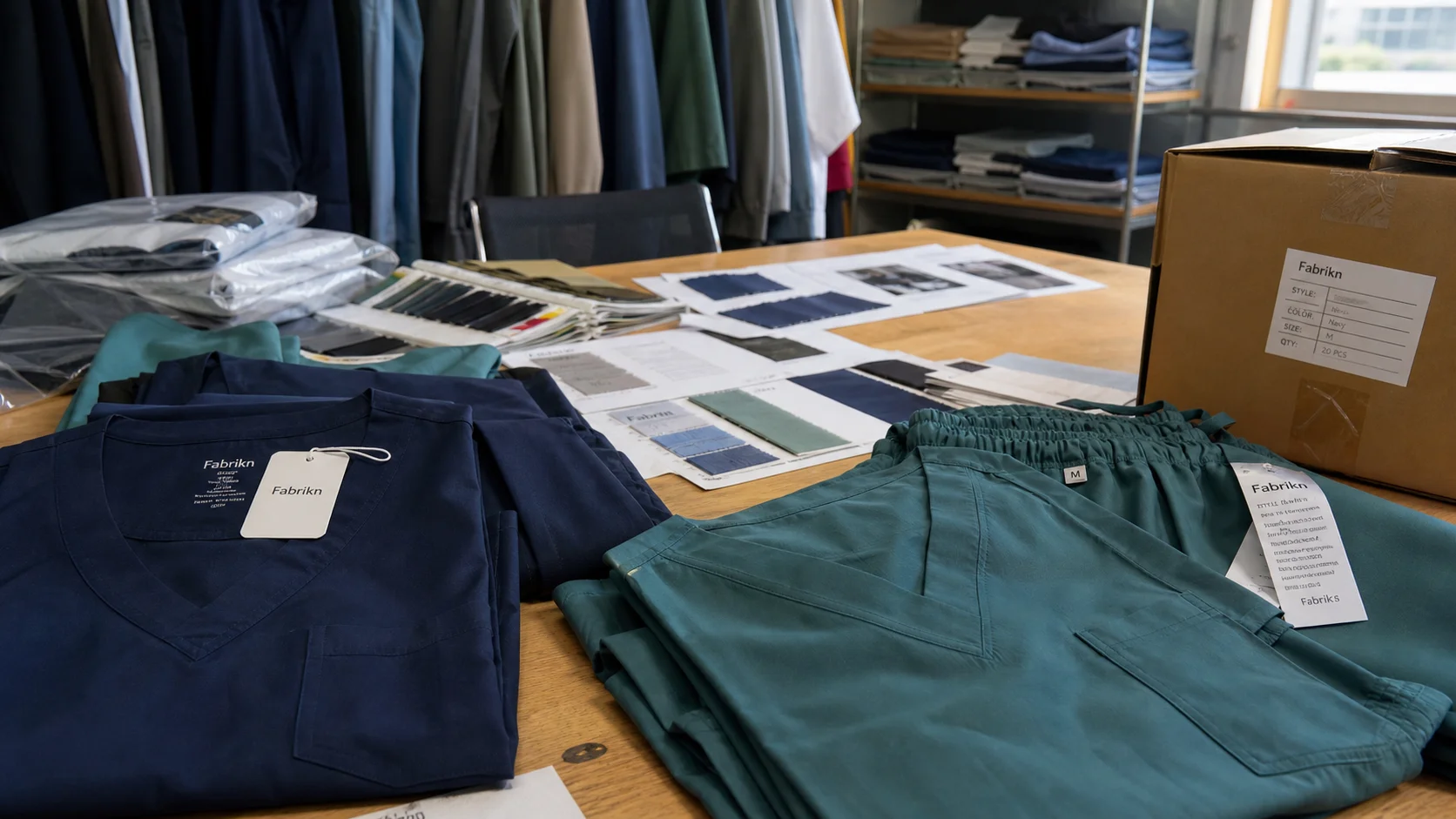
Custom Paper Boxes for Fashion Ecommerce with checks for samples, fit, MOQ, QC evidence, pricing terms, and delivery risk.
Fast answer: Custom Paper Boxes for Fashion Ecommerce: Costs, Impact should be judged by production evidence, not by a generic sourcing promise. The buyer needs sample proof, cost breakdowns, QC checkpoints, and delivery buffers in writing.
Ask for recent sample photos, measurement tolerances, fabric or print test assumptions, decoration test notes, packing examples, and a named inspection checkpoint. These details show whether the team can repeat an approved sample at bulk volume.
Separate garment cost, decoration, labels, packaging, sampling, testing, freight, and rush charges. When every cost line is visible, it becomes easier to reduce colorways, adjust size depth, or reserve more time for sampling.
A box that buckles in transit can undo a polished brand faster than a bad headline. Damage claims on apparel parcels can run 2% to 8% of shipments, and in the factories I’ve visited, the fix is rarely expensive branding. Structure wins. That is why custom paper boxes for fashion ecommerce have shifted from nice-to-have to operational necessity. A box that crushes, bows, or opens badly can undo a $120 order in 7 seconds — about the time many buyers need to decide whether a brand feels worth the price.
I’ve watched this play out across 8 countries and more than 200 factories. DTC brands often tolerate a box cost of $1.20 to $2.80 because repeat purchase matters. Boutique labels usually accept $2.50 to $4.50 if the box feels giftable. Marketplace sellers, by contrast, push for $0.45 to $1.10 and usually sacrifice print coverage or board weight. Same product category. Very different tolerance for packaging spend.
Outside Ho Chi Minh City, a carton plant technician once showed me how a 1.5 mm board versus a 2.0 mm board changed crush resistance enough to reduce transit damage on shoulder bags by 30% in one client test. In Milan, another converter warned me that full-coverage dark flood printing can magnify scuffs and corner wear, especially on matte boxes handled 3 to 5 times before delivery. A paper box only looks sustainable if it survives the trip intact.
Then the sustainability story falls apart. Oversized boxes need more void fill. Crushed boxes trigger reships. Over-printed boxes can require extra ink and coating, then still arrive dented. I’ve seen brands spend $0.80 on recycled board, then lose $14 to $28 in replacement shipping and customer service per damaged parcel. Sustainable packaging is not a slogan. It is a system that has to work from carton plant to doorstep.
Buyers notice fit first. If a box rattles, feels hollow, or arrives with too much empty space, the product feels cheaper. If the closure is crisp, the lid aligns within 1 to 2 mm, and the garment sits snugly, the whole order reads more expensive than the material cost suggests. I’ve seen a 320 GSM folding carton outperform a heavier box simply because the dieline was tighter and the opening sequence felt deliberate.
Luxury labels care about rigidity, color accuracy, and clean edges. Mid-market apparel brands react strongly to opening experience and storage efficiency. Accessory brands watch stacking, because warehouses judge a box by pallet count as much as by appearance. In a Bangkok factory, I saw a shoe box with a simpler tuck-end structure print cleaner than a highly decorated rigid box, then ship at 18% lower dimensional weight. Simpler often wins.
Premium-looking custom paper boxes for fashion ecommerce do not always require premium materials. A well-engineered folding carton with 350 GSM SBS, a precise glue flap, and a matte aqueous coating can look more polished than a stiff but badly printed rigid box. I have seen brands waste money on foil, embossing, and complex sleeves when what they really needed was better color control and fewer print passes.
Reaction tracks with price point. A $35 accessory can get away with a kraft mailer and one-color branding. A $220 coat needs more structure, but not necessarily more decoration. If the box is meant for gifting, social sharing, or resale, buyers remember the tactile cues: the sound of the lid, the resistance of the fold, the way the tissue paper lies. Those details shape repeat purchase behavior more than many brands admit.
The unit price changes fast with volume. At 1,000 units, I typically see custom paper boxes in the $1.40 to $3.80 range depending on board grade, print coverage, and structure. At 5,000 units, that often falls to $0.75 to $2.20. At 20,000 units, a simple folding carton or mailer can reach $0.35 to $1.20, though rigid boxes stay higher, often $1.80 to $4.50 even at scale. Those are factory-level numbers before freight, duties, and warehousing.
Here is where the money goes. Board grade can account for 25% to 40% of the cost. Die-cutting and assembly may take another 15% to 25%. Print method matters too: offset for sharp color, flexo for lower-cost runs, digital for short runs. Coatings add another $0.05 to $0.30 per unit. Inserts, magnets, ribbon pulls, and manual labor can each push the price up by cents that quickly become dollars on larger orders.
I’ve walked lines where a rigid box required 11 manual steps and 4 glue points, while a folding carton needed 3 steps and 1 glue point. That difference matters at 5,000 units and becomes decisive at 20,000. Inventory risk matters too. A brand storing 20,000 boxes might need 18 to 30 pallet positions, and in cities with high warehouse rent, that can add $120 to $250 per month per pallet. Cheap units can become expensive inventory.
Domestic production usually offers 2 to 4 week lead times on simpler cartons, with lower freight uncertainty and easier reorders at 500 to 1,000 pieces. Overseas production can cut unit cost by 15% to 35%, but total landed cost rises with ocean freight, customs, and 30 to 60 day transit windows. For brands with tight cash cycles, that delay can hurt more than a 10% higher manufacturing price. If you need get a free quote for custom paper boxes for fashion ecommerce, ask for landed cost, not just factory price.
My rule is blunt. If the box supports a margin above 65%, premium finishing can make sense. If the item sells at a 45% gross margin or lower, focus on board quality, fit, and transport durability first. Foil and embossing are easy to love in samples and hard to justify once chargebacks, storage, and damaged returns enter the spreadsheet.
Fashion ecommerce usually runs on three formats: folding cartons, rigid boxes, and mailer boxes. Folding cartons suit tops, swimwear, scarves, and lightweight accessories because they ship flat and store efficiently. Rigid boxes suit luxury apparel, footwear, and gifting, but they cost more and take more warehouse space. Mailer boxes are strong for direct shipping, especially when a brand wants one container to survive fulfillment, transit, and presentation.
Material choice decides both sustainability and failure rate. Recycled fiber lowers virgin content, but if the board is too soft, corners collapse after 2 to 3 impacts. SBS gives crisp print and bright whites. Kraft signals natural positioning, though it can mute fine color work. Specialty wraps and laminated papers look refined, but mixed-material structures can complicate recycling unless they are carefully designed. According to OEKO-TEX, material transparency matters when brands want to support credible claims rather than vague green language. The Textile Exchange also offers useful guidance for brands building more responsible supply chains.
Shoes often need 1.5 mm to 2.5 mm board or reinforced mailers, especially if the pair weighs 900 g to 1.8 kg. Jewelry needs inserts and tighter cavities because small movement creates a cheap feel. Knitwear can travel in slimmer cartons, but bulky French terry 320 GSM hoodies need enough headroom to avoid crushing folds. Belts and embellished pieces need protection around buckles, beading, and metal trims. The wrong caliper ruins a good garment.
Factory details matter more than most buyers expect. Board caliper affects stacking. Glue points affect opening memory. If a carton is folded and reopened 10 times during QC, weak scoring shows immediately. One Vietnamese factory showed me how a 0.2 mm variance in board thickness changed how neatly the flap held after compression testing at 12 kg. Small differences. Big consequences. The right format also lowers shipping cube, which saves money in both air and parcel freight.
For brands sourcing custom paper boxes for fashion ecommerce in China, factory communication matters as much as material selection. A manufacturer, factory, or supplier that understands production tolerances can protect both quality and MOQ targets, especially for wholesale and bulk orders. If your team needs broader sourcing support, Fabrikn’s fashion manufacturing solutions can help align packaging with apparel timelines.
Color accuracy is the first trust signal. A box printed with a warm off-white when the brand promised cool white looks sloppy, even if the structure is perfect. Matte finishes usually read more modern and can reduce glare, while gloss makes color pop but can exaggerate scratches. Soft-touch adds a premium feel, though it often raises unit cost by $0.10 to $0.35. Foil, embossing, and spot UV each create a visual hit, but only if the design language already supports them.
Inside printing is one of the smartest uses of budget. A single-color message inside the lid, a pattern on the base, or a care note on the insert can raise perceived value without doubling spend. I’ve seen a minimalist label use black ink on uncoated kraft, then place one clean message inside: size, fabric content, and care. It felt considered. A streetwear brand can use brighter ink, while a luxury label may prefer restraint and texture over loud graphics.
Resale perception matters too. Buyers of premium apparel often keep boxes, and when packaging is neat, they are more likely to list or gift the item later. That has a strange but real effect on brand recall. A client selling $180 knitwear saw more Instagram mentions after moving from plain poly mailers to printed mailers with an insert card. The change cost $0.42 per order and improved giftability in post-purchase surveys by 19%.
Over-design is a trap. A mockup with 6 finishes can look expensive on screen and fail in the warehouse because foil rubs, soft-touch scratches, or complex die-cuts crush under stack pressure. I’ve watched fulfillment teams reject beautiful boxes because they slowed packing by 20 to 30 seconds per order. Packaging must survive humans, not just renders.
Supplier selection starts with capacity, not charm. I want to know how many cartons per day a factory can actually finish, how many QC checks happen per batch, and whether the team can answer a dieline question in under 24 hours. A supplier that cannot quote paper tests, color tolerance, compression strength, and drop testing is not ready for ecommerce volume. If you also need private label clothing services, make sure packaging and garment timelines are coordinated.
Regional sourcing changes the math. China offers broad material access and fast sampling, often 5 to 10 days for the first prototype. Vietnam can be strong on carton assembly and garment-adjacent packaging. India is useful for specialty papers and lower labor on certain formats, though transit can take longer. Eastern Europe often works well for smaller runs inside 1,000 to 3,000 units, and local converters can be the fastest for 200 to 500 unit pilots.
I’ve seen red flags repeat across factories: vague specs, hidden setup fees, sample versions that differ from production by 10% or more, and poor transit packing that leads to dented corners before the boxes even reach the port. Ask for compression and drop test results, then verify them with real samples. A supplier that cannot keep samples and mass production aligned will cost you time and chargebacks later.
Scalability matters as much as sample quality. A good partner can move from a 500-piece pilot to 5,000 units without changing board grade, glue, or print registration. If they also handle cut and sew manufacturing, ask whether the packaging team and apparel team share production calendars. Missed handoffs are where good launches go wrong.
Ask each manufacturer about production capacity, quality control, MOQ, wholesale pricing, and bulk replenishment terms before you approve samples. That conversation should also cover whether the factory can support custom artwork revisions without delaying the run. For brands comparing suppliers across China and other regions, trade guidance from Trade.gov can help frame logistics and market-entry questions.
Start with a packaging brief that lists product dimensions, weight, SKU count, fulfillment method, and target unit cost. Then build the dieline around the product, not around a generic box. I usually advise brands to approve 1 primary structure and 1 backup structure, because changes after sampling can cost 2 to 3 weeks and several hundred dollars in revision fees. Get the brief right and you save money later.
Next comes the pilot run. Test 3 to 5 shipping scenarios: domestic parcel, regional parcel, stacked warehouse storage, one drop from 90 cm, and one humid-condition test if your route crosses tropical climates. If the box bows, scuffs, or opens under those conditions, it is not ready. I have seen a 4% reduction in damage claims after a brand tightened the lid lock and added a 2 mm insert.
Then match the packaging to operations. If your fulfillment team picks 400 orders per day, a complicated box can slow throughput by 15 to 25 minutes every hour. If you carry 18 SKUs, each with different sizes, you may need two box families rather than one. Storage matters too. Flat cartons may save 60% to 80% of the footprint compared with assembled rigid boxes, which is why I push brands to model warehouse space before ordering.
Build a timeline with design, sample production, revisions, test shipping, and freight buffer. A realistic path is 7 to 10 days for design, 5 to 15 days for samples, 5 to 7 days for revisions, and 2 to 6 weeks for production depending on location. Then compare suppliers, check print proofs, and browse our product catalog of fashion packaging and apparel solutions to see how box formats map to different apparel categories before you lock the final spec.
Custom paper boxes for fashion ecommerce usually pay off when the order value, brand positioning, and return sensitivity justify it. Below are the buyer questions I hear most often, with the numbers that matter.
For 1,000 units, simple folding cartons often cost $1.40 to $3.80 each. At 5,000 units, that can fall to $0.75 to $2.20, and at 20,000 units, a basic carton may reach $0.35 to $1.20. Rigid boxes stay higher because of manual assembly, extra board, and more freight volume.
Most factories quote 500 to 1,000 pieces for simple cartons and 300 to 500 for some local converters. Rigid boxes often start at 1,000 units because the setup and labor are harder to absorb. If a supplier offers 100-unit runs, ask where they cut corners on board quality or print method.
Sampling usually takes 5 to 15 days, depending on dieline complexity and print requirements. Production can take 2 to 6 weeks domestically and 4 to 8 weeks overseas, not counting freight. Add 7 to 30 days for ocean transit if the order ships by sea.
There is no single best material. Recycled board works well for lighter garments and brands prioritizing recycled content, SBS prints cleanly for premium branding, kraft suits natural positioning, and rigid board is strongest for shoes or gift sets. I choose material based on weight, shipping method, and the unboxing experience the brand wants to pay for.
They can be, but only if the design reduces damage, oversizing, and material waste. A smaller, better-fitting box can cut void fill by 20% to 40% and reduce transport cube, which lowers emissions and cost. Sustainable claims fail fast if the box arrives crushed, over-printed, or too large for the product.
A first run usually costs more because tooling, sampling, and setup are spread across fewer units. For 1,000 boxes, I often see $1.40 to $3.80 each, while 5,000 units can drop closer to $0.75 to $2.20. Freight, duties, and storage are separate.
Sampling usually takes 5 to 15 days after the dieline is approved. If you need printed proofs, specialty coating, or insert revisions, add another 3 to 7 days. A realistic pre-production window is 2 to 4 weeks before mass manufacturing begins.
Most suppliers want 500 to 1,000 units for folding cartons and 1,000 or more for rigid boxes. Local converters sometimes accept 200 to 300 pieces, but unit cost rises sharply. Small runs are useful for pilots, not for long-term scale.
For shipping strength, corrugated mailer boxes and well-scored folding cartons perform best. A 1.5 mm to 2.5 mm board is common for heavier garments, shoes, and accessories. If the product is light, a 350 GSM carton may be enough when the fit is precise.
Choose the smallest box that protects the product, avoid unnecessary lamination, and use recycled or responsibly sourced board where print quality allows. A well-sized box reduces void fill and shipping cube, which can cut packaging waste by 20% to 40%. Better fit beats extra decoration.