
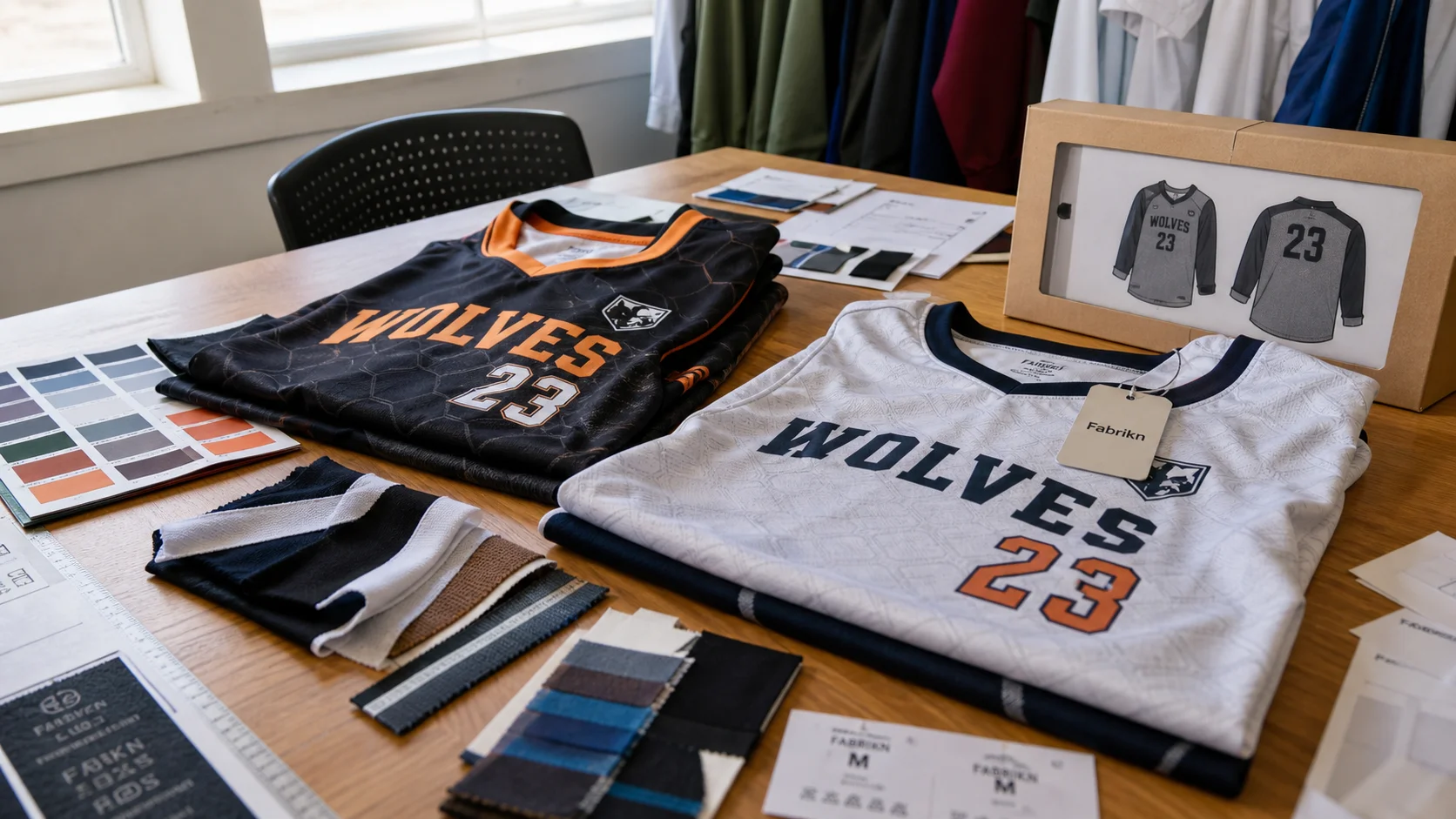
Apparel Mailer Quote Checklist with checks for samples, fit, MOQ, QC evidence, pricing terms, and delivery risk.
Fast answer: Apparel Mailer Quote Checklist: Material, Closure, Print, and Shipment Fit should be judged by production evidence, not by a generic sourcing promise. The buyer needs sample proof, cost breakdowns, QC checkpoints, and delivery buffers in writing.
Ask for recent sample photos, measurement tolerances, fabric or print test assumptions, decoration test notes, packing examples, and a named inspection checkpoint. These details show whether the team can repeat an approved sample at bulk volume.
Separate garment cost, decoration, labels, packaging, sampling, testing, freight, and rush charges. When every cost line is visible, it becomes easier to reduce colorways, adjust size depth, or reserve more time for sampling.
On a cold sales floor in Milan, 120 blazer jackets hung in neat rows, each one tucked into a paper sleeve instead of a crinkled poly cover. Small change. Big signal. In premium boutiques, department stores, and DTC pop-ups, custom paper garment bags for retail packaging now read as an upgrade, and shoppers clock it fast.
For many retailers, custom paper garment bags for retail packaging also help unify the in-store and online experience. They look more intentional on the rack, photograph better for social media, and support a cleaner brand story at the point of sale. Plastic garment covers still win on one metric: price. In large runs, they often land at $0.03-0.08 per unit. Paper alternatives sit closer to $0.12-0.45, depending on stock, print, and closure.
Yet buyers rarely stop at unit cost. They’re weighing perceived value, recyclability claims, and how the packaging photographs in e-commerce returns, store windows, and social posts. A dull poly sleeve can make a $180 shirt look like a warehouse item. A well-made paper bag can make a $48 shirt feel considered. That is why custom paper garment bags for retail packaging keep gaining ground with fashion teams that care about presentation.
Retail teams like the operational logic too. Paper prints cleanly, so logos, care icons, size markers, and barcodes can share the same surface without the fuzzy edges some plastics show after heat sealing. In factory visits across China, Turkey, and Vietnam, I saw buyers use paper packaging to support ESG language, cut complaints about flimsy covers, and improve the unboxing sequence for online orders shipped in 3-5 days domestically or 2-4 weeks by sea. For omnichannel brands, that matters.
Thick paper can outlast thin poly covers in transit. A 250-350 GSM paperboard sleeve with a light aqueous coating resists scuffing, folding, and shoulder-crush marks better than a cheap 20-30 micron plastic cover. I watched cartons dropped from 60 cm; the paper showed fewer creases because it held its structure. Thin plastic wrinkled, then trapped the wrinkle.
Sustainability still sells, but only when the claim is clean. Heavy lamination, mixed non-recyclable film, vague disposal instructions — all of that weakens the story fast. According to Global Organic Textile Standard guidance and OEKO-TEX material transparency expectations, documentation matters as much as the material itself. Paper works. Bad specs do not.
Substrate comes first. Kraft paper is the most common base because it offers decent tear resistance, a natural look, and recycled content options buyers can verify. Coated paperboard brings a sharper print surface and more rigidity. Recycled paper stock lowers virgin fiber use, while FSC-certified stock helps brands document responsible sourcing. Premium art paper sits at the top end, especially for luxury garments that need a polished hand feel and precise color reproduction.
Finish changes everything. Matte looks restrained and contemporary. Soft-touch feels expensive, though it can complicate recyclability if the coating system is too heavy. Aqueous coating is the compromise I recommend most often because it protects against fingerprints, light moisture, and rub damage without adding the plastic-like barrier of full lamination. Spot varnish can highlight a logo or monogram, but it works best when used sparingly; too many shiny zones and the bag starts to look promotional instead of premium.
Structural details deserve equal attention. Gussets create volume for folded shirts or knitwear. Window panels help merchandisers identify product without opening the bag, though every clear patch needs a recycling check. Folded hems strengthen open edges. Die-cuts can create carry holes or hanger slits. Adhesive closures range from simple peel strips to resealable tabs, and the difference shows up in return handling and store re-use.
In factories, I’ve seen 180 GSM paper fail on structured outerwear and succeed on lightweight tees, while 300 GSM stock handled both shape retention and rack friction with far less crush damage. Too much coating adds cost, slows drying, and can make a recyclable sleeve harder to process. A 10-15% rise in board weight may improve transit performance more than a second layer of varnish ever will.
For shirts, 120-180 GSM kraft or coated board usually works. Suits and tailored jackets need 250-350 GSM with broader shoulders and longer drop dimensions. Dresses often need narrower neck lines and extra length. Outerwear can require 350-400 GSM or reinforced inserts. Luxury pieces sometimes use art paper over a rigid insert, especially when a brand also offers clothing packaging solutions that extend from retail floor to e-commerce shipment.
Print turns a protective sleeve into retail media. Blank covers hide the product. Printed ones carry the brand before the hanger even reaches the fitting room. I’ve seen a 2-color logo on uncoated kraft outperform a full photographic print because it looked confident, not noisy. That’s the trap: more design is not always more luxury.
At mass market level, the bag usually needs to communicate size, SKU, and basic brand identity in a single glance. Mid-market brands can add pattern work, foil accents, embossing, or a deeper color field, often with a 1-3 week proof cycle. Luxury packaging tends to stay quiet: one centered logo, clean typography, controlled color. In Europe — Italy, France, parts of Germany — restraint reads as expensive. In some US department store formats, bigger logos and bolder contrast still sell because the packaging has to compete in brighter, denser merchandising zones.
Print area matters more than most buyers expect. A sleeve seen from 2 meters on a rack needs different hierarchy than a package photographed in a delivery box. I watched warehouse teams scan 500 hanging units in under 10 minutes, and the bags with strong logo placement were easier to sort and repack. The same packaging also showed up better in customer photos posted after delivery. That’s free media, if the artwork is disciplined.
Over-design causes trouble. Too many type sizes, metallic effects, and texture layers can make the package look busy and shorten the expensive feel buyers expect from retail garment packaging. I usually tell brands to choose one hero message, one finish, one repeatable layout. Three messages on one sleeve is not premium. It’s a compromise.
Regional taste differences are real. In Spain and the Nordics, buyers often prefer muted tones, recycled fibers, and minimal ink coverage. In parts of the US, louder brand marks can help with recognition on open racks and in delivery unboxings. When a brand also builds private label clothing services, the bag should reinforce the same visual code, not fight it. According to U.S. Commercial Service export guidance, presentation standards can vary sharply by market, which is why one graphic system rarely fits every region.
Paper usually costs more upfront, and buyers should model that honestly. A PE or PP garment cover can be manufactured for roughly $0.03-0.10 at scale, depending on thickness, print, and hang features. Paper alternatives often run $0.12-0.50 per unit, with the upper end tied to premium board, multi-pass printing, and specialty finishing. The delta narrows fast when volume rises, but raw unit cost still isn’t the whole story.
Think in layers. Paper stock might take 35-45% of the unit price. Printing can add another 15-25%. Die-cutting, folding, gluing, and closure systems contribute 10-20%. Freight, especially when packaging is flat-packed but heavy, can surprise teams that have never compared carton weights line by line. A 50,000-piece order in 300 GSM paper can add several hundred kilograms versus plastic, which changes air freight sharply and affects ocean carton counts too.
At 1,000 units, tooling and proofing dominate. A buyer may pay $350-900 in setup fees and still see a unit cost above $0.60. At 10,000 units, the same bag may fall to $0.22-0.35. At 50,000 units, strong buying power can pull it closer to $0.14-0.24 if the artwork is simple and the closure is standard. Plastic stays cheaper at every one of those volumes, but the gap is not always large enough to outweigh the merchandising lift.
There are hidden costs in both directions. Color matching for paper is usually more forgiving than on film, yet proof approval still takes 1-2 rounds if you care about accurate brand tones. Tooling for die-lines, custom windows, or special folds can add $150-600. Shipping weight matters more from Europe to North America than many teams expect; from Asia, the lower unit cost can be offset by a 3-6 week transit window and higher uncertainty around port congestion.
I’ve seen brands source from China for unit economy, then shift to Turkey or Eastern Europe for faster replenishment, tighter EU certification comfort, and shorter lead times of 2-3 weeks on repeat runs. For very small launches, I often tell buyers to cut and sew manufacturing plans and packaging plans together so the garment, the carton, and the sleeve do not arrive out of sync. If the package lands late, the cheapest quote is a false win.
The production line is straightforward, but the details are unforgiving. It starts with a spec sheet and dieline. Then comes artwork approval, paper sourcing, printing, coating or lamination, cutting, folding, gluing, and final packing. A solid factory can move from approved files to shipment in 15-30 days for repeat orders, though first runs often stretch to 25-45 days because of proofs and sample sign-off.
Lead time depends on paper availability, the number of colors, curing time, and seasonal congestion. Four-color process printing takes longer than 1-color flexo. Foil stamping can add 2-4 days. Special coatings may need extended drying to avoid blocking. During peak export months, I’ve seen a 7-day delay appear simply because a mill missed a fiber allocation or a carton supplier was short on board.
QC is where retail failures get prevented. Factories should test ink rub resistance, fold-line cracking, adhesive strength, and dimensional tolerance. I always ask for a sample that is folded, glued, and closed exactly as the final article will be. A generic mock-up tells you little. A real sample tells you whether the crease will whiten, the glue will peel, or the logo will shift 2-3 mm off-center after 100 folds.
Small artisanal suppliers can be excellent for 200-800 pieces, especially when a brand needs unusual paper texture or a hand-finished look. High-volume factories win on repeat consistency, packed carton counts of 250-500 pieces, and faster replenishment for chain stores. I’ve watched both models work, but they solve different problems.
The smartest sample request includes final paper weight, coating, closure method, and carton pack format. If the production order will use 250 GSM matte board with a peel-and-seal strip, the sample should use 250 GSM matte board with a peel-and-seal strip. Anything less is theater.
Supplier screening should start with capacity, sampling speed, minimum order quantity, print registration accuracy, and packaging experience. I want to know how many sleeves a factory can produce per day, how many proof rounds they tolerate, and whether they understand apparel logistics or only general paper goods. A manufacturer that has handled 5,000-50,000 piece apparel programs will usually ask better questions than a middleman quoting from a catalog.
Certifications matter, but only the right ones. FSC helps when you want chain-of-custody support. ISO systems can indicate process control, though buyers should ask for recent audit dates, not just a logo on a PDF. Recycled content claims need documentation, especially in the EU and UK. If a bag will ever touch mixed-use packaging or carry inserts with food-adjacent use, check food-contact rules too. The standards stack is different by market, and sloppy paperwork can sink an otherwise good run.
Geography affects execution. China remains strong for volume, print complexity, and broad supplier choice. Vietnam often offers competitive lead times on medium runs. India can be strong on paper workmanship and hybrid textile-packing programs. Turkey is attractive for Europe-facing buyers who want faster freight and tighter communication cycles. Eastern Europe can be the best option for 1,000-10,000 piece replenishment orders with short transit and fewer customs surprises.
One sourcing mistake shows up constantly: buyers choose the lowest quote, then skip transit testing and proof approval. A bag that looks perfect flat can crack at the fold line after 12 hours in a hot container. A glossy finish that reads beautifully on screen may pick up fingerprints in the store. That’s why I recommend a scorecard. Rate 3-5 vendors on cost, quality, speed, compliance, and sustainability claims, then weight the categories based on your market.
For brands building broader apparel programs, the supplier should be able to coordinate early with the Fabrikn team for a free quote requests so packaging, labeling, and production timing stay aligned. According to ISO quality management guidance, documented process control is the difference between repeatable output and expensive variation.
Start with the product, not the bag. Define target garments, pack count, branding needs, sustainability requirements, and where the package will be used: on-rack, in back-of-house, in e-commerce, or in all three. A shirt sleeve and a coat cover are not cousins. They’re different engineering problems.
My 30-day sourcing path is simple. Days 1-3: gather the brief. Days 4-7: request quotes and samples. Days 8-14: review dielines, material options, and print proofs. Days 15-21: approve samples and test transit behavior. Days 22-30: release production, confirm carton counts, and lock shipping mode. A 1-2 week delay usually comes from artwork changes, not manufacturing itself.
Your spec checklist should include size, paper weight, finish, print colors, closure type, certification, carton count, and shipping method. Add garment type, fold direction, and whether the bag must survive 3-5 handling events in store or 1 long outbound shipment. If the packaging will sit on premium rails, ask for scuff testing and a 5-10% overrun allowance for QC rejects.
Test before you roll out. A pilot batch of 500-2,000 units can reveal whether store teams like the opening mechanism, whether warehouse staff can pack quickly, and whether the brand mark is readable from 2 meters. I’ve seen a brilliant-looking sleeve fail because associates could not close it quickly during peak hours. Beauty that slows operations is costly.
Choose on brand fit, recyclability, durability, and landed cost, not appearance alone. A good package should protect the garment, support the price point, and survive the journey. A weak one will tell customers you spent on the front end and ignored the back.
At small volumes, expect roughly $0.35-0.60 per unit, plus $150-600 in setup and proofing. At 10,000 pieces, many orders drop to $0.22-0.35, while 50,000-piece runs can fall closer to $0.14-0.24 depending on paper weight, print colors, and closure type.
First orders usually take 25-45 days from approved artwork to shipment. Repeat runs can move in 15-30 days if paper stock is available and the print is simple. Add 2-4 extra days for foil, specialty coatings, or complex die-cuts.
For shirts, 120-180 GSM is often enough. Suits and jackets usually need 250-350 GSM, while heavier outerwear may need 350-400 GSM or reinforced structure. The right choice depends on fold retention, transit risk, and how much visual rigidity the brand wants.
Yes, if the construction is simple enough. Kraft and FSC-certified paper are easier to recycle, while heavy lamination, plastic windows, and mixed coatings can reduce recyclability. Ask suppliers for clear material statements and disposal guidance before approval.
China is strong for scale and print complexity, Vietnam for medium-volume speed, India for paper workmanship, Turkey for Europe-facing timelines, and Eastern Europe for shorter freight routes. The best choice depends on volume, compliance needs, and how quickly you need repeat orders.