
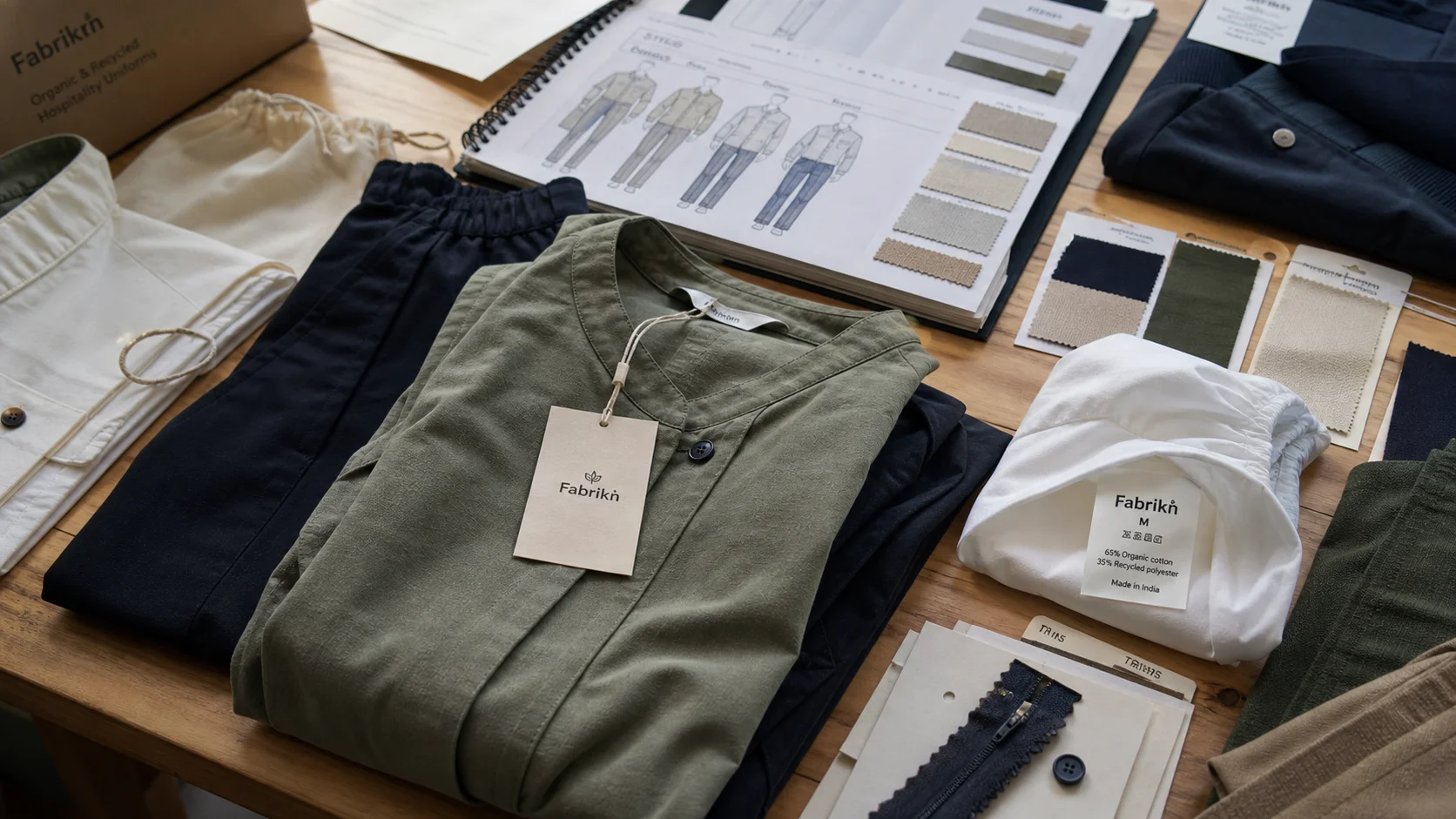
Eco Friendly Mailer Boxes for Clothing Ecommerce compared by sample evidence, fabric or trim specs, MOQ, AQL terms, cost lines, delivery timing, and rework...
Fast answer: Eco Friendly Mailer Boxes for Clothing Ecommerce: Material, Print, MOQ, and QC Terms should be judged by production evidence, not by a generic sourcing promise. The buyer needs sample proof, cost breakdowns, QC checkpoints, and delivery buffers in writing.
Ask for recent sample photos, measurement tolerances, fabric or print test assumptions, decoration test notes, packing examples, and a named inspection checkpoint. These details show whether the team can repeat an approved sample at bulk volume.
Separate garment cost, decoration, labels, packaging, sampling, testing, freight, and rush charges. Clear cost lines make it easier to reduce colorways, adjust size depth, or reserve more time for sampling.
Eco friendly mailer boxes for clothing ecommerce are rarely just boxes. They shape freight, damage rates, and the way customers judge a brand before they even touch the garment. A 180-gram T-shirt shoved into an oversized carton can use 2 to 3 times more material than a right-sized mailer, and that waste comes back as higher shipping costs, more complaints, and a thinner margin.
In apparel ecommerce, packaging sits inside the product economics.
Walking through factories in Vietnam and India, I kept seeing the same quiet leak: brands pay for the garment, then pay again for empty space. A DTC basics label shipping 30,000 units a month may spend $0.22 to $0.45 on packing materials per order, while a premium fashion house may spend $1.00 or more because the presentation supports a higher AOV. Price matters. Fit matters more.
Freight punishes bad assumptions. Small parcels moved by air, or by zone-based carriers that price on dimensional weight, can be billed on volume rather than actual mass. A mailer that is 20 percent larger than needed can push chargeable weight high enough to wipe out the margin on a $24 tee. I have seen brands ship a 150-gram knit top in a box that weighed 120 grams by itself, with another 40 grams of void fill. Expensive air.
Factory audits reveal a less obvious cost. Poor box sizing can drive corner crush, especially when cartons are stacked 6 to 8 high in a fulfillment zone. If the product is fine but the shipper arrives with a split seam or dented edge, the customer still blames the brand. In one audit, a mid-market womenswear label had a 4.7 percent complaint rate on packaging alone, even though garment defect rates were below 1 percent. Weak glue. Oversized mailers. A bad combination.
The point is simple: eco friendly mailer boxes for clothing ecommerce are not decorative extras. They affect cost, carbon, and repeat purchase rates in the same way fit affects returns. Brands that treat packaging as a side line item usually overspend. Brands that treat it as a supply-chain decision usually win.
“Eco-friendly” gets thrown around everywhere, which is exactly why the phrase means little unless the materials are specified. A mailer box can be recyclable, recycled, FSC-certified, or compostable, and those are not interchangeable claims. Recyclable means it can enter a recycling stream where facilities accept it. Recycled content means it already contains recovered fiber. FSC-certified means the virgin fiber comes from responsibly managed forests. Compostable only matters if the item is designed for a composting system that actually exists.
Recycled content usually tells me more than vague green language. An 80 percent recycled kraft mailer carries more weight than a “planet-friendly” label on a glossy box. I’ve reviewed supplier sheets that looked strong on marketing copy but weak on data. Some had 30 percent recycled content, some had none, and some used virgin fiber with a green ink wash to signal sustainability. Not sustainable packaging. Color psychology.
Material choice changes end-of-life outcomes too. Glossy laminations, plastic windows, and thick film coatings can interfere with curbside recycling because they add mixed materials or contamination risk. Heavy aqueous coatings are more recyclable than plastic lamination, but if the coating is overapplied, it can still cause trouble in paper recovery. Water-based inks and adhesives are common in apparel packaging because they reduce solvent load and usually work well with fiber recycling streams. Glue matters as well. A strong water-based adhesive is often better than a shiny but stubborn synthetic adhesive layer that complicates pulping.
Regional expectations differ. North American buyers often ask for recycled content percentages, box weight, and whether the format is curbside recyclable. European brands tend to push harder on extended producer responsibility, recycled fiber targets, and packaging reduction metrics. According to Textile Exchange, material traceability and fiber sourcing are under much tighter scrutiny than a few years ago, and that scrutiny is spilling into packaging decisions too. Buyers who already ask for fiber certifications in garments tend to ask for the same discipline in cartons.
I’ve seen brands connect packaging choices with garment sourcing in a useful way. A company producing organic babywear through custom baby clothing manufacturing is often already documenting chemical safety, fabric origin, and supplier compliance. That same rigor should apply to packaging specs. If a supplier cannot tell you recycled fiber percentage, board grade, or glue type, the sustainability claim is not ready for purchase orders.
Good packaging design starts with dimensions, not mood boards. A folded T-shirt, a hoodie, and a pair of leggings do not need the same cavity. The right mailer box should match the folded garment size, the polybag replacement plan, and the SKU mix. A brand shipping 60 percent tees and 40 percent sweatshirts needs a different size logic than a label built around outerwear. I usually want to see the most common folded dimensions first: 10 x 12 inches for lightweight tops, 12 x 14 inches for knits, and deeper formats for fleece or multi-item orders.
Closure strength matters because apparel is often packed in high-volume, fast-moving facilities where boxes are opened, reclosed, and stacked. Score quality affects whether the folds sit square or bulge under pressure. Corner crush resistance affects whether the box survives sorting belts, truck vibration, and warehouse stacking. A box can look elegant on a studio table and still fail after 3 courier transfers. That is why I care about the board spec, not just the print finish.
Brands overuse inserts all the time. Not every order needs tissue, cards, stickers, or nested trays. A clean kraft presentation can feel more premium than a crowded box, especially for low-AOV basics where each extra component adds cost without improving retention. For premium apparel, tactile detail still matters, but it should be controlled. One small logo sticker, a neatly folded garment, and a strong opening experience often outperform five layers of decorative fluff.
The thing nobody tells you: some of the most expensive-looking boxes are the weakest in transit because they use over-thin board or weak glue. I have opened luxury mailers that felt beautiful but failed a 500 mm drop test after the seam split on the second corner.
That is why I compare premium and value brands differently. A $180 silk label can justify a slightly heavier board and a more refined print method, because the pack is part of the product story. A $28 basics brand cannot afford to waste 12 to 18 percent of fulfillment cost on packaging theater. Yet both need protection. The money just lands in different places.
For brands that produce private-label capsules through private label clothing services, packaging should be built alongside the range plan, not after it. If the product team is still changing fold depth by 15 mm, the box spec will drift. That is how overruns begin.
Box price alone hides the real bill. I build landed cost around five line items: the box, print, storage, damage, freight, and disposal. A $0.28 mailer that reduces dunnage by $0.07, lowers damage by 0.5 percent, and improves dimensional weight efficiency can cost less than a $0.19 alternative that ships poorly and gets replaced by customer service.
Conventional poly mailers are cheap, usually $0.05 to $0.12 each in volume, and they still win for some low-cost basics. Standard corrugated mailers often sit around $0.18 to $0.35 depending on board and print. Recycled-content mailer boxes can range from $0.24 to $0.60 at 1,000 units, then fall at 10,000 units once tooling and print are spread across volume. Custom print usually widens the gap at low MOQ.
At 1,000 units, a two-color recycled mailer might cost $0.42 each. At 10,000 units, the same spec may drop to $0.23 to $0.29, depending on region and board market prices. That delta matters. A mid-sized brand shipping 8,000 orders a month can save $1,200 to $2,000 monthly just by moving from oversize boxes to right-sized recycled mailers, even before return savings are counted.
Here is the simple model I use. If a conventional package costs $0.20, adds $0.08 in void fill, raises freight by $0.12 through dimensional weight, and creates a 1 percent damage rate on a $34 order, the true cost can creep above $0.50. A better mailer at $0.32 may eliminate the void fill, shave the freight charge, and reduce damage to 0.3 percent. The math changes fast. Packaging that looks cheaper can be more expensive by the time the parcel arrives.
Region matters too. Asia-based production often lowers unit cost, especially at 5,000 units or more, but local sourcing can cut lead time from 35 to 45 days to 10 to 15 days and reduce inventory risk if your size mix changes. I have seen brands in Spain and the US switch to local supplier programs after holding 3 months of packaging stock that no longer matched their new box artwork. Not savings. Storage debt. Brands comparing eco friendly mailer boxes for clothing ecommerce across channels should weigh freight, lead time, and quality together, not just the factory quote.
Supplier vetting starts with documents, not samples. I ask for material specs, recycled-content proof, FSC certificates, and any food-contact claims if the vendor is also making food or cosmetics packaging. Apparel boxes rarely need food-contact certification, but the presence of that paperwork can tell you how disciplined the factory is. If the paperwork is vague, the product probably is too.
MOQ is another filter. Stock mailers may start at 500 to 1,000 units. Custom-printed programs often begin at 2,000 to 5,000 units, sometimes 10,000 if the plant wants to protect its setup cost. In smaller regional factories I’ve visited, short-run flexibility was better but print options were limited. In larger export plants, volume was excellent, yet minor artwork changes could add 7 to 14 days. Neither is wrong. The buyer has to know what problem they are solving.
Quality control should cover printing registration, crush strength, moisture resistance, and glued seam consistency. I want to see a test report, not just a glossy sample. A box with perfect color but weak seam glue can fail when humidity rises from 45 percent to 80 percent in transit. That happens often on routes through Southeast Asia, the Gulf, and parts of the US summer shipping network.
Factory setups differ by region. Some low-cost plants are excellent at volume and basic structure, especially for standard kraft boards and large runs. Others are better at short runs, detailed finishing, and precise color matching for premium brands. If you are pairing packaging with cut-and-sew development, the discipline that supports cut and sew manufacturing should extend to packaging samples, too. I want the same rigor in the proofing stage.
One practical warning: a supplier may quote a recycled box that is technically recyclable but too soft for apparel shipping unless tested. A 100 percent recycled board can be the right environmental choice and still fail a 7 kg compression test if the caliper is too low or the flute profile is wrong. Ask for numbers. A claim without a board grade is just a sales line. For eco friendly mailer boxes for clothing ecommerce, a strong supplier, clear factory data, and transparent production specs matter more than sales copy.
I never approve packaging without testing. The minimum program should include drop tests, vibration, edge crush, and warehouse stacking. A box that survives hand-carried factory inspection can still fail once it moves through a courier network with 3 to 5 transfers. That is where real-world abuse starts.
For cross-border ecommerce, humidity is a serious variable. In tropical climates, I want a 24-hour conditioning test at 80 percent relative humidity and a second check after transit simulation. Paperboard absorbs moisture. Glue weakens. Corners round off. In one Vietnam audit, a box that performed well at 22°C and 50 percent humidity lost 18 percent of its compression strength after conditioning in a wet room. Not a rounding error. A shipment risk.
Compliance failures usually come from language, not engineering. Unverified recycled claims can trigger complaints from regulators or marketplace teams. Compostable language is especially risky if the box is not certified and locally accepted for composting. Packaging that is technically recyclable in one market may be rejected in another because the coating or format does not match local rules. According to ASTM International, test methods are only useful if the buyer applies them to the actual material build, not a simplified sales version.
Channel changes the pass/fail bar. Subscription apparel boxes need repeated opening and closing, so seam performance matters more. DTC basics need compression and weight control. Premium fashion gifts need cosmetic perfection, which means print consistency and corner integrity matter even if freight is less sensitive. I have seen a premium launch fail because 2.5 percent of boxes arrived with ink rub, even though structure was fine.
For brand teams working with limited drops or seasonal capsules, I often recommend starting with a small sampling budget and then validating the packaging order alongside apparel development. If the product line is already custom, your packaging should be treated the same way. That is one reason many founders who source through get a free quote prefer to request apparel and packaging estimates together. It forces the numbers into the same conversation.
To keep standards aligned, compare your box requirements against recognized textile and packaging guidance from OEKO-TEX and sourcing practices discussed by Trade.gov. Those references can help teams define material, compliance, and export expectations before production starts.
I like a 30-day sourcing plan because it keeps teams honest. Week 1: define size targets, sustainability goals, artwork limits, budget, and shipping lanes. Week 2: request 3 supplier samples. Week 3: test them against your real garments, not dummy fillers. Week 4: approve the final spec and lock the order. Fast enough for a launch. Structured enough to stop improvisation.
Your spec sheet should include board grade, recycled content percentage, dimensions, print method, closure type, glue type, and test standard. I also add target weight per box, acceptable variance, and the exact pack format for each SKU class. A tee might use one spec. A hoodie might use another. The more precise you are, the less waste you buy.
Run a three-sample comparison before committing. Choose one cheapest option, one most sustainable option, and one best-balanced option. Then test them against the same garment mix, the same drop height, and the same transit route. I’ve seen brands discover that the cheapest sample had the highest damage rate and the “greenest” sample needed a heavier board that erased the recycled-content story through extra material use.
Approval should sit with operations, finance, and brand together. Operations checks fit and freight. Finance checks landed cost and inventory exposure. Brand checks the opening experience and print quality. If one team signs off alone, redesigns usually follow after launch. That is expensive and avoidable.
Brands building apparel lines through private label clothing services or scaling from a small label to a multi-category range need packaging discipline early. The best eco friendly mailer boxes for clothing ecommerce reduce waste without increasing returns, breakage, or hidden costs. That is the standard I use in factory audits, and it should be the buyer’s standard too.
They are usually made from kraft paperboard, recycled corrugated board, or a blend with 70 to 100 percent recycled fiber. The better versions use water-based inks and adhesives, with no plastic lamination or window film. FSC-certified virgin fiber is also common when recycled content alone cannot meet strength requirements.
At small volumes, expect roughly $0.24 to $0.60 per box depending on size, print, and board grade. At 10,000 units, pricing often falls by 20 to 40 percent. Freight, storage, and damage savings can change the total landed cost more than the box quote itself.
Typical sampling takes 7 to 14 days, and production can take 15 to 45 days depending on region and order size. Local sourcing is usually faster, while overseas production often needs more time for proofing and shipping. Add 3 to 5 days if you need revised artwork or structural changes.
Yes, for many folded apparel orders they can replace poly mailers if the box is right-sized and the board grade is strong enough. They are especially effective for premium basics, multi-item packs, and brands that want a more refined presentation. For very low-margin items, poly mailers can still be cheaper.
Ask for recycled-content proof, FSC certificates, board specs, and test results for compression and moisture resistance. If the supplier cannot provide exact percentages or only offers vague “eco” claims, treat that as a warning. A recyclable box that is too soft or overcoated may create more waste through damage and returns.