
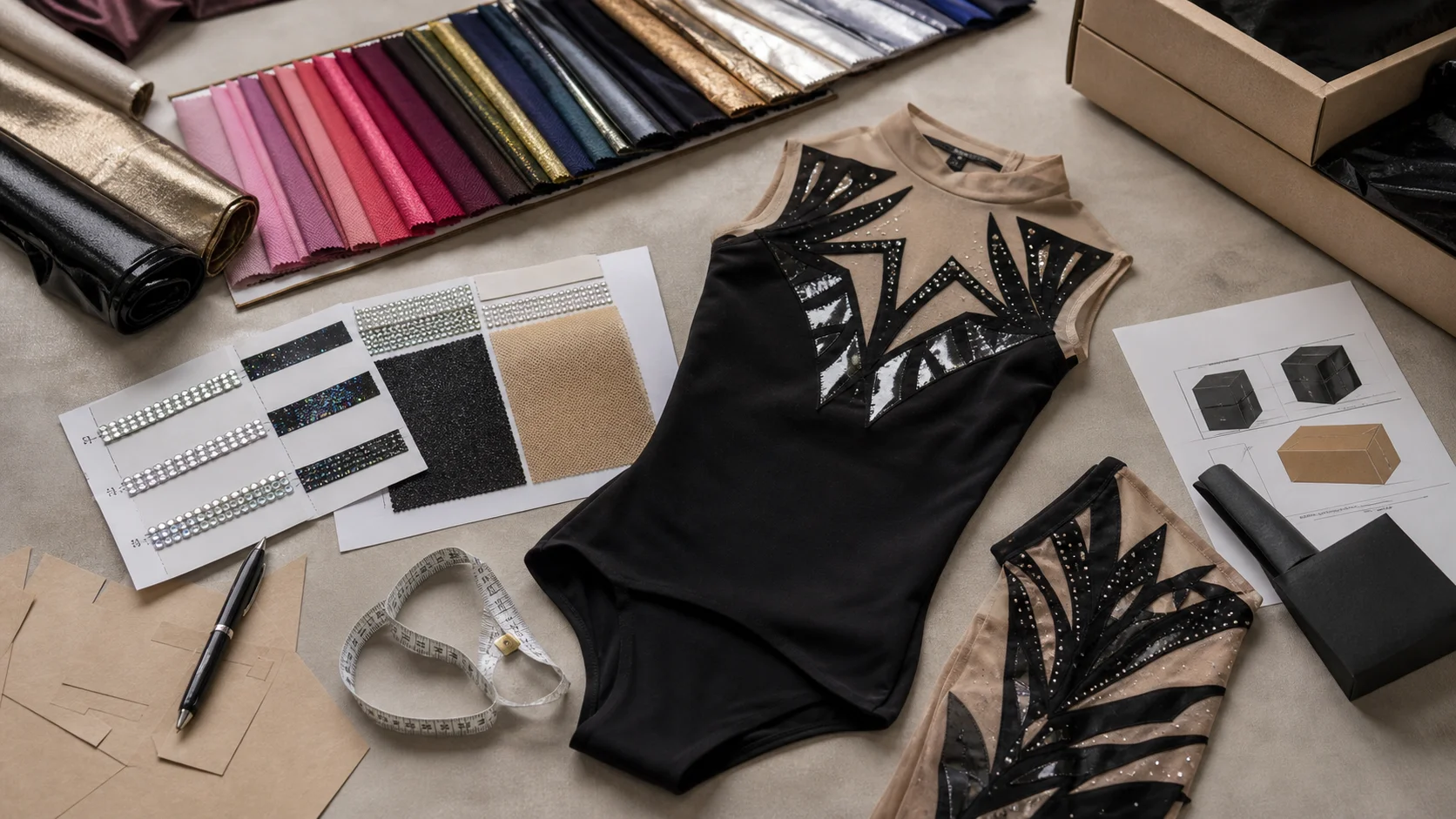
Foilstamped Hang Tags for Fashion Brands with checks for samples, fit, MOQ, QC evidence, pricing terms, and delivery risk.
Fast answer: Foilstamped Hang Tags for Fashion Brands: Costs, Quality, ROI should be judged by production evidence, not by a generic sourcing promise. The buyer needs sample proof, cost breakdowns, QC checkpoints, and delivery buffers in writing.
Ask for recent sample photos, measurement tolerances, fabric or print test assumptions, decoration test notes, packing examples, and a named inspection checkpoint. These details show whether the team can repeat an approved sample at bulk volume.
Separate garment cost, decoration, labels, packaging, sampling, testing, freight, and rush charges. When every cost line is visible, it becomes easier to reduce colorways, adjust size depth, or reserve more time for sampling.
On a crowded rail, a good tag can do more heavy lifting than the garment expects. I’ve watched a $38 tee get handled like a $68 tee because the tag caught the light first. That’s the quiet power of foilstamped hang tags for fashion brands: they make a split-second argument before anyone reads a spec sheet.
Trade and retail teams know the effect well. Light does half the selling. Gold foil catches overhead LEDs; silver reads clean in window displays; even a small 8 mm logo can show up in a phone photo from 1.5 meters away.
For DTC brands, that matters twice. First sale online, then the customer checks the tag at home and decides whether the piece feels worth keeping.
Luxury buyers notice restraint. Mid-market shoppers notice contrast. In a premium showroom in Milan, I saw buyers run a thumb over a 600 GSM tag before they touched the garment. In a mass retail hub in Istanbul, they checked barcodes, price clarity, and whether the foil looked cheap under fluorescent lighting. The garment mattered, sure, but the tag set the expectation.
During factory visits in China, India, and Portugal, the failures were almost always the same: foil that cracked on a fold line, stamping that looked dull after 2,000 rubs, or dies aligned 1.5 mm off center. Small defects read as big shortcuts. Buyers may not name the defect, but they feel it.
That is why I treat hang tags as conversion tools, not stationery. A spend of $0.07 to $0.22 per piece can lift perceived price far more than a half-hearted fabric upgrade that costs $0.40 a yard. I’ve seen brands spend heavily on French terry 320 GSM, enzyme wash finishes, and custom stitching, then attach a tag that looks like it came from a chain store clearance bin. That mismatch kills the premium signal fast.
The substrate decides whether foil feels refined or flimsy. FSC-certified paper, textured cotton stock, recycled kraft, coated art paper — I’ve handled all of them in factories from Guangzhou to Ahmedabad, and the differences are not cosmetic. A 300 GSM FSC sheet with a smooth topcoat will hold fine serif type better than a 350 GSM recycled kraft that drinks ink and softens edges.
Paper weight changes more than rigidity. At 250 GSM, tags bend easily in packing and can curl after humidity exposure. At 400 GSM, they feel substantial, but shipping cartons fill faster and per-unit freight can creep up when brands order bulk quantities. For brands using lightweight knits, that extra stiffness can feel right. For swimwear or soft jersey, 320 GSM often balances feel and cost.
Foil choice matters just as much. Metallic gold remains the most requested because it signals premium quickly, but silver is cleaner on black paper and holographic foil can look loud if the brand voice is minimal. Matte foil is the sleeper option. It reflects less, but on dark stocks it gives depth without the flash. The cleanest small logos I’ve seen used silver foil on 350 GSM coated art paper with a subtle velvet lamination.
Adhesive layers and heat settings determine durability. Poor bonding shows up as edge lifting after one week on the floor. According to ASTM testing standards used for print and material performance, abrasion and adhesion should be checked under repeat stress, not just at first glance. I’ve watched a factory with weak calibration lose 6% to 12% of a run to faint stamping or patchy transfer.
Here’s the part many people miss: recycled content does not automatically reduce quality, but recycled kraft with heavy foil coverage often fails to hold tiny type as crisply as FSC art paper. If a logo has strokes below 0.3 mm, I advise a smoother stock, a tighter die, and less foil coverage. That combination keeps detail intact and avoids reprints.
For brands comparing a manufacturer, factory, or supplier, ask for live samples, not just photos. A custom specification can look perfect on screen and still fail in production if the paper grain, foil temperature, or die cut is off. If you are sourcing from China, request proof of the exact stock, finish, and quality checks before approving wholesale or bulk production.
Pricing changes sharply with volume. At 1,000 pieces, foilstamped hang tags for fashion brands often land around $0.30 to $0.80 each in China, $0.55 to $1.10 in India, $0.80 to $1.60 in Europe, and $1.20 to $2.50 from a local printer in the U.S. or U.K. By 5,000 pieces, those numbers can fall to $0.12 to $0.34 in China, $0.20 to $0.48 in India, $0.45 to $0.95 in Europe, and $0.70 to $1.40 locally.
At 10,000 pieces, the curve gets kinder. I’ve seen China price at $0.08 to $0.22, India at $0.14 to $0.30, Europe at $0.32 to $0.70, and local production at $0.45 to $1.00 depending on die complexity and turnaround. Those ranges assume a standard rectangular shape, one foil color, and a simple backside print. Add embossing, edge paint, or dual-sided stamping, and the numbers rise fast.
Setup costs do not disappear; they dilute. A foil die may run $30 to $120, plates $20 to $80, and sampling $25 to $150 depending on revisions. If a brand orders 1,000 units, those charges sting. At 10,000 units, they become background noise. That’s why premium finish tags often cost 20% to 40% more than standard print in the low-volume band, then narrow the gap once scale arrives.
Regional differences showed up clearly in my factory visits. Chinese plants usually offered 3 to 5 week lead times, but holiday bottlenecks around Lunar New Year could add 10 to 18 days. Indian suppliers were often stronger on communication and manual finishing, though lead times ranged from 4 to 6 weeks. European printers were fastest for short runs, 7 to 14 days once artwork was approved, yet labor pushed unit costs higher. Local printers cut freight and customs risk, which matters when a drop lands in 12 days, not 6 weeks.
To protect margin, simplify shape, reduce foil coverage, and limit color count. A 55 x 90 mm tag with one foil hit and one black print can outperform a complex die-cut tag that costs 35% more and adds no sales lift. I’ve seen brands save $0.09 to $0.18 per piece just by trimming the back copy and removing a second foil pass. For brands building private label clothing, that discipline protects margin without flattening the brand story.
Restraint sells. Full-coverage foil often looks cheaper than a single, disciplined stamp because the eye has nowhere to rest. A 12 mm logo in gold on matte black stock can feel more premium than a full-bleed metallic sheet, especially when the garment price sits between $90 and $180. In the brands I’ve audited, the best tags usually reserve foil for the mark, not the message.
Typography does heavy lifting. Sans serif type at 6.5 pt can stay readable if contrast is strong, but fine hairlines and compressed tracking are risky under foil. I’ve seen small type fill in after stamping, especially on textured paper. Barcode placement matters too. If the scanner needs to hunt, retail staff lose patience. Keep the barcode on a flat, low-gloss area and leave at least 4 mm of quiet space around it.
Shape choices affect waste and cost. Rounded corners reduce bending, while a 3 mm perforation for price tear-off helps stores move product faster. Edge painting can look rich, but it adds setup and often creates reject risk if the paint bleeds 1 mm onto the face. Embossing and debossing work best when they reinforce the foil, not compete with it. Spot UV can add depth, though too much gloss starts to feel like packaging from a gift shop.
Common mistakes are predictable. Too much copy. Low-contrast type. Foil lines thinner than 0.25 mm. I’ve watched a brand lose two weeks because the designer placed care icons inside the foil zone and the printer had to remake the die. The reprint cost $430 on a 5,000-piece run, and the team still had to approve a second sample. Precise design cuts reject rates before a machine ever starts.
When I worked with a brand that also invested in custom bra manufacturing, the tags had to do more than look pretty; they needed to align with fit messaging, fiber disclosure, and retail speed. The same principle holds across categories: packaging and product story should speak the same language.
If you are planning foilstamped hang tags for fashion brands at wholesale or bulk scale, keep the design simple enough for repeat production. A custom brief should specify the manufacturer’s tolerance for fine type, foil coverage, and die alignment before the first production run begins.
The sample ladder catches the expensive mistakes. I insist on three stages: digital proof, pre-production sample, and bulk approval. The digital proof should confirm layout, crop marks, barcode readability, and foil coverage. The pre-production sample should test real paper, real foil, and final cutting. Bulk approval should compare the first 200 pieces against the golden sample, not against memory.
Defects are easy to list and costly to ignore. Ghosting happens when the foil shifts slightly and leaves a shadow. Flaking means adhesion failed under pressure. Color shift can make a deep navy back print read purple. Warped stock usually points to humidity or poor drying time. Cutting errors show up as uneven corners, off-center holes, or perforations that tear too easily. In one Vietnamese plant, I saw a 3% reject rate from a die that drifted 0.9 mm over a long run.
Inspection tolerances should be written down. For registration, I prefer a maximum variance of 0.5 mm on standard tags and 0.3 mm for fine logos. Foil coverage should remain consistent across the batch, with no visible patchiness in at least 20 random samples per carton. If a factory cannot document those numbers, I assume the control process is weak.
Stronger factories show you the paperwork before you ask. They track humidity at 45% to 60%, keep sample history, and photograph the first-off sheet under white light and warm light. Weaker factories rely on verbal reassurance and a stack of “looks okay” comments. That gap matters. According to ISO quality management standards, repeatability and documented checks are the backbone of controlled production, not just a nice-to-have.
A short QC checklist can save a recall. I’ve seen a 12-cent tag trigger a $9,000 packaging rush because the foil logo was reversed on 18,000 units. That sort of mistake is embarrassing, but it is also preventable with 10 minutes of inspection discipline and one signed-off reference sheet.
For foilstamped hang tags for fashion brands, quality should be checked at the factory and again at the supplier’s packing stage. That extra control matters whether the job is custom, wholesale, or bulk, because small errors compound quickly across production.
Local printers are faster; overseas mills are cheaper. Simple trade-off on paper. Messy in practice. A local supplier can often move from artwork to delivery in 7 to 14 days for a 1,000-piece run, while China or India usually needs 3 to 6 weeks once the die is approved. Add ocean freight, and a larger order can stretch to 5 to 8 weeks if customs sits on the paperwork.
The timeline breaks into six steps: design, sampling, die creation, production, shipping, and customs. Design may take 2 to 5 days if the file is clean, or 2 weeks if the brand keeps changing the back copy. Sampling usually runs 3 to 7 days locally and 5 to 10 days overseas. Die creation is often 2 to 4 days. Production itself can be quick, sometimes 2 to 6 days for simple tags, but shipping and port delays do the real damage.
Urgent drops justify higher prices when the launch window is fixed, inventory is already in a warehouse, and the tag becomes a hard gate before retail receipt. I would pay more for a 10-day local run if a collection is tied to a press event or a wholesale appointment. I would not pay local rates for a seasonal core line with 8 weeks of planning room. The margin hit is unnecessary.
Holiday bottlenecks are real. China slows around Lunar New Year, India can tighten around Diwali, and Europe often sees capacity squeeze in August. I’ve also seen customs paperwork stall a shipment for 9 days because a packing list listed 4,900 cartons as 5,000. Good sourcing means checking who answers emails in 2 hours, who sends a true-to-scale sample, and who provides sustainability documents without being chased. That last piece matters to brands buying clothing packaging solutions with recycled content or FSC claims.
For sewn goods and trimmed accessories, I use the same supplier screening logic I apply to cut and sew manufacturing: communication speed, sample accuracy, and documentation. If a factory cannot track material origin, it probably cannot track foil consistency either.
If you are comparing a China factory with a European supplier, ask for the same sample spec, the same production timeline, and the same quality checklist. That makes cross-region pricing easier to judge and avoids false savings from weak production control.
A 30-day rollout is realistic if the brand is disciplined. Days 1 to 3: lock the tag size, budget, and required copy. Days 4 to 7: brief the designer with exact paper weight, foil color, barcode size, and finish references. Days 8 to 12: request digital proofs from two or three suppliers. Days 13 to 18: approve the pre-production sample and confirm a golden sample for the warehouse. Days 19 to 30: run bulk production, inspect the first cartons, and book delivery with a 2 to 4 day buffer.
I tell brands to set a budget guardrail tied to product tier. For entry luxury or premium DTC, a tag budget of 0.5% to 1.5% of retail price is reasonable. For a $120 jacket, that gives you room for a $0.12 to $0.50 tag without panic. For a $28 top, keep the tag closer to $0.05 to $0.18 or the packaging starts behaving like overhead instead of branding. That discipline is especially useful for brands scaling with private label clothing, where every cent repeats across volume.
Brief designers with non-negotiables. Use 300 DPI artwork, outlined fonts, vector logos, and a barcode that scans at 100% on a laser test. Specify the paper stock, foil color, and finish in writing. Set approval deadlines early, because one late edit can push a foil die by 3 to 5 days. Merchandisers should know the final tag count per SKU, overage allowance, and carton labeling rules before production starts.
The thing nobody tells you: a small test run of 500 to 1,000 tags can save more money than a large “safe” order, because it reveals foil cracking, barcode failures, and design clutter before you commit to 10,000 pieces.
Test one capsule collection first. Compare sell-through, return rate, and customer photo quality against a plain tag version for 2 to 4 weeks. If the premium tag lifts perceived value and does not increase reject rates, scale it. If not, trim the foil, simplify the copy, and try again. I’d rather see a brand treat hang tags as a measured branding tool than as decorative overhead that happens to travel with the product.
Before launch, confirm the supplier can support repeat production without changing paper stock or foil shade. That matters for consistency across seasons, especially when working with a manufacturer in China or a local factory that may revise materials based on availability.
At 1,000 pieces, costs often range from $0.30 to $0.80 in China, $0.55 to $1.10 in India, $0.80 to $1.60 in Europe, and $1.20 to $2.50 locally. At 10,000 pieces, a simple foil tag can fall to $0.08 to $0.22 in China and $0.14 to $0.30 in India, depending on size, foil coverage, and finish.
Local printers can deliver simple runs in 7 to 14 days once artwork is approved. Overseas production usually takes 3 to 6 weeks before shipping, and customs can add 3 to 9 days. Complex shapes, embossing, or multiple proof rounds can add another 1 to 2 weeks.
FSC paper, smooth coated art paper, and heavier recycled stocks are common choices. For fine logos and small type, 300 GSM to 350 GSM smooth stock usually gives the cleanest foil edge. Textured kraft can work, but it often softens detail and needs simpler artwork.
Yes, but the spec has to be deliberate. FSC-certified paper, recycled content, and minimal foil coverage reduce impact better than a full-foil design on heavy stock. Ask for documentation on paper origin, foil type, and waste rates before you approve production.
Use a digital proof, then a pre-production sample, then bulk approval. Check registration within 0.5 mm for standard tags, inspect for flaking and ghosting, and test barcode scans on at least 20 samples. A written QC checklist lowers reprint risk and helps catch defects before cartons ship.