
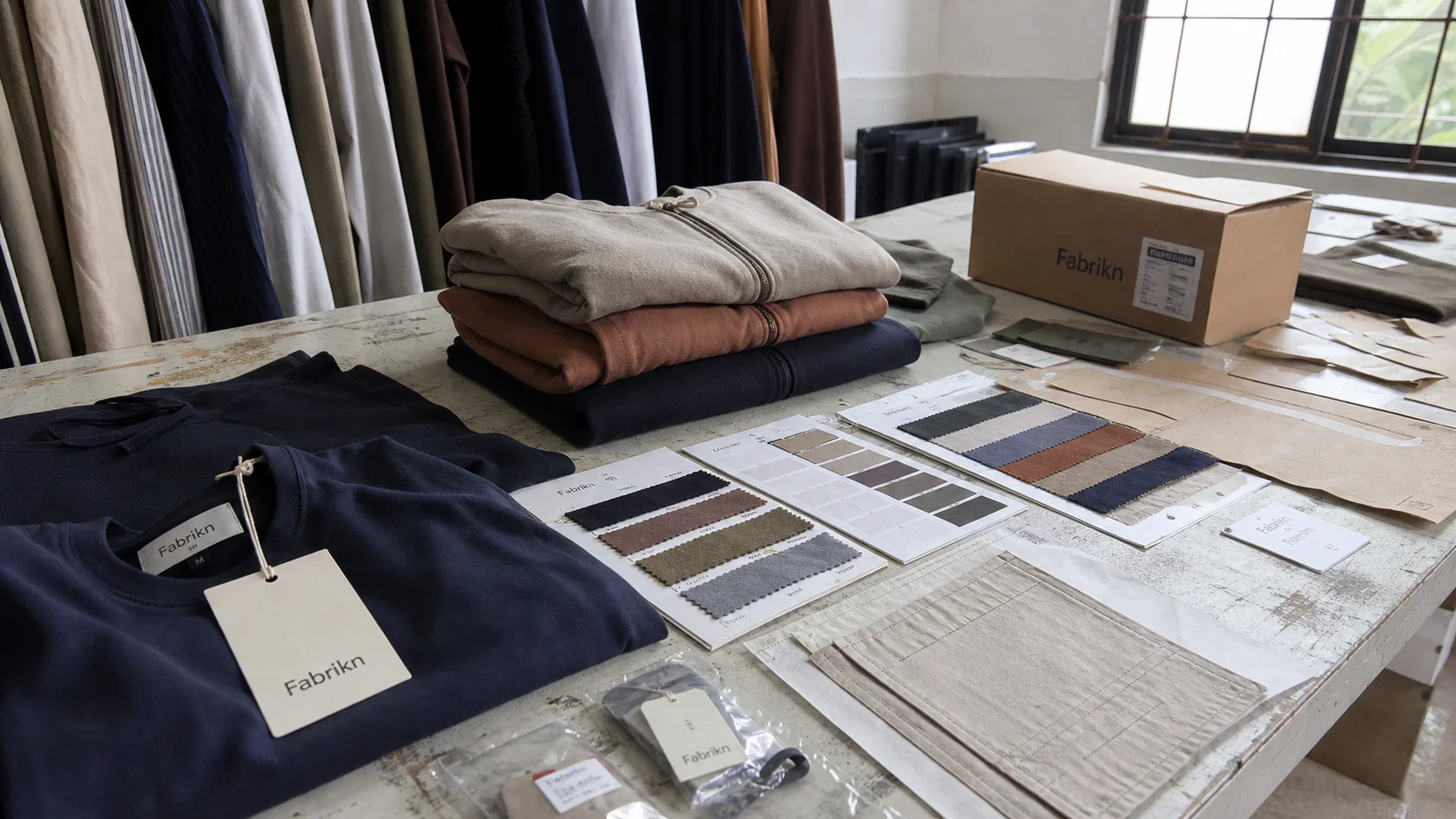
Much Does Custom Embroidery Cost compared by sample evidence, fabric or trim specs, MOQ, AQL terms, cost lines, delivery timing, and rework responsibility.
Fast answer: Much Does Custom Embroidery Cost: Tech Pack, Sample Gate, MOQ, and QC Terms should be judged by production evidence, not by a generic sourcing promise. The buyer needs sample proof, cost breakdowns, QC checkpoints, and delivery buffers in writing.
Ask for recent sample photos, measurement tolerances, fabric or print test assumptions, decoration test notes, packing examples, and a named inspection checkpoint. These details show whether the team can repeat an approved sample at bulk volume.
Separate garment cost, decoration, labels, packaging, sampling, testing, freight, and rush charges. Clear cost lines make it easier to reduce colorways, adjust size depth, or reserve more time for sampling.
If you are planning branded uniforms, corporate apparel, promotional merchandise, or retail clothing, one of the first questions you will likely ask is: how much does custom embroidery cost? The short answer is that custom embroidery pricing can vary widely depending on stitch count, design complexity, garment type, quantity, placement, thread colors, and setup requirements. The long answer is more useful, because understanding each pricing factor helps you budget accurately and avoid surprises.
This guide explains how custom embroidery pricing works, what affects the final cost, how embroidery compares with other decoration methods, and how to estimate your project more confidently. If you are sourcing custom clothing for a business, team, or event, this article will help you make a smarter purchasing decision and get the best value from your supplier.
Custom embroidery is the process of stitching a logo, name, artwork, or message directly onto a garment or textile using thread. Unlike printing methods that place ink or film on top of fabric, embroidery creates a textured, durable design with a premium look and feel. It is commonly used for polo shirts, jackets, hats, hoodies, aprons, uniforms, workwear, and premium promotional apparel.
Because embroidery uses thread and machine time rather than ink, its cost structure is different from screen printing or heat transfers. Instead of charging only per print, embroidery pricing often includes a one-time digitizing fee plus a per-item stitching cost. That means a small order can feel expensive at first, while larger orders often become more cost-effective.
The average custom embroidery cost can range from about $5 to $20 per item for simple designs on common garments, with more complex or premium projects costing more. In many cases, the final price includes several components:
For a basic logo on a polo shirt, you might expect a lower per-piece decoration cost than for a large, detailed design on a heavy jacket. Meanwhile, embroidered hats and caps often have their own pricing structure because of the curved surface and special hoops required.
Here is a practical pricing range to help with early budgeting:
Keep in mind that garment quality, order quantity, and supplier capabilities will influence whether you land at the low or high end of these ranges.
When asking how much does custom embroidery cost, the most important thing to understand is that embroidery is not priced by a single flat rate. It is shaped by several variables. The more you know about these variables, the easier it is to compare quotes and spot hidden costs.
Stitch count is one of the biggest cost drivers in embroidery. More stitches mean more machine time, more thread usage, and more labor. A small left-chest logo usually has a lower stitch count than a full-back design or an oversized sleeve graphic. Many suppliers base embroidery prices on stitch ranges, such as under 5,000 stitches, 5,000 to 10,000 stitches, or higher tiers for detailed work.
Simple text and basic logos are faster and easier to embroider than detailed illustrations, fine gradients, or tiny lettering. Thin lines may not translate well into stitching, so the design may need to be adjusted before production. The more detailed the artwork, the more likely you are to pay a higher digitizing and stitching cost.
Embroidery uses individual thread colors for different parts of the design. A one-color logo is generally more straightforward than a multi-color design with several transitions. While adding extra colors does not always dramatically increase the price, it can affect setup time and production efficiency.
Embroidery on a basic cotton t-shirt is different from embroidery on a structured jacket or a thick fleece hoodie. Heavier fabrics and specialized garments often require more time, different needles, or more careful handling. Some garments are also less suitable for embroidery, which can increase complexity and cost.
Common placements such as the left chest are typically more affordable than large designs on the back, sleeves, or across the shoulders. Hard-to-embroider areas may require additional handling and specialized hooping, which can increase labor costs.
Like most custom manufacturing services, embroidery becomes more economical at higher volumes. The digitizing fee is usually a one-time cost, so spreading it across 50, 100, or 500 items lowers the effective price per item. If you order only a few pieces, setup costs make up a larger share of the total.
Rush orders can cost more because they disrupt normal production scheduling. If you need embroidered apparel by a tight deadline, expect to pay a premium for accelerated setup and production.
One of the most misunderstood parts of custom embroidery pricing is digitizing. Before a logo can be stitched, it must be converted into a machine-readable embroidery file. This process is called digitizing, and it often carries a one-time fee.
Digitizing fees commonly range from $20 to $100 or more, depending on artwork complexity and the supplier. Basic text logos are usually less expensive to digitize than intricate corporate symbols or artwork with many stitch changes. Some suppliers may waive digitizing fees on large orders or repeat projects, while others charge it every time a new design is created.
Other setup fees may also apply, such as:
If you plan to use the same logo repeatedly, ask whether your digitized file is stored for future reorders. This can save money on repeat campaigns and long-term uniform programs.
The type of apparel you choose can have a major impact on the total embroidery cost. Some garments are easy to embroider, while others require more care, stabilizers, or machine adjustments.
These are among the most common and cost-effective garments for embroidery. They are popular for office uniforms, sales teams, hospitality staff, and trade show apparel. Left-chest logos are typically straightforward and affordable.
Hoodies often cost more than polos because the fabric is thicker and the surface can be less stable. Pockets, seams, and drawstrings can also affect placement. Embroidered hoodies are popular for premium branded apparel and employee gifts.
Jackets can be more expensive to embroider due to thicker materials, linings, and technical construction. However, embroidery is often the preferred method for outerwear because it delivers a durable, upscale finish.
Caps are a special category because embroidery on curved surfaces requires specific machinery and techniques. Front-panel logos are common, while side or back embroidery may cost extra. Hats are a favorite for company merchandise, sports teams, and retail branding.
Aprons, chef coats, and industrial workwear are often embroidered for branding and identification. Cost depends on fabric thickness, logo size, and whether names or titles are added to the design.
If you are buying custom embroidered apparel for a team, company, or event, bulk ordering can significantly reduce your cost per item. This happens because the fixed digitizing fee is spread across more pieces, and production becomes more efficient at scale.
For example, a one-time digitizing fee of $50 on a 10-piece order adds $5 per item before any stitching charges. On a 100-piece order, that same fee adds only $0.50 per item. That is why larger orders often produce much better value.
Many manufacturers also offer quantity-based discounts for decoration and garment pricing. If your project includes multiple garment styles or multiple logo placements, a supplier may still be able to optimize the order across product groups.
If you are planning a recurring uniform program, ask for pricing at different volume tiers so you can compare 25, 50, 100, and 250-piece scenarios.
Where you place your embroidery matters almost as much as the design itself. Standard placements usually cost less because they are faster to hoop and stitch. Common placements include:
Larger or less common placements generally increase cost because they require more thread, more machine time, and more complex setup. A small chest logo is typically more affordable than a large back design. If budget is a concern, keeping the embroidery compact is one of the easiest ways to save money.
Size also matters for readability and quality. Tiny text may look neat in digital artwork, but it can become difficult to stitch cleanly. Suppliers may recommend simplifying your design or increasing its size to produce better results.
Many buyers compare embroidery with screen printing or other decoration methods when deciding on custom clothing. In general, embroidery usually costs more per item than basic printing, especially for low-volume orders. However, it also offers a more premium appearance and greater durability in many applications.
Embroidery is often the best choice when you want:
Printing may be more cost-effective when you need large graphics, multiple colors, or large event quantities. The best option depends on your budget, garment type, and brand image.
If you are unsure which decoration method suits your project, a supplier experienced in custom clothing can guide you through the trade-offs. You can learn more about Fabrikn’s capabilities on our services page.
To estimate your embroidery budget, start with four basics: garment cost, digitizing fee, stitch complexity, and quantity. A simple formula can help you build a realistic estimate before requesting a quote.
Here is a practical approach:
For example, if you want 50 embroidered polo shirts with a left-chest logo, your quote will likely include the shirt price plus a one-time digitizing fee plus a per-item embroidery charge. If the same design is used again later, the second order may cost less because digitizing has already been done.
When you request a quote, provide clear artwork files and be specific about:
For a tailored quote or product discussion, you can reach out through our contact page.
Even though embroidery has a premium look, there are several ways to manage your costs effectively without sacrificing quality.
Simple logos, clean lettering, and limited stitch density are more affordable than highly detailed artwork. If possible, streamline the design before digitizing.
Left-chest or front-panel embroidery is generally more economical than custom placements or oversized graphics.
If your organization has recurring needs, combine orders to reduce the effective cost per item.
Once your design is digitized, reuse it for future orders whenever possible. This avoids repeated setup fees.
Select apparel that matches both your brand image and your budget. A premium jacket may be ideal for executives, while polos may be better for everyday staff wear.
Allow extra time for sampling, approvals, and production. Rush charges can often be avoided with better planning.
When you are sourcing custom clothing, working with a manufacturer that understands both apparel construction and decoration methods can make a major difference in cost, quality, and delivery reliability. At Fabrikn, we support B2B clothing manufacturing with a focus on quality, consistency, and practical production guidance.
Whether you need embroidered workwear, branded uniforms, or custom apparel for a campaign, the right partner can help you balance design, durability, and budget. If you want to learn more about our company and production approach, visit our about us page.
By partnering with an experienced manufacturer, you can reduce communication issues, avoid costly mistakes, and get clearer pricing from the start.
So, how much does custom embroidery cost? The answer depends on the garment, the design, the stitch count, the number of colors, the order size, and the setup involved. For simple designs, the cost can be quite affordable, especially in bulk. For detailed artwork, premium garments, or small orders, the price can rise quickly.
The best way to control your budget is to keep designs clean, choose standard placements, plan ahead, and work with a supplier that provides transparent quotes. If you are comparing options for custom clothing, embroidery remains one of the most durable and professional-looking decoration methods available.
For a detailed discussion of your project, contact Fabrikn and request a quote tailored to your garment type, branding needs, and volume requirements.
Get a free quote from Fabrikn — your trusted B2B clothing manufacturer with 10+ years of experience. MOQ as low as 200 pieces.
Get a Free Quote →Custom embroidery on a shirt often costs around $5 to $15 per item for common designs, not including the shirt itself. The exact price depends on stitch count, placement, and quantity.
Embroidery usually costs more because it requires digitizing, machine setup, and more production time. It also uses thread and specialized equipment to create a textured, durable finish.
Yes, many suppliers charge a one-time digitizing fee to convert artwork into an embroidery file. This fee is often reused for repeat orders of the same design.
The cheapest option is usually a simple one-color logo in a standard placement, such as the left chest, ordered in larger quantities on a common garment like a polo shirt.
It can. Hats and jackets often require more specialized setup and handling than basic shirts, which can raise the cost depending on the design and material.
Yes. You can lower costs by simplifying the design, reducing stitch count, choosing standard placements, ordering in bulk, and reusing digitized artwork for future orders.
Provide your garment type, quantity, logo artwork, desired placement, thread colors, and deadline. A complete brief helps the supplier give you a more accurate estimate.