
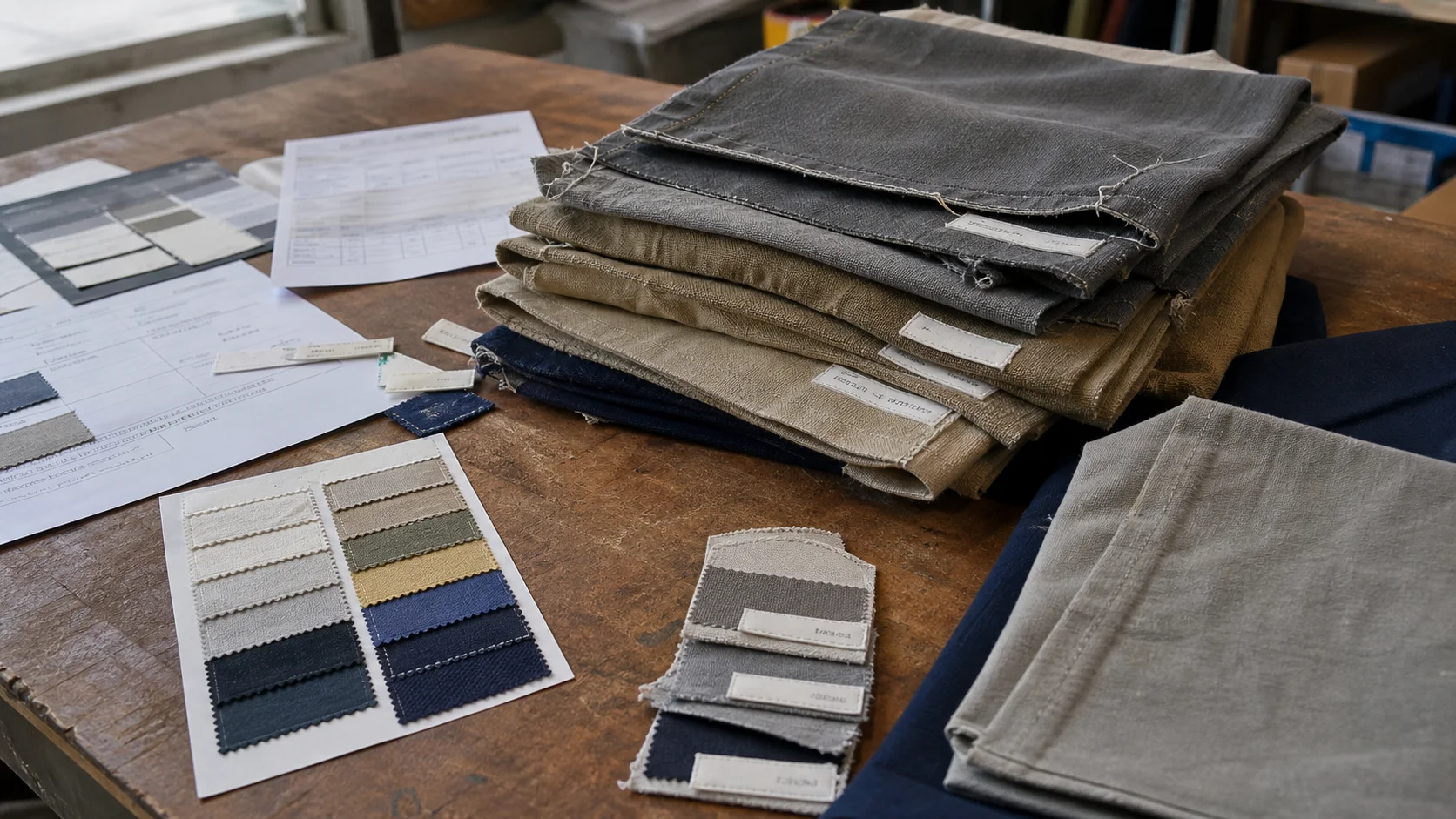
A practical SEO outline for hotel procurement teams auditing woven origin tab colorfastness before approving uniforms, linens, robes, and textile programs.
For hotel procurement teams, a woven origin tab looks like a small detail until it fails in service. Once a tab fades, bleeds onto adjacent fabric, or loses contrast after wash and abrasion, the problem is no longer decorative. It becomes a brand consistency issue, a QA dispute, and in some cases a replacement cost across an entire soft goods program. A colorfastness audit for woven origin tabs is therefore not a niche textile check. It is a practical control point for hotel buyers who need repeated performance, stable shade matching, and predictable acceptance criteria across bulk production.
This article explains how procurement teams should specify, test, and approve woven origin tabs used in hotel textiles and decoration programs. It covers typical MOQ expectations, sample approval stages, lead-time factors, fabric and trim selection, and the inspection risks that commonly cause avoidable rejections. The focus is not on theory. It is on what buyers can actually put into a purchase specification, a lab test request, and a pre-shipment audit.
Woven Origin Tab Colorfastness Audit for Hotel Buyers - Decoration & Printing manufacturing guide
A woven origin tab is a small woven label or tag that identifies the product origin, brand mark, collection name, or compliance statement. In hotel procurement, it is often stitched into bedding, towels, robes, curtains, cushion covers, spa textiles, and decorative soft goods. These items are handled, washed, pressed, and displayed repeatedly. That means the tab must survive not only visual scrutiny but operational abuse.
Colorfastness is the ability of the tab’s yarns, dyes, and finishing chemistry to keep their color under expected conditions. Those conditions can include laundering, hot water, detergent, chlorine-based chemistry, rubbing, sunlight, steam finishing, and dry cleaning. A tab that looks fine in a sealed sample can still fail after standard hotel care cycles. Buyers should treat the tab as part of the product system, not as a separate accessory with lower risk.
For hotel programs, a woven origin tab usually needs three things at once:
That combination is harder than it sounds. A thin label with bright contrast colors may look premium, yet it can be more vulnerable to bleeding or loss of sharpness after laundering. A more muted yarn selection may be safer for performance, but it may not meet brand presentation requirements. The right decision depends on how the hotel uses the textile, how often it is cleaned, and how much visual precision is required.
Procurement judgment matters here: the cheapest woven tab is often the one that costs more later because it creates rework, rejects, or mismatched replacements across a rollout.
Colorfastness issues do not appear evenly across all hotel applications. The risk profile changes with fabric type, care cycle, and visible placement. A woven origin tab sewn into a pillow seam is not exposed the same way as a tab on a spa robe that sees frequent high-temperature laundering. Buyers should map the intended use before approving a construction standard.
Hotels often underestimate the impact of laundry chemistry. A tab that passes a mild home-laundry style test can fail in commercial wash conditions. Detergent concentration, peroxide bleaching, chlorine exposure, water hardness, and mechanical agitation all change the result. If the product will be processed in-house, the audit standard should reflect actual linen-room practice rather than a generic consumer benchmark.
Another common issue is visual mismatch within the same order. If the base textile and the woven tab are sourced from different mills or run on different dye lots, the two components may age differently. That is especially visible on neutral backgrounds where the tab is intended to create a subtle branded accent. Colorfastness is not just about surviving wash cycles. It is also about staying visually coherent across replenishment batches.
A useful specification removes ambiguity before production starts. It gives the supplier a clear testing target and gives procurement a basis for rejection if needed. The specification should cover composition, color standard, weave structure, size tolerance, and the care conditions the tab must survive.
Fiber choice influences the final risk profile. Polyester generally offers stronger wash durability and dimensional stability than many natural fibers, though the hand feel and appearance can be different. Cotton can work for certain soft hospitality programs, but it typically requires tighter control on dye fixation and shrinkage. Blends may offer a compromise, yet blend variability can complicate consistency if the supplier is not disciplined on incoming material control.
For hotels with strict presentation standards, a buyer should specify whether the tab will be visually exposed or hidden. An exposed woven tab usually needs better edge finishing and stronger colorfastness. A hidden internal tab may be allowed slightly less visual sophistication, but it still must not bleed or contaminate adjacent fabric. Hidden does not mean low risk.
For sourcing support or technical coordination, it can be useful to align the supplier early on the manufacturing route and test documentation. Teams that want a broader production overview can review services and, when needed, move directly to contact us for sampling and development discussions. Background on company scope is also available through about us.
A colorfastness audit should not begin after bulk production. It should begin at sample stage, move through lab verification, and finish with in-line and pre-shipment checks. The goal is to catch a weak yarn, an unstable dye recipe, or a poor finishing process before the goods are distributed across hotel properties.
Start with the approved visual artwork and the production file. Confirm the number of colors, the exact placement of logos or text, and the expected contrast between face and background. Many label disputes start because the supplier interpreted the artwork loosely and substituted a similar-looking thread. Similar is not acceptable if the label sits beside a branded guest textile.
The supplier should identify the fiber content, yarn source, and dye method. Buyers should ask whether the label is yarn-dyed, piece-dyed, or printed on a woven base. The route matters because different dye systems create different colorfastness behavior. Yarn-dyed woven tabs are usually preferred for durability, provided the dye fixation is stable and the production line maintains lot consistency.
The sample should be reviewed under standardized lighting, ideally both daylight-equivalent and warm interior light. Check color, clarity, edge quality, and dimensional accuracy. If possible, request a wash trial on the exact textile substrate or a closely matched equivalent. A label that looks clean before washing can still distort after stitching and heat exposure.
Do not rely solely on visual approval. Request objective test results for the agreed standard, and make sure the report identifies the exact sample lot tested. Generic certificates are not enough if they cannot be tied to the supplied batch. Traceability matters when a hotel chain needs to resolve a quality claim across multiple purchase orders.
During production, check whether the shade, weave density, and edge finish match the approved sample. A run that starts correctly can drift if the supplier changes yarn lot, dye concentration, loom setting, or post-wash finishing. A single batch variation may seem minor in the factory, then become obvious when dozens of rooms are fitted out side by side.
Pre-shipment inspection should not only count quantity. It should verify the visual state of the tabs after handling, packing, and final folding. Compression in cartons, moisture exposure, and rough handling can affect the appearance of woven labels, especially those with high contrast colors or delicate stitched attachments.
The exact test suite depends on product use, but hotel buyers usually need a combination of wash, rub, light, and dimensional checks. The supplier may offer local lab testing, third-party testing, or both. The important point is that the standard must match the real usage profile.
Test Area What It Shows Why It Matters for Hotels Wash colorfastness Whether color remains stable after laundering Directly tied to linen room and housekeeping cycles Rub fastness Whether color transfers under friction Important for embroidery-adjacent labels and repeated handling Lightfastness Whether color fades under light exposure Relevant for guest-facing decor and sunlit areas Dimensional stability Whether the label shrinks or distorts Affects neatness after wash and press cycles Seam durability Whether the attachment remains secure Prevents peeling, curling, or label loss in serviceWhen a hotel program includes heavy-duty laundering, request test conditions that reflect the intended cleaning method. That can mean higher temperatures, stronger detergents, longer mechanical action, or more aggressive drying. If the supplier only tests to a mild retail standard, the result may be technically valid and practically useless.
Colorfastness should be evaluated alongside trim behavior. A tab with stable color but weak stitching can still fail because the label folds, puckers, or rotates after wash. In that case, the procurement issue is not simply the dye. It is the complete build.
Buyers should also define acceptance criteria in advance. A common mistake is to ask for “good colorfastness” without specifying the minimum pass level, the relevant standard, or the allowable delta after testing. Ambiguity gives the supplier room to argue after the fact. Precision reduces dispute.
Woven origin tabs are usually low-unit-cost components, but they still carry setup complexity. The minimum order quantity can vary by yarn type, number of colors, label size, finishing route, and loom setup. A simple single-color tab may have a relatively modest MOQ, while a multi-color, finely detailed woven tab can require a larger commitment because of machine setup and color change waste.
Sampling should follow a formal sequence. First, the buyer reviews digital artwork and technical notes. Next, the supplier submits a strike-off or woven sample. After that, the buyer approves color, hand feel, size, and layout. A wash or rub trial should be run before final sign-off if the item will face repeated laundering. Bulk should not begin until the buyer signs a controlled sample or golden reference.
Some hotel buyers try to reduce time by approving artwork only. That is risky. Artwork approval is not production approval. A woven tab can be visually correct in a file and still fail in actual weaving because of yarn tension, color substitution, or edge binding problems. The approval record should include a physical reference whenever possible.
When the supply chain is tight, procurement teams may be tempted to skip the pre-production round. That usually moves risk downstream. For a hotel rollout, one defective batch can be more expensive than a short delay for proper sample approval. It is better to absorb a controlled schedule change than to scramble for replacements after installation.
Lead time for woven origin tabs is shaped by more than sewing capacity. Yarn sourcing, dyeing, loom availability, finishing, testing, and packing all affect the final ship date. Hotel buyers should ask for a critical path instead of a single vague promise.
Typical lead time depends on whether the tab uses stock yarn or custom-dyed yarn. Stock yarn is faster. Custom shade development can add time for lab dips, approvals, and rework if the first strike-off misses the target. If the order includes multiple colorways, the supplier may need additional setup time for each variation. That is especially true for programs with brand-specific color rules across room types or property tiers.
Seasonality also matters. Suppliers can be congested during peak buying windows, especially if the same factory is handling larger textile orders. A low-value label may receive less priority if it is not tied to a firm production plan. Buyers should keep label procurement aligned with the main textile order rather than leaving it to the end of the timeline.
Packaging requirements can extend lead time as well. If the labels must be sorted by SKU, region, or property, the supplier needs clear pack instructions. Mixed packing errors are common when the order contains multiple tabs with subtle shade or size differences. The more variants in the program, the greater the risk of mis-packing.
Even when the product passes lab testing, real-world inspection can still uncover issues. The most common disputes arise from visual tolerance, batch variation, and documentation gaps. Buyers should know what tends to fail before the goods are shipped.
A frequent cause of dispute is the assumption that a label can tolerate any laundering because the base textile is stronger. That is not always true. A woven tab can be made from a different fiber, dyed with a different recipe, or finished with a different chemistry than the parent textile. The result is a component that behaves differently under stress. Procurement should request component-level testing, not just finished-garment testing.
Another risk is inspection overreliance on photography. Images are useful, but they flatten color differences and can hide texture issues. Physical comparison against the approved reference is more dependable. If the tab has a satin or jacquard structure, the way it reflects light may change the perceived shade. That effect should be accounted for in the acceptance standard.
When a failure is found, the buyer should distinguish between a correctable lot issue and a systemic process issue. If one carton is wrong, re-sort may be enough. If the yarn batch itself is unstable, the entire lot may need review. Good procurement practice requires that this distinction be documented before the supplier is asked to replace or rework anything.
Suppliers should be judged on more than price. For woven origin tabs, the stronger partner is usually the one that can prove process control, not the one that quotes the lowest unit cost. A good supplier should be able to explain the dye route, show traceability to the production lot, and provide practical advice on care limits.
Price comparisons should be normalized. A cheap quote that excludes testing, packing segregation, or custom color matching may become expensive once the hidden charges appear. Buyers should ask whether the offer includes lab dips, strike-offs, pre-production samples, third-party testing, and carton labeling by SKU. Those details matter in a hotel supply chain.
For sourcing teams that need support in spec development, supplier qualification, or production coordination, a structured manufacturing partner can reduce wasted iterations. Review the available services if the program needs development input, and use contact us when the requirement is moving toward sampling or bulk planning.
The following checklist can be adapted into a purchase order appendix or a supplier quality agreement.
Item Buyer Requirement Notes Product type Woven origin tab State whether visible or hidden Material Specify fiber content and blend ratio Include yarn source if critical Color standard Pantone, physical standard, or approved artwork Define light source for evaluation Construction Weave type, size, fold, edge finish Include tolerances Performance Wash, rub, and lightfastness targets Match hotel laundry conditions Sampling Lab dip, strike-off, pre-production sample Do not skip physical approval Traceability Lot identification on sample and bulk cartons Necessary for claims handling Packing SKU-separated packing with count control Prevent mix-ups in rollout programsFor hotel procurement, the best specification is the one that reduces interpretation. A vague order invites substitution. A clear order allows the supplier to price, plan, and test correctly. That does not eliminate risk, but it does make the risk visible before the order is placed.
Buyers should also preserve a record of approvals. Keep the approved sample, the test report, the technical sheet, and any email confirming exceptions. When a bulk issue appears later, the quality file becomes the baseline for determining whether the supplier delivered to contract.
A woven origin tab seems minor until a hotel receives the first complaint about faded branding, bleeding color, or a label that looks worn before the textile itself is due for replacement. A proper colorfastness audit turns that small component into a controlled part of the sourcing process. The key is to specify the material and construction clearly, test against real hotel care conditions, and approve physical samples before bulk production starts.
For procurement teams, the practical standard is straightforward: if the tab cannot survive the hotel’s wash, press, and display cycle, it is not approved, no matter how good it looks at handover. That discipline protects brand presentation, reduces replacement cost, and avoids the kind of small defect that becomes visible across an entire property.
Get a free quote from Fabrikn — your trusted B2B clothing manufacturer with 10+ years of experience. MOQ as low as 200 pieces.
Get a Free Quote →The main purpose is to confirm that the woven tab keeps its color, shape, and appearance under the hotel’s expected use conditions, especially laundering, rubbing, pressing, and light exposure.
Wash colorfastness and rub fastness are usually the most important. Lightfastness and dimensional stability matter when the tab is visible in guest areas or subject to repeated pressing and handling.
MOQ varies by design complexity, number of colors, and yarn requirements. Simple tabs may start in the low thousands, while detailed multi-color versions often need higher quantities because of loom setup and dye batching.
No. Digital approval is not enough. A physical strike-off or woven sample should be reviewed, and wash testing should be completed before bulk sign-off when the product will face regular laundry cycles.
Polyester is often more stable for wash performance and dimensional control, but the best choice depends on the intended look, hand feel, and hotel care process. Cotton and blends can work if the dye and finishing controls are strong.
Use a controlled physical standard, keep lot traceability, and require the supplier to confirm yarn or dye lot consistency on every repeat run. Re-approval is prudent if the supplier changes raw materials or finishing conditions.
Finished-product testing is useful, but it should not replace component-level checks. The tab can behave differently from the base textile, so the component itself should be evaluated where possible.