
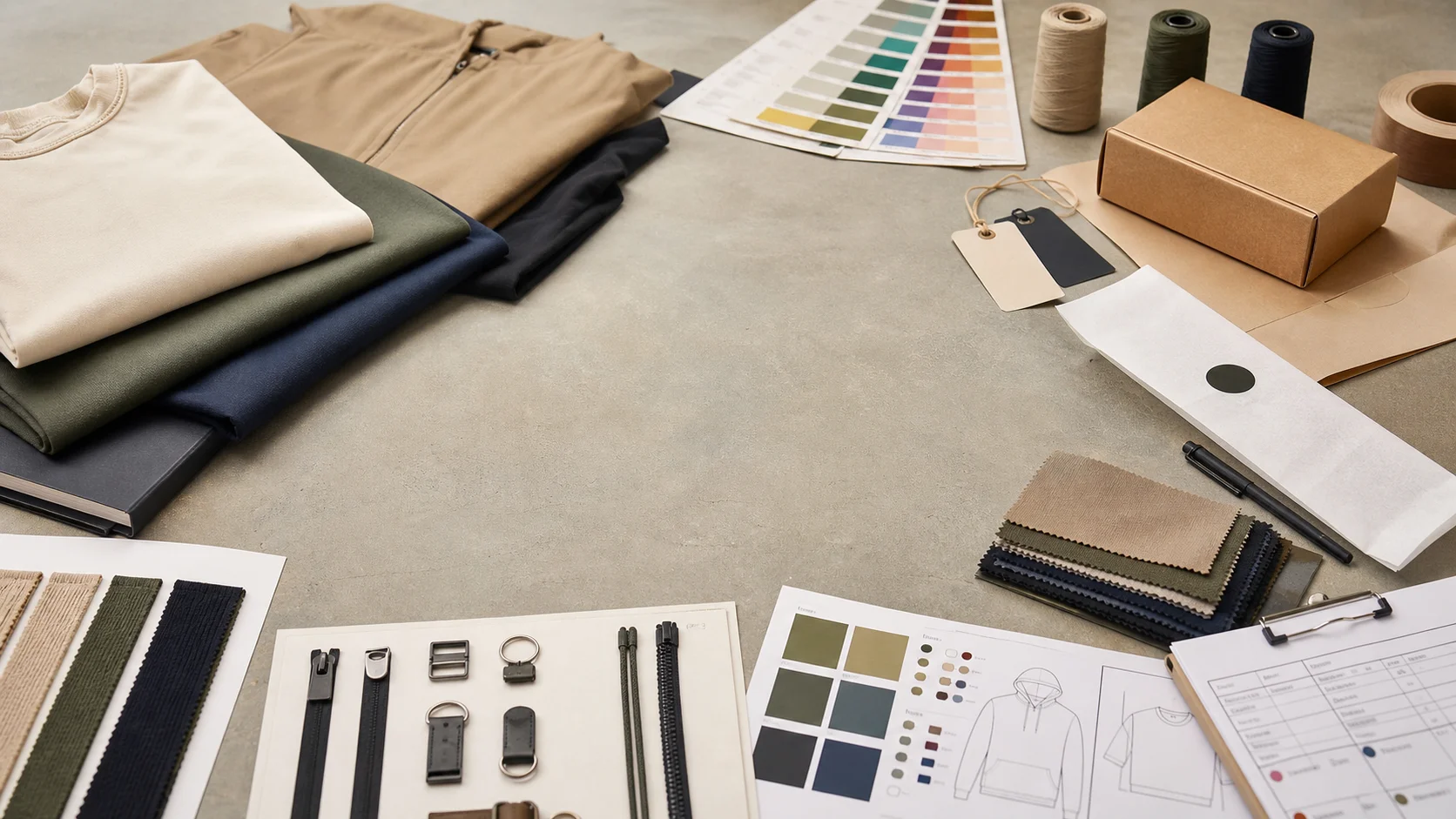
Much Does Custom T-shirt Production Cost compared by sample evidence, fabric or trim specs, MOQ, AQL terms, cost lines, delivery timing, and rework...
Fast answer: Much Does Custom T-shirt Production Cost: Sample Fit, Trim, AQL, and Delivery Risk should be judged by production evidence, not by a generic sourcing promise. The buyer needs sample proof, cost breakdowns, QC checkpoints, and delivery buffers in writing.
Ask for recent sample photos, measurement tolerances, fabric or print test assumptions, decoration test notes, packing examples, and a named inspection checkpoint. These details show whether the team can repeat an approved sample at bulk volume.
Separate garment cost, decoration, labels, packaging, sampling, testing, freight, and rush charges. Clear cost lines make it easier to reduce colorways, adjust size depth, or reserve more time for sampling.
If you are building a clothing brand, launching a merch line, or planning a private-label apparel collection, one of the first questions you will ask is: how much does custom t shirt production cost?
The answer is not a single number. Custom T-shirt production cost depends on fabric quality, garment construction, printing or embroidery, order quantity, sampling, packaging, shipping, and the manufacturer you choose. A simple promotional T-shirt can cost just a few dollars per unit, while a premium fashion-weight shirt with custom dye, labels, and special finishes can cost significantly more.
In this guide, we will break down every major cost component so you can understand what you are paying for, how manufacturers price custom T-shirts, and how to plan a realistic budget for your brand. Whether you are ordering 100 pieces or 10,000 pieces, this article will help you estimate production costs with more confidence.
If you are comparing manufacturing options, you can also explore our services to see how Fabrikn supports clothing brands from concept to production.
Several variables determine the final unit cost of a custom T-shirt. Even when two shirts look similar from a distance, their production costs can be very different based on materials, trims, decoration methods, and order size.
The biggest cost driver is often fabric. Basic cotton jersey is usually the most affordable option, while organic cotton, combed cotton, ring-spun cotton, heavyweight jersey, and blends with modal, bamboo, or recycled fibers cost more.
Fabric weight also matters. A 140 GSM lightweight tee generally costs less to produce than a 220 GSM heavyweight streetwear tee because heavier fabrics use more yarn and often require more precise finishing.
How the T-shirt is made affects cost. Standard cut-and-sew tees are relatively simple, while oversized silhouettes, boxy fits, dropped shoulders, curved hems, coverstitch details, or reinforced seams require more production time and skill.
Screen printing, DTG printing, sublimation, embroidery, puff print, and heat transfer all have different cost structures. A single small front print is cheaper than a multi-location design with large graphics, sleeve prints, and neck branding.
Higher quantities usually lower the cost per unit because the manufacturer can spread setup, pattern, and labor costs across more pieces. Small runs often cost more per shirt because fixed costs remain the same even when the order is small.
Before mass production, most brands need prototypes or sales samples. These are separate costs and may include pattern making, fabric sourcing, sample sewing, and revision rounds.
Custom woven labels, printed neck labels, hangtags, polybags, stickers, barcode labels, and custom cartons all add to the final cost. These details are essential for brand presentation, but they must be budgeted carefully.
Faster production timelines can increase cost. Where your manufacturer is located also matters because labor rates, local material availability, and logistics costs vary by country and region.
To understand how much custom T shirt production costs, it helps to break the process into individual components. Below is a practical breakdown of the most common cost categories clothing brands should expect.
A tech pack communicates the exact specifications for your garment: sizing, stitching, fabric type, color, trims, print placement, and labeling instructions. Some manufacturers include basic guidance, while more advanced development work may be charged separately.
Estimated cost: $0 to $200+ depending on complexity and whether you need design assistance.
Pattern making creates the base shape of your shirt, and grading scales the pattern across sizes. For standard T-shirts, these costs are often manageable, but custom fits or unique silhouettes raise the price.
Estimated cost: $50 to $300+ per style.
Sampling allows you to test fit, fabric, stitching, print quality, and overall appearance before bulk production. Many brands go through one to three sample rounds before approval.
Estimated cost: $30 to $150+ per sample, sometimes more for premium fabrics or complex decoration.
Fabric usually makes up a significant portion of the unit cost. The price depends on fiber content, yarn quality, fabric weight, dyeing method, and whether the material is stock-supported or custom-developed.
Estimated cost per shirt:
Cutting and sewing labor varies by country, factory size, and garment complexity. A simple T-shirt requires fewer operations than a fashion tee with paneling, contrast stitching, or reinforced details.
Estimated cost per shirt: $1.00 to $4.00+
Decoration is often the most visible part of the product, and also a major cost factor.
Branding details add professionalism to your product. Common trim costs include woven neck labels, size labels, care labels, hangtags, and custom packaging elements.
Estimated cost per shirt: $0.20 to $1.50+
Quality control may be included in factory pricing or charged as part of third-party inspection. It helps reduce defects, sizing issues, and print inconsistencies.
Estimated cost: $0.05 to $0.50+ per unit, depending on inspection level.
Basic packaging like standard polybags is inexpensive, while branded folding, custom tissue paper, compostable bags, and retail-ready boxing increase costs.
Estimated cost per shirt: $0.10 to $1.50+
Shipping can significantly affect landed cost, especially for lower-volume orders. Air freight is faster but more expensive, while sea freight is more economical for larger shipments. You may also need to account for customs duties, VAT, and brokerage fees.
Estimated cost: Highly variable by location, shipment size, and delivery speed.
Manufacturers use different pricing structures, and understanding them helps you compare quotes more accurately.
FOB, or Free On Board, usually means the manufacturer covers production up to the port of origin, and you handle freight and import costs. This is one of the most common pricing structures in apparel manufacturing.
EXW, or Ex Works, means you are responsible for all logistics from the factory door onward. The base price may seem lower, but your total landed cost could be higher once transportation is added.
Some suppliers provide a fully landed price that includes manufacturing, freight, customs, and delivery. This is helpful for budgeting, though less common for custom apparel orders.
Many manufacturers offer lower unit prices at higher quantities. For example, 100 pieces may cost much more per unit than 1,000 pieces because setup and labor are spread across a larger run.
When brands ask how much custom t shirt production costs, they often focus only on the quoted unit price. However, several hidden costs can change the total budget.
Each sample correction may require new fabric, new prints, or additional sewing time. Multiple revisions can add up quickly.
Factories often include a buffer for fabric shrinkage, cutting waste, and defective units. If you are producing premium garments, this can affect material usage and pricing.
If your quantity is below the factory’s minimum order quantity, the manufacturer may charge a higher unit rate or extra setup fees.
Custom colors may require lab dips, dye lots, and approval rounds, which can add both time and cost.
Expedited production often comes with premium charges because the factory may need to adjust workflow, allocate overtime, or prioritize your order over others.
If you are selling in regulated markets, testing for colorfastness, fiber composition, AZO compliance, or product safety may be necessary. These expenses depend on your target market and product claims.
For brands wanting guidance on production planning and costing, you can reach out through our contact us page.
To make the numbers more practical, here are a few example scenarios for custom T-shirt production. These are estimates only, but they show how different choices impact cost.
Estimated unit cost: $3.00 to $6.00
This is a common option for events, giveaways, and entry-level merch. It keeps production simple and helps brands test demand without a major investment.
Estimated unit cost: $6.00 to $12.00
This is a stronger option for streetwear labels or boutique brands that want a better hand feel and a more premium presentation.
Estimated unit cost: $10.00 to $20.00+
This type of shirt is positioned as a premium product and can support a higher retail price. The cost is higher, but so is the perceived value.
If you want to keep your T-shirt production budget under control, there are several smart ways to reduce costs without sacrificing quality.
Do not over-engineer the product if your customers do not need it. For many brands, a well-made midweight cotton tee offers the best balance of quality and cost.
Every additional print location, embroidery element, or specialty ink adds cost. Keep the design clean if you want a lower unit price.
If your sales forecasts are strong, increasing quantity can reduce the unit cost significantly. Just be sure your inventory risk is manageable.
Using fewer colors, one or two fits, and a consistent size run can simplify production and reduce errors.
Prepare a detailed tech pack and clear references before sampling. Better communication reduces revision rounds and saves money.
An experienced partner can help prevent expensive mistakes, recommend materials, and optimize construction for your target price point. Learn more about our team and approach on the about us page.
Custom T-shirt production is not just about getting the lowest unit price. The real goal is to balance cost, quality, consistency, and brand value. A reliable clothing manufacturer can help you avoid common issues such as poor sizing, inconsistent prints, delayed shipments, and weak packaging presentation.
At Fabrikn, we work with clothing brands that need dependable production support, clear communication, and scalable manufacturing solutions. From fabric sourcing and sampling to bulk production and finishing, the right manufacturing partner can make your launch smoother and more profitable.
If you are ready to explore production for your next T-shirt line, visit our services page or contact us directly through contact us.
Get a free quote from Fabrikn — your trusted B2B clothing manufacturer with 10+ years of experience. MOQ as low as 200 pieces.
Get a Free Quote →For most brands, custom T-shirt production costs can range from about $3 to $20+ per unit depending on fabric, decoration, quantity, packaging, and shipping. Basic promotional tees are cheaper, while premium fashion tees cost more.
The cheapest approach is usually a simple cotton T-shirt with one-color screen printing, basic packaging, and a larger order quantity. Keeping the design and construction simple helps reduce costs.
Small orders cost more per unit because setup, pattern, sampling, and labor costs are spread across fewer pieces. Larger orders allow factories to produce more efficiently.
In many cases, yes. Screen printing is usually more cost-effective for larger graphics and bulk orders. Embroidery often costs more because it requires digitizing and stitch-based production.
Usually, yes. Sampling is often billed separately from bulk production because it involves development work, materials, and labor before the full order is approved.
The best way to get an accurate quote is to prepare a tech pack or detailed product brief, including fabric preferences, size range, decoration method, quantity, packaging needs, and target delivery timeline.
Yes. Fabrikn supports clothing brands with custom apparel manufacturing services, including production planning, sampling, and bulk orders. To discuss your project, please use our contact us page.