
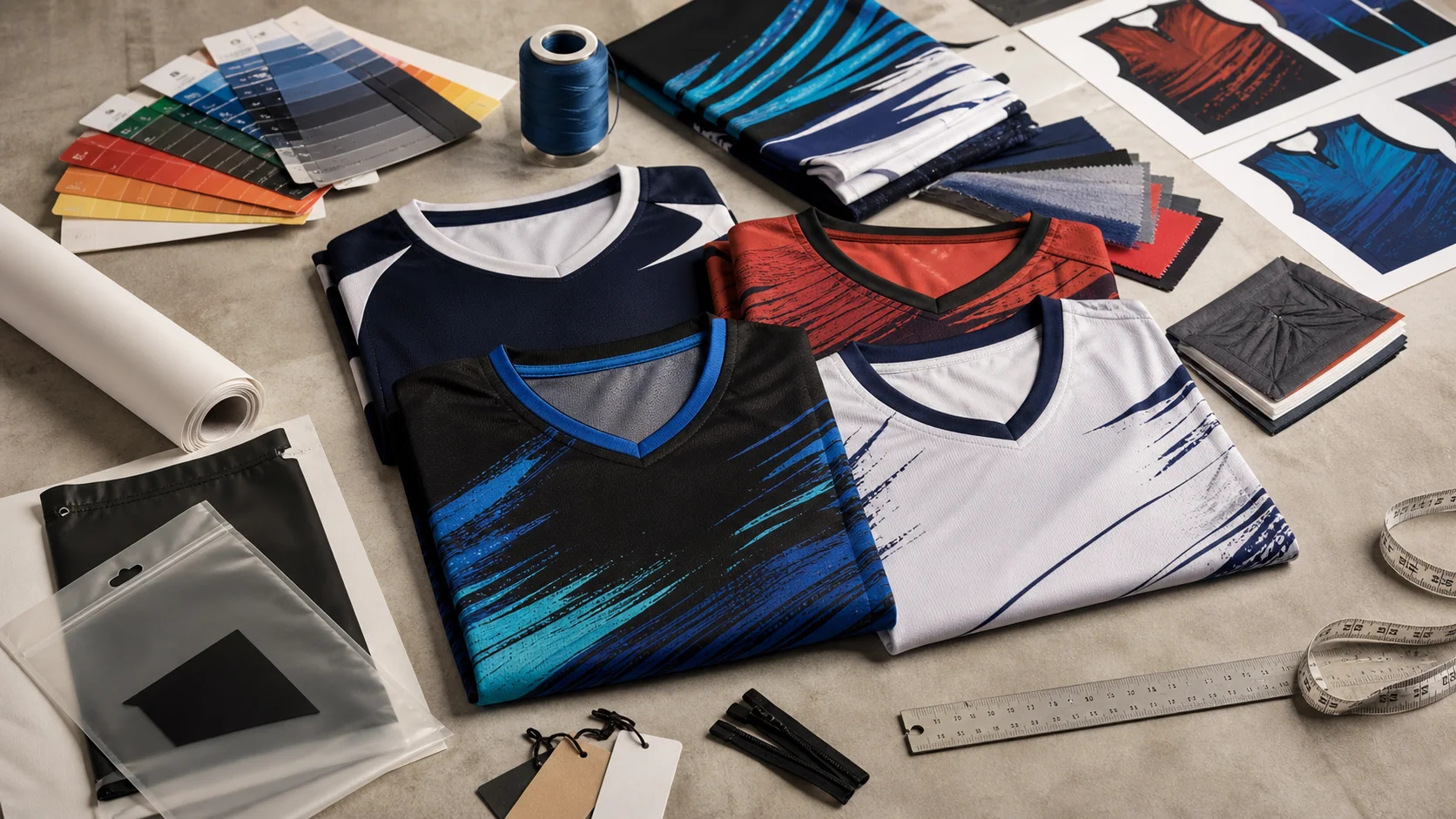
Create A Luxury Unboxing Experience for Clothing with checks for samples, fit, MOQ, QC evidence, pricing terms, and delivery risk.
Fast answer: Create A Luxury Unboxing Experience for Clothing: Material, Print, Packing Flow, and Cost should be judged by production evidence, not by a generic sourcing promise. The buyer needs sample proof, cost breakdowns, QC checkpoints, and delivery buffers in writing.
Ask for recent sample photos, measurement tolerances, fabric or print test assumptions, decoration test notes, packing examples, and a named inspection checkpoint. These details show whether the team can repeat an approved sample at bulk volume.
Separate garment cost, decoration, labels, packaging, sampling, testing, freight, and rush charges. When every cost line is visible, it becomes easier to reduce colorways, adjust size depth, or reserve more time for sampling.
The package earns its verdict in seconds. The hand is making that call before the eyes even get involved. Learning how to create a luxury unboxing experience for clothing? Start there: the box has to feel considered before it ever opens. On factory benches in Portugal, Vietnam, and Turkey the same truth keeps showing up—a 350 GSM box with sharp edges and a clean tuck beats a heavier box that arrives scuffed, bent, or badly closed. Not theater. Evidence. In Guangzhou the average production cycle on 500 rigid boxes runs 18-22 business days once die-lines are locked, with a Heidelberg Speedmaster 4-color press printing the 350 GSM board, a Komori die cutter scoring the folds, and water-based EVA adhesive or hot-melt PSA anchoring the tuck before an MBO folding machine completes the final gluing step.
Clothing buyers use packaging as a proxy for product quality, brand care, and whether the price tag was justified. A $28 tee in a poly mailer can still sell if the brand is honest about value. But a $180 knit in flimsy packaging feels like a trust problem. Premium basics sit in the middle, where a $1.20 to $2.80 packaging spend can lift perceived value without pretending to be couture. Luxury is different again. There, buyers expect board weight, alignment, and silence when the lid closes. A matte black, soft-touch setup box with blind emboss and a single foil stamp produced out of Guangzhou or Istanbul runs $2.50-4.00 per unit at the 500 MOQ level for the box alone, leaving room for a $1.10 tissue, a $0.12 perforated sticker, and a $0.40 insert while still shipping within the 18-22 business day window.
At factories in Guangzhou, Ho Chi Minh City, Dhaka, and Istanbul the smallest upgrades changed perception faster than any copy deck. Tissue shifted by 5 mm looked careless. A folded shirt packed with a 2 cm deviation made the whole shipment feel rushed. A crisp brand card on 300 GSM FSC-certified stock printed on a Heidelberg Speedmaster 74, hot foil stamped with 24K gold using a Mitsubishi Diamond plate, die-cut on a Germark CNC, and scored on a Hohner V-200 did more for credibility than metallic foil flashing cheap under warehouse lights. The team in Dhaka even ran the insert through a Duplo slitter and a Sanwa hand-folder to keep the edges square before a Kolbus KA-AT glued the pieces together. The gap between “nice” and “expensive” was often 30 seconds on the packing line, and every site operates with GOTS, OEKO-TEX Standard 100, WRAP, BSCI, and GRS certifications so the organic cotton wraps, recycled PET stickers, and water-based adhesives align with the story.
Packaging belongs in the sales conversation. It frames the first physical moment after purchase, and that moment tells the customer whether the brand understands detail. In the premium category, packaging often has to justify a $15 to $40 margin story. In luxury, it helps defend a $300 to $1,200 price point. Buyers forgive a longer shipping window when the unboxing feels considered. But they do not forgive a $90 sweatshirt in a mailer that looks like it came from a discount warehouse. On the logistics side, the Guangzhou-to-Istanbul consolidation of 200 GSM recycled kraft shippers sealed with WRAP-approved hot-melt beads keeps the freight arriving within the 18-22 business day window without stressing that margin.
For brands working in custom baby clothing manufacturing, the emotional stakes are even higher. Parents notice softness, cleanliness, and order instantly. The same principle applies across categories. Packaging is part of the product. Teams layer a 140 GSM GOTS-certified organic cotton muslin sheet, seal the overlap with a GRS-certified recycled PET sticker embossed with hot foil on a Kolbus KA-AT binder, and top it with an OEKO-TEX Standard 100 authenticity card before swelling the bundle into a rigid box sealed with water-based EVA.
The most convincing packages are built in layers, not stuffed with extras. Want to master how to create a luxury unboxing experience for clothing? Start with the anatomy: outer shipper, presentation box or premium mailer, tissue, protective insert, and brand card. Each layer has a job. Each layer should earn its place. I have seen brands spend $4.50 on ribbons and magnets, then ship garments in weak board that crushed at the corners. Backwards. Structure first. At the Guangzhou and Dhaka facilities, the outer shipper is formed from 200 GSM recycled kraft on a Kolbus BF gluing line, the presentation box boards are die-cut on a Gietz TS 315, and the soft-touch wrap and spot UV are applied with a Komori UV varnish station so every fold is predictable.
At lower price points, a high-GSM recycled mailer or reinforced corrugated shipper can signal care without overbuilding. And premium basics benefit from an FSC rigid board box, 1-color print, and a 17 to 22 pt insert card that feels expensive if the closure is clean. True luxury often uses a rigid setup box, soft-touch or uncoated wrap, and tight tolerances on folds and lid fit. For a 1,000-unit run, premium mailers have landed around $0.85 to $1.60 each, while rigid boxes sit closer to $2.80 to $6.50, depending on board thickness, finish, and print method—the insert is usually die-cut from 18 pt board on a Gietz line and laminated with a water-based acrylic to keep the corners sharp, while the lid may use 0.3 mm neodymium magnets pressed into 420 GSM board with a Kolbus fold-and-glue system.
Five sensory layers matter most: touch, visual order, sound, weight, and scent. The first three drive almost everything. A box that opens with a soft resistance feels deliberate. Tissue that rustles lightly feels refined. A lid that clacks shut feels cheaper than it is. Scent is where brands often overdo it. A faint paper smell reads clean. But heavy fragrance reads like damage control. I have thrown out samples perfumed so aggressively they made the garment feel less wearable.
Heavier does not always read as higher-end if the closure feels cheap. A 420 GSM rigid box with a sloppy magnetic catch can feel worse than a 300 GSM board box with exact edges and a precise tuck. Customers notice friction points. They do not need to know board caliper. A bad magnetic closure, for example, is usually the result of a misaligned die registration on the Komori press or glue contamination, not the board weight itself.
Brands building private label clothing services often benefit from standardizing one box family across categories, then tuning inserts and print finish by price tier. It keeps tooling costs sane. It also makes reorders easier when MOQ 500 is all a launch can support. A reliable supplier and manufacturer relationship also helps the factory plan production more efficiently, particularly when the shipper carton, premium box, and tissue all share the same raw material certificate and are logged in the supplier’s ERP.
When a brand sources wholesale or bulk packaging from China or another production hub, a sample set before confirming the final custom spec can save time. That small step often prevents costly rework later. We ask for a Bureau Veritas or SGS check on the sample, include the exact die, foil, and adhesive data, and note if any process requires a second press run on the Heidelberg Speedmaster to hit the Pantone reference.
A good unboxing sequence tells a story in 3 or 4 moves. Open the outer shipper. Reveal the protective wrap. Lift the garment with a single clean fold. Find one card that explains why the piece costs what it costs. That is enough. Anything more starts to feel like filler.
A strong brief makes the supplier's job narrower and the quote more reliable. For create luxury unboxing experience for clothing that sells, include the target customer, sales channel, expected order quantity, size range, decoration needs, packaging requirements, and delivery market. Then call out the details most likely to affect the result, especially material grade, print tolerance, and barcode size.
The brief should also explain what cannot change. Some brands care most about hand feel, some about price, some about launch timing, and some about retail compliance. When those priorities are not written down, suppliers tend to optimize for whatever is easiest to quote. Clear priorities help the factory make better tradeoffs before the first sample is cut or printed.
Ask the supplier to respond with assumptions, not just a price. A useful reply states MOQ, sample route, production capacity, inspection plan, packing method, and freight handoff. If the answer is vague, the project may still work, but it needs a tighter pre-production stage before money and calendar pressure build up.
The best time to catch problems is before the pre-production sample is approved. Check measurements, color, placement, material behavior, shrinkage, construction, labels, and packaging in the same review instead of approving each item in isolation. Many bulk issues are not caused by one dramatic mistake; they come from several small unchecked assumptions.
For create luxury unboxing experience for clothing that sells, pay special attention to folding method, pack-out sequence, and retail compliance. These details often look minor in an email but become expensive once cutting, printing, sewing, packing, or shipping begins. A simple checklist with owner, due date, and approval status keeps the brand team and factory aligned.
Bulk production should not start until the supplier can explain how the approved sample becomes a repeatable production standard. That means reference sample storage, line instructions, inline checks, final inspection, and defect handling. A factory that can describe this process clearly is usually safer than one that only promises speed.
Price differences are useful only when the quotes cover the same work. Compare sample cost, material source, trims, decoration, packaging, testing, inspection, and freight assumptions. A low unit price can become expensive if it excludes items the brand needs before launch.
Timeline promises deserve the same scrutiny. Ask what happens if the first sample needs revision, whether materials are in stock, when the production slot is reserved, and how export packing is handled. The most reliable supplier is often the one that gives a realistic calendar instead of the fastest optimistic answer.
Before making the final decision, write down the specification, approval owner, delivery expectation, and the one or two risks that would cause the most trouble if missed. For create luxury unboxing experience for clothing that sells, this usually means checking material grade, print tolerance, barcode size, and the support process after the order is placed.
This last review does not need to be complicated. It simply makes the decision easier to repeat, easier to explain, and easier to verify when the finished product or jewelry arrives.
One useful way to pressure-test the decision is to ask what would happen if the order had to be repeated in six months. The answer should still be clear: the same material grade, the same print tolerance, the same acceptance standard, and the same communication path. If a second order would depend on memory or guesswork, the first order is not documented well enough yet.
Another useful check is to separate preference from requirement. Preference is the look, wording, or finish the brand likes. Requirement is the measurement, tolerance, certificate, material, or delivery condition that cannot fail. Good buying decisions keep both visible, so the final choice is not pushed around by the last email, the cheapest quote, or the prettiest sample photo.
Finally, ask who owns each approval. A project with one accountable owner for sample review, one owner for final content or artwork, and one owner for delivery sign-off usually moves faster than a project where every decision is shared loosely across a team. Clear ownership reduces delays and makes the finished result easier to judge.