
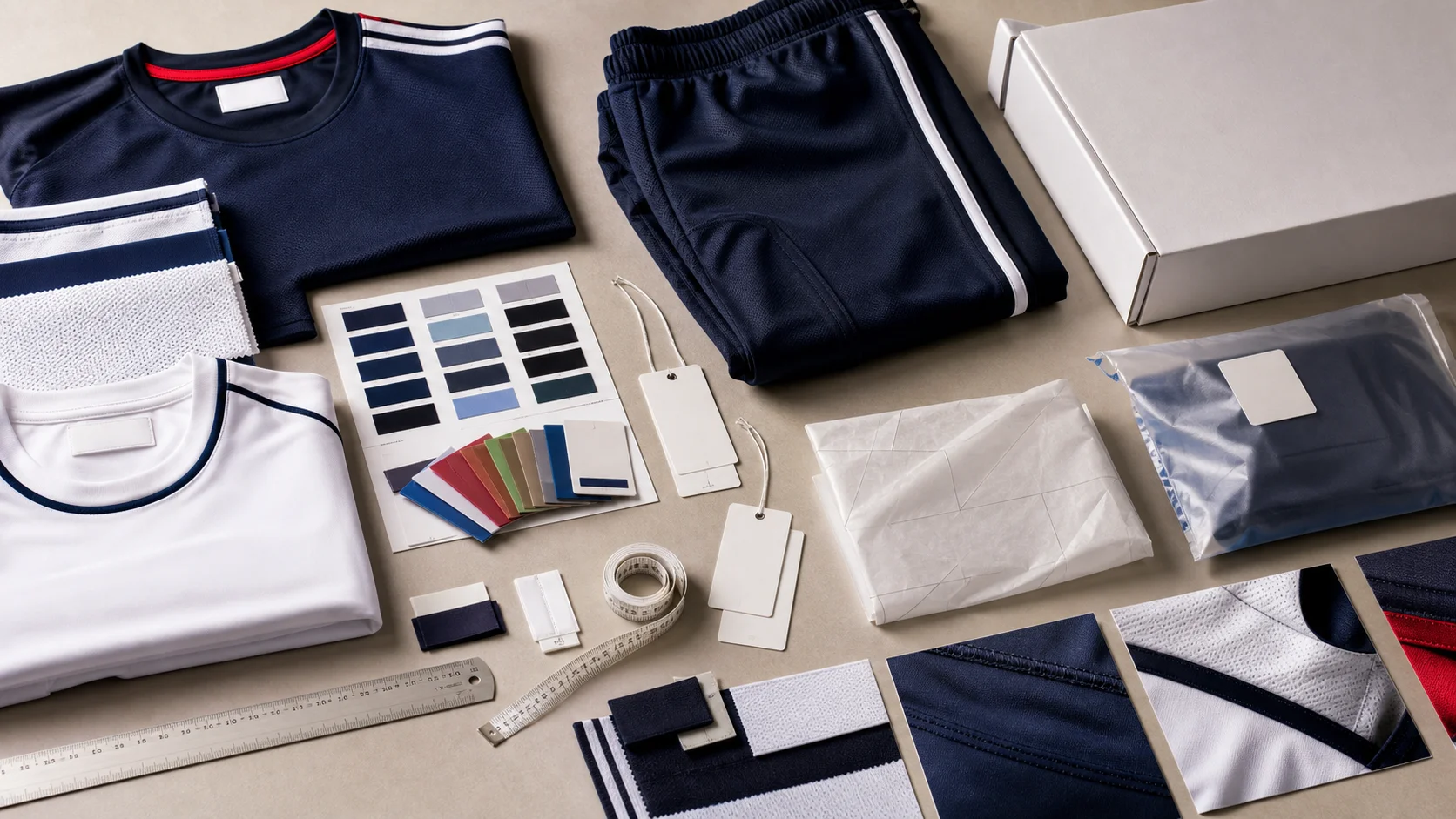
Design Premium Clothing Box Inserts compared by sample evidence, fabric or trim specs, MOQ, AQL terms, cost lines, delivery timing, and rework responsibility.
Fast answer: Design Premium Clothing Box Inserts: Tech Pack, Sample Gate, MOQ, and QC Terms should be judged by production evidence, not by a generic sourcing promise. The buyer needs sample proof, cost breakdowns, QC checkpoints, and delivery buffers in writing.
Ask for recent sample photos, measurement tolerances, fabric or print test assumptions, decoration test notes, packing examples, and a named inspection checkpoint. These details show whether the team can repeat an approved sample at bulk volume.
Separate garment cost, decoration, labels, packaging, sampling, testing, freight, and rush charges. Clear cost lines make it easier to reduce colorways, adjust size depth, or reserve more time for sampling.
The best packaging lesson I’ve learned on a factory floor is this: the insert has one job before it has any beauty. It must hold the garment still, protect the fold, and make the brand feel expensive the moment the lid lifts. When brands ask how to design premium clothing box inserts, they usually start with finishes. I start with failure modes. Less than 5% of total pack cost, yes — but they drive 100% of first-touch perception. I’ve watched brands spend $0.18 on the outer carton, then lose the sale-feel because the insert slid, crushed, or looked cheap at opening. Wrong place to save money. Also the easiest place to burn it.
Across more than 200 factory visits in 8 countries, the same pattern kept showing up. My team visited die-cut lines in Guangzhou running Heidelberg and Bobst presses with hot foil stamping attachments, cut-glue cells in Dhaka using Kammann hotmelt applicators, and finishing lines in Ho Chi Minh City equipped with automated creasing wheels and hand-sanding tables for molded pulp. I also audited a composite board plant outside Istanbul where machinists used Krone slitting systems to optimize panels for quick hand assembly. In East Asia, carton board sourcing can be cheap and fast, with paperboard pricing often 10-20% below comparable European supply. South Asia brings labor costs low enough to absorb hand assembly on runs of 5,000 to 20,000 units. Western Europe trades higher material bills for tighter compliance, shorter transit, and lower defect rates that can offset a 3-4 week shipping delay from Asia. The spec you can afford changes by region, and so does the level of finish you should demand.
Returns, damage, dissatisfaction — that’s where luxury brands lose money on poor insert design. I’ve seen knitwear arrive with fold memory because the insert forced a too-tight bend. Silk shirts creased because the tray had sharp cut edges and no tissue buffer. Box-lid scuffing jumped by 12% after a brand switched to heavier board with a rougher surface that snagged fabric. The customer never blames the engineering team. They blame the brand.
Heavier-looking inserts are not always more premium. In one factory in Ho Chi Minh City, a 1.8 mm board insert looked less expensive than a well-registered 350 gsm folded paperboard insert with precise die cuts and zero glue squeeze-out. Premium is not thickness for its own sake. It is precision, fit, restraint.
That is the core of how to design premium clothing box inserts: structure does the heavy lifting, material sets the baseline, and finishing tells the customer whether the brand cares about detail. Decoration alone cannot fix a bad dieline. A foil stamp cannot hide a misfit tray. I’ve seen brands try, and the carton still felt like a compromise.
Start with the product, not the box. A folded shirt, a ribbed knit, a tie set, or a pair of socks each behaves differently under pressure, and the insert should control movement without flattening the garment into a lifeless rectangle. I have measured boxes that allowed 8-10 mm of side-to-side drift and watched collars shift enough to create visible creases after a 48-hour transit. Design failure, not packing issue.
Hold the garment in place. Preserve fold lines. Frame the product so opening feels deliberate. That’s the job. Fit tolerance matters here, and I usually want the insert geometry matched to the garment and the box within 2-5 mm. Too tight, and the packer fights the structure. Too loose, and the product travels. For a folded tee in a 32 x 24 x 4 cm box, a millimeter mistake can turn into a crumpled neckline.
Die-cut board works well for shirts and accessories when the product needs a visible stage. Folded paperboard suits scarves, lingerie, and lighter sets where speed matters and the insert should disappear into the package. Molded pulp can protect nested items, though it usually reads more utilitarian unless the surface finish is refined. Foam-free alternatives are now common in premium apparel because they avoid the bulky, waste-heavy feel that hurts luxury perception. Fabric-wrapped trays sit at the higher end, but use them sparingly because labor can add 15-30% to unit cost.
Premium cues are often invisible. Clean edges matter more than graphics. A restrained color palette beats loud branding because the garment should remain the hero. Precise cutouts for hang tags or accessory pouches can create order without clutter. Tactile coatings, like soft-touch varnish or a matte aqueous finish, can help, but only if they do not interfere with recyclability or add a slippery surface that slows packing. I worked with one brand that briefly used a glossy insert on a premium shirt set; the visual looked rich, yet packers reported 20% more handling time because the shirt slipped during insertion.
If your project includes direct-to-consumer boxes for childrenswear, treat the insert with even more discipline and source alignment. Brands scaling into custom baby clothing manufacturing often need inserts that are softer, lighter, and easier to open with one hand. In premium apparel, function wins. Always.
Material choice is where premium becomes measurable. For lightweight apparel, 300-400 gsm paperboard is usually enough if the insert is well designed and the garment is not under tension. For luxury gifting, 1.5-2.5 mm rigid board gives the tray a more substantial feel and better edge definition. Molded pulp earns its place when nested protection matters, especially for accessory sets, but it needs careful surface control if you want the result to read as premium rather than industrial.
Caliper and rigidity affect more than protection. They shape the hand feel at opening. A board that flexes too easily looks inexpensive, even if the print is perfect. A board that is too stiff for the box can create compression marks on cashmere, viscose, or brushed cotton. I’ve seen French terry at 320 GSM arrive with faint fold shadows simply because the insert tab pressed too hard on the stack. That cost the brand rework, plus a 7% spike in complaint emails over two weeks.
Regional access changes the economics. In China, board and converting costs can come in lower because of dense supplier networks and volume buying. In Western Europe, labor is more expensive, and hand assembly can push the per-unit price up by 0.20-0.60 depending on complexity. East Asian suppliers may quote an insert at $0.18-0.45 for a simple run of 10,000 units, while a comparable European build can land at $0.55-1.20. Those are not small differences when the pack program runs across multiple SKUs. If you need a reliable manufacturer or factory partner, ask for samples, production photos, and references from a supplier that already handles premium apparel packaging at scale.
Plain materials can still look expensive. Perfect print registration, tight creases, and clean assembly beat a fancier substrate when the execution is sharp. That is why bulk buying from an experienced supplier can help keep the MOQ practical without compromising quality.
That is why recycled content must be specified carefully. You can ask for FSC-certified board, 30-100% recycled fibers, and water-based inks without losing a premium look. The trick is avoiding muddy blacks, weak fold lines, and fiber speckling on heavily tinted stock. Dye constraints matter too. If you want deep navy or charcoal, test batch-to-batch color matching through Pantone swatches before committing to a wide tonnage.
Textile-grade certifications such as GOTS, OEKO-TEX Standard 100, and GRS are increasingly expected when inserts touch sensitive garments, especially for organic cotton or wool bases. Factory programs that comply with WRAP and BSCI audits also provide peace of mind when those inserts are bundled with high-end apparel.
Fiber choice (virgin vs. recycled) affects crease recovery, particularly for inserts with multiple folds. A premium supplier in Guangzhou blends bleached kraft with a 100% recycled liner to keep the whiteboard bright without diminishing sheet stiffness. Their finishing line uses a Gallus flexo press to apply spot UV for detailing, followed by a Polar paper cutter that ensures a 0.05 mm tolerance on die-cut tabs.
Structure is mathematics. The right fold pattern, crease depth, and tab sequence determine whether an insert builds squarely or collapses under tension. I often sketch in CAD, send to the supplier, and validate with a prototype made from the actual board. A proper insert will assemble in less than 15 seconds on the line with 2 glues or tabs, and it should sit flush inside the box so no part peeks out during shipping.
Machines matter. A Bobst die cutter running a 3,000 cycles-per-hour press, followed by a Bobst gluing module using solventless adhesive, can deliver precision that manual starts struggle to match. If you need embossing, a Heidelberg cylinder press with a 70-ton impression will produce consistent depth without tearing the board. We specify water-based acrylic linings for adhesives so the insert can be recycled with the box.
Pull-away detail helps packers. Cigarette-style joints, lined relief reliefs for ribbons, and perforated lifting tabs keep garments from needing re-adjustment after insertion. The clear geometry of 90-degree corners in the tray keeps folded items from twisting, and the use of micro-fluting in critical ribs boosts stiffness without adding weight.
Colors and surface finish can tell a story, but only once the structure works. I prefer muted charcoal, dove gray, or rich ivory for premium dressing, carefully aligning inkjet proofs with Pantone references. Machines such as an Epson SureColor with inline spectrophotometers maintain less than ΔE 1.5 color variance across panels.
When comparing factories, break the list down into material, converting, finishing, and handling. A premium assembly in Guangzhou with die-cut board, water-based lamination, and soft-touch UV varnish can range from $2.50-4.00 per unit at 500 MOQ, depending on complexity. That price assumes the supplier handles die-cutting, folding, and robotic stacking with Peroni automation for consistency. Long runs in Dhaka with hand assembly can come in at a similar price once you account for import duties, but lead time extends.
Speaking of lead time: expect 18-22 business days from released sample in Guangzhou to bulk shipment ready for ocean transport, assuming the supplier runs two shifts on the insert line. In Istanbul, shorter transit to European warehouses can trim landed time by two to three days, though per-unit cost may be slightly higher due to local labor. Ho Chi Minh City suppliers, meanwhile, often deliver 100% complete packing sets—insert, box, and ribbon—for the same ship set as the garments, reducing the handling steps at the brand’s fulfillment center.
To keep costs manageable, plan for seasonal runs with 1.5X demand cushion. Suppliers typically allow a 5-10% price reduction for stacking multiple SKUs on the same die and board width, but you must provide accurate measurements and print files early. Always confirm the tooling costs and amortize them across the expected volume.
If you need a trusted partner, seek out factories with low rejection rates, in-line quality systems, and documented audits. Request current certifications, including WRAP, BSCI, and, if you handle organic goods, GOTS or OEKO-TEX Standard 100 when the insert contacts sensitive fabrics. These certifications speak to both social responsibility and consistent process control.
Tactile materials and restrained palette go a long way. Use thick-edge laminates, beveled corners, or velvet-touch paper sleeves. Combining matte finish with a gloss soft-touch patch lets the light catch deliberate areas, while the rest remains understated.
Consider multi-plane inserts with compartments for accessories, or double-stage structures that house hang tags on top of the garment. Hidden magnets can keep lids closed, but keep them thin so the package remains easy to recycle.
For additional flair, add foil debossed logos, laser-cut windows, or ribbon pull tabs that align with the garment and brand story. Coordinate the finishing level—spot UV, embossing, or raw edge details—with the overall packaging architecture.
Include CAD files, pantones, product dimensions, and final garment configurations. Provide garment samples so the supplier can test seating the item inside the tray. Also supply clear tolerance tables, desired certifications (WRAP/BSCI), and the expected packing sequence.
Bring any lab reports, such as OEKO-TEX Standard 100 certification for textiles, and explain if the insert needs to be part of a GOTS-compliant set. Mention the required lead time and MOQs upfront to avoid rushed decisions during peak seasons.
To minimize waste, design inserts that nest efficiently on sheet sizes to reduce scrap, and choose adhesives that do not leave residue on garments. Avoid single-use plastics and heavy laminates when a simple soft-touch coating does the job.
Track returns and complaints weekly. If the insert fails to keep a garment aligned, the resulting crease or displacement is costly. Invest in a small-run pilot to test new materials, then move to full production once results confirm the desired outcome.
Q: What certifications should I ask for on inserts? A: At minimum, insist on WRAP or BSCI compliance, and check for GOTS, OEKO-TEX Standard 100, and GRS when inserts touch certified textiles.
Q: How soon can I get inserts delivered? A: Typical lead time ranges from 18-22 business days for Asian suppliers with dual-shift operations; European and Turkish partners may offer shorter transit but slightly higher per-unit costs.
Q: Are premium inserts worth the investment? A: Yes. For $2.50-4.00 per unit at 500 MOQ, you protect the garment, prolong the brand story, and significantly boost the unboxing experience.