
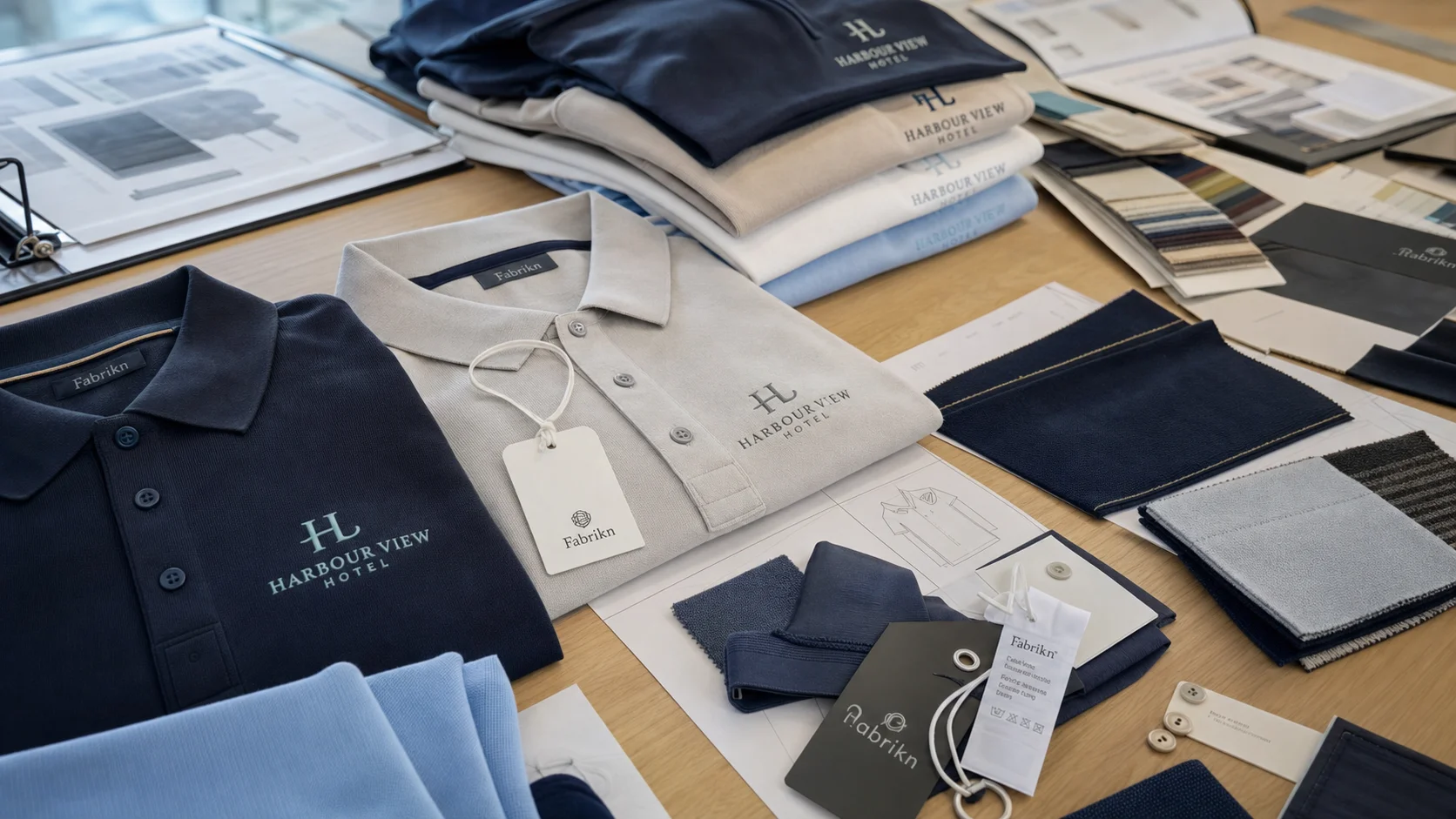
Evaluate Stitching and Finishing Quality in Apparel Factories compared by sample evidence, fabric or trim specs, MOQ, AQL terms, cost lines, delivery...
Fast answer: Evaluate Stitching and Finishing Quality in Apparel Factories: Tech Pack, Sample Gate, MOQ, and QC Terms should be judged by production evidence, not by a generic sourcing promise. The buyer needs sample proof, cost breakdowns, QC checkpoints, and delivery buffers in writing.
Ask for recent sample photos, measurement tolerances, fabric or print test assumptions, decoration test notes, packing examples, and a named inspection checkpoint. These details show whether the team can repeat an approved sample at bulk volume.
Separate garment cost, decoration, labels, packaging, sampling, testing, freight, and rush charges. Clear cost lines make it easier to reduce colorways, adjust size depth, or reserve more time for sampling.
When sourcing apparel from a factory, one of the biggest differences between a product that looks premium and one that feels disappointing is the quality of stitching and finishing. For brands, retailers, and sourcing teams, understanding how to evaluate stitching and finishing quality in apparel factories is essential to reducing returns, protecting brand reputation, and ensuring consistency across production runs.
In today’s competitive garment market, buyers cannot rely on appearance alone. A shirt may look polished on the hanger but still have loose threads, uneven seams, poor topstitching, or weak finishing that fails after washing. That is why evaluation must go beyond a visual check and include clear inspection criteria, measurable standards, and factory accountability.
This guide explains what to look for, how to assess workmanship, and how to create a practical quality evaluation process when working with apparel factories. If you are comparing manufacturing partners, you may also want to review Fabrikn’s services, learn more about us, or contact us for support.
Stitching and finishing are core indicators of garment quality because they directly affect durability, appearance, comfort, and product value. In many apparel categories, customers may not know technical details, but they instantly notice if a garment has uneven seams, loose threads, crooked hems, or poor internal construction.
From a business perspective, poor workmanship creates hidden costs. These can include:
For apparel factories, stitching quality reflects process discipline. It shows whether the factory has trained operators, proper machine settings, quality control systems, and finishing standards that can scale reliably from sample to bulk production.
To evaluate stitching and finishing quality in apparel factories, buyers should examine both visible and structural aspects of the garment. The goal is not just to see whether the product looks clean, but whether the sewing is strong, consistent, and fit for purpose.
A complete evaluation usually includes these areas:
Different garment types require different standards. For example, luxury knitwear, corporate uniforms, sportswear, children’s apparel, and denim each have distinct stitching tolerances and finishing expectations. A good factory should understand these category-specific requirements and be able to show samples that reflect them.
One of the clearest signs of quality is whether stitches are even and consistent throughout the garment. Uneven stitch length often indicates weak machine setup or operator inconsistency. Look for uniform stitch spacing on visible seams, hems, and topstitching lines.
Stitch density refers to the number of stitches per inch or centimeter. Too few stitches may reduce seam strength, while too many can cause fabric puckering or stiffness. The correct density depends on the fabric and product type. A quality factory should be able to explain why a specific density was chosen.
Strong stitching should hold under normal wear, stretching, and washing. Check whether seams appear secure and whether stress points such as armholes, crotch seams, side seams, and pockets are reinforced appropriately. Weak seams are a major sign of poor workmanship.
Seams should follow the intended garment pattern exactly. Wavy seams, crooked stitching, or twisted panels suggest poor control during sewing or cutting. This can affect both appearance and fit.
Skipped stitches are a serious quality issue because they weaken the seam and can lead to failure during use. Inspect garment seams under good lighting and look closely at high-stress areas. Broken threads and inconsistent lockstitch or chainstitch patterns should not be accepted unless the product specification allows them.
Thread tension affects seam appearance and durability. Too much tension can pucker the fabric or cause thread breakage; too little can create loose, sloppy seams. Balanced tension results in stitches that lie flat and look professional on both sides of the garment.
Areas that require reinforcement, such as pocket corners or waistbands, should be sewn cleanly without bulky thread buildup. Backstitching should be secure but not messy. Poor reinforcement often points to rushed production or weak SOPs.
Loose threads are one of the simplest and most visible finishing defects. A well-finished garment should have trimmed threads with minimal visible excess. Extra thread ends around seams, labels, and hems often indicate weak final inspection.
Inside the garment, seam edges should be finished in a way that suits the product category. This may include overlocking, binding, French seams, flat-felled seams, or clean internal construction. The finish should prevent fraying and maintain a neat appearance inside the garment.
Hems should be even, straight, and securely sewn. Uneven hems can make a garment look poorly made even if the rest of the construction is acceptable. Buyers should also check whether the hem width matches the technical pack and whether the stitching line is visible and consistent.
These are highly visible areas where poor finishing is easy to spot. Collars should sit evenly, cuffs should match in size and shape, and plackets should be aligned without twisting or puckering. In dress shirts and polos, these details often determine whether the garment feels commercial-grade or premium.
Patterns and panels should be aligned correctly, especially in striped, plaid, or print-matched garments. Misaligned pockets, uneven panel placement, or mismatched seams are strong signs that a factory may not be following proper cutting and sewing control.
Good finishing also includes pressing, folding, and packing. Garments should be free from unwanted wrinkles, shine marks, or heat damage. The final presentation should make the product ready for shipment and retail display without extra rework.
Brand labels, care labels, hangtags, snaps, zippers, rivets, and other trims must be attached correctly and securely. Misplaced labels or damaged trims are common finishing issues that can cause customer dissatisfaction and compliance problems.
Evaluating stitching and finishing quality requires a structured process. The best results come from combining sample review, inline inspection, and final inspection rather than relying on a single check at the end.
Before bulk production begins, review the approved sample carefully. This sample should set the benchmark for stitch type, seam behavior, finishing, trim placement, and overall workmanship. Compare production pieces against it to confirm consistency.
A reliable factory should work from a clear technical pack or spec sheet. This document should define stitch types, seam allowances, stitch density, tolerances, thread color, finishing methods, and acceptable defect levels. Without this reference, quality evaluation becomes subjective and inconsistent.
Inline inspection helps catch problems early. During production, inspect sewing stations, finished bundles, and partially assembled garments. This allows you to identify whether defects are isolated or systemic. If repeated issues appear on the line, the factory should correct machine settings, operator training, or workflow immediately.
Lighting matters. Use bright, neutral light to inspect stitch formation, thread tension, loose fibers, and seam alignment. Poor lighting can hide defects and lead to false approvals. Many professional buyers also use magnification for fine details in premium apparel.
In addition to visual inspection, perform basic functionality checks. Open and close zippers, test snaps and buttons, stretch seams where appropriate, and verify that decorative stitching does not distort the fabric. The garment should look good and perform well in real use.
To make quality control objective, many buyers use AQL inspection or another agreed defect classification system. This helps define which issues are critical, major, or minor. It also creates a common language between buyer and factory when discussing stitch and finishing defects.
Even a factory with polished marketing materials can still deliver poor sewing and finishing. Watch for the following warning signs during factory evaluation:
If these issues appear in sample garments, they may become much worse during bulk production unless the factory has a strong corrective process. In many cases, the sample is the best indicator of what you can expect at scale.
When reviewing a factory or inspecting production output, use a simple checklist to keep evaluations consistent. This reduces emotional or subjective decision-making and makes supplier comparisons easier.
For more complex programs, buyers should also include defect photo documentation, measurement checks, and wash-testing results. That gives a fuller picture of whether the factory can maintain quality throughout production and after use.
Quality evaluation should not be treated only as fault-finding. The best apparel brands build collaborative quality systems with their factories. If a supplier is willing to improve, the relationship becomes stronger and production becomes more predictable.
Factories can only meet expectations when those expectations are clearly defined. Provide detailed specs for stitch type, seam type, finishing requirements, and defect tolerance. Avoid vague language like “neat finish” or “high quality” without supporting examples.
Use a signed-off sample as the standard for bulk production. The more precise your sample approval process, the easier it is to evaluate whether the factory is delivering the expected stitching and finishing quality.
A factory’s workmanship depends on both equipment and people. Ask what machines are used, whether operators are trained for your garment category, and how the factory handles quality supervision on the sewing floor.
Strong factories usually have inline QC, end-line checks, and rework processes. Ask how defects are recorded, how nonconforming garments are handled, and how corrective actions are documented. A factory with a mature quality system is more likely to maintain consistency.
If issues appear, document them clearly with photos, descriptions, and garment references. Good factories respond to specific feedback better than general complaints. Over time, this creates a process of continuous improvement rather than repeated problems.
Evaluating stitching and finishing quality is easier when you work with a factory that values transparency, consistency, and garment expertise. A strong manufacturing partner will not only produce clothing but also guide you on construction choices, feasibility, and quality control methods that fit your product and market.
At Fabrikn, we understand that quality is more than appearance. It is about performance, consistency, and trust. Whether you are producing basics, uniforms, private label apparel, or custom garments, a structured quality evaluation process can protect your business and improve your results. To learn more about our manufacturing support, explore our services or get in touch through our contact page.
Get a free quote from Fabrikn — your trusted B2B clothing manufacturer with 10+ years of experience. MOQ as low as 200 pieces.
Get a Free Quote →The most important sign is consistency. Even stitch length, straight seams, balanced tension, and no skipped stitches show that the factory has control over the sewing process.
Poor finishing usually shows up as loose threads, uneven hems, messy seam edges, crooked labels, and weak pressing. These issues are often visible even without specialized tools.
No. The best practice is to inspect at multiple stages: pre-production samples, inline production, and final output. This helps catch problems early and reduces bulk defects.
No. Different products require different standards depending on fabric, function, and price point. For example, activewear, denim, and formal shirts each have unique stitching and finishing expectations.
Document the issue with photos, compare it against the spec sheet, and ask the factory for a corrective action plan. If the problem continues, it may indicate weak training, poor supervision, or inadequate quality systems.
Yes. This is common when sample-making is handled by experienced technicians but bulk production is not controlled well. That is why inline and final inspections are both necessary.
Use the same inspection checklist, the same approved sample, and the same criteria for both factories. This makes comparison more objective and helps you identify which supplier has stronger workmanship and control.
Evaluating stitching and finishing quality in apparel factories is one of the smartest ways to protect your product and your brand. With a clear checklist, the right inspection process, and strong communication with your manufacturing partner, you can reduce defects and improve consistency from the first sample to the final shipment.