
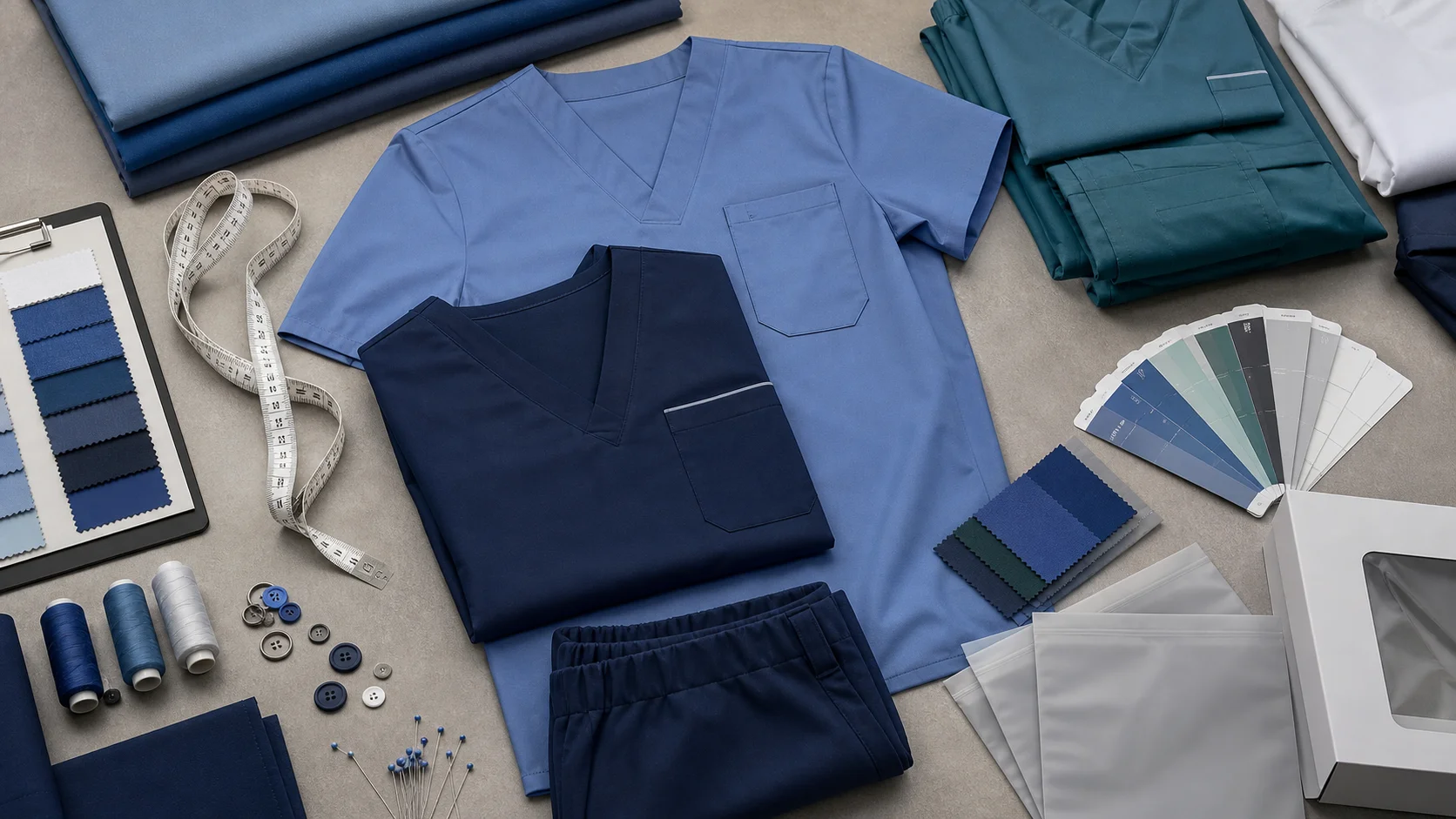
Logos on Mailer Bags with checks for samples, fit, MOQ, QC evidence, pricing terms, and delivery risk.
Fast answer: Logos on Mailer Bags: Screen Print, Flexo, Artwork, and Error Control should be judged by production evidence, not by a generic sourcing promise. The buyer needs sample proof, cost breakdowns, QC checkpoints, and delivery buffers in writing.
Ask for recent sample photos, measurement tolerances, fabric or print test assumptions, decoration test notes, packing examples, and a named inspection checkpoint. These details show whether the team can repeat an approved sample at bulk volume.
Separate garment cost, decoration, labels, packaging, sampling, testing, freight, and rush charges. When every cost line is visible, it becomes easier to reduce colorways, adjust size depth, or reserve more time for sampling.
Branded mailers do more than carry a parcel; they set the tone before the customer sees a single seam. A plain gray bag arrives like an afterthought. A printed one says the brand was awake when it shipped. Last year, inside a fulfillment center in Vietnam, I watched two parcels leave the same line: one in an unprinted LDPE bag, one in a matte black printed mailer with a crisp white logo. The branded bag cost just $0.11 more at 5,000 pieces, yet the staff said return-to-sender damage claims dropped because customers handled it more carefully.
Buyers often stare at the quote sheet and miss the variables that actually shape the result. Film gauge, seal strength, surface treatment, and print adhesion matter more than whether a mailer is $0.09 or $0.14. A cheap bag with sharp registration and a clean zipper line can look premium. A thick bag with muddy ink looks careless. In retail, perception is built in seconds, and branded mailers routinely outperform plain ones on social sharing intent. For e-commerce, that means more repeat attention, not just a prettier parcel.
Factories love samples that flatter the eye while hiding production risk. I’ve opened mailers that looked perfect in hand, then watched the logo scuff off after 50 rub passes or the seam split under 3 kg of packed goods. The sample was printed on one machine, at one speed, with one ink batch. Mass production may run 8 hours a day, 6 days a week, on older equipment. Those differences show up fast. If you want an honest quote from a manufacturer or factory, ask about substrate, print method, color count, and the intended use weight before you ask for price. A reliable supplier will also explain MOQ, quality controls, and whether the order is better suited to custom wholesale or bulk production in China.
Low-cost packaging can still look expensive when the design is disciplined. One color on a well-treated frosted PE mailer often beats four colors on a cheap, glossy film. I’ve seen DTC brands spend $0.28 per unit on lavish print and still look amateur because the logo sat too close to the edge and the black ink sat unevenly on the fold. By contrast, a $0.13 mailer with generous white space, a 320 GSM paper insert card, and a clean one-color logo can feel much more premium. If you also produce apparel, that same sharp branding logic carries over to private label clothing services and the packaging that ships with it.
Before you request quotes, answer four questions: what is the order size, what is the bag material, how many print colors are required, and how much abrasion will the bag face in transit. That is the real starting point for how to print logos on mailer bags. A buyer who knows these four points can compare apples to apples. A buyer who does not ends up paying for guesswork.
Flexographic printing is the workhorse for larger runs. Setup usually costs $250-$900 for plates and prep, and unit pricing drops sharply once you pass 10,000 pieces. On polyethylene mailers, flexo handles solid logos and simple line art well, especially with 1-3 spot colors. The catch is registration. If the plate mount is sloppy or the operator runs the press too fast, a 1 mm drift becomes visible at the logo edge. I’ve seen factories save $40 in setup and lose a full batch because the white underbase shifted on black film.
Rotogravure is the choice for long runs and dense color coverage. Cylinder engraving is expensive, often $1,500-$4,000 per design, but the print consistency can be excellent over 50,000-200,000 pieces. It is strongest on PE and some paper mailers, less friendly to quick design changes. The ink laydown is rich, which helps if you want deep reds or large flood backgrounds. What factories sometimes hide is wear. After long runs, cylinder edges lose sharpness, and a logo can soften just enough to make premium packaging look tired.
Digital printing works best for short runs, seasonal tests, and designs that change every few weeks. There is usually little or no plate cost, and MOQ can be as low as 500 pieces. Unit cost is higher, often $0.20-$0.60 depending on bag size and coverage, but it saves money when you need 3-4 colorways or variable artwork. It is a useful route if you are pairing mailers with sublimation printing services for a broader branded program. On compostable films, digital can be tricky because the surface energy is lower and ink anchoring is less forgiving.
Screen printing is the simplest method and still the most practical for bold, one- or two-color logos on thicker mailers or paper envelopes. Setup is modest, often $80-$250, and it handles opaque ink well. I like it for minimalist logos, warning text, and black-on-natural paper bags. The limitation is speed. A factory that screen prints 15,000 bags a day may do only a fraction of that if the design requires multiple passes. Also watch curing. Weak curing leads to smudging, and smudging is a silent defect because it may not appear until the cartons are stacked in a hot truck.
According to AATCC, colorfastness and friction resistance tests are essential when printed surfaces will be handled repeatedly. That is not academic. It is the difference between a mailer arriving crisp and arriving with a gray thumbprint where the logo should be.
The decision framework is simple. Under 5,000 pieces, digital or screen printing usually makes the most sense. Between 5,000 and 30,000 pieces, flexo is often the best mix of cost and speed. Above 30,000 pieces, gravure becomes attractive if the artwork is stable and the budget can absorb cylinder cost. If your logo uses six colors, gradients, or fine type, simplify it before you print. Flexible packaging rewards restraint. For sustainable sourcing, many brands also check certification guidance from Textile Exchange and material compliance references from OEKO-TEX.
Factories need clean files before the press ever starts. Send vector artwork in AI, EPS, or PDF format, plus linked fonts or outlined text. For raster images, 300 dpi at final size is the minimum. I prefer 400 dpi for small logos because flexible film can exaggerate jagged edges. Safe margins matter too. Keep the logo at least 8-10 mm from seals, folds, and tear strips so the artwork does not disappear into a crease.
CMYK works for full-color digital jobs, but spot colors are safer for brand consistency on flexo and gravure. Pantone references help, though the final result still depends on substrate and ink opacity. Metallics are difficult on thin film because they can streak. Gradients look better on rigid substrates than on mailers, and tiny type below 6 pt often breaks apart during curing or handling. A factory in Shenzhen once showed me a beautiful 4-color logo that had to be redrawn into 2 spot colors because the yellow disappeared against frosted PE.
Bleed should be 2-3 mm for printed edges, and trap should be added where colors touch, especially on moving presses. One millimeter of misregistration sounds tiny on paper. On a mailer bag, it reads as sloppy. If your brand mark has hairline borders, thicken them. If the icon contains fine serifs, convert them to bolder shapes. Here, practical packaging design overlaps with apparel production discipline, the same discipline used in cut and sew manufacturing where seam allowances and stitch tolerances determine final quality.
Factory examples are brutally consistent. Cleanly printed mailers tend to have one solid logo, strong contrast, and at least 1.5 mm line weight. Failed versions usually combine thin text, low contrast, and busy artwork. If your design cannot survive on a moving film web, it is too fragile for mass production. Keep that in mind before sending a 9-color brand illustration to a plant that runs 60,000 bags per shift.
LDPE is forgiving, flexible, and common in mailer bags. HDPE is lighter, crisper, and less stretchy, which can make printing appear sharper but also more prone to cracking if the film is over-stretched. Compostable films are the hardest to print consistently because they vary by resin blend and often need tighter press control. Paper mailers accept ink well, especially water-based systems, yet they scuff at corners if the outer coat is too soft. I’ve seen glossy paper mailers look expensive on day one and look tired after 2 days in a warehouse.
Ink adhesion starts with surface treatment. Corona treatment raises surface energy so ink can anchor instead of beading. Many factories target 38-42 dynes for PE film, but that number only helps if it is measured regularly. Primers can improve adhesion on difficult substrates, especially compostable film, though they add cost and drying time. Curing is the part that gets ignored. If the oven temperature is too low or the dwell time is too short, the ink appears set but rubs off during packing. If heat is too high, thin mailers warp.
Transit is harsher than most sample rooms. Bags are stacked, compressed, dragged across conveyors, and exposed to humidity swings of 20-30 degrees. A logo that survives a one-minute sample rub test may still fail after 500 bags are palletized under cartons. That is why I ask factories for rub resistance, seal-strength data, and a cold-chain or hot-truck simulation if the shipment is seasonal. Data from ISO standards work shows why process consistency matters: repeatable testing is the only way to compare results across suppliers and batches.
The thing nobody tells you: some of the most premium-looking mailer bags I inspected used cheaper ink systems than the plain ones beside them. The difference was not cost. It was the press operator’s discipline, cure time, and how well the film was corona-treated before printing.
That counterintuitive finding matters because buyers often assume higher price equals better durability. It does not. A $0.22 bag with weak curing may fail faster than a $0.14 bag with a plain one-color print and correct primer use. If you are printing recycled or compostable films, ask for rub testing after 24 hours and again after 72 hours. Some inks continue to set, while others degrade under moisture. These are small details, but they decide whether your branding reaches the customer intact.
Pricing changes faster than most buyers expect. For a simple one-color logo on a standard PE mailer, I have seen costs land around $0.10-$0.16 at 1,000 pieces, $0.07-$0.12 at 10,000 pieces, and $0.045-$0.085 at 100,000 pieces. Those ranges move with bag size, ink coverage, and shipping terms. Add a second color and the unit price may rise by $0.01-$0.04. Add a third or fourth color, and the cost curve gets steeper because setup, proofing, and press time all increase.
Flexo usually carries moderate tooling costs and low unit cost at scale. Gravure carries high cylinder cost, sometimes $1,500-$4,000 per design, but can beat flexo on long, stable runs. Digital has the opposite pattern: low setup, higher unit cost. Screen printing sits in the middle for simple logos, especially if the order is under 5,000 pieces. Freight can add another 6%-18% depending on carton size and destination. Buyers who ignore freight often think the print is cheap until the cartons are quoted by cubic meter.
There are three common price traps. First, paying for extra colors that your brand does not need. Second, choosing a short run and then paying setup twice within 60 days. Third, sending artwork that requires multiple revisions and proof rounds. I have seen brands spend $600-$900 on plates because they wanted a gradient that could have been simplified into two spot colors. One smart way to save is to order a longer run that covers 6-9 months of inventory, especially if your packaging stays stable across seasons.
Some suppliers bundle print into the bag price, which can hide the true unit economics. Ask for a line-item quote: film, print, plates or cylinders, proof, packaging, and freight. A factory that can produce both packaging and apparel may offer more consistent design control across products, particularly if it also handles private label clothing services and related brand assets. For buyers who want to compare suppliers quickly, ask each factory to quote the same 3 quantities: 1,000, 10,000, and 50,000 pieces. That reveals the pricing curve immediately.
Proofing is non-negotiable when learning how to print logos on mailer bags at scale. Request a strike-off or pre-production sample, then compare it under daylight, warm indoor light, and warehouse fluorescents. A logo that shifts visibly under one of those lights will probably create complaints after delivery. I also ask for seal-strength data and a photo of the bag after 50 rub passes. That catches weak contrast, ghosting, and smudging before mass production starts.
Common defects are predictable. Ghosting appears when the film moves under the plate or cylinder. Misregistration shows up as misaligned outlines. Smudging comes from weak curing or poor stacking. Weak contrast often means the ink is too transparent for the film color. Supplier questions matter here. Ask what ink system they use, how long curing takes, and what their yield loss was on the last 3 runs of similar bags. If they cannot answer in numbers, treat that as a warning sign.
On factory floors, the red flags are visible before the cartons leave. Ink trays with crusted edges, operators skipping viscosity checks, or piles of rejected bags hidden behind the press usually signal trouble. I have walked into plants where the printed logo looked fine on the first 200 units, then drifted by 2-3 mm by the end of the shift because the web tension was never reset. That is not bad luck. It is bad process control. Buyers sourcing from China should also ask about batch traceability, in-line inspection, and whether the supplier can document corrective actions after a failed sample.
Start with a one-page brief. Include bag size, material, thickness, print colors, artwork format, target quantity, delivery timeline, and destination. Add the use case too. A fashion return mailer for 250 g knitwear is not the same as a parcel bag for denim at 1.2 kg. Ask each supplier for a quote on the same specs, then compare sample quality, not just price. If a supplier is slow to answer basic questions, that usually shows up later in production.
Use the same scorecard across factories: color match, registration, seal strength, rub resistance, and carton condition on arrival. Then request a final pre-production sign-off before the full order starts. If you need a starting point, request a custom production quote and send the same artwork package to at least 3 factories. Consistency in the brief is what makes comparison meaningful. That is especially true for wholesale and bulk orders, where small specification gaps can change cost and quality quickly.
Digital printing or screen printing is usually the best route for 500 to 1,000 pieces because setup is light and MOQ can stay low. Expect roughly $0.20-$0.60 per bag depending on size, colors, and material. If the logo is simple, screen printing can deliver better opacity than digital.
For a one-color logo on standard PE mailers, pricing often lands around $0.07-$0.12 per bag at 10,000 pieces. Two colors can add $0.01-$0.04 per unit, while tooling or plates may add $250-$900 upfront. Freight is separate and can raise landed cost by 6%-18%.
Vector files are best: AI, EPS, or print-ready PDF. Keep raster images at 300 dpi minimum, and 400 dpi is safer for small text or fine lines. Outline fonts, define Pantone colors, and leave 8-10 mm clear space from seals and folds.
Small digital or screen-printed runs can take 7-14 days after approval. Flexo jobs usually need 2-4 weeks, and gravure can take 3-6 weeks if cylinders must be made. Shipping time is extra, so build in at least 1-2 weeks for freight and customs.
Yes, but the process is less forgiving. Compostable films often need tighter corona treatment control, stronger primers, and more testing for rub resistance and curing. Clean results are possible, though color consistency may vary more than with LDPE or HDPE.