
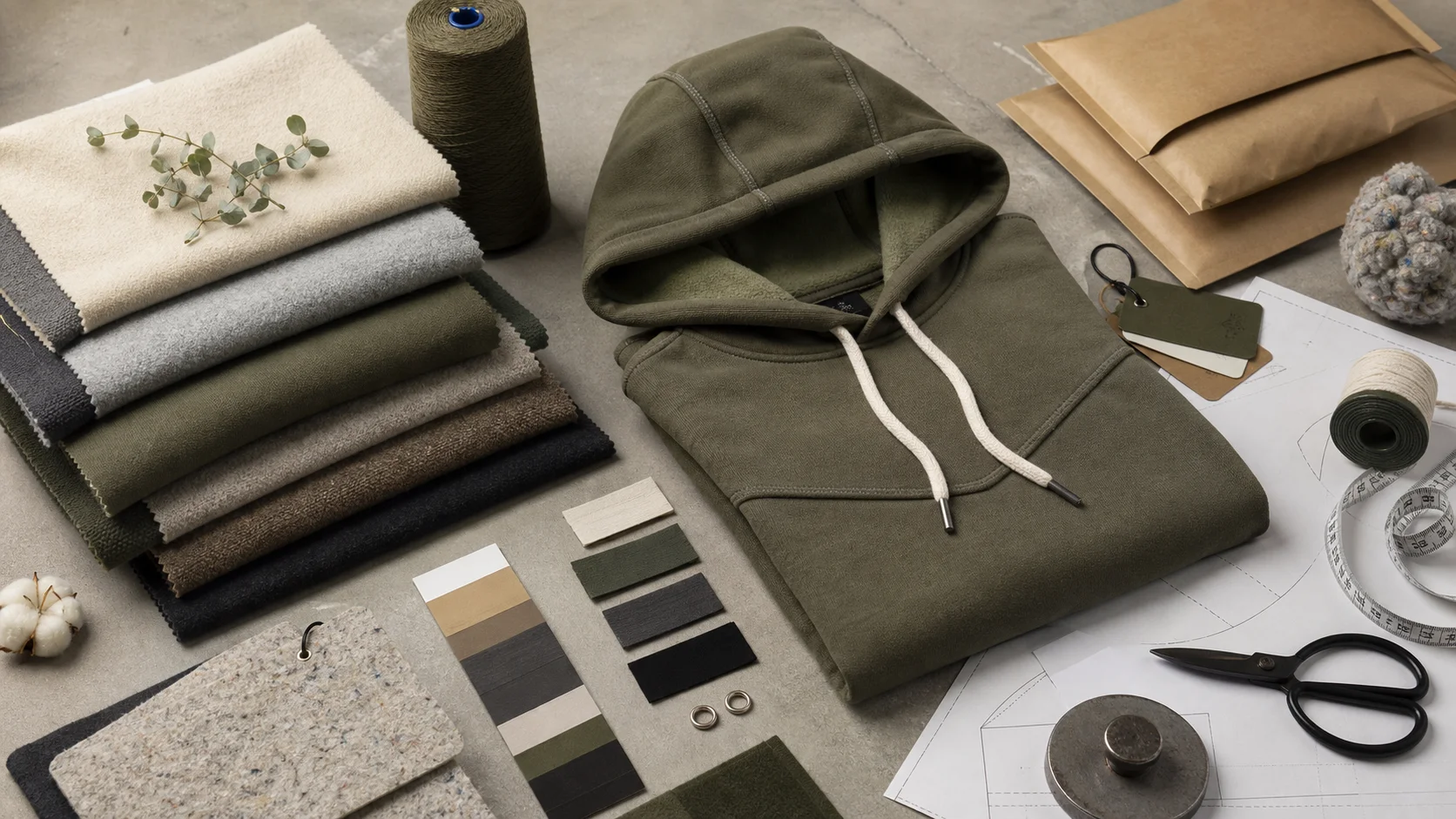
Source Grs Certified Fabric compared by sample evidence, fabric or trim specs, MOQ, AQL terms, cost lines, delivery timing, and rework responsibility.
Fast answer: Source Grs Certified Fabric: Fabric, Shrinkage, Fit, and QC Terms should be judged by production evidence, not by a generic sourcing promise. The buyer needs sample proof, cost breakdowns, QC checkpoints, and delivery buffers in writing.
Ask for recent sample photos, measurement tolerances, fabric or print test assumptions, decoration test notes, packing examples, and a named inspection checkpoint. These details show whether the team can repeat an approved sample at bulk volume.
Separate garment cost, decoration, labels, packaging, sampling, testing, freight, and rush charges. Clear cost lines make it easier to reduce colorways, adjust size depth, or reserve more time for sampling.
As sustainable fashion continues to evolve from a niche movement into a mainstream business priority, brands are under increasing pressure to prove that their materials are genuinely responsible. Customers, retailers, and regulators are asking harder questions about recycled content, chemical safety, supply chain transparency, and environmental impact. In this context, GRS certified fabric has become one of the most important material choices for brands committed to credible sustainability.
GRS stands for the Global Recycled Standard, a certification that verifies recycled content and sets strict requirements for social, environmental, and chemical practices across the supply chain. For fashion brands, sourcing GRS certified fabric helps support product integrity, strengthen sustainability claims, and reduce greenwashing risk. It also offers a practical way to build collections using recycled materials while maintaining quality and consistency.
However, sourcing GRS certified fabric is not as simple as asking for “recycled fabric.” Brands need to understand the certification, evaluate suppliers carefully, request the right documentation, and ensure their manufacturing process supports compliance. This guide explains how to source GRS certified fabric in a way that is efficient, credible, and commercially smart.
GRS certified fabric is textile material made with recycled content and verified under the Global Recycled Standard. The standard was developed to ensure that recycled materials are genuinely traceable and that the production process meets defined environmental and social criteria. It covers the entire chain of custody, from the recycler to the final fabric supplier and, in many cases, the garment manufacturer.
To qualify as GRS certified, a product must contain a minimum level of recycled content, typically at least 20%, though many brands aim for much higher percentages. The standard also requires:
It is important to distinguish GRS from other textile claims. A fabric can be “recycled” without being GRS certified, but that does not automatically guarantee traceability or compliance with the broader sustainability criteria. GRS certification offers a more reliable framework for brands that need proof, not just promises.
Sourcing GRS certified fabric offers several strategic advantages for sustainable fashion brands. First, it helps brands meet customer expectations. Modern consumers are increasingly educated about sustainability and are quick to question vague claims. Using certified materials gives your brand stronger evidence to back up product stories and marketing statements.
Second, GRS fabric can support retailer and marketplace requirements. Many wholesale buyers and premium stockists now ask for certified materials as part of their vendor onboarding or compliance process. If your brand plans to scale, certification can make your sourcing story more credible to business partners.
Third, GRS certified fabric supports better supply chain management. Because the certification requires documentation and chain-of-custody control, brands gain more visibility into where their materials come from and how they are produced. That transparency can help reduce sourcing risk and improve operational discipline.
Finally, working with certified recycled fabrics can align your brand with broader environmental goals, including reduced dependence on virgin raw materials and lower textile waste. For fashion companies building a long-term sustainability strategy, this is more than a trend; it is a competitive advantage.
To learn more about how Fabrikn supports responsible apparel production, visit our services page or explore our about us page.
Before approaching suppliers, clarify exactly what you need. Different garments require different fabric performance characteristics, so you should define the fabric type, weight, hand feel, stretch, color, and end-use. At the same time, determine your sustainability targets. Are you looking for polyester made from recycled bottles, recycled cotton blends, recycled nylon, or a specific recycled content percentage?
It also helps to define any additional criteria, such as organic certification, low-impact dyeing, or PFAS-free finishes. The clearer your brief, the easier it will be to identify suitable GRS certified fabric options.
Not every fabric mill that claims to sell recycled materials is actually certified to GRS. Start by shortlisting suppliers who can provide valid certification documents and demonstrate experience working with certified recycled inputs. You can source from fabric mills, garment manufacturers with integrated textile capabilities, or sourcing partners who have existing relationships with approved mills.
Ask the supplier whether the facility itself is GRS certified and whether the specific fabric you want is included in their certification scope. This is essential because a company may be certified for certain products or locations but not all of them.
Before you commit to samples or production, request the supplier’s GRS certificate and scope certificate. These documents should show the certification body, certificate number, validity dates, and the covered product categories. If you are sourcing through multiple tiers, ask for transaction certificates as well, because these help prove the chain of custody for specific orders.
Documentation is not just a formality. It protects your brand from compliance issues and helps ensure that sustainability claims are defensible. If a supplier hesitates to share these materials, treat that as a warning sign.
GRS certified fabric must contain verified recycled content, but the percentage can vary. Some fabrics may be 20% recycled, while others are 100% recycled. The recycled content level should match your brand goals and your product positioning. For example, a premium eco-collection may require high recycled content, while a performance line may need a blend to preserve durability and stretch.
Check whether the recycled component comes from pre-consumer waste, post-consumer waste, or a combination of both. Also confirm the base fiber type, such as recycled polyester, recycled cotton, recycled wool, recycled nylon, or blended recycled textiles. Each has different performance, cost, and sustainability implications.
Sustainability alone is not enough. The fabric must also meet your product standards. Request swatches and test key qualities such as shrinkage, pilling, colorfastness, breathability, durability, drape, and recovery. If the fabric will be used for activewear, outerwear, childrenswear, or workwear, testing becomes even more important.
Ask for laboratory reports where available, and if possible, conduct your own testing before bulk order approval. A certified fabric that fails in wear testing will create waste, delays, and customer dissatisfaction.
GRS certification includes chemical restrictions, but brands should still verify what finishing processes were used. Ask whether the fabric complies with restricted substance standards and whether any coatings, dyes, or treatments were applied. This is especially important for brands that market themselves as non-toxic or skin-friendly.
If your brand operates in multiple regions, check whether the fabric meets local regulatory requirements as well. Sustainability certification does not replace legal compliance.
Certified recycled fabrics may have higher minimum order quantities or longer lead times than conventional fabrics, especially if the material is custom-developed. Discuss MOQ, production capacity, and replenishment timelines early in the process so you can plan launches realistically.
For growing brands, this step is vital. A great fabric is only useful if the supplier can deliver it consistently and at a scale that supports your collection calendar.
Traceability is one of the core strengths of GRS certification. Ask how the supplier tracks recycled input material, how records are maintained, and whether the chain of custody can be demonstrated from raw material to finished fabric. This is especially important if your brand will make recycled content claims on labels, product pages, or wholesale materials.
If possible, build a sourcing file for each fabric style that includes certificates, test reports, purchase orders, and communication records. This makes future audits and claim substantiation much easier.
Even if a fabric looks promising on paper, it is wise to place a smaller trial order before committing to bulk production. This allows you to test the material in your actual manufacturing environment and see how it performs during cutting, sewing, washing, printing, or finishing.
A trial order can also reveal practical issues such as shade variation, roll consistency, or handling behavior. Catching these early can save significant time and cost later.
Choosing the right supplier is just as important as choosing the right fabric. A strong supplier should act as a partner, not just a vendor. Look for the following qualities when evaluating GRS certified fabric suppliers:
You should also ask operational questions. Can the supplier support custom colors? What is the production lead time? Do they offer lab dips or sample yardage? Can they supply fabric in the roll widths you need? Do they have experience with your target market or garment category? The answers will tell you whether the supplier is capable of supporting a real commercial program, not just a one-off order.
For brands that need support with production planning, textile sourcing, or garment development, a manufacturing partner can make the process more efficient. If you are building a collection and need end-to-end help, explore Fabrikn’s services or get in touch through our contact page.
Many brands make avoidable mistakes when sourcing GRS certified fabric. One of the biggest is assuming that “recycled” and “GRS certified” mean the same thing. They do not. Without certification, you may not have the documentation needed to substantiate claims.
Another common mistake is ignoring the supplier’s certification scope. A supplier may be certified, but not for the exact product category or site involved in your order. Always confirm the details.
Brands also sometimes focus only on sustainability and forget about performance. If the fabric does not work for the final product, the sustainability benefit disappears because of returns, defects, or short garment lifespans.
Other mistakes include:
A disciplined sourcing process reduces these risks and helps ensure your final product reflects your brand values.
If you plan to use GRS certified fabric across multiple seasons, build a long-term sourcing strategy rather than treating each order as a standalone project. Start by developing a preferred supplier list and maintaining a centralized record of certificates, test results, and order history. This creates continuity and makes it easier to repeat successful styles.
It is also smart to collaborate early with your manufacturer and product development team. Fabric performance affects pattern making, sewing methods, shrinkage allowances, and final fit. The earlier everyone is aligned, the smoother your production process will be.
Another best practice is to monitor certification renewals. GRS certificates expire, so make sure your supplier’s documentation remains current. If a certificate lapses, your claim chain may be disrupted even if the fabric itself has not changed.
Finally, communicate honestly with your customers. GRS certified fabric is a meaningful sustainability choice, but it is only one part of a responsible fashion system. Pair your material claims with broader commitments around durability, waste reduction, and responsible manufacturing. Transparent storytelling builds trust over time.
Get a free quote from Fabrikn — your trusted B2B clothing manufacturer with 10+ years of experience. MOQ as low as 200 pieces.
Get a Free Quote →GRS certified fabric is textile material verified under the Global Recycled Standard. It contains recycled content and meets requirements for traceability, chemical restrictions, environmental responsibility, and social compliance.
No. Recycled fabric simply means the material includes recycled content, while GRS certified fabric has been independently verified against a recognized standard with chain-of-custody documentation.
Ask for the supplier’s certificate and scope certificate, and confirm the validity dates, covered locations, and product categories. You can also request transaction certificates for specific orders.
Common options include recycled polyester, recycled cotton, recycled nylon, recycled wool, and blended fabrics containing recycled input materials.
Yes, but the fabric must also meet the performance needs of the garment. For example, activewear, outerwear, and basics may require different fiber blends, weights, and finishes.
It helps brands support credible sustainability claims, improve supply chain transparency, meet buyer requirements, and reduce the risk of greenwashing accusations.
If you need a manufacturing partner that understands sustainable sourcing and production, explore Fabrikn’s services, learn more about our team on the about us page, or contact us to discuss your next project.
Sourcing GRS certified fabric takes careful planning, but the payoff is significant. By choosing verified recycled materials, checking documentation, and partnering with trustworthy suppliers, sustainable fashion brands can create products that are both commercially strong and environmentally credible. In a market where proof matters, GRS certification gives your fabric story the structure and transparency it needs.