
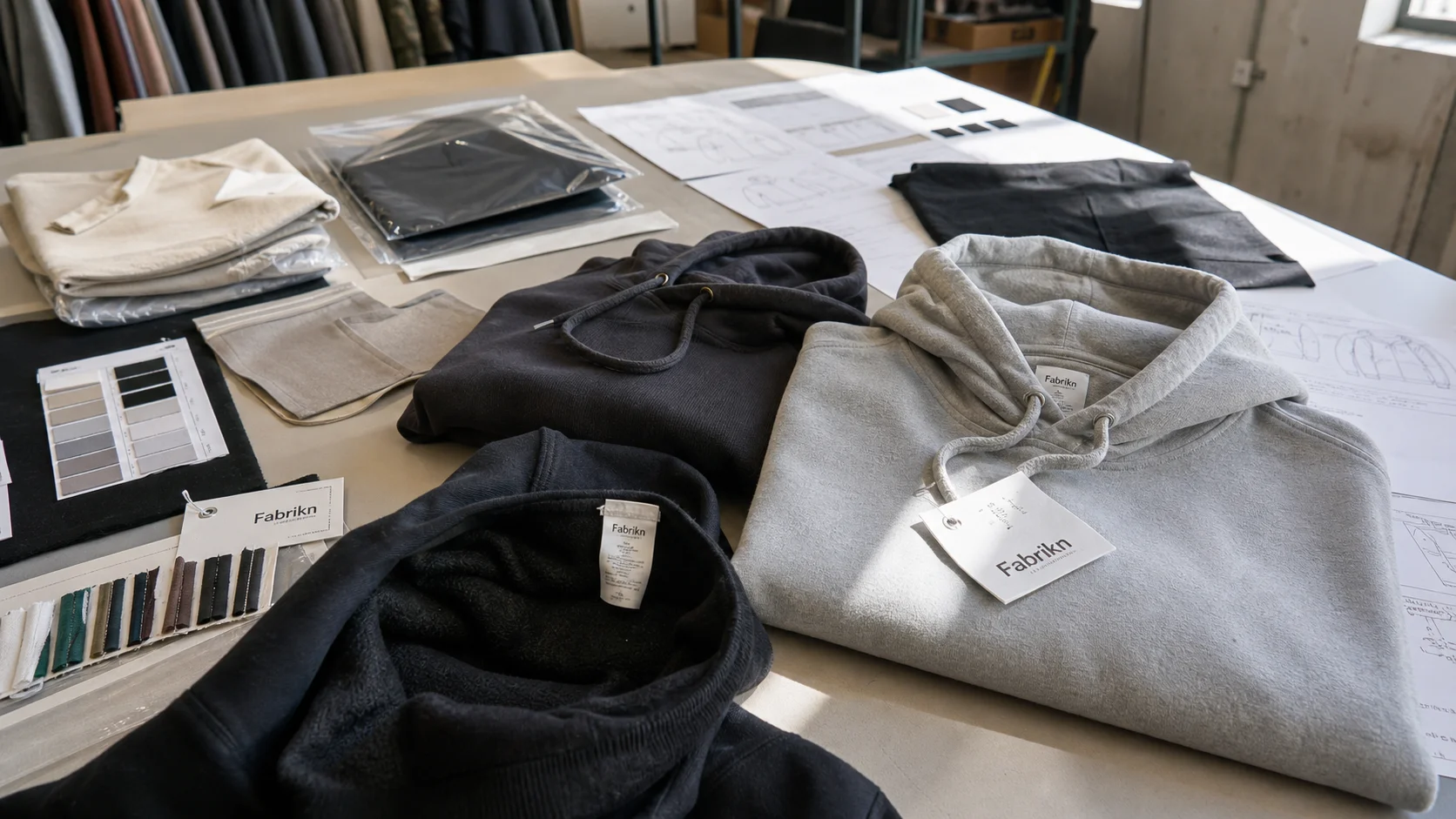
Verify Recycled Content Claims in Sustainable Fashion compared by sample evidence, fabric or trim specs, MOQ, AQL terms, cost lines, delivery timing, and...
Fast answer: Verify Recycled Content Claims in Sustainable Fashion: Tech Pack, Sample Gate, MOQ, and QC Terms should be judged by production evidence, not by a generic sourcing promise. The buyer needs sample proof, cost breakdowns, QC checkpoints, and delivery buffers in writing.
Ask for recent sample photos, measurement tolerances, fabric or print test assumptions, decoration test notes, packing examples, and a named inspection checkpoint. These details show whether the team can repeat an approved sample at bulk volume.
Separate garment cost, decoration, labels, packaging, sampling, testing, freight, and rush charges. Clear cost lines make it easier to reduce colorways, adjust size depth, or reserve more time for sampling.
Recycled content claims are everywhere in sustainable fashion. Brands use terms like “made with recycled polyester,” “contains recycled cotton,” or “crafted from post-consumer materials” to signal environmental responsibility and appeal to increasingly conscious buyers. But in a market where greenwashing is common, these claims need to be verified carefully. For fashion brands, retailers, and sourcing teams, knowing how to verify recycled content claims is essential for protecting brand credibility, meeting compliance expectations, and making informed material choices.
This guide explains how to verify recycled content claims in sustainable fashion, what documentation to request, which certifications matter, how to interpret fiber content labels, and where the biggest red flags appear. Whether you are sourcing products, auditing suppliers, or building your own sustainability strategy, a structured verification process can help you separate genuine claims from vague marketing language.
Recycled content claims state that a product, fabric, or component contains material recovered from waste or pre-existing items. In fashion, these claims may refer to fibers, trims, yarns, linings, packaging, or even entire garments. A claim may be broad, such as “recycled material,” or more specific, such as “80% post-consumer recycled polyester.”
These claims can refer to several different material streams:
Not all recycled content claims are equally meaningful. A product labeled “made with recycled materials” may contain only a small percentage of recycled fiber. That is why verifying both the source and the percentage of recycled content is so important.
Verifying recycled content claims matters for several reasons. First, customers increasingly expect transparency. Second, retailers and wholesale buyers often require documentation before approving sustainability claims. Third, regulations in some markets are tightening around environmental marketing claims, making unsupported statements risky.
Without proper verification, a fashion brand may face:
In short, recycled content claims should never be accepted at face value. They should be backed by evidence that shows exactly what material was used, where it came from, how it was processed, and how much recycled content is actually present in the finished item.
Understanding the material itself is the first step in verification. Some recycled inputs are easier to trace than others.
One of the most common recycled fibers in fashion, recycled polyester is often made from post-consumer PET bottles or pre-consumer waste. Verification should confirm whether the material is truly post-consumer or simply factory waste. These differences matter because the environmental story is not the same.
Recycled cotton is often made from textile waste, cuttings, or used garments. Because cotton fibers shorten during recycling, recycled cotton is frequently blended with virgin fibers to maintain durability. Buyers should verify both composition and recycling method.
Recycled nylon is commonly sourced from fishing nets, carpet waste, or industrial scraps. It may be sold under proprietary names, so traceability documents are especially important.
Recycled wool can come from pre-consumer milling waste or post-consumer garments. The claim may be legitimate, but the source should be clearly defined to avoid confusion.
Many garments contain blended fabrics or mixed recycled inputs. In these cases, the recycled content percentage should be documented for each component, not just the overall product where possible.
If you are developing or sourcing sustainable apparel products, working with a manufacturing partner that understands material traceability is crucial. Fabrikn’s services can help brands build more transparent production processes and align product development with sustainability goals.
Verification should be systematic. A supplier saying a product is “eco-friendly” is not enough. You need a chain of evidence that supports the claim from raw material to finished garment.
Start by asking for a detailed spec sheet that lists fiber composition, yarn type, fabric construction, and trims. The document should clearly state the recycled percentage and whether that content refers to the fabric, the entire garment, or a specific component.
Be cautious if the claim appears only in marketing copy but not in technical documents. If the spec sheet says 70% recycled polyester, the supplier should be able to explain the remaining 30% and provide supporting documents.
Ask where the recycled material came from. Was it post-consumer PET bottle waste, pre-consumer textile waste, or industrial plastic scrap? A genuine claim should identify the origin of the recycled feedstock.
Useful evidence may include:
The more specific the origin, the stronger the claim.
Chain of custody is the paper trail showing how recycled material moved through the supply chain. It helps ensure that the recycled fiber used in the finished product matches the certified input source.
Ask whether the supplier can provide:
Mass balance systems can be legitimate in some contexts, but they must be clearly disclosed. A mass balance claim is not the same as physical traceability, so the buyer should understand what system is being used.
Certifications can strengthen recycled content claims, but only if they are relevant, current, and properly applied to the product. Not every certification covers every material. You should confirm that the certification matches the exact claim being made.
Examples of supporting certification types include chain-of-custody, recycled content verification, and environmental management standards. Ask for the certificate number, scope, expiration date, and certifying body. Also confirm that the specific mill, factory, or product falls within the certification scope.
In some cases, particularly for blended fibers or disputed claims, independent lab testing may be useful. Fiber composition testing can confirm whether the claimed recycled content appears consistent with the supplier’s declaration.
However, lab tests do not always prove the origin of the fiber. A test can show polyester content, for example, but it cannot tell you whether that polyester came from recycled bottles or virgin petrochemical feedstock. That is why testing should complement, not replace, documentation.
Some recycled content claims are technically true but misleading in how they are phrased. For example, “made from recycled bottles” may sound like the bottles make up most of the garment, when they actually account for a small percentage of the final fabric.
Look for exact language such as:
Be wary of vague terms like “eco,” “green,” “sustainable,” or “made responsibly” unless they are backed by measurable evidence.
Sometimes recycled content applies only to one part of a product. A jacket may have a recycled shell but virgin lining, zipper tape, and labels. A sneaker may include recycled polyester laces but no recycled upper material. The claim should clearly identify whether it refers to the full item, the main fabric, or a trim component.
For buyers and product developers, this distinction is essential. Clear component-level labeling avoids overstatement and helps maintain claim accuracy throughout the product lifecycle.
Once you receive a recycled content claim, compare it against purchase orders, production specs, and final inspection records. The claim should be consistent across all documents.
If the supplier promised 50% recycled content but the shipment documents show standard virgin material codes, pause and investigate. Inconsistent paperwork is one of the most common signs of a weak claim.
For high-value products or key sustainability initiatives, a supplier audit may be worth the investment. On-site audits can help confirm material segregation, documentation practices, and traceability controls.
Audits are especially useful when recycled content claims are central to marketing, wholesale commitments, or ESG reporting. If your brand needs support with supplier communication and production oversight, you can learn more through Fabrikn’s about us page or contact the team directly via contact us.
Several standards and certification frameworks can support recycled content verification. The right one depends on the material type, market, and supply chain structure.
Some standards focus specifically on recycled input verification and product claims. These usually define how recycled content is measured, documented, and tracked through production.
Chain-of-custody systems verify that certified material remains identifiable throughout the supply chain. They are often used for recycled fibers, organic fibers, and other traceable inputs.
Some recycled fibers are certified through programs tied to a particular material class, such as recycled polyester or recycled nylon. These can be highly useful, but only when the certificate scope matches the actual material in question.
Although not direct proof of recycled content, broader compliance systems can indicate that a supplier has stronger process controls and better documentation practices. These systems support overall trustworthiness.
Always remember that certification is not a substitute for due diligence. A certificate can expire, be out of scope, or apply only to one factory while the claim is being made for another. Verification still requires a document-by-document check.
There are several warning signs that a recycled content claim may be weak or misleading. If you see one or more of these, dig deeper before making purchasing decisions.
A good rule of thumb is this: the more important the sustainability claim is to your brand story, the more evidence you should require.
To make recycled content verification easier and more reliable, build it into your sourcing process from the start.
Brands that treat recycled content verification as part of product development—not an afterthought—are more likely to maintain trust and avoid costly claim corrections later.
If your team is building a new sustainable apparel line, working with an experienced manufacturing partner can simplify verification and production alignment. Fabrikn’s services page outlines how the company supports clothing brands with production solutions designed for reliability and transparency.
Verifying recycled content claims in sustainable fashion requires more than a supplier’s verbal assurance. It takes documentation, traceability, third-party validation, and careful claim wording. By checking material specifications, origin records, certifications, and supporting evidence, brands can confidently distinguish genuine recycled content from vague marketing claims.
As consumer expectations grow and regulations become stricter, the ability to verify recycled content claims will continue to be a competitive advantage. Brands that invest in accurate verification protect their reputation, strengthen supply chain relationships, and build more credible sustainability stories.
For additional support on clothing production, sustainable sourcing, or brand development, visit Fabrikn’s contact us page to start a conversation.
Get a free quote from Fabrikn — your trusted B2B clothing manufacturer with 10+ years of experience. MOQ as low as 200 pieces.
Get a Free Quote →Verify it by reviewing the material specification, checking the source of the recycled input, confirming chain-of-custody documentation, validating certificates, and ensuring the claim wording matches the actual product composition.
Ask for the fiber composition sheet, recycled material origin documents, certificates, batch records, invoices, and any lab test reports or chain-of-custody paperwork.
No. Certification helps, but it should be paired with product-specific documentation. The certificate must also cover the correct material, factory, and time period.
Post-consumer recycled content comes from products used by consumers and then recovered. Pre-consumer recycled content comes from manufacturing waste before the product reaches consumers.
Lab testing can confirm fiber composition, but it usually cannot prove whether a fiber came from recycled or virgin feedstock. It is useful as supporting evidence, not standalone proof.
Common red flags include vague wording, missing documentation, expired certificates, unclear origin, and inconsistent claim language across different documents.