
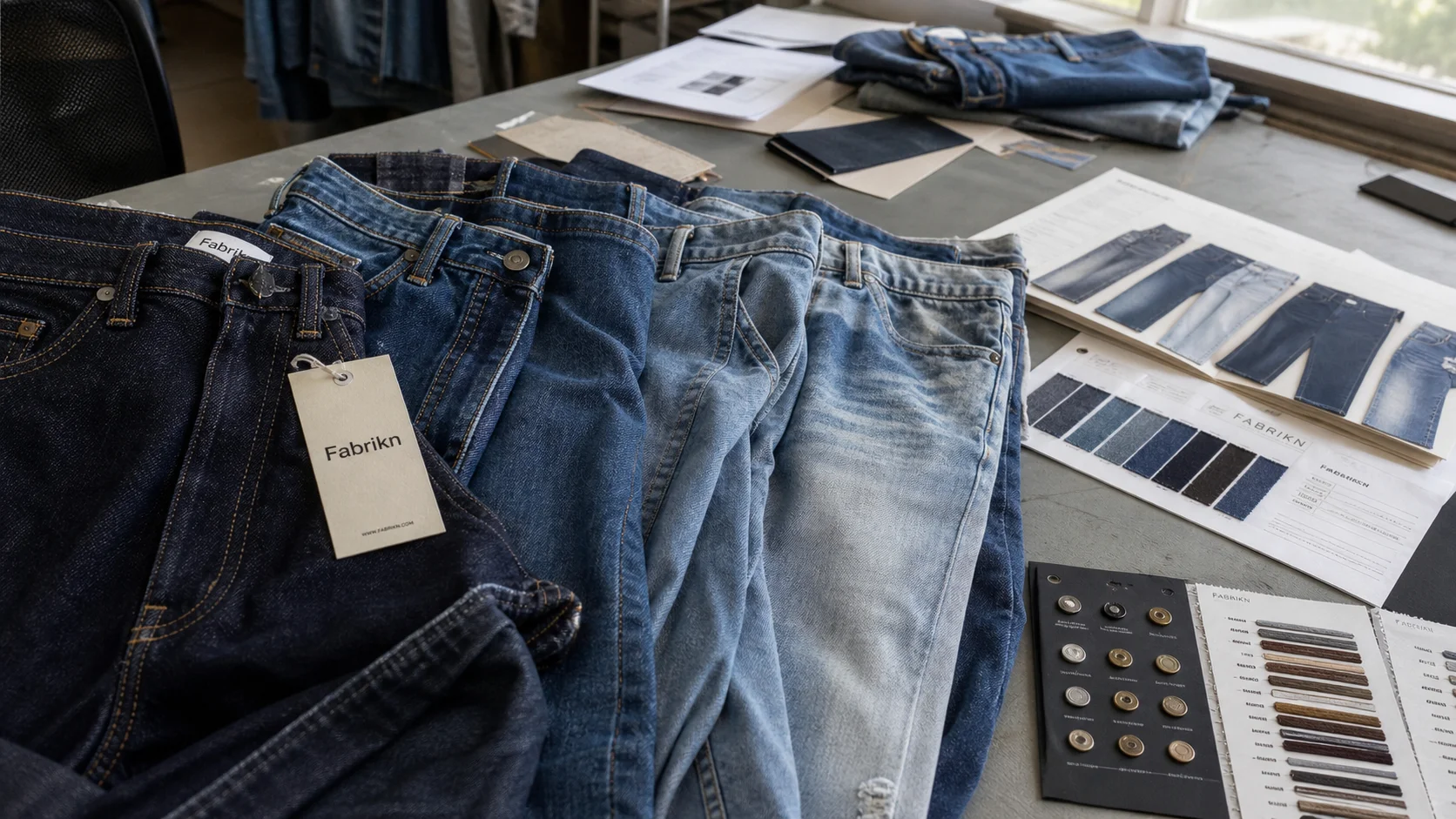
Jeans Manufacturer with Custom Washes with checks for samples, fit, MOQ, QC evidence, pricing terms, and delivery risk.
Fast answer: Jeans Manufacturer with Custom Washes should be judged by production evidence, not by a generic sourcing promise. The buyer needs sample proof, cost breakdowns, QC checkpoints, and delivery buffers in writing.
Ask for recent sample photos, measurement tolerances, fabric or print test assumptions, decoration test notes, packing examples, and a named inspection checkpoint. These details show whether the team can repeat an approved sample at bulk volume.
Separate garment cost, decoration, labels, packaging, sampling, testing, freight, and rush charges. When every cost line is visible, it becomes easier to reduce colorways, adjust size depth, or reserve more time for sampling.
Finding the right jeans manufacturer with custom washes can make the difference between an average denim collection and a truly standout brand. In a crowded apparel market, denim is one of the most competitive categories, and customers are often drawn to jeans not only because of fit and silhouette, but also because of the character created by wash effects, fading, texture, and finishing details.
Custom washes are one of the most powerful tools a brand can use to build identity. They can make jeans look vintage, premium, rugged, clean, fashion-forward, or minimalist. They can communicate authenticity, craftsmanship, and personality before a customer even tries the garment on. For brands, the challenge is finding a jeans manufacturer that can turn creative concepts into production-ready products with consistency, quality, and commercial viability.
In this guide, we will explain what custom washes are, why they matter, what techniques are available, and how to choose the right manufacturing partner for your denim line. Whether you are launching a new denim brand or expanding an existing collection, understanding custom washes will help you create products that stand out in the market. If you are exploring full-service apparel production, you can also learn more about our capabilities on our services page.
Denim is unique because the finished garment often looks very different from the raw fabric it starts with. The wash process transforms the jeans into a final product with visual depth, softness, comfort, and style. This makes the wash a central part of the design, not just a finishing step.
For brands, custom washes matter for several reasons:
The best denim programs are built with wash storytelling in mind. A raw indigo jean sends a different message from a heavily faded, whiskered pair. A black garment-washed style creates a very different customer perception than a lightly enzyme-washed vintage blue jean. This is why it is important to work with a manufacturer that understands not only production, but also aesthetic execution.
There are many ways to customize the finish of jeans, and the right choice depends on your target customer, price point, and brand identity. A skilled jeans manufacturer with custom washes should be able to recommend the best approach based on your concept and fabric selection.
Raw denim is untreated denim that has not undergone washing after weaving. It offers a clean, deep indigo appearance and develops natural fading over time as the wearer breaks it in. This style is often favored by heritage brands, premium labels, and customers who appreciate authentic aging.
Stone washing uses pumice stones or similar abrasive materials to create a worn-in look. The process softens the fabric and lightens the indigo tone, resulting in a vintage appearance. It is a classic technique but must be carefully controlled to avoid fabric damage or excessive irregularity.
Enzyme washing is a more modern technique that uses biological enzymes to break down the surface of the fabric. It can reduce stiffness, improve softness, and create subtle fading without the harsh abrasion associated with stone washing. It is popular with brands looking for a cleaner and more controlled finish.
Acid wash jeans have a dramatic, high-contrast look, often associated with retro fashion or bold streetwear styling. This effect is achieved using chemicals or bleaching agents in a controlled process. While eye-catching, acid washes require careful execution to ensure consistency and safety.
Vintage wash effects mimic the natural wear of aged denim. This category can include fading, whiskering, grinding, and localized distressing. It is one of the most popular choices for fashion brands because it creates a worn-in story that feels familiar and authentic.
Although commonly associated with other apparel categories, garment dye and overdye techniques can also be used to create unique denim looks. These processes alter the color tone and can produce muted, washed-out, or layered effects that help a collection feel contemporary and elevated.
Laser technology has become an important innovation in denim manufacturing. It can be used to create whiskers, fades, patterns, and distressing effects without heavy manual labor or high chemical input. Laser finishing is often favored by brands that want precision, repeatability, and more sustainable production methods.
Some brands prefer artisan-style distressing done by hand. This may include sanding, scraping, hole creation, edge grinding, or localized fading. Hand finishing gives a more bespoke appearance, but it can also increase production costs and lead times.
Different effects can be combined to create unique signatures. For example, a brand might use enzyme wash, laser whiskering, and hand-sanding to achieve a premium vintage result. The key is to align the wash technique with the desired end customer and sales channel.
Not every factory that produces denim is equipped to handle advanced wash development. If your brand wants a distinctive finish, you need a partner with technical expertise, process control, and the ability to scale. When evaluating a jeans manufacturer with custom washes, consider the following:
A strong manufacturing partner should understand fiber behavior, dye behavior, shrinkage, and how different washes affect handfeel and color. This expertise helps prevent costly errors and ensures your final jeans match the approved sample as closely as possible.
Wash development often requires multiple rounds of sampling. A reliable manufacturer should be able to create test washes, revise recipes, and refine the finish until it aligns with your target. This is especially important when working with branded denim lines that rely on exact aesthetic details.
The wash result depends heavily on the base fabric. A manufacturer should help you choose denim weight, fiber blend, stretch percentage, and weave structure that will perform well in the wash process.
One of the biggest challenges in denim manufacturing is maintaining wash consistency from sample to bulk production. Your factory should have strong quality control systems to ensure the same color depth, fade pattern, and softness across all units.
Modern denim production requires attention to chemical compliance, wastewater treatment, labor standards, and environmental impact. A trustworthy partner should be transparent about their processes and able to support sustainable production goals.
Denim wash development is a collaborative process. You want a manufacturer that can communicate clearly, interpret mood boards and reference samples, and provide practical production guidance. If you want to discuss your project directly, you can reach out through our contact us page.
Working with a jeans manufacturer with custom washes usually involves several stages. Understanding this process will help you plan your collection more effectively and reduce development delays.
Start by defining your denim concept. What kind of customer are you targeting? What style of jeans are you producing? What mood should the wash communicate? This is the stage to gather inspiration, reference images, sketches, and color direction.
Before the wash is finalized, the factory should help you choose the right denim fabric and fit block. The wash process can alter fabric behavior, so the base material must be selected with the final look in mind.
The manufacturer creates sample jeans with different wash approaches. These may vary in fade level, softness, distressing, and color tone. Multiple rounds of samples are often needed to achieve the intended result.
Once the sample is approved, the manufacturer finalizes cost calculations based on fabric, labor, wash complexity, trims, and order volume. More complex washes generally require more labor and higher production cost.
After approval, bulk production begins. Quality checks should be performed throughout cutting, sewing, washing, finishing, and packing to ensure that the product stays on spec.
The finished jeans should be inspected for wash consistency, measurements, seam quality, trim placement, and any defects created during finishing. Only after final approval should the order be packed and shipped.
It is easy to get excited about unique denim washes, but wash effects should never come at the expense of quality or fit. The most successful denim brands balance style with wearability and performance.
Here are the key quality areas to watch:
Brands should also pay attention to the difference between appearance and performance. A highly distressed jean may look fashionable in photos but could fail durability tests if the wash is too aggressive. The best manufacturer will help you balance visual impact with practical construction.
Sustainability has become a major concern in denim production because traditional washing processes can consume significant water, energy, and chemicals. For brands that want to reduce environmental impact, selecting a jeans manufacturer with custom washes that supports eco-conscious methods is increasingly important.
Some sustainable wash methods include:
If your brand emphasizes responsible manufacturing, ask potential suppliers about their wash technology, wastewater treatment, energy use, and compliance certifications. Sustainable wash development is no longer just a marketing advantage; it is increasingly a buying decision for retailers and consumers.
Custom washed jeans typically cost more than standard denim because the process requires additional development, labor, and quality control. The final price depends on several factors:
Minimum order quantity, or MOQ, can vary by manufacturer. Some factories may support smaller runs for emerging brands, while others focus on larger wholesale production. More advanced wash effects often require a higher MOQ to justify setup and processing costs.
Lead times also tend to be longer for custom washed denim. That is because wash development involves sampling and testing before bulk production begins. Brands should build extra time into their product calendar, especially if they are launching seasonal collections or coordinating with retail buy deadlines.
To minimize surprises, ask for a clear development timeline at the start. A professional manufacturing partner should provide estimated sampling time, production time, and delivery windows so you can plan inventory properly.
In today’s market, jeans are not just basic wardrobe staples. They are a key fashion product with strong branding potential. Custom washes help turn denim into a signature category that customers remember.
Here is how wash development strengthens a denim line:
Strong denim programs often start with one or two core fits and expand through wash variation. This approach makes the line easier to manage while creating room for growth. A skilled manufacturer can help you develop a wash family that stays consistent with your brand voice while offering enough variation to keep the range exciting.
At Fabrikn, we understand that a jeans manufacturer with custom washes must do more than cut and sew garments. We help brands develop denim products that combine design intent, technical execution, and commercial readiness.
Our team supports apparel brands through each stage of the process, from fabric selection and sample development to wash refinement and bulk production. Whether your goal is a clean premium finish, a vintage-inspired look, or a more fashion-forward distressed effect, we can help translate your concept into a production-ready product.
We also value collaboration and transparency. Denim development works best when brands and manufacturers communicate clearly about details such as fit, handfeel, wash depth, and pricing. If you are exploring a new denim project, we invite you to learn more about our company on our about us page.
Choosing the right jeans manufacturer with custom washes is one of the most important decisions a denim brand can make. The wash defines the personality of the product, influences customer perception, and helps create a line that feels distinct in a competitive marketplace. From raw denim to laser-finished vintage effects, custom washes give brands the flexibility to create denim that reflects their identity and meets market demand.
To build a standout denim line, focus on more than just the final look. Evaluate your manufacturer’s technical expertise, sampling process, consistency, sustainability standards, and communication style. With the right partner, you can develop custom washed jeans that are visually compelling, commercially strong, and aligned with your brand values.
If you are ready to develop your next denim collection, a trusted manufacturing partner can help you move from concept to production with confidence.
Get a free quote from Fabrikn — your trusted B2B clothing manufacturer with 10+ years of experience. MOQ as low as 200 pieces.
Get a Free Quote →A jeans manufacturer with custom washes is a factory that can produce denim garments with specialized finishing effects such as fading, distressing, softening, or vintage styling. These manufacturers handle both construction and wash development.
Custom washes help brands create unique product identity, improve retail appeal, and differentiate their jeans from competitors. They also influence comfort, style, and perceived quality.
Vintage wash, enzyme wash, and light stone wash are among the most popular options because they create a soft, worn-in appearance that appeals to a wide range of customers.
Yes, custom washes usually increase production cost because they require extra development, processing, labor, and quality control. More complex effects generally cost more than standard washes.
Yes. Techniques such as laser finishing, ozone washing, and enzyme treatments can reduce water and chemical usage compared with traditional methods.
Start with your brand identity, target customer, and price point. Then work with your manufacturer to select a wash that complements your fit, fabric, and overall collection direction.
You can start by visiting our contact us page to discuss your denim project, share your ideas, and request manufacturing support.