
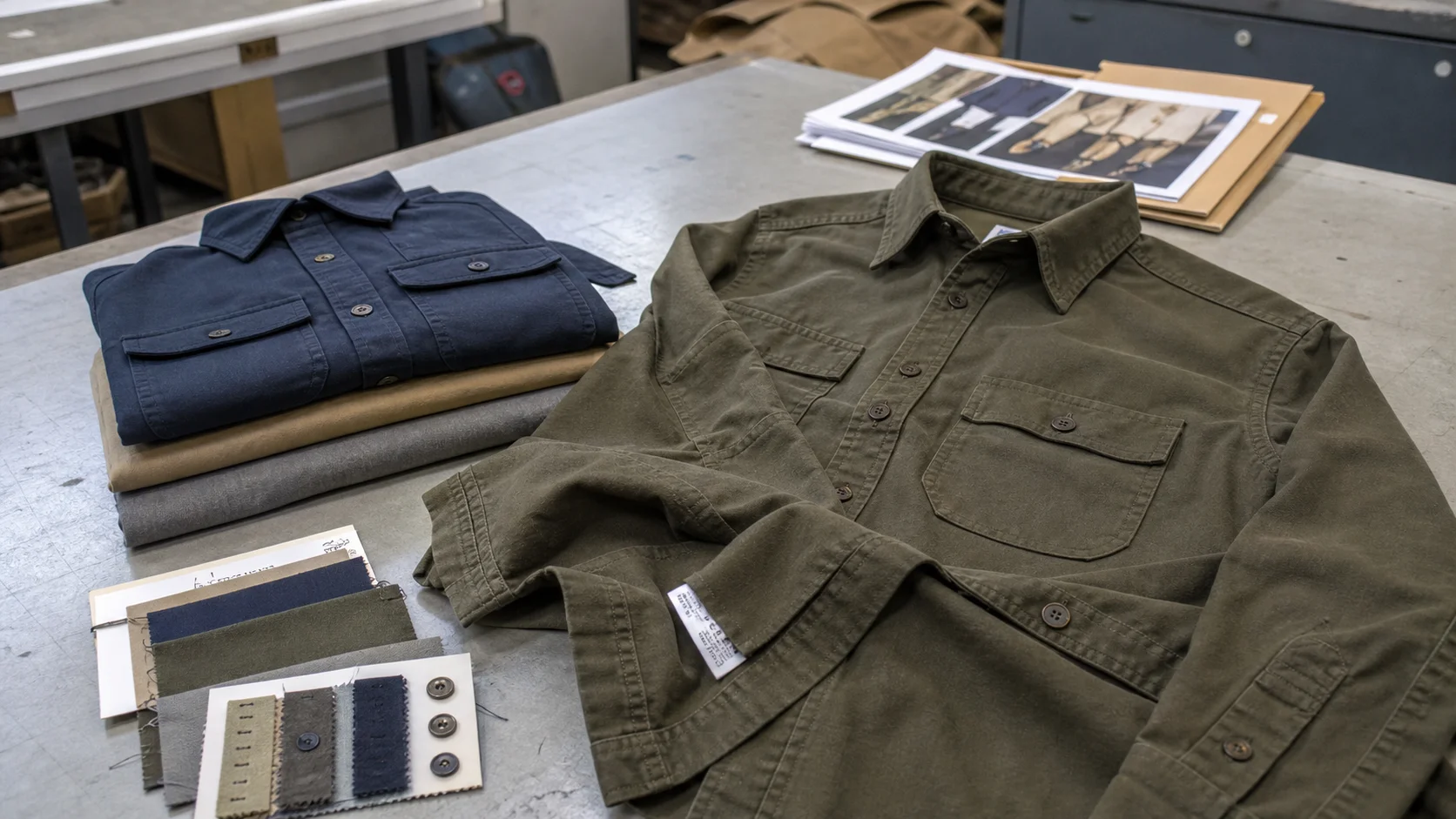
A product-specific outline for logistics teams sourcing OEM workwear coats with embroidery, covering coat construction, logo execution, visibility features, wear conditions, and production checkpoints for uniform programs.
OEM Embroidered Workwear Coats for Logistics Buyers - Fabrikn production reference
Logistics uniform programs are rarely simple apparel buys. A coat used by warehouse teams, drivers, cross-dock supervisors, and yard staff has to do several jobs at once. It needs to present a consistent brand image, hold up under heavy daily wear, fit a broad size curve, and stay repeatable across future reorders. That is why many buyers look for OEM workwear coats with embroidery rather than off-the-shelf promotional outerwear.
For logistics operations, embroidery remains one of the most practical branding methods for coats. Screen printing works for lightweight garments, but coats and insulated jackets often need a more durable, professional marking option. A stitched logo on the chest, sleeve, or back yoke usually gives a cleaner long-term result, especially when garments face abrasion from seat belts, package handling, pallet contact, and frequent washing.
OEM production also gives procurement teams more control over fabric weight, pocket layout, trim quality, color matching, and size grading. That matters when uniform programs are expected to run season after season, not just for a short campaign. Buyers who want help structuring a custom development process often begin by reviewing supplier capabilities on pages such as /services/.
The main tradeoff is complexity. A custom embroidered logistics coat program can deliver much better consistency than blank stock decoration, but it introduces more development steps, more approval points, and more ways for delays to appear. Smart buyers accept that tradeoff when they need predictable brand standards and repeatable replenishment.
In this category, OEM usually means the coat is produced to a buyer’s required specification rather than pulled from a finished catalog with only a logo added. That can include custom shell fabric, insulation level, pocket construction, zipper brand, embroidery placement, woven labels, hangtags, polybag labeling, carton marking, and packing ratios by size.
For logistics buyers, true OEM is valuable when the program has operational requirements that standard retail-inspired outerwear does not address. Examples include:
Some suppliers describe any private-label garment as OEM. Buyers should press for detail. There is a practical difference between custom labeling on an existing body and a fully developed workwear coat with bespoke components. Neither option is automatically wrong. The correct choice depends on volume, timing, and how much deviation the uniform program can tolerate.
Purchasing judgment: if the program is a pilot, a modified stock body with approved embroidery may be the sensible entry point. If the program will roll out nationally or across multiple sites, deeper OEM control usually pays off in fewer replenishment issues later.
Logistics teams do not all work in the same environment, so a single coat style is often a weak answer. Most serious uniform programs segment outerwear by task and climate. The most common OEM coat types include:
Softshell styles are widely used for drivers, delivery staff, and supervisors who need light weather protection with better mobility. A typical construction might use a bonded polyester shell with mechanical stretch, fleece backing, and water-resistant finish. This option is practical for transitional weather and active roles, but not enough for cold-storage or winter yard work.
These are common for distribution centers, loading docks, and regional winter programs. Buyers often specify polyester pongee or oxford shell fabrics, with padding weights such as 80gsm, 120gsm, or 160gsm depending on climate and layering expectations. These coats accept left-chest embroidery well, though heavy back embroidery needs stabilization planning to avoid puckering.
For outdoor handling, linehaul support, and exposed delivery roles, waterproof outerwear can be worth the higher cost. In this category, seam sealing, zipper shielding, hood construction, and breathable coating performance matter more than marketing claims. Embroidery on fully waterproof garments requires extra care because needle penetration can compromise water resistance unless the design is placed in suitable panels and finished properly.
These styles are aimed at tougher handling environments. Heavier shells such as cotton-rich canvas or polyester oxford can improve abrasion resistance. The downside is weight and reduced flexibility. If teams spend hours driving, stiffer fabrics may reduce comfort and actual wear compliance.
Some logistics uniform programs need visibility features for yard operations or roadside activity. In those cases, coat design has to account for reflective tape layout, contrast panel positioning, and embroidery placement rules so branding does not interfere with visibility areas. Buyers should align the garment spec with the applicable safety requirement in their target market before approving artwork placement.
Embroidery sounds straightforward until approvals begin. Cost, appearance, and defect risk are all affected by technical choices that buyers should document early.
Common placements for logistics coats include left chest, right chest, upper sleeve, and back yoke. Left-chest embroidery is usually the safest and most cost-effective. Large back logos increase stitch count, add production time, and can distort lighter shells or insulated panels.
Most suppliers price embroidery by stitch count, number of locations, and setup requirements. Dense logos with small text can look sharp in a digital proof but perform poorly on coated or padded fabrics. Buyers should ask whether the artwork needs simplification for embroidery rather than assuming the brand file will translate cleanly.
Workwear coats often need stronger backing to prevent logo puckering. That is especially true for lightweight shells, bonded softshells, and insulated garments. The wrong backing can make the logo area stiff or cause tunneling around stitched shapes.
Polyester embroidery thread is the standard choice for most logistics outerwear because it offers good durability and color retention. Rayon can provide sheen, but it is less practical for rugged use. If the uniform program includes dark shells and bright logo colors, request thread shade approval against actual fabric rather than only against artwork.
Embroidery on lined or insulated coats typically happens before full assembly, or through access openings that later need neat closure. This is a routine process, but sloppy closure finishing is a known risk. Buyers should inspect the inside of the embroidered panel, not just the front appearance.
Purchasing judgment: keep embroidery disciplined on operational outerwear. One or two logo placements usually outperform heavily branded decoration in both durability and cost control.
The fabric spec is where many logistics coat programs are won or lost. A polished logo cannot compensate for shell failure, seam stress, poor zippers, or cuffs that wear out in one season.
Common shell options include polyester pongee, polyester oxford, taslon, bonded softshell, and cotton-poly canvas blends. Each comes with tradeoffs:
Buyers should ask for the actual coating or membrane details, not generic “waterproof” language. For many logistics roles, water resistance is enough. Fully waterproof specifications can raise price and reduce breathability. If staff move between vehicles, loading docks, and indoor areas, a balanced spec often works better than the most aggressive weather rating.
Not every market needs the same fill weight. A coat with 160gsm insulation may sound premium, but it can be too warm for active pick-and-pack teams. Lighter insulation or body-mapped padding often gives better real-world wear rates.
Zipper failure is one of the most common complaints in uniform outerwear. Buyers should define zipper type, tape quality, puller shape, and whether storm flaps use snaps, hook-and-loop, or both. Low-cost substitutions in trims are common when specs are vague.
Elasticated cuffs may improve weather protection, while adjustable tabs can support glove use. Pocket bags need sufficient strength for scanners and keys. Thin pocketing fabric can fail early even when the shell looks fine. These are small line-item costs with a disproportionate impact on wearer satisfaction.
Buyers comparing custom development paths can often gauge a supplier’s technical depth by how clearly they discuss these details during early conversations through pages like /about-us/ and supplier briefing channels.
MOQ for OEM embroidered workwear coats depends on fabric sourcing, color customization, and decoration complexity. For a modified existing style with custom embroidery and labeling, typical MOQ may start around 100 to 300 pieces per color. For a more customized coat with unique shell fabric, trims, and pattern adjustments, MOQ often lands in the 300 to 800 piece range per style, sometimes higher if special materials are required.
These are not fixed numbers. MOQ can rise when buyers request:
Skipping stages may save a week on paper and lose a month in corrections later. For logistics uniform programs, the pre-production sample is especially important because it reveals how the embroidery behaves on the actual coat build, not just on a strike-off swatch.
Purchasing judgment: if the supplier resists a clear approval sequence, that is usually a process warning. Uniform replenishment depends on records, sealed references, and repeatable specs.
Lead times for OEM workwear coats with embroidery vary by season, material availability, and factory loading. A practical range for development plus bulk production can run from 60 to 120 days, sometimes longer for first orders with custom fabric or heavy winter demand.
Typical lead-time components include:
Reorders are often faster if the original materials remain available and the supplier has accurate archived specifications. That is one reason disciplined tech packs and sample sealing matter. Without them, even a “repeat” order can drift in shade, fit, embroidery execution, or trim quality.
Buyers should also ask how the supplier handles raw material continuity. If a program is expected to run across multiple buying cycles, stocking greige fabric, reserving trim standards, or pre-approving alternates can reduce risk. This kind of planning is usually more valuable than chasing the lowest opening quote.
Workwear outerwear carries a different risk profile than fashion jackets. The coat has to survive movement, friction, repeated fastening, and often weather exposure. Embroidery adds another layer of inspection points.
A bulk inspection plan for logistics coats should cover more than AQL visual checks. It should include measurement review, logo placement verification, functional zipper testing, seam stress points, carton assortment accuracy, and packaging labels for distribution. If the garments are intended for multi-site uniform issue, incorrect carton ratios can create receiving problems even when garment quality is acceptable.
Buyers should also be realistic about wash and wear testing. If coats will be commercially laundered or used in dirty handling environments, request performance checks suited to that exposure. A logo that looks fine at shipment can degrade quickly if the wrong thread or backing was used.
Price matters, but in this category process discipline matters nearly as much. A low quote can unravel if the supplier lacks control over embroidery execution, trim sourcing, or size consistency.
When evaluating suppliers, buyers should compare:
A capable supplier should answer technical questions directly. Vague assurances are a concern, especially when buyers need repeat uniform standards across regions or seasons. Early communication is often a good indicator of future execution. Buyers looking to open a custom discussion can use channels such as /contact-us/ to outline target quantities, climates, branding locations, and performance needs before requesting quotations.
A strong logistics coat program is not just a single PO. It is a specification system. The best results usually come from buyers who standardize the key details early: approved shell fabric, color standard, embroidery file version, logo placements, measurement chart, trim list, labeling format, and carton rules.
That approach supports several practical goals:
There is also a strategic decision to make around style architecture. Some buyers try to cover every use case with one universal coat. That tends to create compromise. Others develop a small outerwear family: for example, a lightweight softshell for transit seasons, an insulated coat for colder sites, and a waterproof layer for exposed outdoor roles. That structure often improves compliance and lets the embroidery branding remain consistent across multiple functional garments.
The best OEM workwear coats with embroidery for logistics uniform programs are not necessarily the most complex. They are the ones with balanced specifications, realistic MOQ alignment, repeatable approvals, and inspection criteria tied to actual job use. Buyers who manage those tradeoffs well usually get better long-term value than buyers who only optimize for opening unit cost.
In practical terms, that means asking sharper questions before sampling starts. What climate band is this coat truly for? Will staff wear it while driving, lifting, walking routes, or standing at gates? Does the logo need one position or three? Is the program a trial, a regional rollout, or a replenishment-based national standard? The answers shape the correct OEM path.
For sourcing teams in outerwear and jackets, embroidery remains a reliable branding method when paired with the right base garment and a disciplined development process. The coat itself still does the heavy lifting. If shell, insulation, trim, and fit are wrong, a clean logo will not rescue the program. If those fundamentals are right, embroidered OEM workwear coats can support both brand consistency and operational performance across demanding logistics environments.
Get a free quote from Fabrikn — your trusted B2B clothing manufacturer with 10+ years of experience. MOQ as low as 200 pieces.
Get a Free Quote →For modified stock styles with custom embroidery and labels, MOQ often starts around 100 to 300 pieces per color. For more fully customized OEM coats, buyers commonly see 300 to 800 pieces per style, sometimes higher depending on fabric and trim customization.
In many cases, yes. Embroidery is generally more durable and more suitable for outerwear fabrics, especially for chest logos. Large or very detailed artwork may need adjustment, and waterproof garments need careful placement because stitching can affect shell performance.
First orders often take 60 to 120 days from development through bulk completion, depending on sampling rounds, material sourcing, seasonality, and shipping method. Reorders can be faster if the original specifications and materials remain available.
At minimum, buyers should approve embroidery digitizing, color standards, size specs, fit sample comments, pre-production sample, labeling, packaging details, and a sealed production reference. Clear records reduce reorder risk later.
The most common issues include embroidery puckering, incorrect logo placement, thread color mismatch, poor inside finishing behind embroidered panels, zipper defects, and inconsistent sizing. These risks are manageable when the supplier uses a structured sample and inspection process.
That depends on the work environment. One style may be enough for smaller programs in a narrow climate range. Larger operations often get better wear compliance and function from a small outerwear range built around different job conditions, while keeping branding and visual identity consistent.