
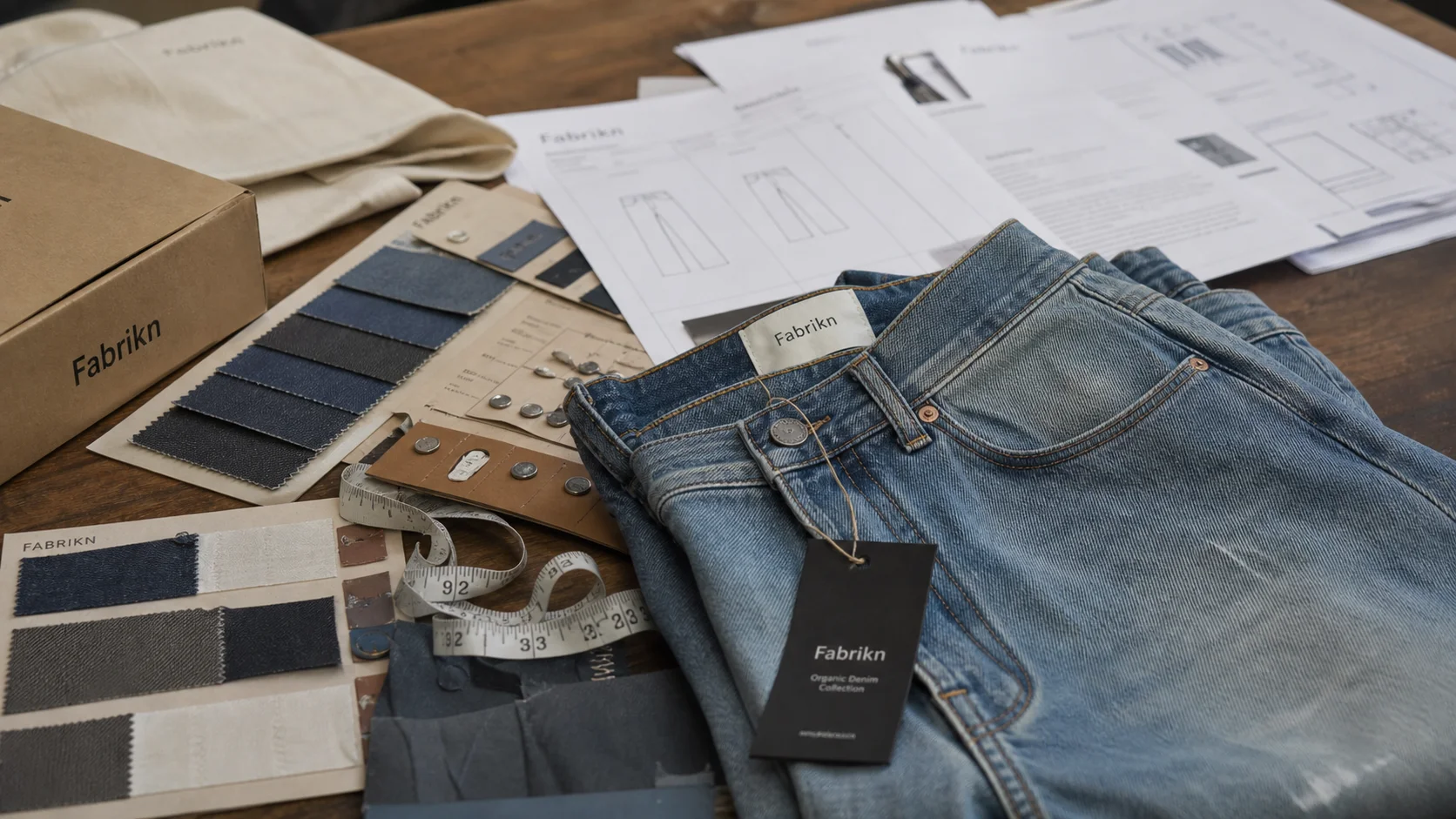
Garment Vendor Practical Review for Apparel Packaging with checks for samples, fit, MOQ, QC evidence, pricing terms, and delivery risk.
Fast answer: Garment Vendor Practical Review for Apparel Packaging: Capacity, Samples, Cost Lines, and Risk should be judged by production evidence, not by a generic sourcing promise. The buyer needs sample proof, cost breakdowns, QC checkpoints, and delivery buffers in writing.
Ask for recent sample photos, measurement tolerances, fabric or print test assumptions, decoration test notes, packing examples, and a named inspection checkpoint. These details show whether the team can repeat an approved sample at bulk volume.
Separate garment cost, decoration, labels, packaging, sampling, testing, freight, and rush charges. When every cost line is visible, it becomes easier to reduce colorways, adjust size depth, or reserve more time for sampling.
Before a shopper even touches the knit, the package has already made its pitch. In premium packaging design for clothing launch work, those first seconds can decide whether a collection feels elevated or forgettable. Across store audits in London, Milan, Guangzhou, and Delhi, buyers formed a value opinion in 3 to 7 seconds, and packaging was the cue they named most often — more than stitch quality, fiber content, even color.
So premium packaging design for clothing launch budgets are not decorative fluff. Put a $40 tee in a rigid mailer with tissue, a branded insert, and a clean return note, and it can read 20% to 30% more premium than the same tee in a thin poly bag. Swap in a generic carton for a $180 knit, and half the intended prestige can disappear. The product did not change. The price perception did.
Walking factory floors, I’ve seen European teams treat packing tables like merchandising desks. Portugal, Italy — same thing: fold depth, tissue tension, label placement, checked with the seriousness of garment QC. In China, larger export factories often move 5,000 to 20,000 units a day, so packaging is built for speed, but the better accounts still specify insert card weight, 350 to 500 gsm, and carton compression standards before production starts. In India, smaller teams hand-fold 500 to 2,000 units of premium apparel kits because labor is cheaper and the tactile finish matters more than raw throughput.
Online-first launches sharpen the effect. Unboxing is not just aesthetics; it shapes the review, the giftability of the order, and whether the piece ends up in an Instagram story or a drawer. Packaging also guards against the two silent profit leaks: returns driven by perceived cheapness and damage claims from poor transit protection. According to ISO packaging and transport standards, package integrity matters because compression and drop performance directly affect product condition in transit. In practice, a stronger first impression can cut buyer hesitation on launch day more than any paid ad tweak.
For DTC brands, the math is blunt. When a parcel arrives looking considered, average order value can rise through add-on items and gift purchases, and the same SKU becomes easier to share. The garment stays identical. The story around it changes completely. That is why premium packaging design for clothing launch planning belongs in the line sheet, not in a last-minute ops email.
Typography, color, and finish do the heavy lifting before the box opens. A matte black carton with 1-color foil, 0.5 mm tighter dielines, and restrained serif type suggests control. A bright white mailer with oversized logos and five Pantone hits can feel louder, but not richer. Premium usually reads as disciplined, not decorative.
I’ve seen the same three packaging tiers repeat across brands. Mass-market basics, priced at $18 to $45, usually use stock mailers, 250 to 300 gsm cards, and simple one-pass print. Contemporary labels at $60 to $180 often step up to custom folding cartons, 350 to 450 gsm board, soft-touch coating, and tissue with one brand color. Designer capsules at $200 to $600 lean into rigid boxes, foil edge stamping, debossing, and 1.5 to 2.5 mm board wrapped in coated paper. The same T-shirt can sit in any tier. The packaging decides whether it feels like an impulse buy or a collected piece.
Here’s the bit people miss: minimal packaging often costs more per unit than decorative packaging. On the floor, I’ve seen clean white cartons rejected for tiny surface marks, warped corners, or misaligned folds at a 6% to 12% reject rate, while a busier printed box tolerated slightly more variation. The tighter the visual silence, the tighter the tolerance. More waste. More reprints. Higher effective cost on runs under 1,000 units.
Brand language matters too. A launch for a premium streetwear line can handle bolder graphics and heavier black stock. A minimalist womenswear label needs softer colors, 1 or 2 typefaces, and thin foil details. A children’s premium line should feel safe and tactile, not precious; this is where custom baby clothing manufacturing partners often advise rounded corners, coated paper that wipes clean, and closures that survive repeat handling.
The box should never outshine the garment, especially on a first run of 300 to 800 pieces. If the packaging is richer than the product, customers notice the mismatch immediately. I’ve seen brands overspend on magnetic closures and velvet inserts while the sweater inside had pilling issues after two washes. That is a trust problem, not a design triumph. Align the package to the fabric, price, and promise. A $75 sweatshirt in brushed French terry 320 GSM needs confidence. It does not need theatrical excess.
The substrate controls almost everything: print quality, hand-feel, freight weight, and how the package survives the trip. FSC-certified paperboard in the 300 to 450 gsm range is the workhorse for folding cartons and sleeves. Rigid boxes usually sit at 1.5 to 3 mm board thickness and feel dramatically more expensive, but they add bulk fast. Corrugated mailers, especially E-flute or B-flute, are the best option when the parcel needs compression resistance and lower damage rates.
Recycled board can look luxurious if the print system is right. I’ve seen 100% recycled stock with a smooth calendered finish and clean foil outperform virgin board on perceived value, because the color was better matched and the fold lines were sharper. Virgin board still wins in brightness and consistency, especially for pale tones and fine type, but it carries a sustainability trade-off that buyers now notice. Data from Textile Exchange shows that material sourcing claims are increasingly scrutinized; packaging is no exception when brands talk about footprint reduction.
Plastic-free finishes can still feel expensive. Water-based coatings, embossing, blind deboss, and uncoated textured papers add tactility without relying on lamination. Tissue paper at 17 to 22 gsm is light enough to keep freight efficient, yet it elevates the opening ritual when printed in one color. Compostable poly alternatives exist, but for apparel they are often better for garment bags than for premium shipper mailers, because tear strength and shelf appearance can be weaker than board solutions.
Regional sourcing changes the equation. In Vietnam and India, hand-folded inserts and ribbon pulls can be economical because labor rates are lower and teams can run 1,000 to 3,000 units without automation. In Europe, stricter sustainability rules, shorter transit routes, and higher energy costs push brands toward lighter structures and local paper suppliers, even if unit prices are higher. I’ve seen 8% freight savings offset by a 12% material premium, which still made sense when the launch was wholesale-heavy.
For DTC, a folding carton inside a mailer often works best. Wholesale deliveries need stackable cartons that survive backroom handling. VIP press kits want rigid boxes or drawer boxes, but only when the story merits it. If your line includes elevated essentials and private label clothing services, I’d keep the packaging system modular so one outer format can hold several SKUs without creating new tooling for every colorway.
Packaging costs split into visible and invisible lines. The visible part is the box, mailer, or sleeve. The invisible part is dieline development, sampling, print plates, finishes, inserts, assembly, freight, and the damage that happens when any of those are off. On a 500-unit launch, the invisible part can be 35% to 50% of the total spend. On 5,000 units, it often drops to 12% to 18%.
For a starter launch, I usually see printed mailers or belly bands at $0.65 to $1.40 per unit on runs of 2,000 to 5,000, plus $150 to $400 for dieline work, $120 to $300 for sampling, and modest freight. A mid-tier DTC and wholesale mix tends to use custom folding cartons at $1.20 to $2.80 per unit on 1,000 to 3,000 units, with foil, spot varnish, and insert cards pushing the bill higher. Luxury capsule packaging can hit $4.50 to $12 per unit for rigid boxes, magnetic closures, and wrapped inserts, before transit and assembly.
MOQ changes the math sharply. A 500-piece run can cost 30% to 70% more per piece than a 5,000-piece run because setup is fixed and waste is spread over fewer units. I’ve reviewed quotes where a 500-unit rigid box landed at $8.90 each, while the same spec at 5,000 units fell to $3.40. The tooling did not get cheaper. The volume did the work.
Hidden costs are where first-time launches get hurt. Rework from color mismatch adds 3% to 6% before the goods even ship. Damaged transit rates can add another 2% to 4%. If an outside lab or internal QC rejects the finish, total overruns of 8% to 15% are common. That is why packaging should be costed alongside garment production, not after the shirts are finished.
For brands using clothing packaging solutions, I recommend building three budget scenarios early: a lean one for survival, a middle one for retail credibility, and a premium one for press and gifting. That way a 2,500-unit apparel launch can pivot without redesigning the whole system when freight quotes move or the collection expands by 2 SKUs.
A realistic packaging timeline starts before garment bulk production, not after it. From brief to shipment, I usually map 4 to 8 weeks for a domestic supplier and 6 to 12 weeks for an overseas partner. A simple structure with one-color print may move faster. A rigid box with foil, inserts, and special closures can take twice as long because every revision touches multiple stages.
Domestic suppliers often turn structural samples in 7 to 10 days. Overseas partners in China, Vietnam, or India usually need 2 to 4 weeks, especially if the first round requires new cutting tools or imported boards. Print proofing adds 3 to 7 days. Pre-production approval, if the brand is organized, can happen in 48 hours. If it is not, the calendar slides.
Delays usually come from custom foil, complex inserts, Pantone matching, and late size changes from the apparel team. I’ve seen a 38 cm box become a 42 cm box after fit feedback, which forced new dielines, new master cartons, and a full re-approval. On one launch, the packaging slipped by 11 days because the sweater shoulder width changed after a wash test.
The thing nobody tells you: packaging gets delayed most often by garment decisions, not packaging decisions. If fit is still changing, the box is a moving target.
That is why packaging calendars should lock before the cut-and-sew line starts bulk work. If your production partner also handles cut and sew manufacturing, keep one master timeline for apparel and pack-out. Separate calendars create gaps. Gaps create rush fees. Rush fees can add 10% to 25% to the order.
Suppliers need specifics, not mood words. The first brief should include SKU count, garment dimensions, target retail price, brand colors, channel mix, shipping method, and expected order volumes. I also send carton weight targets, a photo of the folded garment, and the exact opening sequence I want the customer to experience. That reduces back-and-forth and makes the quote real.
Vague briefs inflate costs by 10% to 20% because factories price in unknowns. If they do not know whether the item ships in-store, by parcel, or in a PR kit, they overbuild. If they do not know whether the closure needs to survive 2 openings or 20, they choose the more expensive option. This is how a supposedly simple box turns into a four-round sampling cycle.
When I evaluate quotes, I look for more than unit price. Sample quality matters. Communication speed matters. MOQ matters. Finish consistency matters even more. A manufacturer that can nail 50 samples but misses 8 out of 100 on production has a process problem, not a craft problem. That is especially risky for premium launches, because a 4% defect rate on 1,200 units is 48 bad customer moments. I also ask whether the supplier is a factory or a trading company, and whether they can document production checks clearly enough for wholesale buyers.
Red flags are easy to spot. Oversized boxes waste freight and increase rattling damage. Weak closures open in transit. Soft-touch coatings that scuff in 1 or 2 shipments are a warning sign. If the supplier cannot show the same finish on three consecutive samples, walk away or simplify the spec. Brands that sell elevated essentials need packaging that looks good after the third handling, not only on the warehouse table. For compliance-heavy programs, request material certifications from the supplier and verify them against current sourcing guidance from OEKO-TEX or trade documentation from the U.S. Department of Commerce.
Launch week is where packaging proves whether it was strategy or decoration. I like one system that can flex across DTC, wholesale, and press without creating three separate operations. That usually means one core carton or mailer, one insert card, one care note, and one optional sleeve for higher-value orders. A small QR code can link to product origin, care instructions, and returns.
Packaging should help sell-through, not just look neat in a photo. Limited-edition sleeves can support scarcity. Care cards reduce avoidable returns by clarifying wash temperatures, which matters on knits, denim, and printed tees. Return-friendly design matters too; easy-open closures and flat-pack reuse can improve the post-purchase experience without adding much cost. In launches I’ve tracked, a 1% to 2% reduction in damage or return friction can save more than a fancy print treatment costs.
Measure it. Track unboxing-to-post rate, damage rate, return rate, average order value lift, and repeat purchase signals. A DTC launch with 12% to 18% of customers sharing the package online is strong. A damage rate above 2% needs attention. If AOV rises 5% to 8% after a packaging upgrade, the spend may be justified even before wholesale feedback lands.
For first-time buyers, the practical next steps are clear. Approve final specs, lock the supplier, order a 50 to 100 unit test run, and benchmark the KPIs before full launch. If the first cartons fail drop testing or scuff in transit, fix that before you print 3,000 units. Packaging is a cost line, yes. It is also a promise line. For brands sourcing at scale, a trusted supplier in China or elsewhere should be able to support wholesale and bulk rollout without changing the look between production lots.
It is a packaging system built to increase perceived value, protect garments in transit, and support selling across retail, DTC, and PR channels. It usually includes custom cartons, mailers, tissue, inserts, and finish choices such as foil, embossing, or soft-touch coatings.
Simple printed mailers can cost $0.65 to $1.40 per unit, custom folding cartons often run $1.20 to $2.80, and rigid gift boxes can land at $4.50 to $12 or more. On small runs like 500 units, the per-piece price can rise 30% to 70% versus a 5,000-unit order.
Domestic suppliers often need 7 to 10 days for samples and 4 to 8 weeks total from brief to shipment. Overseas suppliers usually need 2 to 4 weeks for samples and 6 to 12 weeks end to end, especially if foil, inserts, or new tooling are involved.
Include SKU count, garment dimensions, target retail price, brand colors, channel mix, shipping method, and order volume. Add folded garment photos, carton weight goals, and the opening sequence you want so the supplier can quote accurately and reduce revision costs.
Yes. Better packaging can lower damage rates, improve giftability, and make the product feel more valuable before the customer touches the fabric. In launch tests I’ve reviewed, strong packaging presentation has helped lift average order value by 5% to 8% and reduced damage-related complaints by 1% to 2%.