
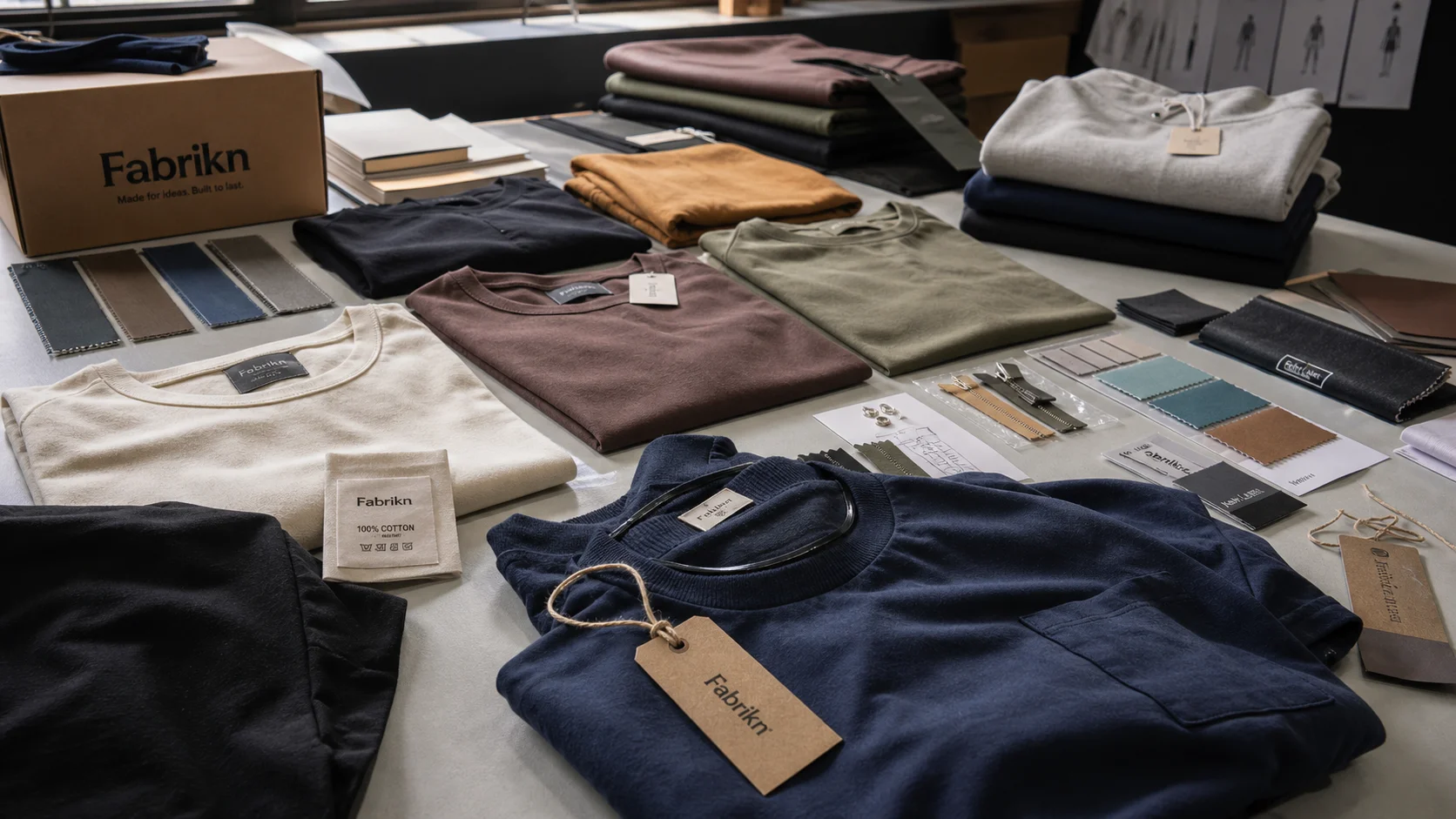
Premium Fashion Ecommerce Packaging with checks for samples, fit, MOQ, QC evidence, pricing terms, and delivery risk.
Fast answer: Premium Fashion Ecommerce Packaging: Box Strength, Inserts, Finish, and ROI should be judged by production evidence, not by a generic sourcing promise. The buyer needs sample proof, cost breakdowns, QC checkpoints, and delivery buffers in writing.
Ask for recent sample photos, measurement tolerances, fabric or print test assumptions, decoration test notes, packing examples, and a named inspection checkpoint. These details show whether the team can repeat an approved sample at bulk volume.
Separate garment cost, decoration, labels, packaging, sampling, testing, freight, and rush charges. When every cost line is visible, it becomes easier to reduce colorways, adjust size depth, or reserve more time for sampling.
Forty seconds is all it takes for a package to decide whether a customer feels delighted or shortchanged. In premium packaging design for fashion ecommerce, that first touch often shapes how the product is judged before it is even worn. I’ve watched a $120 blouse come out of a plain poly mailer, then seen a $28 tee wrapped in tissue, boxed in rigid board, and tied with a clean cotton ribbon. Guess which one felt more expensive? The second one.
On more than 200 factory visits across 8 countries, I kept seeing the same mistake: brands treated packaging like decoration instead of part of the product experience. That is an expensive mistake. A damaged return on a $90 garment can burn $8 to $18 in shipping, labor, and restocking before the refund even lands. When the unboxing feels giftable, customers post it, photograph it, and talk about it. In several DTC apparel programs I studied, gift-wrap style presentation lifted social sharing rates by 12% to 27% and cut “arrived damaged” complaints by 15% to 22% when the structure held up.
Luxury and mid-market buyers do not react the same way. Luxury shoppers expect the box to feel substantial. Mid-market shoppers often respond even more strongly to an upgrade because the visual cue shifts perceived value relative to price. A rigid box may add only $1.80 to $3.50 per unit at scale, yet that same box can make a $120 blouse feel closer to a boutique purchase. On a $28 tee, that spend can disappear into the margin unless the item is a gift or part of a set.
Here’s the part people miss: one brand paid for foil stamping, magnetic closures, and custom ribbon, then shipped a silk slip dress in a thin insert that let it move around. Pretty outside, scuffed inside. The returns team said it plainly — the outer experience looked premium while the product arrived creased. Visual embellishment cannot cover weak structure. I saw the same thing in a factory pushing 20,000 units a month and in a small workshop packing only 500. Protection first. Prestige second.
Material choice decides almost everything: shelf appeal, shipping weight, recyclability, and the feel in hand. A rigid box uses thicker board, usually 1.5 mm to 2.5 mm, and gives a more ceremonial opening. Folding carton? Lighter. Cheaper. Good for folded shirts, swimwear, accessories. Mailers win on freight efficiency, especially for flat shipments, but they need careful design if you want them to feel elevated instead of disposable.
In factories, premium rarely comes from one expensive finish. It comes from board thickness, print registration, edge wrapping, and insert fit. A 1200 gsm greyboard with tight wrapping can look sharper than a glossy box with a bad corner seam. For dresses and outerwear, rigid boxes or reinforced mailers with shaped inserts work best. For intimate wear, a folding carton inside a mailer often balances presentation and cost. Footwear usually needs stronger board and a dust barrier. Accessories can look excellent with smaller cartons, tissue, and a custom belly band. If you need a starting point, clothing packaging solutions should match the product size, not another SKU’s packaging.
Paper finishes matter too. Uncoated stock feels more natural and recycles more easily. Soft-touch coating feels luxurious, but it can complicate recycling, especially with foil or heavy lamination. Magnets and ribbon closures look elegant, yet they introduce mixed materials and make disassembly harder. Compostable mailers can work well for basics, but they do not solve everything if the printed branding uses non-recyclable inks or layered films. According to OEKO-TEX, material safety and chemical transparency are becoming part of the value equation, not just a compliance checkbox.
For brand positioning, I usually map material to category. Luxury dresses justify rigid packaging, inner tissue, and precise fold control. Outerwear needs crush resistance. Intimate wear benefits from light, neat cartons that hold shape. Footwear demands board strength and a snug insert. Accessories can often carry the highest-looking finish per dollar because the surface area is smaller, so print consistency matters more than heavy add-ons.
Packaging costs move fast with volume. At 1,000 units, a custom folding carton might land at $1.10 to $2.40 each, while a rigid box can sit at $3.50 to $7.00 once setup fees are spread across the run. By 5,000 units, those numbers often fall to $0.70 to $1.60 for cartons and $2.10 to $4.20 for rigid boxes. At 20,000 units, careful procurement can bring cartons below $0.55 and rigid boxes into the $1.60 to $3.10 range, depending on print complexity, inserts, and closures.
Margins leak in the hidden costs. Oversized boxes can push dimensional weight up by 8% to 14%. Warehouse space disappears faster with rigid packaging than many operators expect. I’ve seen one brand pay $0.18 more per order in packing labor because the box needed folding, stuffing, and a separate insert. Replacement shipments are worse. A damaged garment that triggers a second parcel can double shipping on that order. Data from trade.gov shows how logistics and landed-cost differences by region can shift total program economics more than print finishes ever will.
Lead time matters just as much as unit price. Several Asia hubs can deliver custom packaging in 3 to 5 weeks once tooling is approved, while US or European production may sit at 5 to 8 weeks with higher landed costs. That spread creates a real planning choice. Seasonal fashion with a 6-week turn does not need the cheapest box. It needs the box that shows up on time and keeps launches from slipping. Missed launches cost more than a 20-cent packaging difference. A lot more.
Retention is the point. A better first-order experience can justify a small uplift if repeat purchase rises by even 3% to 5%. On a brand with a $95 AOV and a 25% repeat rate, that change is material. Premium packaging design for fashion ecommerce works when it makes the first order feel considered, not inflated. If the box costs $1.80 more but reduces refunds and nudges a second order, the math can work quickly. For brands building private-label lines, private label clothing services often pair best with packaging programs that protect margin without looking generic.
I’ve seen excellent packaging in China, Vietnam, India, Italy, Portugal, Turkey, the US, and Mexico, and the differences are not as simple as “cheap” versus “premium.” China moves fast and can stack decorations in one program: foil, embossing, matte lamination, custom inserts. Vietnam impressed me with disciplined assembly and export readiness. India stood out for board sourcing flexibility and textile-friendly finishing. Italy and Portugal delivered strong artisan detailing, especially on smaller runs. Turkey often balanced speed and finish quality. The US and Mexico were strongest when brands needed closer communication, shorter replenishment runs, or tighter control over domestic distribution.
Premium does not always mean expensive. I watched a mid-price factory in Portugal beat a luxury supplier on consistency because it ran tighter inline inspections, checking print alignment every 200 units instead of every 1,000. In another case, a higher-cost Italian producer had better paper stock but a higher waste rate because the team over-handled delicate folded inserts. Waste rates at well-run mid-market plants can sit under 2%, while poorly managed premium lines can drift to 6% or more.
That gap matters for sustainability too. Fewer rejects mean less scrap, less rework, fewer emergency shipments. It also changes the buyer’s regional strategy. Need speed? Look at Turkey, Mexico, or domestic North American production. Need craftsmanship and tactile detail? Italy or Portugal can justify the premium. Need scale with controlled decoration? China and Vietnam remain strong. For sustainability credentials, ask for paper certification, recycled board content, and clear waste reporting. According to the Global Standard, traceability and audited processes are becoming central to material claims.
Use a simple buyer checklist. Match region to priority: speed, craftsmanship, sustainability proof, or MOQ. A manufacturer or supplier quoting MOQ 500 may suit a capsule line; another quoting MOQ 5,000 may be better for repeatable replenishment. I have seen brands choose a prestigious factory and still lose money because the lead time was 10 weeks. Regional fit is not about status. It is about execution, production quality, and the right wholesale or bulk strategy for the business model.
Consumers read premium signals fast. Restraint helps. A clean palette, one strong logo placement, and a precise fold often feel more expensive than a crowded design with five finishes fighting for attention. Embossed logos, blind debossing, and sharp typography tend to beat loud metallic treatments because they suggest control. Inside the box, a neat tissue wrap, one folded thank-you card, and a structured reveal feel intentional. Chaos feels cheap.
Structural design can lift perceived value without huge spend. Layered reveals work. Top lid, tissue barrier, product card — suddenly the opening feels ceremonial. Compartmentalized inserts protect jewelry, belts, or lingerie and stop the rattling that makes customers doubt quality. QR codes can carry care instructions, styling content, or return policies, which helps reduce support tickets. For brands building garment systems at scale, cut and sew manufacturing decisions should align with packaging so the final fold, size, and presentation all match.
Too much design is a trap. I’ve audited packaging programs where foil, gloss UV, soft-touch coating, magnetic closures, and metallic ribbon were stacked together. The defect rate climbed because every extra finish added another failure point, from corner splits to misaligned print to weak adhesive. In one run of 10,000 boxes, the cosmetic reject rate reached 4.8% before the first shipment left the dock. Luxury on paper. Operational friction in practice.
Sustainability messaging can still look premium. Use recycled board with a clean uncoated finish, then explain the choice in one line on the inside flap. Keep the copy short. If the box looks spare but carefully made, customers read it as confident. If it looks stripped back without purpose, they read it as cheap. That difference sits mostly in alignment, print quality, and fold discipline — not in how much decoration you buy.
I start with the brief, not the box. Give a custom packaging manufacturer your product dimensions, fabric type, shipping zones, breakage risk, sustainability targets, and annual volume. A cashmere knit, a structured blazer, and a pair of sandals need different packaging logic. So do a domestic shipment and a cross-border one. Ask for unit targets at 1,000, 5,000, and 20,000 pieces, plus expected setup fees, tooling, and lead times. If the supplier cannot quote all three, the program is not ready.
Then prototype. I want a plain structural sample first, because beauty is useless if the product shifts. Run drop tests from 76 cm, compression checks, and transit simulations for 2 to 3 shipping zones. Test heat, humidity, and vibration if the brand ships into summer markets or uses courier networks with rough handling. Ask a small panel of customers to open the package and rate clarity, protection, and giftability on a 1-to-5 scale. Numbers beat instincts here.
Phase in premium elements carefully. Start with strong board, correct sizing, and print consistency. Only then add foil, ribbon, or specialty coatings if the customer feedback justifies them. I have seen brands lock cash into decorative features that shoppers barely noticed, while ignoring the insert that stopped collars from creasing. The order matters. Structure first. Presentation second. That is also where the right factory matters, especially if you need custom apparel packaging for a launch and want to compare quality before committing to tooling.
Use a scorecard. Rate each factory, manufacturer, or supplier on quality, lead time, sustainability proof, flexibility for new SKUs, and defect handling. A good scorecard saves months. One fashion client I worked with reduced packaging defects from 3.2% to 0.7% after switching suppliers and tightening the brief. The new partner was not the cheapest. It was the most predictable, whether the order was custom, wholesale, or bulk.
Likes do not pay invoices. Track repeat purchase rate, unboxing shares, damage rate, returns, support tickets, and packaging cost as a share of AOV. I also watch refund reasons line by line. If “item arrived damaged” drops from 4% to 1.5%, that is real money. If social shares rise but repeat rates do not move, the box may be performing as marketing only. In a healthy program, packaging should influence both brand perception and operations.
Use cohorts or A/B tests to separate packaging from campaign noise. Compare customers who received the old packaging with those who received the new version over 60 to 90 days. Keep channel mix constant where possible. A product bought through paid social may behave differently from one bought through email or organic search, especially at price points under $50 versus above $150. Premium packaging design for fashion ecommerce often pays back faster in higher-AOV channels because the relative margin room is larger.
Watch for diminishing returns. If a $2.20 box with custom tissue, insert, and print drives stronger retention, keep it. If adding a magnet, ribbon, and extra print layer does nothing but raise cost by $0.80, cut it. The test is simple: does the customer notice, and does that notice change behavior? If not, trim decorative extras before structural quality. This is where premium packaging design for fashion ecommerce becomes disciplined rather than indulgent.
My rule is blunt: premium should feel intentional, not indulgent. Every element must earn its place through protection, presentation, or reuse. If it does none of those three, it is clutter. Start with a clean brief, test hard, compare regions by execution rather than romance, and measure the after-sales numbers for at least one full reorder cycle. That is how packaging stops being a cost line and starts acting like a sales channel.
At 1,000 units, expect a custom folding carton to land around $1.10 to $2.40 each and a rigid box around $3.50 to $7.00. At 20,000 units, those prices can fall to roughly $0.55 to $1.60 for cartons and $1.60 to $3.10 for rigid boxes, depending on finishes and inserts.
There is no single best material. Rigid boxes suit luxury dresses and giftable items, folding cartons fit accessories and intimate wear, and reinforced mailers work for flatter apparel. The best choice balances product protection, freight weight, recyclability, and the unboxing experience.
Most custom packaging programs take 3 to 8 weeks after final approval. Smaller runs with simpler print can move faster, while rigid boxes, specialty coatings, or mixed-material closures usually push timelines longer. Add extra time if you need sampling, transit testing, or import clearances.
Yes, especially when damage and presentation drive complaints. Better inserts, tighter fit, and stronger board can reduce transit damage by 15% to 22% in some programs I have reviewed. It will not fix sizing returns, but it can cut avoidable losses tied to shipping and handling.
Choose by priority. China and Vietnam are strong for scale and decoration breadth, Italy and Portugal for craftsmanship, Turkey and Mexico for speed, and the US for shorter domestic replenishment. Match the region to MOQ, lead time, and quality-control expectations rather than chasing the lowest unit price.