
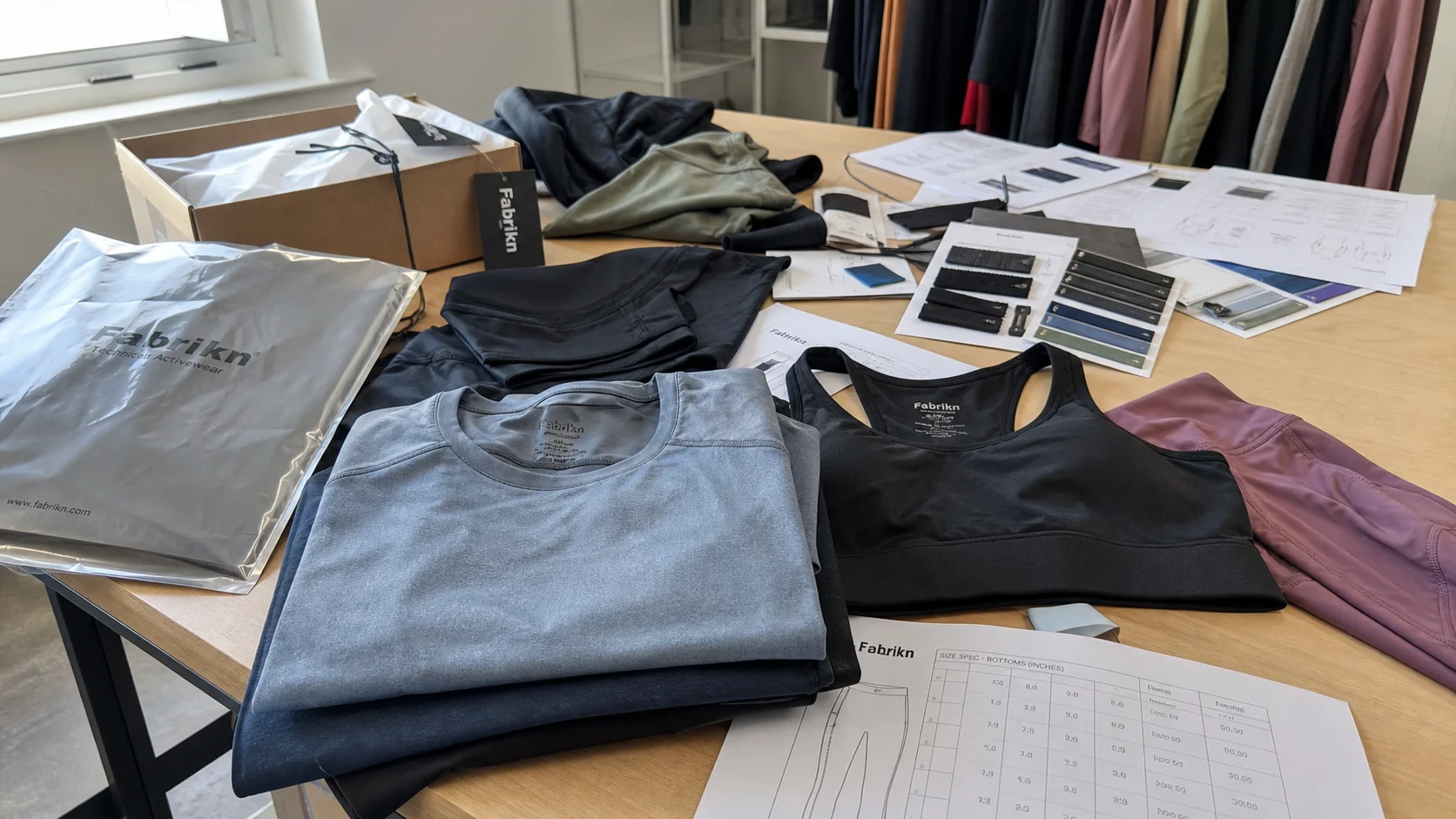
Private Label Hoodie Manufacturer with checks for samples, fit, MOQ, QC evidence, pricing terms, and delivery risk.
Fast answer: Private Label Hoodie Manufacturer: Sourcing, Samples, and MOQ should be judged by production evidence, not by a generic sourcing promise. The buyer needs sample proof, cost breakdowns, QC checkpoints, and delivery buffers in writing.
Ask for recent sample photos, measurement tolerances, fabric or print test assumptions, decoration test notes, packing examples, and a named inspection checkpoint. These details show whether the team can repeat an approved sample at bulk volume.
Separate garment cost, decoration, labels, packaging, sampling, testing, freight, and rush charges. When every cost line is visible, it becomes easier to reduce colorways, adjust size depth, or reserve more time for sampling.
Hoodie margins are usually decided long before the first ad goes live. A private label hoodie manufacturer for brands controls the fabric, the stitching, the shrinkage, and the finish — which means it also controls how much money survives after returns, wash tests, and wholesale pressure. I have seen the same silhouette quoted at $7.40 in one factory and $10.95 in another, both branded “premium fleece.” The spec told the truth: one used 280 GSM brushed fleece; the other used 360 GSM French terry, better rib recovery, and tighter stitch density.
Factory capability is a margin decision. Full stop. Marketing can create demand, but the manufacturer decides whether the unit economics survive wash tests and size returns. Spend $25,000 on ads, then watch the P&L bleed if the hoodies pill after four washes or the neckline warps in two weeks. I have also seen the opposite: a mid-tier hoodie with an $8.20 FOB outlasted a $14.00 competitor because the mill held shrinkage under 3% and the sewing line kept seam variance within 2 mm.
Bangladesh, Portugal, and Turkey each bring something different to hoodie production. I have walked all three and heard the same low-MOQ pitch: cheap to start, expensive somewhere else. One small plant in Portugal asked for only 120 pieces per color and looked pricey next to an Asian supplier demanding 500 pieces. Still, the Portuguese line hit a 96% first-pass approval rate; the cheaper quote needed two rework rounds and three extra weeks. Cheap volume can hide a very expensive mess.
Premium, mid-market, and value hoodies live in different worlds. Premium usually means 320-420 GSM, ring-spun cotton or cotton-rich blends, double-needle coverstitching, and stronger zipper hardware. Mid-market styles often sit at 280-340 GSM with acceptable rib recovery and softer trims. Value hoodies can look fine at $12.00-16.00 retail, then fall apart after repeated laundering because the knit is loose and the drawcord hardware was bought for cost, not durability. More margin disappears from poor rib recovery than from freight.
The wrong factory at the right price is still the wrong factory. The cheapest quote is rarely the best one. The private label hoodie manufacturer for brands that protects consistency at scale, controls shrinkage, and keeps repeat production close to the approved sample is usually the one that saves money.
A private label hoodie manufacturer for brands puts your name on a factory-made garment. The value sits in the controls: trims, labels, packaging, fit, and fabric standards. Not full custom. Not generic white label either. White label is fast. Private label is more deliberate. For brands that want a hoodie that looks and feels like theirs while still protecting margin, private label usually lands in the sweet spot. For broader apparel lines, this sits alongside private label clothing programs that keep the category story consistent.
The development sequence is plain, but every weak link gets expensive later: spec sheet, fabric sourcing, sampling, fit approval, bulk production, final packaging. Skip the spec sheet and you may buy three sampling rounds instead of one. Approve a fit sample that looks great on a mannequin and watch it fail on body length after washing. Factories build what you document, not what you meant.
Logo placement gets too much attention; it should not. Fleece weight, shrinkage control, rib recovery, zipper quality, and label placement drive satisfaction. A 320 GSM French terry hoodie with stable ribbing can beat a heavier 380 GSM brushed fleece if the heavier one pills after two washes and the cuffs stretch out. Zippers matter more than first-time brands expect. I have watched a $0.18 zipper add more perceived value than a louder print.
Small launches and replenishment cycles are different animals. A good private label hoodie manufacturer for brands can handle 100-300 piece test runs with stock fabric and existing blocks, then scale to 2,000+ pieces once demand is proven. First order: learn the product. Second order: defend the margin. In one launch I reviewed, the brand changed only the rib construction and cut returns by 11% because the cuff held its shape better under wear.
I never sign with a factory after one polished video call. A private label hoodie manufacturer for brands should show manufacturer capability through production photos, compliance documents, QC process, and recent client references without hesitation. No fewer than two references, or a clear defect-report sample. Otherwise, I assume there is a problem hiding behind the smile. Charm does not ship goods. Proof does.
On-site or on video, I look at line balance, sewing machine mix, fabric inspection, and needle policy. Is fabric checked before cutting, or only after complaints start? Are overlock, coverstitch, and flatlock machines available in enough numbers to keep the line moving, or is one machine doing the work of three? A factory that can explain its rejection rate in numbers usually deserves more trust than one that calls every flaw “minor.” I also ask how contaminated lots get isolated and whether needle logs are kept per line. Small detail, big recall risk.
Smaller can beat bigger. A 42-person factory in Vietnam ran a 2.1% defect rate and outperformed a 180-person facility sitting at 6.8%, even though the larger plant quoted 9% less on paper. The larger plant had more machines. The smaller one had a manager who knew every line leader by name and checked 100% of first-off samples before bulk. Scale helps. Discipline wins.
Compliance changes by region. In Europe, buyers lean hard on social audits, dye-house traceability, and restricted substance controls. In the U.S., many brands ask for WRAP or similar social compliance documentation, while chemical expectations often track OEKO-TEX and ASTM or AATCC test methods. Recycled claims need traceability, not just a percentage on a page. If a private label hoodie manufacturer for brands says 40% recycled polyester, I ask for chain-of-custody paperwork, not an invoice line. For sourcing basics and market context, U.S. textile and apparel trade guidance is also a useful reference.
Red flags show up early: vague lead times, samples that never resemble bulk, tech packs that contradict themselves on pocket placement or rib height, reluctance to discuss rejection rates, and sample fees that never convert into production credits. When a supplier insists it can do everything with no trade-off, I walk. It cannot. A partner that admits limits is usually more reliable than one that overpromises every week.
Unit cost and landed cost are not the same thing. Hoodies make that painfully obvious because freight, duties, packaging, and rework stack fast. I have seen a $6.80 FOB hoodie become an $11.90 landed product after air freight, carton upgrades, labeling, and duty. Another private label hoodie manufacturer for brands quoted $9.10 FOB, yet the final landed number came in lower because the factory packed more efficiently, needed fewer sample cycles, and used a cleaner customs description. Cheapest quote, most expensive line item — it happens all the time.
Asia, especially Bangladesh, Pakistan, and parts of China, can deliver entry-level hoodies at $5.50-8.50 FOB with MOQs around 300-1000 pieces, depending on fabric and embellishment. Turkey often lands in the $8.50-14.50 FOB range, with quicker turn times of 3-6 weeks for stock fabric and smaller MOQ options, sometimes 150-300 pieces. Portugal usually sits higher at $10.50-18.00 FOB, but sampling is fast and quality consistency can be stronger on premium fleece. Domestic production in the U.S. can start around $14.00-24.00 FOB, with lead times of 2-5 weeks for some programs and MOQs from 50-200 pieces, though fabric availability often sets the limit.
Price point shifts the math again. A 260-300 GSM fleece hoodie with basic tipped drawcords and one-color print should not be compared with a 420 GSM luxury-weight pullover built with a double-layer hood, premium rib, and enzyme wash. The latter may cost 25% to 40% more before trim upgrades. Fabric origin can matter more than labor in certain regions too. If the mill sits 1,200 km away and imports yarn anyway, inland freight can erase the labor advantage. The quote may look local. The supply chain is not.
Compare suppliers with a simple sheet: FOB, estimated freight, duty, carton cost, sample fees, and rework allowance. Then normalize everything to landed cost per sellable unit. If one factory gives 100% credit on sample fees and another charges $250 per round with no production offset, the real purchase price changes. Packaging counts too — polybag, size sticker, hangtag, master carton — add $0.40-1.10 per piece. Over 5,000 units, that is real money.
For brands comparing suppliers across regions, I cross-check quotes against market data from WTO trade references and shipping assumptions, then pressure-test the factory’s fabric source and trim source. Labor is only one part of the story. Yarn, wash processes, packaging, and the number of touches before shipment fill in the rest.
Sample room perfection can be deceptive. A hoodie can fit beautifully in a one-off sample and still fail in bulk if washing tests, shrinkage standards, and fabric consistency are not locked before cutting begins. Sleeve length can drift by 1.5 cm after wash. Necklines can twist after three cycles. Pilling can show up only when bulk fabric comes from a different lot than the sample. Small deviations turn into customer complaints fast.
Fabric choice is where many brands oversimplify. Cotton fleece gives structure and warmth. Brushed fleece feels softer but can pill more easily if yarn quality is poor. French terry is lighter, often 280-320 GSM, and fits transitional climates well. Recycled blends can reduce virgin fiber use, but only if the claim is verified and the fiber content stays consistent across the bulk order. Organic cotton helps on the sourcing side, but it does not automatically solve fit, shrinkage, or handfeel. A clean material story is not the same as a durable garment. For bra programs that face similar durability trade-offs, I often reference custom bra manufacturing as a reminder that support, recovery, and trim stability matter as much as the base fabric.
On sustainability reviews, I ask for chemical management records, dye-house traceability, and recycled-content verification. No documents, no claim. Harsh? Maybe. Accurate? Definitely. I have seen brands pay extra for “recycled” hoodies only to discover the yarn blend varied by 8 percentage points between lots, which made shade consistency harder and resale weaker. Sustainability should reduce risk, not add another one.
Fit shifts by market position. Oversized streetwear wants dropped shoulders, wider sleeves, and a boxier body. Premium basics usually need cleaner proportions, firmer cuffs, and a more tailored drape. I have worked with brands targeting 18-24 year-old streetwear buyers who preferred a body length 2-3 cm shorter than the standard block, while higher-end basics sold better with a closer shoulder fit and less volume in the hood. Sustainability can also improve margin stability through lower waste, fewer claims, and better repeat sell-through. Not a moral argument. An operational one.
Your first order brief should be boring in the best way. Target price. Fabric weight. Color standards. Label artwork. Size range. Packaging. Compliance requirements. If retail needs to sit at $48-68, say it. If FOB must stay between $8.50 and $11.00, write it down. If sizes XS-XXL need grade rules for chest, shoulder, and body length, specify those measurements in centimeters and inches. The manufacturer should not have to guess your business model.
A clear tech pack saves money. Mine usually includes a flat sketch, measurements, seam construction, stitch counts, trim placement, wash instructions, and tolerances. I also state whether the hoodie must survive enzyme wash or only a standard garment wash. Not a trivial difference. Enzyme wash can soften handfeel without the same abrasion as stone wash, but it needs the right fabric and tighter process control. For custom cut-and-sew programs that require more pattern work, cut and sew manufacturing becomes the right reference point because the block itself must be built from scratch.
Timelines depend on setup. Stock fabric private label can move in 3-5 weeks after sample approval. Custom fabric usually needs 6-10 weeks, especially if dyeing or knitting starts fresh. Fully cut-and-sew development can take 8-14 weeks, and that assumes approvals happen on time. I have seen one delayed sign-off add 12 days to a delivery schedule, which pushed the brand into peak freight rates. Time is a cost.
MOQ negotiation should protect quality, not bully the plant into cutting corners. If a private label hoodie manufacturer for brands runs best at 500 pieces, asking for 180 pieces across six colors may create expensive inconsistency. Better move: reduce color count, keep one fabric base, and order a tighter size curve. That lets the factory cut and sew more efficiently. For wholesale and bulk reorders, plan inventory so best sellers do not sell out before replenishment lands. I like to trigger reorders when 35% to 40% of stock remains and the plant still has two to three weeks of capacity to book.
Turn the sourcing process into a controlled test. Shortlist 3 to 5 factories, request comparable quotes, and score each one on quality, lead time, and transparency. Compare like with like: same GSM, same fabric composition, same print method, same labeling, same packaging. If one private label hoodie manufacturer for brands quotes a 320 GSM fleece hoodie and another quotes a 280 GSM version, the numbers do not line up. That is how brands lose money by accident.
Before bulk approval, test samples with a wash cycle, seam stress check, and wear trial. I prefer at least 3 washes, one stretch test on cuffs and hem, and one body-wear test across different body types. If the hoodie twists, pills, or loses shape after that, production will not save it. A good sample should survive use, not just a studio photo.
Build a comparison sheet with pricing, MOQ, communication speed, sustainability documentation, and production confidence. I add notes on whether the supplier answers within 24 hours, whether they send measurement charts in mm, and whether they can explain the fabric mill. Those signals matter. The partner that answers eight technical questions clearly is usually easier to work with than the one that sends a glossy brochure and no data.
Structure the first purchase order to reduce exposure. Smaller initial run. QC milestones before cutting begins. Explicit defect tolerances in the contract. For example, I will accept no more than 2.5% minor defects and zero major construction faults. Then I ask for pre-production approval, in-line inspection at 50%, and final AQL checks before shipment. Growth should come from repeatable execution, not luck. The best private label hoodie manufacturer for brands handles your first 300 units and your 30,000-unit reorder with the same discipline.
Typical FOB pricing ranges from about $5.50-8.50 for basic hoodies in Asia, $8.50-14.50 in Turkey, $10.50-18.00 in Portugal, and $14.00-24.00 domestically. Final landed cost usually rises by 18% to 35% once freight, duties, labels, and packaging are added.
Stock fabric private label programs can take 3-5 weeks after sample approval. Custom fabric usually needs 6-10 weeks, and fully cut-and-sew development often takes 8-14 weeks. Add extra time if color approval, lab dips, or compliance testing are delayed.
Ask for production photos, compliance documents, QC steps, recent client references, MOQ, sample fees, and lead times. Also confirm fabric weight in GSM, shrinkage tolerance, zipper or drawcord specs, and whether sample fees convert into production credits.
Yes, but the lowest MOQ is not always the smartest starting point. Some factories will accept 100-200 pieces for stock fabric programs, while others need 300-500 pieces to keep quality stable. Smaller orders work best when you limit colors and keep the construction simple.
Normalize every quote to landed cost per sellable unit. Compare the same GSM, same fabric composition, same trim package, same packaging, and the same testing standards. Then score the factory on defect rate, communication speed, and evidence of repeat production consistency.