
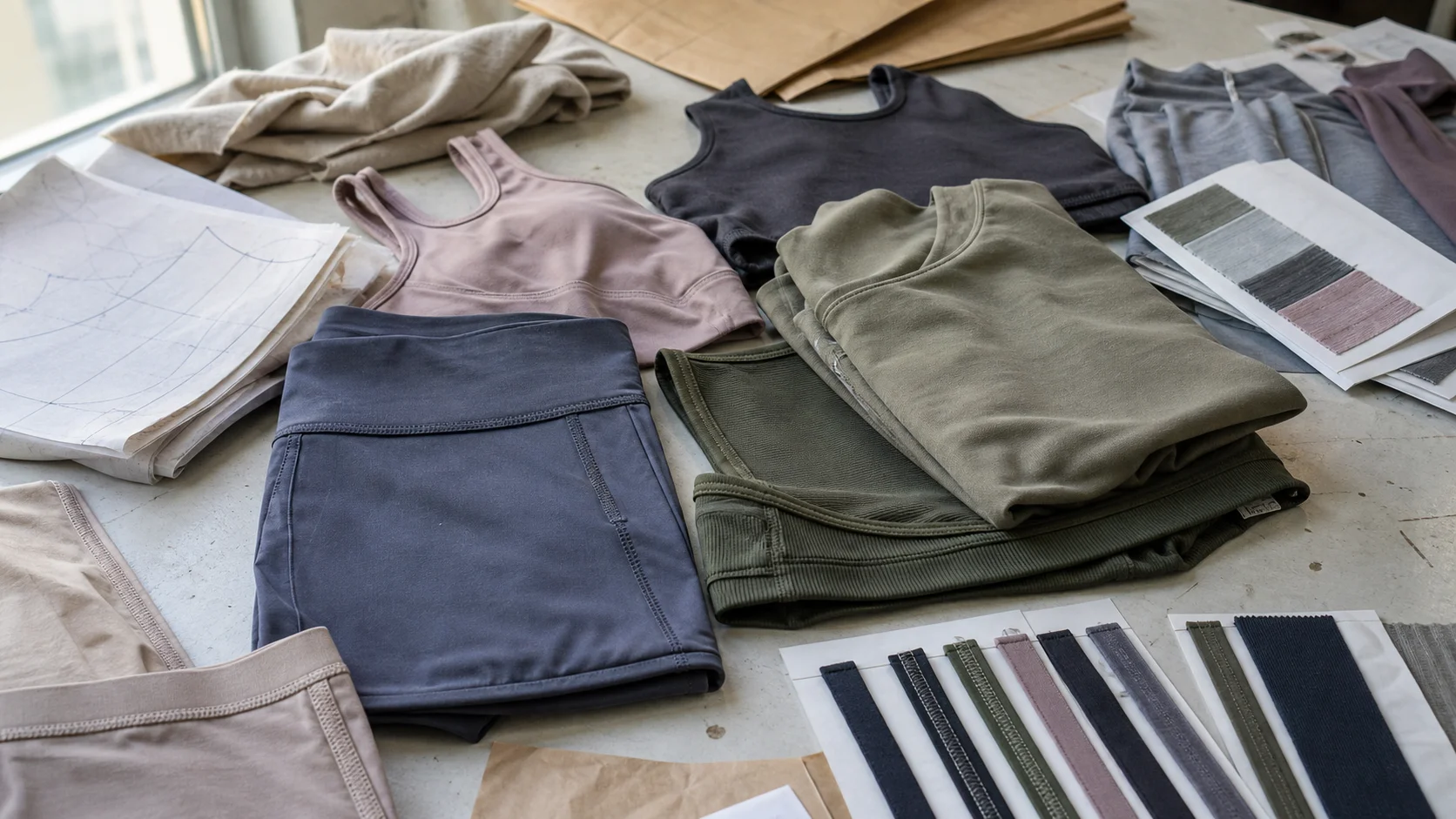
A detailed outline for education distributors evaluating private label uniforms with size grading, covering fit standards, grading rules, sample approvals, production accuracy, and program scalability.
Private Label Uniform Size Grading for Distributors - Fabrikn production reference
Private label uniforms with size grading for education distributor programs sit at a practical intersection of fit, repeatability, and commercial control. Distributors serving schools, academies, colleges, and institutional sports programs usually need more than a simple cut-and-sew supplier. They need a manufacturing partner that can translate one approved sample into a full-size run that performs consistently across age groups, body types, reorder cycles, and seasonal demand.
That is where size grading becomes a purchasing issue, not just a pattern room task. A uniform can look correct in one salesman sample and still fail in bulk if grade rules are too aggressive, inconsistent between styles, or poorly matched to the end-user age band. In education channels, these failures show up quickly: high return rates, complaints about short inseams or tight armholes, mismatched fit between tops and bottoms, and extra stock trapped in low-demand sizes.
For distributors building a private label line, the goal is not to create the most complex grading architecture. The goal is to create a fit system that is stable, scalable, and commercially sensible. That means size breaks should support the real order curve, not just look complete on paper. It also means fabric behavior, trim tolerance, shrinkage risk, and school-use durability all need to be considered before grading is finalized.
In the activewear and teamwear category, the challenge becomes sharper. School uniforms increasingly overlap with sportswear requirements: stretch polos, tracksuits, PE shorts, training tops, warm-up jackets, and house-team apparel. These garments must allow movement, survive repeated laundering, and remain size-consistent through repeat orders. A disciplined private label program can achieve that, but only when grading decisions are made early and validated with real production controls.
Distributors comparing suppliers should look closely at how product development, pattern grading, sample approvals, and in-line quality checks are handled. General sourcing claims are not enough. What matters is whether the supplier can maintain a reliable size architecture across categories and replenishment orders. Buyers who need support with development and production coordination often start by reviewing a supplier’s services, then move into fit, MOQ, and lead-time discussions before range confirmation.
Education uniform programs are different from many fashion programs because demand is structured, recurring, and size-sensitive. Students move through age brackets every year. Some institutions require strict consistency across campuses, while others allow minor styling updates but still expect core items to fit the same way each season. A weak grading system creates operational drag at every level of that cycle.
Distributors usually feel the impact in four places.
For youth uniforms, grading has to reflect growth patterns rather than simple numeric scaling. For adult faculty wear or senior student teamwear, the fit logic changes again. A distributor may be serving primary students, secondary students, and staff under one label. If each category is graded independently without a common fit strategy, the collection starts to feel fragmented.
Good grading also improves forecasting. When a size curve is aligned with actual wearer demand, distributors can place opening orders with more confidence and lower the cost of emergency top-up production. That matters in education supply because selling seasons can be compressed around term starts, enrollment cycles, or annual sports calendars.
For distributor programs, size grading is not a technical extra. It is one of the main controls on return rate, reorder confidence, and long-term account retention.
A private label education uniform program typically gives the distributor control over branding, fit direction, packaging details, and assortment planning while production is handled by an apparel manufacturer. The distributor may choose stock-supported core fabrics for faster replenishment or custom-developed materials for stronger differentiation. Either route can work, but the grading system has to be tied to the production route from the beginning.
Most programs include a mix of core and seasonal items. Core items often include polos, track pants, shorts, leggings, training jackets, sweatshirts, and house-color tees. Seasonal or account-specific items may include event wear, interschool team kits, staff activewear, or premium outer layers. The more categories involved, the more important it becomes to standardize the size philosophy.
From a sourcing standpoint, private label can offer three clear advantages.
The tradeoff is that product development takes more discipline. Distributors must approve measurements, tolerances, materials, artwork, and trim details in a documented way. A manufacturer cannot protect consistency if the approved standard is vague or keeps shifting after the pre-production stage.
When a distributor is new to private label, it is usually better to start with a narrower core range and a clean size architecture than to launch too many silhouettes at once. Range complexity tends to expose grading weaknesses. A supplier profile and background review through pages such as about us can help buyers understand whether the operation is positioned for structured uniform development rather than one-off promotional apparel.
Size grading is the controlled increase or decrease of a base pattern to create a full size set. In uniform production, that sounds straightforward, but the commercial effect depends on how those increases are distributed across key measurement points. Chest, waist, hip, body length, sleeve length, shoulder width, rise, and inseam all need to move in proportion to the intended wearer group.
Buyers do not need to master pattern engineering, but they should be able to ask the right questions. A useful starting point includes the following.
In activewear and teamwear, the grade rule should also account for movement ease. A polo worn in a classroom can be closer to the body than a training top used for PE. A track pant may need more seat and thigh allowance even when the waist measurement stays unchanged. If the factory simply scales every point linearly, fit quality often deteriorates as sizes move away from the base sample.
There is also an important distinction between grading for appearance and grading for wear. A garment may measure correctly on paper but still feel wrong if armhole depth, crotch shape, or sleeve balance has not been adjusted for functional use. Education distributors should be especially cautious with unisex programs. Unisex can simplify SKU management, but it can also create fit dissatisfaction if used too broadly across tops, leggings, fitted jackets, or female-specific categories.
The strongest buying position is to request a full measurement chart with point-of-measure definitions, size-wise specs, and tolerances before bulk confirmation. That document becomes the reference standard during inspections and reorders.
Education wear has its own fit logic because the end users are not a single body type or use case. A school distributor may need to supply younger children, adolescents in growth phases, adult coaches, and administrative staff. Each group responds differently to fabric stretch, garment length, rise, and ease allocation.
For younger students, ease of dressing matters. Neck openings, waistband recovery, and short length should be practical and modest without becoming restrictive. For older students, appearance starts to matter more. Uniforms that look too boxy may be rejected by the wearer even if the institution approves them. For PE and house-team garments, mobility becomes the main issue.
Several fit factors deserve close attention.
Distributors should decide early whether their size system will be age-based, alpha-sized, numeric, or a hybrid. Age labeling can be intuitive for junior programs, but it becomes unreliable if wearer growth patterns vary widely by region. Alpha sizing is cleaner for activewear, yet it often needs measurement guidance for institutional ordering. Numeric sizing is more precise, though it adds complexity to SKU planning.
No single size system is correct for every distributor. The better question is whether the system supports school ordering behavior, parent expectations, and replenishment efficiency. That is a commercial decision as much as a technical one.
A reliable size grading program starts with a precise tech pack and measurement specification. Many distributor problems begin with incomplete development documentation. A sketch and a target fabric are not enough. The supplier needs approved measurements, construction details, branding placements, trim list, seam types, finishing instructions, and grading direction.
A solid spec pack for private label uniforms usually includes:
Buyers should push for clarity on tolerances. In uniforms, a tolerance that is acceptable for promotional apparel may be too loose for a reorder-driven school program. Common commercial tolerances vary by garment type and fabrication, but many buyers work within a range of around 0.5 inch to 1 inch on selected points for bulk production. The right tolerance depends on the product, fabric stretch, and construction method. Stretch garments require especially careful interpretation because recovery can mask size issues during casual checks.
It is also good practice to separate target spec, pattern spec, and finished garment tolerance. Those are not always the same thing. If a supplier mixes them together, later quality discussions become harder.
A distributor that treats the grade rule as a negotiable afterthought often ends up paying for it in stock corrections or retailer complaints. Fit standards should be documented before the purchase order is locked.
Fabric selection can either support accurate grading or undermine it. In activewear and teamwear uniforms, common materials include polyester interlock, polyester-cotton pique, brushed fleece, tricot, stretch jersey, and mechanical-stretch woven fabrics. Each behaves differently in cutting, sewing, washing, and wear.
For example, a 100% polyester interlock PE shirt may hold size stability better than a high-stretch knit, but it can feel less forgiving if the grade rule is too tight at chest or hip. A cotton-rich fleece track top may present shrinkage and torque risk if finishing is not controlled. A bottom with elastic waistband and drawcord may absorb minor waist variation, but inseam inconsistency will still show up clearly in wear trials.
Distributors should review these fabric-related grading issues:
Trim choices matter too. Zippers can distort center-front length if quality varies. Waist elastics affect comfort and usable size range. Rib cuffs and collars can pull garment measurements if tension is not standardized. Even branded heat transfers can change drape on lightweight tops.
One common mistake is approving a grading system on sample fabric and later switching to a different bulk fabric without rechecking fit. That can be manageable if the change is minor and tested. It becomes risky when fabric weight, stretch, or finish changes materially. A disciplined supplier should flag that risk early rather than carrying the sample spec into bulk unchanged.
The sample process is where most size grading errors can still be corrected at reasonable cost. Once bulk cutting starts, the distributor’s leverage becomes narrower. That is why sample approvals should be structured, not informal.
A typical workflow for private label uniform development includes:
For education distributors, the size set sample is especially important. Some buyers skip it to save time. That is rarely a good tradeoff when the program depends on broad size coverage and repeat ordering. A size set can reveal whether sleeve lengths climb too quickly, whether smaller sizes lose shape, or whether bottoms become disproportionate in larger sizes.
Sample reviews should be measured, photographed, and documented. Comments such as “make slightly bigger” or “improve fit” are not useful enough. Revised specs should state exactly which points change and by how much. If the supplier updates the base pattern, the grade rule may also need revision. Buyers should confirm that both have been updated together.
Lead times vary by category, fabric readiness, embellishment complexity, and factory capacity. As a working range, proto and fit development may take several weeks with comment cycles, while pre-production to shipment for bulk orders can often fall in an approximate 45 to 90 day window after approvals and material booking. That range can extend for custom fabric development, peak-season loading, or complex multi-style programs.
MOQ discipline is central to education distributor programs because size grading expands SKU count quickly. A clean range on paper can become commercially awkward if minimums are too high at color, style, or size level.
Typical MOQs in private label uniforms vary widely by supplier type and material route, but many programs start around these broad commercial ranges:
These are only market-style benchmarks, not fixed rules. Buyers should always confirm whether MOQ applies per style, per color, per fabric, or per total order. That distinction changes the commercial picture significantly.
There is a tradeoff between size depth and order efficiency. Broad size coverage improves program credibility, but every additional size can slow inventory turn if demand is thin. Distributors often manage this by keeping core silhouettes in full size runs and reducing optional items to tighter size bands based on account history.
The table below outlines common tradeoffs.
Decision Area Lower Complexity Option Higher Control Option Main Tradeoff Size Range Condensed alpha sizing Expanded numeric or split blocks Simpler inventory vs better fit precision Fabric Route Stock-supported fabric Custom-developed fabric Faster lead time vs stronger differentiation Sampling Base size only Full size set review Lower upfront cost vs reduced grading risk MOQ Strategy Fewer styles, deeper buys More styles, lower depth Inventory efficiency vs broader assortmentBuyers planning long-term school programs should think beyond the opening order. Replenishment terms, repeat color continuity, and fabric rebooking rules deserve just as much attention as launch pricing.
Uniform grading problems often surface during inspection, but by then the root cause may already be locked into cutting or pattern preparation. The practical response is to define inspection priorities that connect directly to the approved graded spec.
Key risk areas in private label education uniforms include:
In-line inspections are often more useful than relying only on final random inspection, especially for bottoms and graded activewear sets. If a grading issue is found early, corrective action may still be possible before too much fabric is cut. Final inspection remains essential, but it is not the best point to discover a pattern-level problem.
Distributors should also ask how the factory checks size assortments during packing. Even accurate garments create complaints if carton ratios or individual size labels are mixed. Education orders are frequently delivered against specific account allocations, so packing accuracy matters almost as much as sewing quality.
A sealed sample, approved size chart, and clear tolerance list should be present during inspection. Without those references, quality approval becomes subjective, and subjective approval tends to create disputes later.
From a distributor’s perspective, the best grading strategy is not always the one with the most sizes. It is the one that supports sell-through and reorder reliability. That often means building a range around actual demand bands rather than theoretical completeness.
Core school polos and track pants usually justify the most disciplined grading effort because they carry the highest reorder exposure. Event tees, limited teamwear capsules, or promotional outerwear may tolerate a simpler size architecture if the program is short-cycle. The buying judgment is to spend development time where fit failure would hurt the account most.
Margin is also affected by grading quality. Better fit lowers returns, markdowns, and customer service burden. At the same time, overengineering the range can raise development cost and trap working capital in fringe sizes. A sensible distributor program balances fit coverage with stock efficiency.
Several commercial practices help:
Private label works best when distributors treat product development as a system rather than a sequence of one-off purchase orders. If a supplier relationship is expected to scale, it is worth establishing a repeatable approval structure early. Buyers ready to move from inquiry to development usually benefit from a direct specification discussion through a dedicated contact page so MOQ, fit expectations, and category scope can be aligned before sampling begins.
Not every apparel manufacturer is suitable for education distributor programs. Some are strong in promotional basics but weaker in repeat fit control. Others can make polished samples but struggle to maintain grading consistency across production orders. Distributor buyers should evaluate suppliers on operational details, not just price and photos.
Useful screening questions include:
Price still matters, but uniform distributors should be careful with offers that appear attractive only because the development scope is thin. If grading, shrinkage testing, and size set approvals are skipped, the lower quote may simply be pushing risk downstream.
The better purchasing stance is to compare total program reliability: fit consistency, reorder predictability, sample discipline, and communication quality. Those factors usually decide whether a private label education range becomes scalable or stays stuck in reactive problem-solving.
Private label uniforms with size grading for education distributor programs require more than a basic apparel sourcing setup. The commercial success of the program depends on whether one approved fit can be translated into a size range that performs consistently in classrooms, sports sessions, and reorder cycles. For activewear and teamwear, that means balancing mobility, durability, modesty, and appearance without letting SKU complexity get out of control.
Distributors that manage grading well usually do three things right. They document the fit standard clearly, they validate grading through size set sampling, and they treat repeatability as a production control issue rather than a last-minute inspection task. Those steps reduce returns, strengthen school account confidence, and protect margin over the life of the program.
The strongest supplier relationships are built on practical detail: realistic MOQ planning, accurate spec packs, fabric decisions that support size stability, and inspection checkpoints that catch grading problems before shipment. In a category where reorders and institutional trust matter, those details are not optional. They are the foundation of a durable private label uniform business.
Get a free quote from Fabrikn — your trusted B2B clothing manufacturer with 10+ years of experience. MOQ as low as 200 pieces.
Get a Free Quote →Size grading is the method used to scale an approved base pattern into a full size range. In school uniforms, it affects how chest, waist, hip, length, sleeve, rise, and inseam measurements change from one size to the next.
Education programs depend on repeat orders and broad size coverage. If grading is inconsistent, distributors often see more returns, harder inventory planning, and lower confidence from school accounts and parents.
Many private label programs begin around 300 to 800 pieces per style-color for simpler items and can rise to 800 to 1500 pieces or more for custom fabrics or more complex garments. Exact MOQ depends on fabric sourcing, embellishment, and supplier setup.
Yes. A size set sample is one of the best ways to confirm that grading works across the range, not just in the base size. It is particularly useful for youth programs, track pants, jackets, and fitted activewear styles.
Common options include polyester interlock, polyester-cotton pique, fleece, tricot, stretch jersey, and mechanical-stretch woven fabrics. The right choice depends on the use case, durability target, comfort, and size stability requirements.
Frequent risks include measurement inconsistency, shrinkage, seam twisting, elastic variation, mismatched fit between repeat orders, and packing errors in size assortments. These are best controlled with clear specs, sealed samples, and in-line inspection.
It can be useful for some categories such as tees or certain outerwear, especially when SKU simplification is important. It is less reliable across all categories if the wearer group is diverse and fit expectations are stricter.
They should look at grading capability, sample process, MOQ flexibility, production consistency, fabric control, and inspection discipline. A supplier that can explain its fit development and reorder controls clearly is usually a safer long-term choice.