
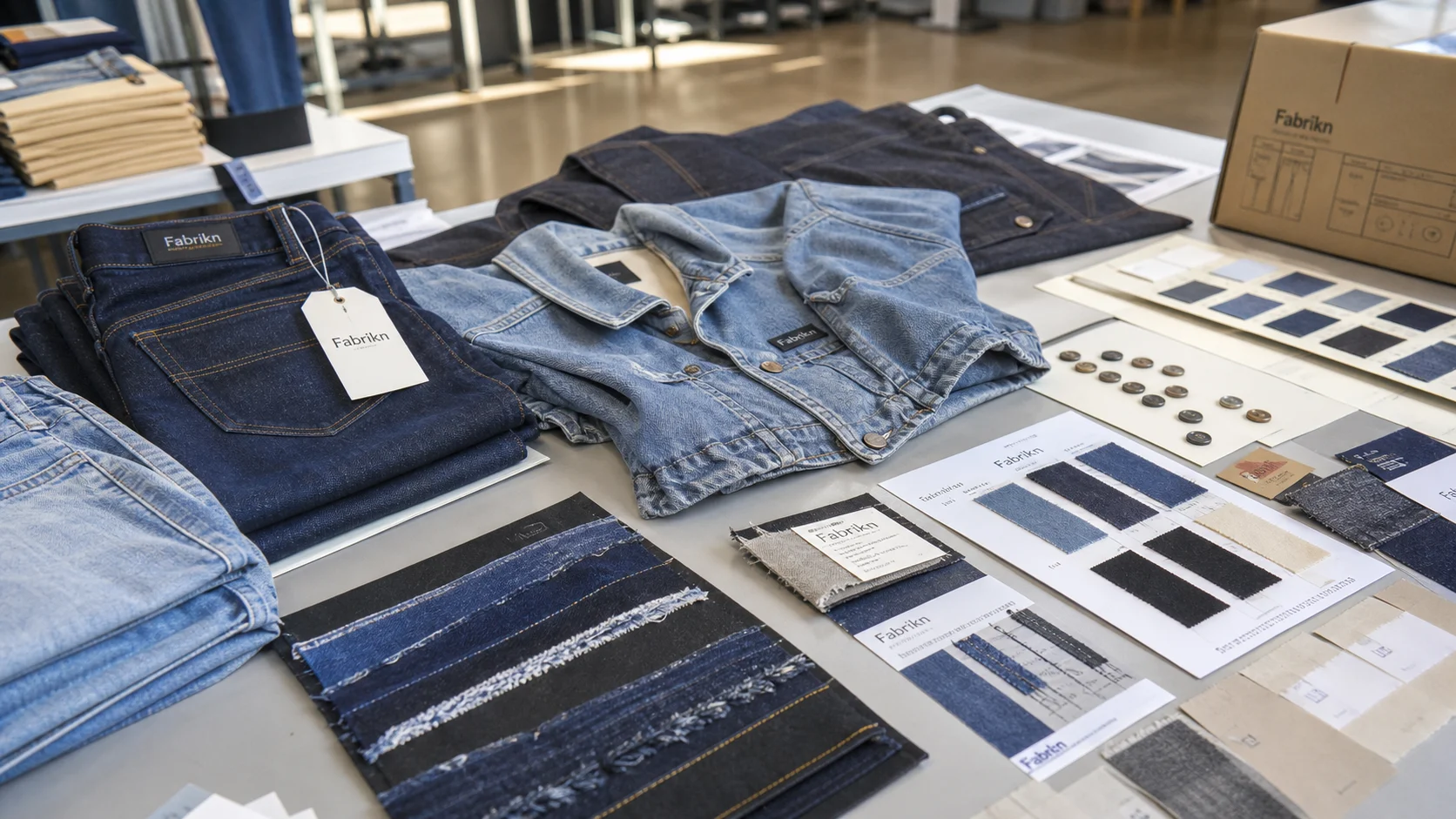
QR Code Printed Apparel Tags with checks for samples, fit, MOQ, QC evidence, pricing terms, and delivery risk.
Fast answer: QR Code Printed Apparel Tags: Scan Test, Cost, ROI, and Use should be judged by production evidence, not by a generic sourcing promise. The buyer needs sample proof, cost breakdowns, QC checkpoints, and delivery buffers in writing.
Ask for recent sample photos, measurement tolerances, fabric or print test assumptions, decoration test notes, packing examples, and a named inspection checkpoint. These details show whether the team can repeat an approved sample at bulk volume.
Separate garment cost, decoration, labels, packaging, sampling, testing, freight, and rush charges. When every cost line is visible, it becomes easier to reduce colorways, adjust size depth, or reserve more time for sampling.
I watched a carton line in Ho Chi Minh City stop for 12 minutes because a 2 cm code on a swing tag had printed 0.3 mm too close to a fold. The garments were fine. The labels were not. That tiny failure decided whether a shopper would reach product data, care instructions, and a returns portal, or hit a dead link after purchase. For brands using qr code printed tags for apparel packaging, that first scan can shape the entire customer experience.
That is the real story behind qr code printed tags for apparel packaging. Cheap square, expensive process. In factory visits across Vietnam, Portugal, and Turkey, scan rates swung from 91% on visible outer hang-tags to 54% on codes hidden inside inner packs during the first 500-piece test runs. Placement matters. So does substrate, ink gain, and the distance between code and crease.
Asia often runs hotter and faster. In some mills, humidity sits near 70% and line speeds reach 1,200 to 1,500 tags per hour, which means coated stocks must dry fast or the bars blur. In Europe, I saw slower lines, around 700 to 900 tags per hour, but tighter print control and more matte finishes. Both regions can succeed. Both can fail. A glossy varnish that looks premium in Milan can become a scan headache in Dhaka.
Brands use these codes for authenticity, care instructions, returns, loyalty, and traceability. A denim label might send a customer to washing guidance, while a cashmere cardigan tag links to fiber origin and repair options. For clothing packaging solutions, the code turns the pack from a passive wrapper into a live service point. I have seen that shift add 18% more post-purchase visits on a 40,000-unit run, yet the same campaign failed on another line because the URL mapped to an expired page.
Here’s the uncomfortable truth: the value is not the square pattern. It is the data governance behind it, the print quality that survives transport, and the packaging design that leaves the code enough breathing room to work on a shop floor, in a warehouse, and in a customer’s hand. If any one of those three breaks, the tag becomes a silent square.
In practice, most brands encode a compact set of fields: product ID, size, color, fabric origin, batch number, care content, and a return portal link. On a 20,000-unit order, I have seen brands include 7 data fields and keep the code stable for 18 months. On a 2,000-unit capsule, the same tag often carries a short URL, a style number, and a resale landing page. The right mix depends on price point, region, and how often the product changes.
Static codes are cheaper and simpler. A static code on a 50,000-piece basic tee run might cost only a few cents in setup, then near pennies per tag after that. Dynamic codes cost more because they route through a managed backend, but they allow updates, A/B tracking, and campaign changes without reprinting the tag. For premium labels, that flexibility matters. For mass-market basics, compliance and returns are usually the first priority.
Data handoff causes more failures than print defects. I have seen codes scan perfectly and still fail because the SKU table was wrong, the URL was retired, or the colorway was renamed after the artwork was approved. That failure shows up late, usually after 10,000 tags are already printed. The tag is innocent. The database is not.
Regional pressure differs. EU sourcing programs often ask for traceability details that can survive audit, especially for fiber claims and batch records. US brands lean harder on authenticity and anti-counterfeit use cases. APAC production controls often focus on line-level accuracy, because one mismatched PO can contaminate multiple cartons. Data from ISO traceability and identification standards reinforces a simple point: if the data model is sloppy, the code only broadcasts the mistake faster.
Premium brands often pair code strategy with private label clothing services so the tag supports brand voice, not just logistics. Mass-market labels usually need fewer fields, but they cannot afford broken returns links or missing batch IDs. That tension is where smart packaging earns its keep.
At 2,000 units, qr code printed tags for apparel packaging can feel expensive because setup dominates. At 20,000 units, the unit cost drops sharply. At 100,000 units, the code itself often becomes a rounding error. I have seen brands pay $0.18 to $0.45 per tag on small limited editions, then fall to $0.03 to $0.08 on repeat basics. Brutal. Predictable.
Digital print is the best tool for short runs, variable data, and frequent artwork changes. Flexo suits large repeat orders, especially when the same code structure runs across 30,000 to 150,000 tags. Offset handles image-heavy premium tags with fine detail and rich brand color, though it usually demands longer setup and tighter proofing. Thermal transfer is a different animal. It is ideal for logistics labels, shipping cartons, and variable data on the production floor, not for every fashion tag.
The hidden costs sit in plain sight. Variable-data setup can add $75 to $300 per style. Proofing and scan testing can add another $40 to $150. Database management is often ignored until a SKU changes three days before delivery. Then reprints arrive. I have seen a 12,000-tag order swell by 9% in cost because one batch number was updated after approval and 1,100 tags had to be scrapped.
Substrate changes the bill too. Coated paper is usually the cheapest. FSC board adds a little more, while recycled stock can vary depending on fiber blend and ink holdout. Synthetic tags, especially polypropylene or PVC-free alternatives, cost more but survive moisture and abrasion better. Attachments matter as well. Cotton string, plastic fasteners, and stapled seals each change line speed and labor by 2% to 6%.
Data from Trade.gov apparel trade guidance shows how apparel moves through many hands before retail, which is why reprint risk becomes costly fast. I have also watched a manufacturer pair apparel labels with sublimation printing services for coordinated packaging on polyester accessories, then discover the tag economics were stronger than the fabric print economics on the same order. Tags are often cheaper to standardize than textiles.
A QR code needs contrast, a quiet zone, adequate size, and resolution that survives movement. I prefer a minimum of 18 mm for shelf scans and 22 mm when the tag will be handled by customers under weak store lighting. Black on matte white remains the safest choice. Thin art lines around the code are where many approvals quietly go wrong.
Factory errors repeat across regions. Glossy coatings can reflect enough glare to break a first scan. Metallic inks look premium and often punish usability. Tight folds near perforations are a common offender in India, Indonesia, and Bangladesh, especially when the code sits too close to a tear line. I have rejected tags where the code was technically correct but physically trapped by the fold after hanging.
Matte usually scans better and costs less than specialty finishes. Premium coatings can still work, but they often need a larger code or a dedicated test print, which adds both time and scrap risk. A modest code on a flat panel often performs better than a giant art-led design crowded by logos and legal copy. Here’s what most people miss: oversized graphics can reduce usability if they crowd the quiet zone. Bigger is not always better.
The production checklist should be blunt. Confirm code version, module size, quiet zone, substrate, varnish, and final placement on the flat panel. Ask for a scan test under store light, warehouse light, and daylight. Require one physical sample after folding and one after hanging. Brands that sell technical apparel should also review compatibility with care labels, hang loops, and carton IDs in the same workflow.
For brands with performance product, I have seen a clean link between tag logic and technical construction. When a jacket is built with cut and sew manufacturing, the tag must respect seam placement, zipper stops, and hanger tension. A beautiful tag that cracks on the line is a bad tag. Full stop.
When working with a supplier or factory in China, ask for a pre-production approval sample and a documented scan check before bulk production. A good manufacturer will build the code into the workflow instead of treating it as an afterthought.
Traceability starts at cut-and-sew and ends nowhere near the checkout counter. A code can follow a shirt from fabric lot to sewing line to carton to retail floor, then stay useful after the sale. That matters when auditors ask for proof of origin, and it matters even more when buyers ask for batch-level documentation within 24 hours rather than 3 days.
EU sourcing programs are often more demanding about traceability fields, while other markets use QR tags mainly for authentication. The use case changes, but the benefit is similar: fewer manual lookups, faster customer service, and cleaner records when the garment moves between warehouse, store, and consumer. In a 60,000-unit program I tracked, linked codes cut email lookup time from 7 minutes to under 2 minutes per case.
Resale and repair are where the category gets interesting. A code can point to washing guidance, spare-part requests, repair intake, or resale verification. That extends product life, and it can improve trust if the product page is maintained well. According to Textile Exchange, material transparency is becoming a more visible expectation in apparel sourcing, which makes code-linked product data practical, not decorative.
The sustainability argument is real, but only when QR tags replace waste rather than add another layer. If a brand uses the code to remove a 4-page insert, a paper care leaflet, and a separate returns card, the savings are meaningful. If it keeps all three and adds a QR tag on top, the environmental case weakens fast. Smart tagging should reduce clutter, not dress it up.
For wholesale programs and bulk orders, the best results usually come from a custom data template that the supplier can repeat across production lots. That keeps compliance, quality, and brand messaging aligned without inflating the MOQ or creating avoidable artwork changes.
I ask for scan tests under store lighting, shipping abrasion, humidity, and after folding or hanging. A code that passes a press check can still fail on a retail floor with harsh LEDs and customer handling. I have seen first-scan success fall from 98% in the print room to 84% in store simulation because the varnish reflected too much light.
Supplier audits should cover artwork approval, code generation control, database ownership, and change management. If the supplier controls the database, the brand needs a written process for who updates URLs and who signs off on SKU changes. Late variable-data approval is expensive. Locked templates with governed SKU data usually save 1 to 2 reprints per season, which adds up quickly on orders above 15,000 units.
Useful acceptance metrics are simple: first-scan success rate above 95%, reject rate under 2%, and fewer than 10 failed scans per 1,000 tags after handling tests. I also ask factories to log the failure mode, not just the failure count. Was it glare, distortion, or bad data. That detail matters more than a pass-fail stamp.
In factory audits, I keep seeing the same pattern. A code can pass pre-press, pass carton check, and still fail when a store associate unfolds the tag against a seam. The full route must be tested. Not just the printer. Not just the mockup.
For quality assurance in bulk production, ask the supplier for a signed inspection report, a retained sample, and a final scan log before shipment leaves the factory. That is especially important when the order is moving from a China-based production line to international wholesale distribution.
My 30-day rollout starts with purpose. Days 1 to 5: define what the code must do, whether that is product data, returns, authentication, or post-sale service. Days 6 to 10: lock the data fields and approve the URL structure. Days 11 to 15: choose print method, substrate, and placement. Days 16 to 22: run a pilot batch of 300 to 1,000 tags. Days 23 to 30: test in warehouse, retail, and customer-service conditions, then freeze the artwork.
Each team has a job. Design owns visibility and placement. Sourcing owns supplier alignment and price control. IT owns the backend and redirects. Customer service owns the response script when scans fail. Compliance owns the claims. If any one team treats the tag as someone else’s problem, reprints are likely.
The most common failure points are simple: changing the SKU after approval, using a code size too small for the finish, and approving art before the database is locked. Prevent those before purchase orders go out. I have watched a 25,000-unit run get delayed 11 days because the brand changed a return URL after files were sent. That delay cost more than the tags did.
Smart tagging is less about flashy packaging than operational discipline. The brands that win are the ones that treat qr code printed tags for apparel packaging as a system, not a decoration. If the process is clear, the tag earns its place. If the process is sloppy, the square tells on everyone.
When choosing a custom supplier, compare MOQ, production lead time, and proofing support before placing a wholesale order. The right factory will help you balance quality and cost instead of pushing the cheapest option for every run. Make the process boring, and the scans will do their job.
Most tags include product ID, size, color, fabric content, batch number, care guidance, and a URL for returns or brand stories. Premium programs may add authentication and resale links. I usually see 5 to 7 fields in a single code.
On small runs of about 2,000 pieces, costs often land around $0.18 to $0.45 per tag because setup is spread across fewer units. On runs of 100,000 pieces, the cost can fall to $0.03 to $0.08 per tag. Substrate, variable data, and proofing can move that number.
A straightforward project can move from brief to pilot in 30 days. Simple static codes may be faster, often 10 to 14 days if artwork is locked early. Dynamic codes usually need more time because the backend, redirects, and testing must be approved.
Yes. Brands use them to verify authenticity, trace batch data, and direct customers to repair or resale pages. The system works best when the code is tied to a governed product database and updated after sale, not just at print stage.
The most common failures are poor placement near folds, glossy finishes that reflect light, and outdated data behind a valid-looking code. I also see issues when URLs change after approval. In field tests, a code can pass the press room and still fail in store lighting.