
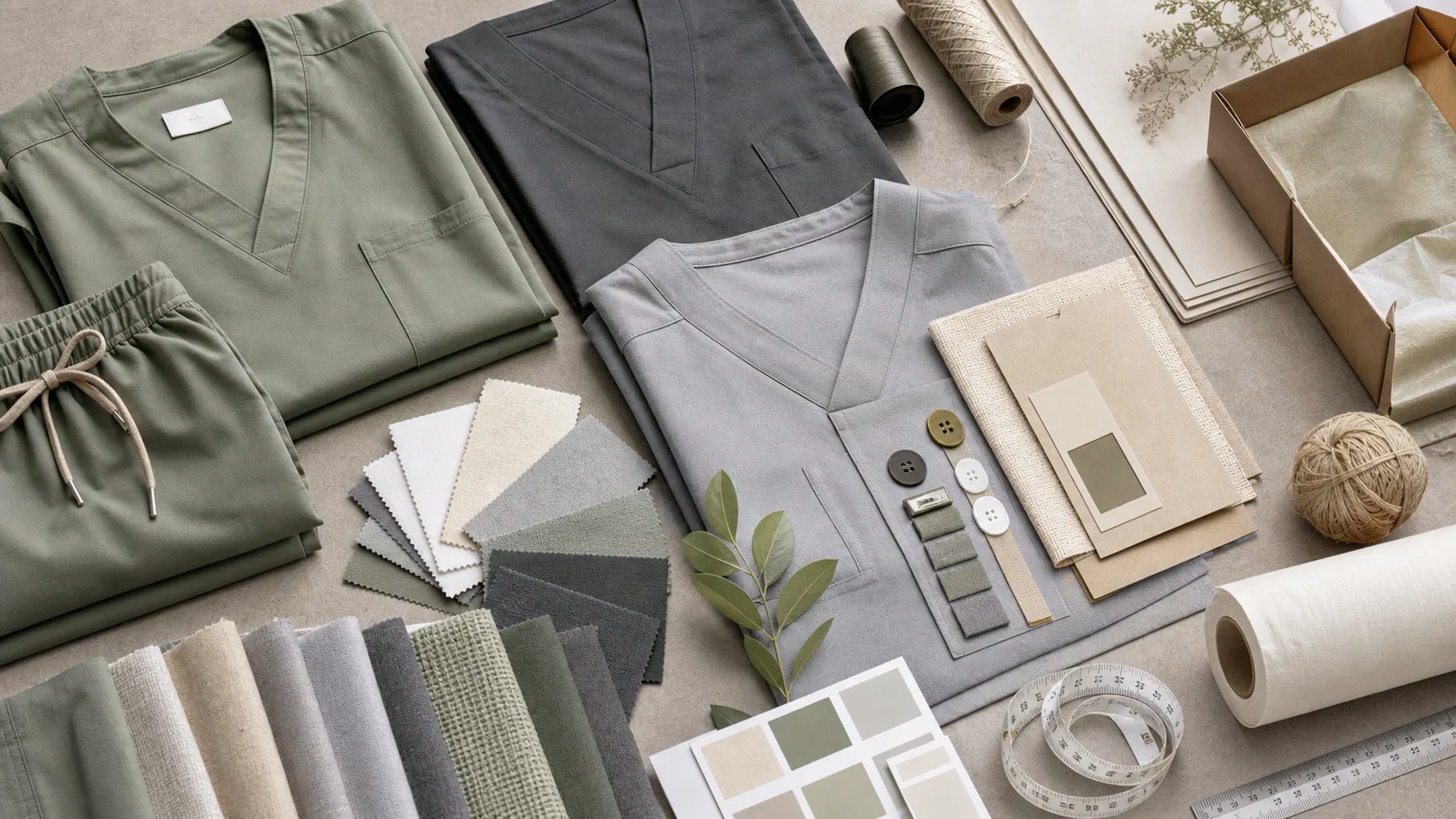
Sampling Costs for Clothing Manufacturers with checks for samples, fit, MOQ, QC evidence, pricing terms, and delivery risk.
Fast answer: Sampling Costs for Clothing Manufacturers: What Drives Pricing should be judged by production evidence, not by a generic sourcing promise. The buyer needs sample proof, cost breakdowns, QC checkpoints, and delivery buffers in writing.
Ask for recent sample photos, measurement tolerances, fabric or print test assumptions, decoration test notes, packing examples, and a named inspection checkpoint. These details show whether the team can repeat an approved sample at bulk volume.
Separate garment cost, decoration, labels, packaging, sampling, testing, freight, and rush charges. When every cost line is visible, it becomes easier to reduce colorways, adjust size depth, or reserve more time for sampling.
Sample budgets have a habit of misbehaving. A brand can walk in expecting a tidy line item and walk out with a bill that has quietly multiplied. A $30 tech pack often turns into a $200 to $500 sample once pattern work, fabric sourcing, trims, labor, courier fees, and revisions land on the invoice. For any manufacturer, factory, or supplier, the sample stage is where production risk first shows its teeth.
When I visited factories in Bangladesh, Portugal, and Vietnam, the pattern stayed the same. The first sample was rarely the cheap one. A factory might quote $45 for sewing labor, then add $18 for pattern revisions, $32 for fabric swatches, $12 for trims, and $65 for DHL. One round becomes $172. Two rounds become $344. Three rounds, and a brand has spent more than the margin on its first production order.
Low-cost factories often advertise a low sample fee because it gets them through the door. Then the real money comes back in courier charges, minimum order penalties, or paid changes after the first fit review. Sample quotes in China and India can run 20% to 35% below Europe on labor alone, yet the total cost lands within 10% once freight and revision time are counted.
The counterintuitive part: higher-priced sample rooms can save money. Their pattern makers may charge $85 instead of $35, but they tend to cut repeat rounds, catch fit errors sooner, and return corrected specs in 3 to 4 days rather than 2 to 3 weeks. For a brand working on six styles with MOQ 500 pieces each, that speed can decide whether the line launches on time or misses the buying window.
Same mistake, different labels. From $14.90 basics to $190 outerwear, brands obsess over production cost and ignore development cost, even though sample problems usually become production problems later. Bad grading. Weak communication. Vague trim requests. The sample stage is where those issues quietly tax the whole order.
A sample quote is rarely just sewing. In most factories, the stack includes development pattern making, CAD work, fabric cutting, sample room labor, trims, wash testing, and freight. For a basic knit tee, that total often lands between $50 and $150. A woven shirt commonly sits at $80 to $250. Denim and tailored outerwear can jump to $150 to $600+, especially once lining, interfacing, and specialty hardware enter the picture.
Pattern making is usually the first hidden cost. A brand may pay $40 to $120 for a development pattern, then another $25 to $80 for grading changes if the fit shifts after the first review. CAD files are sometimes bundled, sometimes billed separately. In Turkey and Portugal, I have seen factories include CAD in the sample fee because they expect tighter communication and faster revisions. In smaller Asian plants, that same work may be itemized line by line.
Fabric is the other trap. A sample can use stock cloth at $3.50 per meter, or it can require a mill to produce a lab dip and a custom lot at $7 to $18 per meter. A blazer in wool blend suiting may need 1.8 to 2.2 meters for one size, while a technical shell jacket can require 3 to 4 meters plus waterproof tape and zipper testing. Those small numbers climb fast.
Then come the extras. Labels, hang tags, custom buttons, zippers, embroidery, heat transfers, wash tests, and courier fees all behave like small charges until they stack. A brand sampling a category like custom baby clothing manufacturing often pays more than expected because the factory has to check safety details, avoid choke hazards, and source low-MOQ snaps or nickel-free trims.
Sampling costs clothing brands also face style-specific charges: lab dips for color approval, fit samples for silhouette, salesman samples for showroom use, photo samples for marketing, and size sets for grading verification. One style can trigger four invoices before production approval. I have seen that sequence add 25% to 40% above the original sample estimate, even when the garment itself looks simple on paper.
A blank T-shirt is not always cheap, and a blazer is not expensive just because it looks formal. The real driver is complexity plus clarity. A cotton jersey tee in 180 GSM can cost $35 to $90 to sample if the art is final and the trim package is standard. Add enzyme wash, oversized fit adjustments, and a special neck rib, and the number can double.
For a woven blouse, I usually see $75 to $180. A denim jacket often sits at $120 to $300 because of hardware, topstitching, and wash development. A tailored blazer can run $180 to $450, while an activewear set with bonded seams and stretch recovery tests may reach $160 to $400. Outerwear with lining, insulation, and taped seams can go from $250 to $700+, especially if the brand needs a waterproof rating check.
Small details are where pricing drifts. Buttons add $0.20 to $1.50 per piece in sample cost, but custom molds can push that much higher. Screen prints may add $15 to $40 per placement. Embroidery can add $20 to $75 depending on stitch count. Bonded seams and special finishes often raise sample pricing by 10% to 40%, and that increase is not arbitrary. It reflects machine setup, operator skill, and the fact that one bad seam can waste a full day of work.
Sometimes a simple garment costs more than a technical one. I have seen a plain shirt with imported corozo buttons, a deadstock chambray, and a narrow 3-week dye lot cost more to sample than a modest activewear set built from in-stock nylon-spandex. The fabric search alone can add 7 to 10 days and $60 to $150 in admin and freight.
The least expensive samples are not always the easiest ones. The real price shows up when the spec is fuzzy, the factory has to guess, and the whole thing needs a second, third, or fourth pass.
I have watched that play out in private label programs too. A brand using private label clothing services may think they are buying speed, but if the fit block, artwork placement, and wash target are incomplete, the sample room still has to improvise. A one-page brief can become a four-round process. That is how a $95 sample becomes a $340 development bill.
Regional pricing is not a clean race to the bottom. China often offers sample labor in the $25 to $60 range for simple styles, with turnaround around 5 to 10 days. Vietnam can run $20 to $55, but fabric sourcing may add a week if the mill is not nearby. India often sits around $18 to $50 for labor, yet communication and revision timing can stretch the total timeline to 10 to 15 days. Those numbers look attractive until freight, customs, and follow-up rounds appear.
Turkey and Portugal are usually more expensive on paper. I have seen sample fees in Turkey at $45 to $120 and in Portugal at $55 to $140 for comparable knits and wovens. Central America often falls between $30 and $75, especially for brands selling into the U.S. market and wanting 3 to 7 day courier windows. According to Trade.gov apparel trade and logistics resources, shipping time and customs handling remain major cost variables for apparel development, not just unit labor.
Here is the part brands miss when comparing regions. A factory with a $30 sample fee and a $45 courier charge is not always cheaper than a factory with a $70 fee and a $12 local delivery. If the first location needs two revisions, the total spend can hit $150 to $220 before approval. The second location may finish at $82 to $130, with better pattern continuity and fewer language gaps.
In my factory visits, Europe usually wins on communication and revision speed, while Asia wins on capacity and lower base labor. Latin America often sits in the middle for brands selling to North America because time zones compress approval cycles. A designer in New York can review a fit photo at 9 a.m. and have revised measurements back by afternoon if the factory is in Guatemala or Honduras. That same loop can take 24 to 36 hours longer from Shenzhen.
For standards and testing, many factories reference ISO testing standards or AATCC methods when discussing shrinkage, colorfastness, and seam performance. Brands focused on responsible sourcing also often review Textile Exchange materials guidance and OEKO-TEX certification when selecting fabric partners. That matters because a sample that passes fit but fails wash testing is not an approved sample. It is a costly draft.
A simple comparison table often helps procurement teams:
The fastest way to cut sample spend is to reduce uncertainty. A tighter tech pack with full measurements, point-of-measure callouts, stitch density notes, and labeled artwork can save 1 to 2 revisions per style. I have seen that trim sampling costs for clothing manufacturers by 15% to 25% before production even starts. If the factory knows the neck drop, sleeve opening, and wash target on day one, it does not need to guess.
Material choice matters just as much. In-stock fabrics, standard buttons, and existing zipper lengths can cut first-sample cost by 15% to 30%. A brand that wants a French terry hoodie at 320 GSM can save real money by using mill-stock shades rather than commissioning a new dye lot for 200 pieces. The same rule applies to prints. One color placement print is cheaper than four placements and a woven patch.
Digital fit reviews also change the math. A 3D prototype may cost $60 to $250 in software time, but it can prevent a $180 courier roundtrip and a $90 resample. I have worked with brands that consolidated comments from design, merchandising, and sales into one approval sheet. That cut the average sample cycle from 4 rounds to 2. The factory liked it. So did the margin.
Still, cheap sample quotes can be a false economy. I have seen a brand choose the lowest bidder by $40, then lose two weeks because the pattern room misread the block and the factory had no English-speaking technician. That is not savings. That is expensive delay. Compare total development spend, not just the first line on the quote.
For cut-and-sew programs, clarity pays twice. If you are building a line through cut and sew manufacturing, you want the factory to see the silhouette, fabric behavior, and construction order before the first sample. A clean fit brief can be the difference between one approved sample and three near misses.
Before you send a tech pack, ask every factory the same questions. What is included in the sample fee. How many revisions are free. Who owns the pattern. Is courier billed separately. Does the quote cover fabric sourcing, trims, and wash testing, or are those charged at cost plus markup. Those four questions expose most hidden fees within minutes.
I also ask for itemized pricing by development stage: development pattern, first sample, fit sample, salesman sample, and size set. If a factory refuses to break costs apart, comparison becomes nearly impossible. An itemized quote lets you see whether one plant is charging $85 for sewing and another is charging $40 for sewing plus $55 for pattern work. Same total. Very different structure.
Red flags show up fast. Pattern fees that appear only after the first sample. Rush fees of $25 to $100 for work that was not labeled urgent. Supplier markups on trims. Re-sampling fees after a minor measurement change. A factory that charges again for a 0.5 cm hem adjustment is not necessarily wrong, but you need that policy in writing before you begin.
My quote comparison template has five columns: sample stage, included services, free revisions, turnaround, and total landed cost. I add one more line for risk. A lower quote with a 14-day turnaround and weak communication scores worse than a slightly higher quote with 5-day revisions and accurate pattern control. That is a procurement decision, not a negotiation trophy.
For brands moving into small runs, especially those scaling through get a free quote, the decision rule is simple. Choose the factory with the lowest total sample cost only if turnaround and accuracy are within 10% of the best option. If not, pay more for the partner that reduces repeat rounds. The savings usually arrive later, in fewer delays and fewer production mistakes.
I recommend setting a development allowance as a share of expected production value. For basic apparel lines, 2% to 4% of forecast production value is usually enough. For technical outerwear, swimwear, or fitted tailoring, 4% to 7% is safer. A brand planning $120,000 in production value should budget $2,400 to $8,400 for sampling, depending on complexity and the number of styles.
Track three numbers on every season. Number of rounds per style. Cost per approved sample. Percentage of samples that convert to production. If a style needs 4 rounds and $380 before approval, that is a signal. If 80% of approved samples reach order placement, your sampling system is working. If only 35% do, the issue may be design realism, not factory pricing.
Negotiate annual development terms if you expect repeat work. A factory may reduce sample fees from $90 to $65 if it knows you will place 6 to 10 styles a year and keep the same blocks. The right conversation is not just about one-off sample prices. It is about how often the factory will support your line and how quickly it can react when a fit issue appears.
Sampling is not a nuisance line item. It is the cost of learning before you buy inventory. Brands that treat it that way usually launch faster, return less stock, and protect margin better than brands that chase the cheapest quote. That is the trade I trust after 200-plus factory visits. Pay for accuracy early, or pay for mistakes later. Managed well, sampling costs for clothing manufacturers become an investment in cleaner production, faster approvals, and fewer unpleasant surprises.
Most sample quotes include pattern making, sample sewing labor, fabric, trims, and courier fees. Depending on complexity, a simple tee may cost $50 to $150, while a blazer or outerwear sample can reach $250 to $700+.
China and Vietnam often quote $20 to $60 for simple sample labor, while Turkey and Portugal are commonly $45 to $140. Total spend also depends on courier fees, which can add $10 to $70 per round.
Use a tighter tech pack, standard trims, and in-stock fabrics. Brands usually cut first-sample costs by 15% to 30% when they reduce ambiguity and consolidate feedback into fewer revision rounds.
Simple samples often take 5 to 10 days in Asia, 4 to 8 days in Turkey, and 3 to 7 days in Central America. Complex garments with wash testing or custom fabrics can take 2 to 4 weeks.
Yes. You can negotiate revision allowances, annual development terms, courier billing, and pattern ownership. Factories are often more flexible on sample fees when they expect repeated orders or 6 to 10 styles per season.