
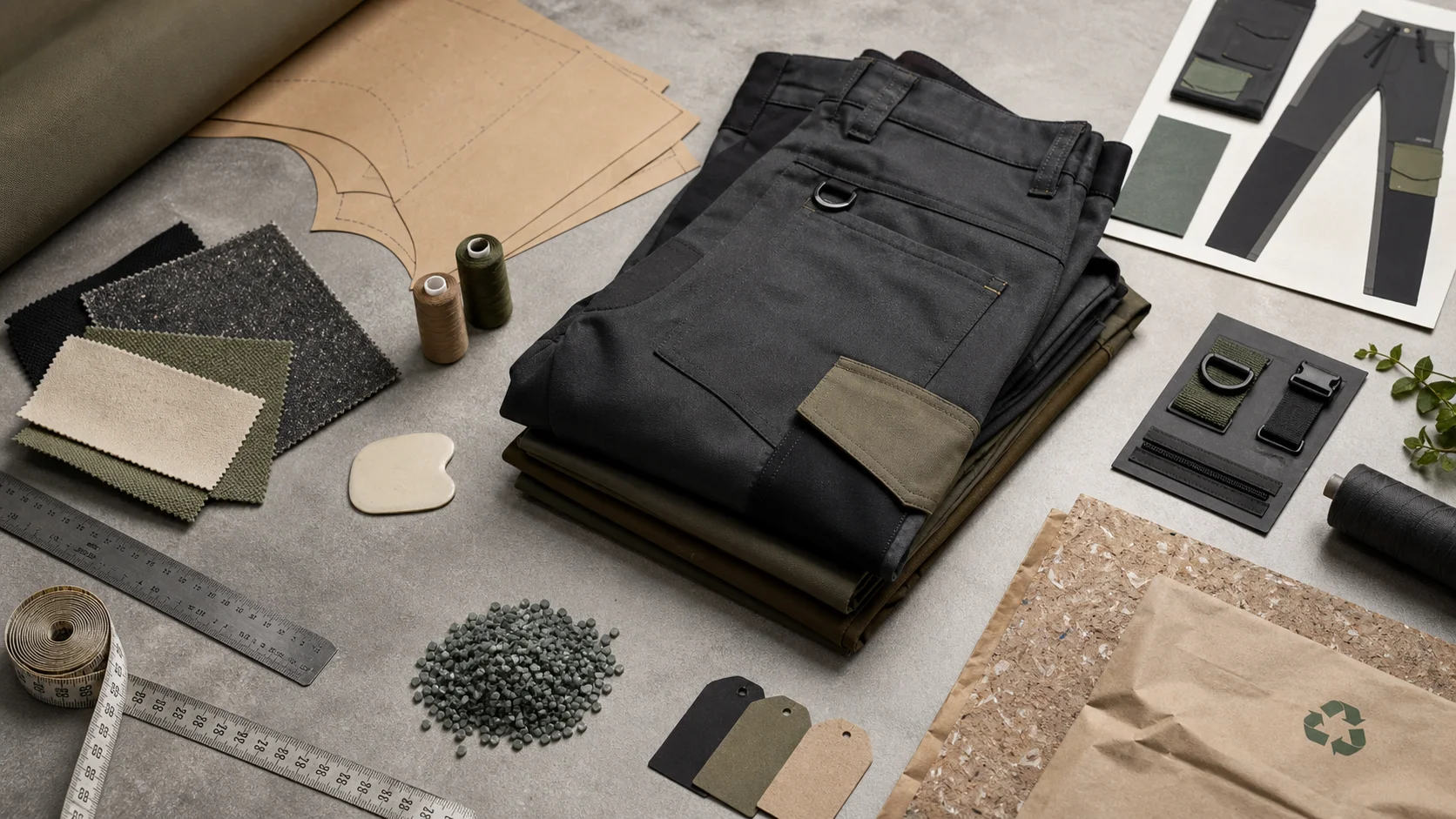
spot uv printed clothing boxes with checks for samples, fit, MOQ, QC evidence, pricing terms, and delivery risk.
Fast answer: spot uv printed clothing boxes: Costs, Quality, and Strategy should be judged by production evidence, not by a generic sourcing promise. The buyer needs sample proof, cost breakdowns, QC checkpoints, and delivery buffers in writing.
Ask for recent sample photos, measurement tolerances, fabric or print test assumptions, decoration test notes, packing examples, and a named inspection checkpoint. These details show whether the team can repeat an approved sample at bulk volume.
Separate garment cost, decoration, labels, packaging, sampling, testing, freight, and rush charges. When every cost line is visible, it becomes easier to reduce colorways, adjust size depth, or reserve more time for sampling.
Most shoppers decide what they think of a clothing box before they have time to blink. In pop-up retail, that judgment can happen in about three seconds; in an unboxing video, it is often even faster. That is why spot uv printed clothing boxes work so well: matte and gloss together catch the eye immediately, even under weak store lighting or a phone ring light.
At a factory in Vietnam, I watched a $28 tee packed in a plain folding carton and the same tee in a box with selective gloss on the logo, the collar line, and a small pattern strip. The garment did not change. The perceived price did. Buyers kept calling the second box “more finished” and “closer to premium.” Exactly the point.
Visual hierarchy does the heavy lifting. Gloss catches light. Matte absorbs it. Put both on the same surface and the logo reads faster, the brand mark looks sharper, and the box feels designed rather than simply printed. For a brand selling at $32-60 retail, that difference can support a better opening price, a cleaner gift impression, and fewer doubts about fabric quality before the customer lifts the lid.
Regional response varies. In luxury-led markets such as Japan, parts of Western Europe, and the Gulf, tactile finishes are rewarded quickly because shoppers already expect packaging to perform. In discount-led channels, the same box can look too polished if the product is a $14 basic and the shelf context is warehouse-like. I have seen a glossy logo help sell a $48 sweatshirt in London, while in a mass channel outside Manila the same treatment added little because the surrounding merchandising cues were flat.
The point is simple: the finish is not decoration alone. It is a sales signal, a protection layer, and a brand cue. According to ISO standards on packaging and distribution testing, surface integrity and transport performance are linked more closely than most buyers assume. A better-looking carton still has to survive the trip, the shelf, and the return shipment.
For brands that care about ethical sourcing, packaging choices can sit alongside broader material standards used in apparel manufacturing. Organizations such as Textile Exchange and OEKO-TEX are useful references when you want packaging decisions to align with a responsible brand story.
A finished carton is a stack of decisions, not one product. The base is usually paperboard, often 300-400 GSM for fashion boxes, though premium rigid packs can go much higher. Then come printing, coating, spot UV application, die-cutting, and gluing. Each layer adds value. Each one can add cost, too, when the spec is sloppy.
Board grade changes both feel and freight. A 350 GSM SBS board can look clean and fold well for a shirt box, while a thicker 16pt or 18pt board improves crush resistance for heavier denim, knitwear, or boxed sets. But heavier board also raises material cost by roughly 8-15 percent in many quotes, and shipping weight can climb enough to matter on a 10,000-unit order. I have seen brands save on the board, then lose the savings in freight because the carton count per pallet dropped.
Not every finish does the same job. Matte lamination softens reflections and gives a subdued premium feel. Gloss varnish boosts saturation and can protect the print surface. Spot UV sits on top as a localized gloss layer, usually on a logo, pattern, or line art. It does not replace a coating; it creates contrast against one. If you want a box that survives scuffing on a distribution center belt, the protective layer matters. If you want a box that looks expensive at arm’s length, the visual layer does the talking.
Artwork complexity can move the price more than some buyers expect. Tight registration over thin geometric art needs cleaner plates, longer setup, and more press checks. A simple centered mark is easy. A repeated monogram with 0.5 mm line spacing is not. MOQ matters too. On a run of 500-1,000 pieces, setup is a bigger part of the total than on 10,000 or 25,000 pieces. Box style matters as well. A mailer with a crash-lock bottom, or a rigid two-piece gift box, costs more than a basic tuck-end carton. Flat-shipped packs save freight; assembled boxes save local labor.
For brands cross-shopping packaging with garment production, I often point them to their own manufacturing mix. A label using private label clothing services or cut and sew manufacturing should treat packaging as part of the same margin model, not as an afterthought. The box and the product must earn their shelf space together. When sourcing custom packaging at wholesale or bulk volumes, it helps to compare factory quotes from China and other regions on the same spec sheet.
Buyers often compare finishes by instinct instead of by economics. That leads to expensive mistakes. In short-run packaging, setup cost dominates. In scale runs, unit cost starts to matter more. Spot UV usually sits in the middle: cheaper than foil stamping or deep embossing for many low-volume jobs, yet strong enough to deliver a premium signal that reads quickly.
Here is the working comparison I use from factory visits and quote sheets:
On a 1,000-piece order, spot UV can be materially cheaper than foil or embossing because the tooling stack is lighter and the process is faster to dial in. At 10,000 pieces, the spread narrows, but the production risk still matters. If your artwork is a clean logo, spot UV is often the most efficient premium cue. If you want a luxury jewelry-style reveal, foil may justify its higher price. If you need tactile drama, embossing wins. If you want quiet restraint, soft-touch does the job, though it is less forgiving in transit.
I have seen something counterintuitive in the field: some lower-priced packaging lines manage crisp spot UV better than expensive suppliers. The reason is registration discipline, not prestige. One factory in South China with a simpler machine line held tighter alignment on a 600-piece run than a European converter quoting nearly 40 percent more, because the operator checked every sheet under a fixed light and rejected drift early. The quote was not the quality.
That matters for brands making apparel boxes for seasonal drops, especially when they also use specialty print elsewhere, such as sublimation printing services for performancewear or graphic-heavy capsule pieces. Consistency across product and package tells a clearer story than a single expensive finish.
The workflow starts long before the box reaches the UV station. Prepress checks the dieline, artwork, and spot mask. Then the printer makes plates, runs a proof, and prints the base sheet. After that come coating, UV curing, conversion, folding, and packing. Every step can improve the result or damage it. I have seen premium packaging ruined because someone rushed the proof stage by 12 hours.
Spot UV artwork must be prepared as a separate vector layer or a clean mask, not buried inside a flattened image. If the tolerance is off by even 0.3-0.5 mm, the gloss can drift from the logo edge and make the package look cheap. Thin type, tight borders, and geometric grids are the hardest. Large simple marks are easier. Files with multiple print areas need even tighter control, because the box may be die-cut from a sheet that has already shifted slightly in the press.
Quality control is where good factories separate themselves. I look for light inspection after printing, adhesion checks after curing, fold-line crack testing, and a scuff test with repeated rubbing against another sheet. If the UV is under-cured, the surface can feel tacky, pick up dust, or show a dull haze that kills the premium effect. That risk rises on humid days, especially when a plant is running at 70-80 percent capacity and tries to shorten cure time by a few seconds per sheet.
From factory visits across eight countries, the regional split is clear. Some Asian plants excel at scale efficiency and can handle 20,000-50,000 units with stable pricing and fast turnaround. Certain European converters are stronger on small-batch precision, color control, and tighter approval loops, especially for 500-2,000 piece luxury runs. Neither group is automatically better. The right choice depends on the brand’s volume, timeline, and how much variation it can tolerate.
If the box is part of a wider garment program, the same process discipline should run through sampling and make-ready. Brands that rely on custom baby clothing manufacturing know this well: if a seam allowance is off by 2 mm, the whole product feels wrong. Packaging behaves the same way. For compliance-minded teams, trade.gov is a practical resource for export basics, market-entry guidance, and international sourcing considerations.
I start with five questions: Who sources the board? What UV equipment do you run? How do you manage color? Can you support the dieline? How fast can you sample? A supplier should answer each one without hedging. If the quote arrives before the spec sheet, I already know I will need a second supplier.
Sample judging is practical, not sentimental. Check alignment first. Hold the box under retail lighting, not warehouse fluorescents. The gloss should pop without bleeding beyond the intended shape, and the edges should remain crisp after folding. Run a finger over the coated area. If the finish looks sharp but scratches with a light touch, that is a warning. Also inspect the corners. If the board splits at the crease, the finish may look good on day one and fail during packing.
Factory type matters by order size. Large converters make sense for 10,000 units and up, especially for core basics that repeat each season. Boutique factories are better for 500-3,000 unit capsule packaging, limited drops, or high-touch seasonal launches. Hybrid suppliers can cover mixed runs, but only if they have real internal controls, not just a sales team and outsourced finishing. I ask for documented QC photos from at least two past jobs, not polished mockups.
Pricing transparency is another filter. A quote should show tooling, printing, spot UV passes, shipping cartons, inserts if any, and rework allowances. If those lines are missing, the low price may not be real. I also ask three hard questions: What is the maximum registration tolerance? What curing method do you use, LED or traditional mercury? How many rejects are built into the process? A factory that cannot answer in numbers is guessing.
For brands building a full product line, supplier selection should sit alongside broader sourcing decisions, not outside them. The same team managing packaging often sits near merchandising and product development, which is why a clean handoff from packaging specs to cut and sew manufacturing saves time and avoids mismatch between product and box. If you are comparing a manufacturer, factory, or supplier in China, ask for the same samples, tolerance limits, and production QC records from each one.
Selective use is the rule. Put spot UV on the logo, a monogram, a fabric texture, or a brand pattern. Do not flood the whole surface unless you want the box to read as plastic. A matte base with gloss details gives the strongest contrast, especially in black, deep navy, charcoal, or muted olive. Pale boards can work too, but the artwork must be planned with more discipline because the gloss has less visual force.
Brand storytelling works best when the finish mirrors the product. A brushed gloss line can hint at a polished poplin shirt. Repeated micro-patterns can suggest tailoring or knit structure. If the apparel line is built around heavyweight French terry 320 GSM, the box can use a dense, solid logo treatment to signal substance rather than delicacy. That connection matters. Shoppers read packaging as a proxy for the garment inside.
The thing nobody tells you: cleaner artwork often prints better and looks more expensive than crowded premium packaging. I have seen brands spend money on three typefaces, two pattern layers, and a busy foil border, only to create a box that looked confused. A single mark with controlled gloss, properly spaced, nearly always reads as more expensive. It also gives the press less room to miss the register.
Sustainability choices can reinforce the premium effect if they are handled honestly. FSC-certified board, soy or water-based inks, and right-sized box dimensions all cut waste without weakening the finish. In practice, a smaller footprint can save 6-12 percent in freight volume on a regular apparel program, and that is before you count the reduction in void fill or oversized cartons. I prefer packaging that earns its carbon cost.
There is also a visual upside to modesty. A less crowded layout leaves more room for the gloss to do its work, which is why the smartest luxury packaging often looks almost quiet. The luxury is in the restraint. For brands pursuing responsible materials, FSC board and verified textile certifications can complement each other cleanly.
Start with 2-3 supplier samples made from the same art file. Do not compare mockups with different logos or board grades. Test each sample under retail lighting, then under office light, then in a shipping carton after 24-48 hours of transit simulation. You want to know whether the gloss still reads after handling, rubbing, and stacking. A box that looks good in a photo and dull in store is not a success.
Then run a small pilot order. I prefer 500-1,000 units for a new packaging spec, or enough to measure defect rate, transit damage, and customer reaction without overcommitting working capital. Track returns or complaints tied to crushed corners, scuffing, or misaligned UV. If the reject rate stays under 3 percent and the packaging survives the route, scale with confidence. If not, fix the spec before the next round.
Build a packaging calendar backward from launch. Artwork approval can take 3-5 days. Plate production may take 2-4 days. Proofing can add another 2 days. Spot UV finishing and conversion can take 4-7 days. Ocean freight may need 18-30 days depending on origin, while air freight can cut transit to 3-7 days at a much higher cost. If you miss one of those windows, the box becomes a late expense instead of a brand asset.
For procurement teams, I use a simple checklist:
The right supplier choice usually comes down to consistency, not the lowest quote on day one. That is true whether the order is 800 seasonal gift boxes or 20,000 core packs. I have watched brands save $0.04 per unit and then lose $0.18 to rework, freight delays, and damaged perception. Packaging should protect margin, not erode it.
If your team already manages apparel development through private label clothing services, treat the box as part of the same launch calendar. The product and the package should arrive together, not argue with each other. For budget planning, it helps to compare MOQ, lead time, and production capacity before you commit to wholesale or bulk replenishment.
They are used to add selective gloss to apparel packaging, usually on logos, patterns, or monograms. The finish helps mid-price and premium brands look sharper at retail and in unboxing videos, especially on runs from 500 to 10,000 units.
For many apparel orders, costs land around $0.80-2.50 per box depending on board, size, and quantity. Smaller runs cost more per unit because tooling and setup are spread over fewer pieces, while 10,000-unit runs can drop the per-piece price by 15-30 percent.
Typical production takes 10-20 days after artwork approval, with sampling adding 3-7 days. Ocean freight can add 18-30 days, while air freight is usually 3-7 days. Complex artwork or multiple UV passes can extend the schedule.
Yes, if the board grade and glue structure are correct. A 300-400 GSM folding carton works for lighter apparel, while heavier items often need stronger board or rigid construction. Poor curing or weak creasing can still lead to scuffing or crack lines.
It is worth it when the box is part of the brand signal, not just a container. If the retail price is above $25 and the product needs stronger shelf presence, spot UV usually pays back through better perception and lower visual discounting.