
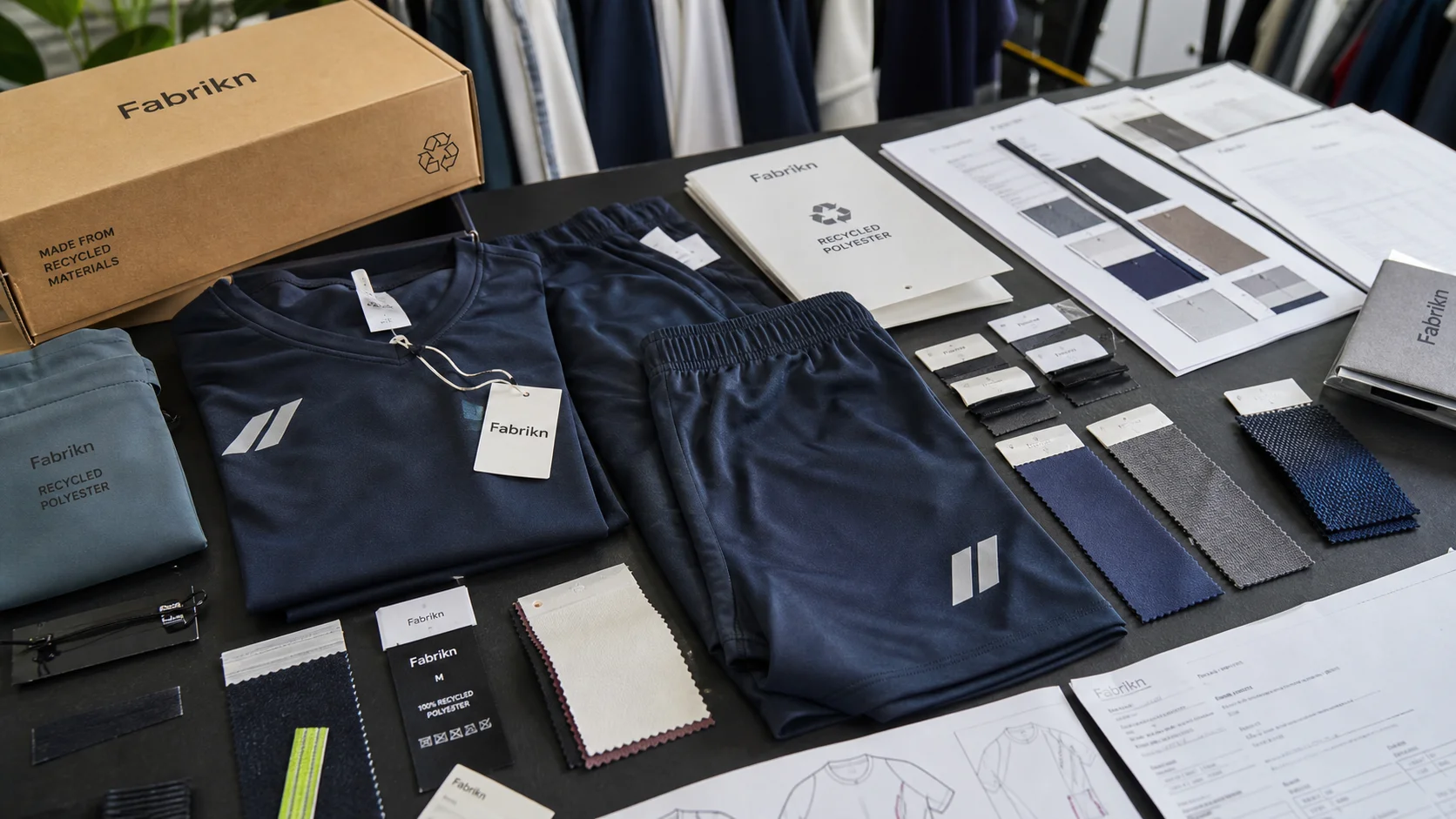
Spot UV Clothing Packaging Boxes with checks for samples, fit, MOQ, QC evidence, pricing terms, and delivery risk.
Fast answer: Spot UV Clothing Packaging Boxes: Finish, Specs, Cost, and Risk should be judged by production evidence, not by a generic sourcing promise. The buyer needs sample proof, cost breakdowns, QC checkpoints, and delivery buffers in writing.
Ask for recent sample photos, measurement tolerances, fabric or print test assumptions, decoration test notes, packing examples, and a named inspection checkpoint. These details show whether the team can repeat an approved sample at bulk volume.
Separate garment cost, decoration, labels, packaging, sampling, testing, freight, and rush charges. When every cost line is visible, it becomes easier to reduce colorways, adjust size depth, or reserve more time for sampling.
Three seconds is all you get in a store; online, the decision can happen even faster once a parcel lands on a kitchen table and gets filmed for social. I have watched shoppers pick up one box, tilt it under the lights, and decide on the spot whether a brand felt worth $38 or $138. Spot uv printed clothing packaging boxes keep showing up in premium apparel for exactly that reason: tactility sells before a hanger tag does.
Spot UV works by creating contrast, not excess. A glossy logo against a matte black carton. A raised shine over soft-touch laminate. A subtle pattern on kraft that catches daylight at one angle and disappears at another. That restraint is why fashion brands use it on apparel mailers, rigid gift boxes, and folding cartons. It makes the box feel engineered, even when the material is only 300-350 gsm paperboard or 1.5 mm chipboard.
On a factory floor in Vietnam, I saw two boxes side by side: one finished with gold foil and one with a restrained spot UV logo on matte navy. The foil cost more, yet the UV box looked richer because it did not shout. Nobody likes to say that out loud, but it matters. A lower-cost box can look more premium than an expensive foil box simply because the finish is less reflective and reads as controlled. That matters for brand tiering, especially when a label sells a $24 tee next to a $160 jacket.
For buyers, the business case is plain: better shelf attention, more unboxing shares, cleaner differentiation between entry-level and premium lines. I have seen brands pair standard folding cartons for basics with spot uv printed clothing packaging boxes for capsule drops, then watch returns stay flat while social saves jump by 18-22% in the first month. For brands also building clothing packaging solutions, the package becomes part of the product story, not just transit protection.
Spot UV is a clear coating applied only to selected printed areas, then cured with ultraviolet light so it hardens fast and sits on top of the artwork. Full UV covers the whole sheet; spot UV picks its battles. That difference matters. Full UV adds overall gloss, while spot UV creates a visual hierarchy. It is not the same as matte lamination, soft-touch lamination, embossing, debossing, or foil stamping, even though factories often mention them in one breath.
In practice, spot UV works best on coated paperboard, rigid chipboard, and matte laminated stock underneath the varnish. The matte base gives the gloss something to argue with. Put it on heavily textured uncoated paper and the effect can look muddy or uneven. I have seen garment brands use it well on T-shirts, knitwear, lingerie, socks, scarves, premium basics, and limited-edition drops with runs of 500-3,000 units. It is especially effective for folded apparel boxes that need to feel upscale at $0.65-1.40 per unit in packaging budget.
The strongest candidates are logos, pattern repeats, care icons, and short storytelling panels. A monogram with spot UV is crisp. A full photograph is usually less convincing. When a box already has a strong silhouette, the finish should support that structure instead of competing with it. I use the same logic when advising labels that need custom baby clothing manufacturing, because babywear packaging has to signal trust and cleanliness, not flashy decoration.
Compared with foil, spot UV is more understated and less likely to date quickly. Compared with embossing, it is less tactile but usually easier to align at scale. For accessories, especially scarves and socks, a simple spot UV logo on a navy or charcoal box often performs better than a busy all-over design because the eye reads the contrast in 1-2 seconds. Small detail. Big payoff.
Restraint wins. I have seen brands spend $4,000 on artwork revisions and still miss the mark because they treated the entire lid like a billboard. For spot uv printed clothing packaging boxes, 10-25% coverage often looks more premium than 60% coverage. The contrast feels deliberate. Too much shine and the box starts reading like a promo mailer, not a fashion object.
Dark base colors are the safest route: black, ink navy, forest, charcoal, deep brown. Minimal typography helps. Line art helps. Monograms help. Texture overlays can work, but only if they are legible at arm's length and do not muddy the varnish boundaries. If the logo is tiny, the gloss can vanish under store lights. If the artwork is dense, the UV layer can make the piece look busy rather than expensive.
Here is the tradeoff I see most often in factory visits. Brands ask for tiny spot UV details because they think more precision equals more luxury. It does not. At 1-2 mm line widths, registration errors become visible, and the glossy layer can bridge over the artwork in a way that looks accidental. Better to use bold shapes, simple type, and a controlled amount of negative space. On a 350 gsm carton, that usually gives a cleaner result than trying to cover every corner.
One more caution: on dusty kraft or uncoated stocks, spot UV can flatten the brand story if the base paper drinks too much ink. The gloss sits there, but the canvas underneath looks weak. That is why I always check mockups under daylight, store lighting, and phone-camera flash. A box that reads luxury under soft studio light may look blunt under LEDs. For labels testing sublimation printing services on garments, the same rule applies: the substrate changes the final impression more than most buyers expect.
Budget is where romantic packaging ideas go to die. On paper, spot UV sounds like a small upgrade. In factory quotes, the premium usually sits above standard CMYK boxes but below foil, embossing, and complex multi-process finishes. The main drivers are plate setup, coating area, substrate quality, number of print colors, die-cut complexity, and MOQ. A simple 500-piece run may cost far more per unit than a 5,000-piece order because the fixed setup gets spread thinner.
Across the factories I have visited in China, Vietnam, and Turkey, I have seen spot UV add roughly 8-20% to a standard printed box, depending on size and registration demands. A folding carton with one-color print and a small logo varnish may land around $0.32-0.58 per unit at higher volumes. A rigid gift box with matte lamination and spot UV on the lid can move into $1.10-2.80 territory. Foil and embossing often exceed that once you include extra tooling and slower throughput.
Timeline is just as variable. I normally break it into six stages: design approval, plate making, printing, UV curing, finishing, quality control, and packing. Prototype rounds can be ready in 3-7 days if the structure already exists. Full production usually takes 2-4 weeks, though queue time can add another week in peak season. If the factory is busy with holiday gift packaging, you may wait 10-14 days before the press even starts.
Rush jobs are expensive for a reason. Spot UV alignment must stay exact within tight registration tolerances, sometimes within fractions of a millimeter. When a buyer cuts a schedule from 25 days to 12, error risk rises because the press team has less room for proofing and rework. I would rather approve one clean preproduction sample than absorb a carton of misaligned lids. For brands building private label clothing services, packaging delays can be as damaging as a delayed sew line.
My sourcing rule is simple: compare quotes not just on unit price, but on defect allowance, lead time, shipping method, and the number of rounds included. A quote that is 6% cheaper can turn expensive fast if it adds a 12% reject rate or forces air freight at the end.
The production sequence is more disciplined than many buyers realize. Artwork is prepared first, then proofed. Printing follows, often in CMYK or with spot colors. If needed, the sheet gets matte or soft-touch lamination. After that comes the spot UV application, then die-cutting, gluing, and packing. The best manufacturer and factory teams treat each step like a checkpoint, not a rush toward the next machine.
Registration accuracy is the heart of quality. The varnish has to land exactly on the selected artwork zone, often within fractions of a millimeter. If the coating drifts, a logo can look blurred or off-center. Manual coating lines tend to be cheaper, but they demand a skilled operator and slower speed. Semi-automatic systems improve consistency. High-speed inline presses win on throughput, yet they need disciplined calibration to avoid tiny shifts across a long run of 10,000-50,000 boxes.
During factory visits, I inspect five things: coating consistency, edge sharpness, scuff resistance, odor, drying time, and carton warp. A good press check should show even gloss on the intended shapes and clean transitions at the edges. I also rub the surface with a dry cloth, press a folded sample at the crease, and hold the box under a bright lamp for pinholes. If it smells aggressively chemical after 30 minutes, I ask what curing system is being used.
Regional variation is real. Some plants in South China move fast and keep lead times tight at 15-18 days. Some Turkish and Eastern European suppliers win on finish control, especially for short runs under 1,000 units, and can produce lower reject rates because they are slower at the press. Neither model is automatically better. It depends on whether the brand values speed or finish stability more.
I approach sustainability with a little skepticism and a lot of numbers. Spot UV can support lower waste if it replaces heavier decoration that would otherwise require multiple materials. A durable box that protects better and resells better may create less waste than a flimsy, overdecorated alternative that gets trashed on arrival. But the coating is still chemistry, and it can complicate recycling if the structure is overcomplicated.
Material choices matter. Recycled paperboard, FSC-certified stock, water-based inks, and low-migration coatings are all sensible asks, especially for garments handled near retail touchpoints. Industry standards such as OEKO-TEX, Global Organic Textile Standard, and trade.gov guidance for international sourcing are more often discussed for textiles and trade, yet the same buyer mindset applies to packaging inputs: know what is in contact with the product and how it behaves in use.
Common defects are easy to spot once you know them. Ghosting. Over-UV shine. Cracking on folds. Poor adhesion. Pinholes. Mismatched gloss levels between batches. I reject boxes when the varnish creeps into the white margin by more than 1 mm or when fold lines fracture after 10 bends. I also ask for shipping compression tests, because a box that looks fine fresh off the press may scuff badly after 7-14 days in transit.
Buyers should set a written standard with the supplier. Define acceptable gloss range. Define bend performance. Define what happens if 3% of cartons arrive dented versus 8%. A clear spec protects both sides, and it keeps the conversation factual when a batch goes wrong.
The cleanest briefs are boring in the best way. Send exact dimensions, paper grade, coating area, Pantone targets, artwork files, logo placement, and shipping method. Include the box style, too: mailer, rigid gift box, or folding carton. I like to specify whether the print is for ecommerce packing, retail display, or seasonal gifting, because the supplier can then judge whether 300 gsm board is enough or whether the job needs 1.8 mm chipboard.
Ask for three things before mass production: printed samples, blank structure samples, and a preproduction proof. A blank sample tells you whether the carton closes properly. A printed sample shows color and gloss. The proof catches registration errors before the whole run is committed. If you can, schedule a press check. One hour on the factory floor can save 10 days of corrections.
The questions that expose weak factories are usually simple. What coating equipment do you use? How often do you inspect during the run? What defect allowance do you accept? What is your rework policy? Have you handled apparel packaging before? If the answers sound vague, keep looking. A supplier that has only made gift boxes may still be fine, but they should be able to explain how they protect delicate folds and stacked cartons.
I recommend comparing three quotes from different regions, not just one. Then compare unit price, defect rate, lead time, and packaging protection. A lower quote from a plant that ships cartons loosely wrapped can cost more once 2-4% of the order arrives scuffed. Confirm the dieline, sign off the proof, and hold back a small buffer for transit damage and color drift. That buffer should be 5-8% for a first run.
The first production run is not the finish line. It is a measurement tool. I tell brands to track sell-through, unboxing shares, return rates, and transit damage for at least 30-60 days. If the box improves shelf pickup but raises scuff complaints by 4%, the finish needs adjusting. If social response spikes but margin falls too far, the design may need a simpler coating map.
Strong brands test two finishes or two coverage patterns in a small batch. One might use a matte lid with a 15% spot UV logo. Another might use a denser pattern at 25% coverage. That comparison gives real data, not opinions. Then they scale the winning spec into core packaging, keep the same supplier or switch only if quality slips, and lock down the dieline before the next season.
The point is operational, not aspirational. Refine the spec. Tighten the tolerances. Keep notes on every defect and every customer comment. That is how spot uv printed clothing packaging boxes stop being a cost line and start doing measurable work.
At higher volumes, simple folding cartons with spot UV often range from $0.32-0.58 per unit, while rigid gift boxes can land around $1.10-2.80. Size, coating area, print colors, MOQ, and factory location drive the final price more than the varnish itself.
Prototype samples can take 3-7 days if the dieline is already approved. Mass production usually takes 2-4 weeks, plus queue time during peak season. Add extra days if you need lamination, complex die-cutting, or air shipment.
They work especially well for T-shirts, knitwear, lingerie, socks, scarves, premium basics, and limited-edition drops. The packaging is strongest for products with a clear price tier, usually from $24 basics to $160 premium items.
Yes, many factories can use recycled paperboard or FSC-certified stock with water-based inks. The key is to confirm the coating system and recycling implications up front, because the varnish can affect end-of-life processing.
Ask for a printed sample, a blank structure sample, and a preproduction proof before the full run. Then compare at least three quotes, review defect allowances, and build a 5-8% buffer for transit damage and color drift.