
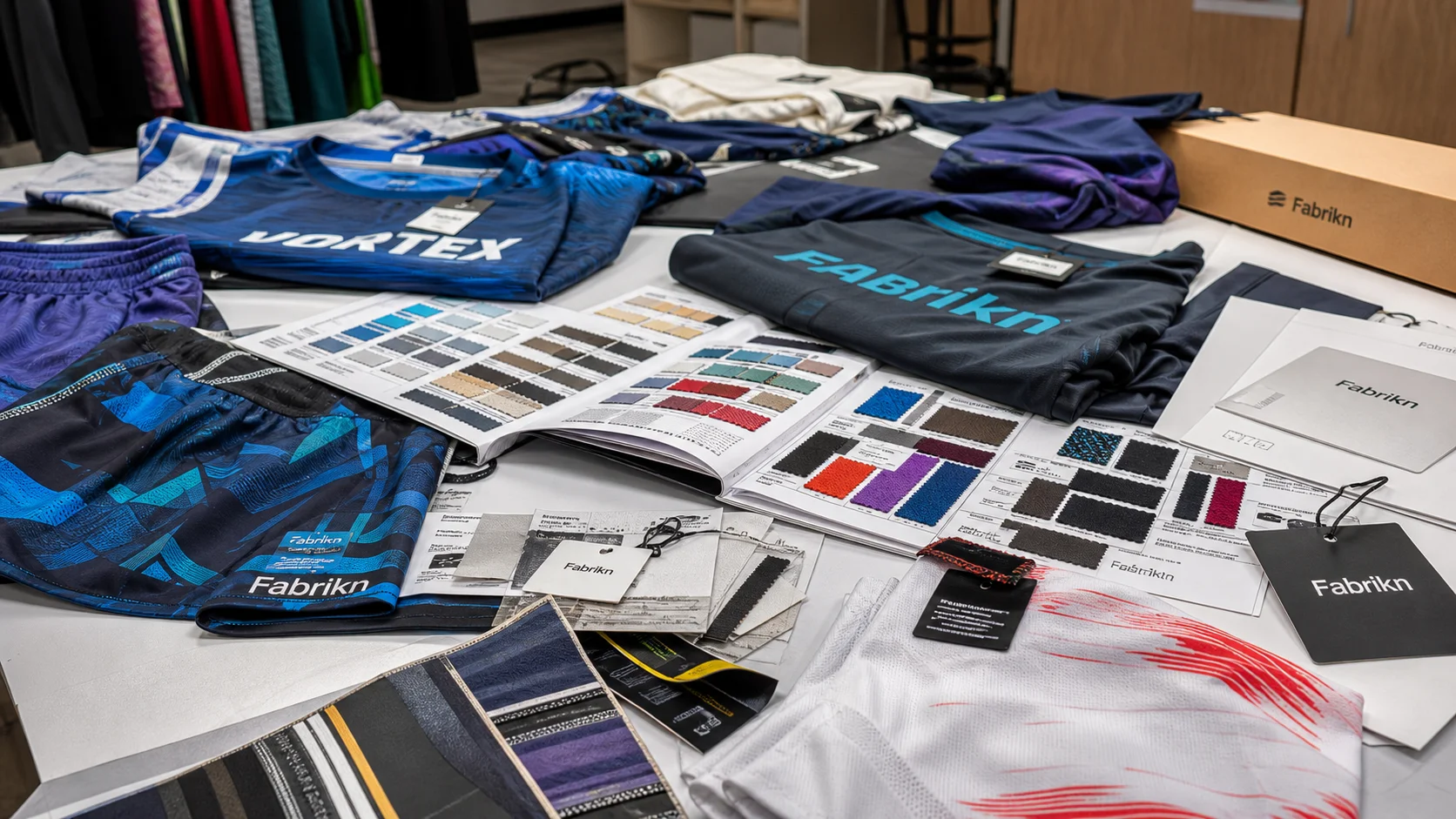
Cut-and-Sew Clothing Manufacturing with checks for samples, fit, MOQ, QC evidence, pricing terms, and delivery risk.
Fast answer: Cut-and-Sew Clothing Manufacturing: Pattern, Fabric, Sample, and Bulk QC should be judged by production evidence, not by a generic sourcing promise. The buyer needs sample proof, cost breakdowns, QC checkpoints, and delivery buffers in writing.
Ask for recent sample photos, measurement tolerances, fabric or print test assumptions, decoration test notes, packing examples, and a named inspection checkpoint. These details show whether the team can repeat an approved sample at bulk volume.
Separate garment cost, decoration, labels, packaging, sampling, testing, freight, and rush charges. When every cost line is visible, it becomes easier to reduce colorways, adjust size depth, or reserve more time for sampling.
Ask a factory to make a garment your way, and the whole process changes character. If you are asking what is cut and sew clothing manufacturing, the short answer is that fabric is sourced or supplied, cut into pattern pieces, and sewn into a finished garment. On a factory floor in Ho Chi Minh City, Dhaka, Guangzhou, or Istanbul, the sequence stays familiar: fabric rolls land, marker making begins, spreaders lay cloth, cutters slice pattern pieces, sewing lines build the garment, then finishing, packing, and carton sealing finish the job. The speed hides how much control sits underneath it.
No blank T-shirt waits on a shelf. No pre-built hoodie gets printed and shipped. Buyers who understand what is cut and sew clothing manufacturing is make better product decisions, because every seam, fabric weight, label placement, and shrinkage allowance gets decided before production starts.
In Guangzhou and Ho Chi Minh City, I have seen factories quoting $2.50-4.00 per unit at a 500 MOQ for organic cotton jersey tees that follow a GOTS-compliant supply chain, while a Dhaka-based specialist focused on recycled polyester blends has set up Samsung Juki AMS-221 sewing lines and Gerber AutoCut 3000 cutters to hit the same numbers with tighter tolerances. Istanbul ateliers, meanwhile, attract boutique activewear buyers by offering Turkish terry brushed on an Özdilek jet-dyeing line with ROI-friendly lead times of 18-22 business days from sample approval.
The appeal is easy to see. Brands get fit control, fabric choice, trim control, branding flexibility, and stronger margin control once volume rises. I have watched the same hoodie price swing by $2.10 a piece depending on cotton origin, rib quality, and whether a manufacturer used enzyme wash or a heavier stone wash. Same style, different feel. Same tag, different shrinkage. One mill used a tighter knit, another a looser construction with different finishing chemistry.
That is why premium basics, sportswear, and private label programs keep returning to this production model. The buyer can choose French terry 320 GSM, brushed fleece 400 GSM, recycled nylon, or organic cotton jersey 180 GSM, then specify rib recovery, neck tape, and stitching density. For a brand that needs consistency, that control matters more than a cheap blank ever will.
Private label clothing services lean on this model because the product is meant to feel ownable. A label sewn into a generic blank does not create a distinct fit block, and it rarely survives serious wear tests. I worked with a streetwear label that moved from blanks to cut and sew on a 2,000-piece run; their return rate dropped from 11% to 4% after they fixed shoulder slope, neckline height, and shrink specs.
But the setup effort is real. You need a tech pack, a pattern, grading, samples, lab dips, trim approvals, and usually a longer lead time. The buyer question is not whether cut and sew is “better” in theory. It is whether the extra setup pays back through quality, consistency, and brand identity at the scale you plan to sell.
The best factories treat production like a chain of approvals, not a sprint. A job usually starts with a tech pack, then pattern making, grading, sample development, fabric sourcing, marker making, spreading, cutting, sewing, finishing, inspection, and packing. On paper, tidy. On the floor, every handoff can create delay if the buyer sends weak specs or changes the fit after sampling.
A strong tech pack is not decoration. It is the contract telling the factory what to make. Miss one measurement and the error can multiply into dozens or hundreds of altered units, especially when the size grade comes from an incorrect base. I saw a missing sleeve opening spec trigger 60 altered sweatshirts because the cuff could not sit correctly after stitching.
The sample sequence matters too. A prototype proves construction logic. A sales sample helps the brand sell the idea. A pre-production sample confirms final fabric, trims, and measurements. A production approval sample becomes the benchmark for bulk. Blur those stages and problems hide until the line is already running.
According to ISO, process control and documented specifications sit at the center of repeatable output. In garment factories, that shows up in practical details: shrink testing before cutting, trim approvals before sewing, and clear QC sign-off before cartons are closed.
Fabric shrink testing can take 3-7 days. Lab dips and trim approvals can eat another 5-10 days if the buyer is slow. Sewing line balance breaks down when one operation takes 18 seconds and another takes 42. Final QC is where rushed factories pay for earlier shortcuts, because seam defects, shade variation, or misaligned prints show up too late to recover efficiently.
The fastest factories are often not the cheapest. They spend more time on pre-production control and lose less time during sewing. I watched a 5,000-piece order ship 9 days sooner from a factory charging 8% more, simply because they locked fabric, trims, and size specs before cutting a single panel.
The choice is not only about method. It is about business model. What is cut and sew clothing manufacturing is one route, while blanks and print-on-demand each solve a different problem. A serious buyer should compare them by cost, control, speed, and return risk rather than by habit.
Model Control Speed Typical use Main trade-off Cut and sew High Slower Premium basics, activewear, private label More setup and sampling Blank apparel Low to medium Fast Events, merch, starter brands Limited fit and fabric choice Print-on-demand Medium for artwork, low for product Fastest to launch Tests, creators, micro-drops Higher unit cost, narrow material optionsBlanks save time, but they narrow your options fast. Screen print a stock hoodie, embroider it, ship it. Fine. But you cannot easily change body length, armhole depth, rib structure, or GSM. That is why blanks suit low-complexity launches, yet struggle to create genuine brand separation.
Print-on-demand reduces inventory risk, which sounds attractive until the math arrives. Unit costs are usually higher, color choices are narrower, and material options can be limited to what the platform carries. A $22 blank sold at $38 can work. A premium fleece program built on that same model often cannot.
I have seen brands use cut and sew manufacturing for their main line and blanks only for test drops. That split makes sense. The main line needs repeatable fit and better fabric. The test drops need speed. Different jobs. Different tools.
What is cut and sew clothing manufacturing best for? It wins for private label, premium streetwear, activewear, uniforms, and high-repeat core products. It also wins when a brand wants to own a silhouette rather than merely decorate one. It loses ground for very low MOQ launches, hyper-trendy drops that will expire in 10 days, and brands needing same-week fulfillment.
Regional pricing changes the answer too. A factory in Vietnam charging $3.80 for a sweatshirt may still beat a U.S. factory at $7.25 once you add 18% higher rejection rates, faster freight on replacements, and lower return rates from better fit control. Labor cost alone rarely tells the full story.
Unit price is a stack of decisions, not one number. The real cost split usually includes fabric, cut and sew, trims, finishing, quality control, and freight. For example, 320 GSM French terry sourced from a GOTS-certified supplier in Ho Chi Minh City paired with OEKO-TEX Standard 100 certified ribbing can cost $1.35 per meter, while recycled nylon shell fabric from Guangzhou treated on a Jetmaster dyeing line runs higher but saves energy credits.
Marker making, spreading, and cutting often happen in one pass because factories use computerized Gerber Z1 cutters, Lectra Spreaders, or Eastman solution knives. This automation reduces labor but adds idle time costs when machines wait for approvals. Sewing operations use Shima Seiki flatbed linkers for seamless coverstitching or Juki lockstitch lines with servo feeders. Each machine has a cycle time; misbalance between a 15-second overlock and a 28-second chainstitch can slow throughput, which is why factories in Dhaka and Istanbul invest in Line Balancing software with touchscreens that log takt time.
Trim and finishing costs are remarkably precise. A woven label from a WRAP-certified supplier shipped to Ho Chi Minh City costs $0.12 per unit, while a laser-cut silicone patch bumps the trim cost by $0.35 per piece. Heat transfer prints performed by Roland or Mimaki machines add another $0.45 per unit, but many buyers prefer the extra crispness. Finishing—pressing, folding, tagging, bagging, and carton sealing—relies on conveyor presses and bespoke folding machines that can be tuned to handle 18-22 business days of lead time for full production runs.
Quality control is why factories pursue certifications such as GOTS, OEKO-TEX Standard 100, WRAP, BSCI, and GRS. Each stamp signals a documented system: GOTS confirms organic fiber traceability, OEKO-TEX ensures chemical safety, WRAP verifies social compliance, BSCI audits ethical labor, and GRS tracks recycled content. Factories in Dhaka often use inline spectrophotometers during lab dips to hit shade tolerances of Delta E <1, while Guangzhou plants rely on UV light boxes to check for dye migration.
Tests and inspections happen at multiple points. Shrinkage tests on a Roaches machine happen after dyeing but before cutting. Tensile and seam strength tests are performed on a Satec MES-UR-10 to ensure stretch garments meet expectations. Each pre-production sample carries a QC sticker from the buyer, and approved cartons receive final QC paperwork showing defects per 1,000 units. Rework and rejection are expensive, so proactive QC—supported by GRS-certified recycling reports and OEKO-TEX test data—keeps buyers from revisiting costly mistakes.
Sustainability teams in Ho Chi Minh City and Istanbul now track water usage via digital meters, report effluent chemistry weekly, and include carbon data if the yarn is produced from recycled post-consumer waste. Those numbers may not appear on the invoice, but they affect sourcing decisions when large retailers require precise compliance documentation.
Choosing the right factory depends on geography, capabilities, and certifications. Start with your priorities: Do you need GOTS-certified organic cotton, a WRAP auditing partner, or a factory that can run enzyme washes at scale? Visit two or three locations—maybe a sample unit in Dhaka, a production line in Guangzhou, and a finishing house in Istanbul—to compare the feel and the machinery, such as which plant deploys automatic tension controls on their Juki machines or which one maintains a fleet of Shima Seiki flatbed linkers.
The best factories welcome your tech pack and ask clarifying questions about fabric width, shrink allowance, and stitch type. They will provide a production schedule showing key milestones and mention achievable lead times—remember 18-22 business days is realistic for many cut and sew runs if fabrics, trims, and samples are locked. Ask about their compliance folder, request copies of GRS and BSCI audits, and view their streamline of processes from marker to carton.
Document every spec. Invest in high-resolution tech packs with graded measurements, stitch diagrams, and trim libraries. Send those files to the factory so they can program markers, plan machine time, and provide an accurate quote—remember, $2.50-4.00 per unit at 500 MOQ is feasible when everything matches the spec sheet. Review samples thoughtfully: check fabric weight, run shrinkage, and inspect every seam.
Schedule a factory visit or third-party audit to verify certifications, especially if you claim compliance with GOTS, OEKO-TEX Standard 100, WRAP, BSCI, or GRS. Confirm the machine list, from the Gerber AutoCut or Lectra boards to the finishing conveyors, so you understand where time and cost accumulate. Then align your product launch with the factory’s projected 18-22 business day lead time—and build in buffer for shipping.
What materials are best for cut and sew apparel? Organic cotton jersey (180 gsm), French terry (320 gsm), brushed fleece (400 gsm), recycled polyester, and nylon power mesh are common, each chosen based on function: comfort, opacity, stretch, and sustainability.
How many days does a typical run take? Pre-production approvals and fabric commitments usually span 18-22 business days. Exceptions happen, but sticking to that window helps buyers avoid rush fees.
Which certifications matter? Prioritize GOTS for organic fibers, OEKO-TEX Standard 100 for chemical safety, WRAP or BSCI for labor, and GRS for recycled materials. Ask factories to show the latest certificates and audit results.
What machines keep costs down? Automated cutting stations like Gerber Z1 or Lectra Vector, Juki AMS-221 or Brother S-7200A sewing machines, and finishing conveyors with ITL or K-Tec presses reduce errors and maintain consistent cycle times.
How do I compare factories across locations? Match your needs—do you value the lower labor cost in Dhaka, the trim ecosystem in Guangzhou, the compliance strength in Istanbul, or the finishing expertise in Ho Chi Minh City? Use the same tech pack to get quotes and lead times so you can compare apples to apples.