
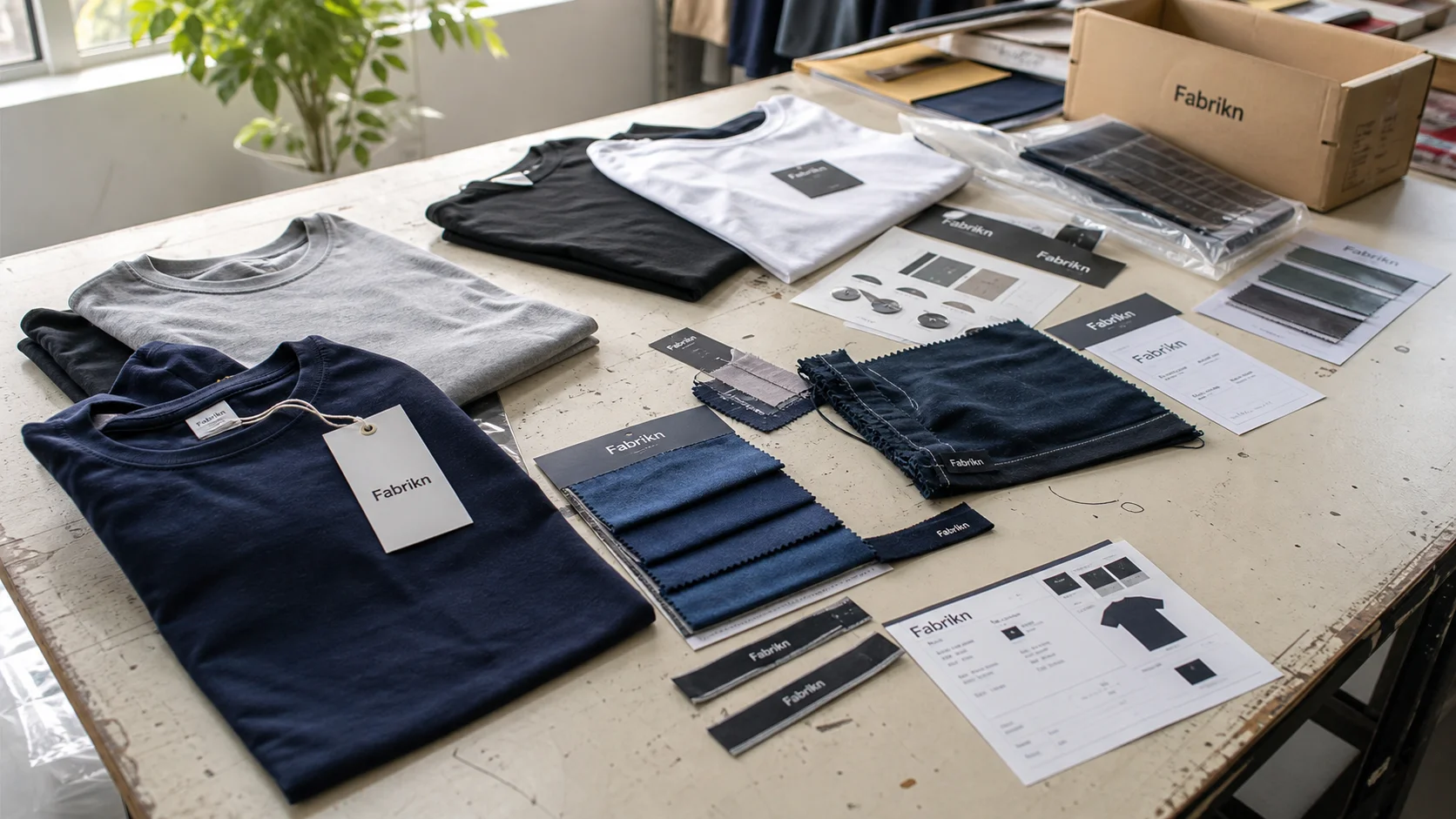
Cut-and-Sew Manufacturer Meaning with checks for samples, fit, MOQ, QC evidence, pricing terms, and delivery risk.
Fast answer: Cut-and-Sew Manufacturer Meaning: Pattern, Fabric, Sample, and Bulk Control should be judged by production evidence, not by a generic sourcing promise. The buyer needs sample proof, cost breakdowns, QC checkpoints, and delivery buffers in writing.
Ask for recent sample photos, measurement tolerances, fabric or print test assumptions, decoration test notes, packing examples, and a named inspection checkpoint. These details show whether the team can repeat an approved sample at bulk volume.
Separate garment cost, decoration, labels, packaging, sampling, testing, freight, and rush charges. When every cost line is visible, it becomes easier to reduce colorways, adjust size depth, or reserve more time for sampling.
A brand I advised last year got two quotes for the same hoodie. One line said cut and sew at $8.40 per piece. The other said blank-body production at $6.70. Superficially, that looked like a 20% gap. In practice, the gap was bigger: the first quote covered fabric sourcing, pattern work, cutting, sewing, folding, and packing; the second assumed an existing shell with decoration added later.
So, what does cut and sew manufacturer mean in a purchase order? That question belongs there, not in a glossary. I’ve seen the phrase tossed around in sampling rooms, line sheets, and factory emails before anyone bothered to pin it down. In the US, buyers often use it to mean a full garment program built from raw cloth. In China, it can mean a factory that handles CMT and full-package work. In Portugal, it often signals tighter pattern control and smaller runs — 300 to 800 pieces, sometimes less. In Bangladesh, it usually points to large-volume garment assembly where fabric lead times of 3 to 6 weeks matter just as much as sewing capacity.
Across eight countries, the pricing logic kept changing. A cut-and-sew hoodie in a Midwest US factory might land at $14 to $22, with labor making up 35% to 50% of unit cost. In Bangladesh or Vietnam, labor may be only 12% to 20% of FOB, but fabric, testing, freight, and rework can wipe out the savings. The same basic tee can run from $2.10 to $4.80 depending on knit quality, collar spec, and order size. MOQ changes the picture too. I’ve seen 100-piece sample runs in Los Angeles, 500-piece minimums in Portugal, and 3,000-piece entry points in some offshore mills.
The first place buyers hear the phrase is usually the sampling room. That’s where the real questions show up: what’s included, what’s excluded, and what gets billed separately? If a factory quotes only sewing labor, a “cheap” price can swell once you add fabric, trims, wash testing, lab dips, and carton packing. If a factory includes full-package production, the headline number may be higher, but the surprise charges are usually lower.
In plain English, a cut and sew manufacturer turns fabric into finished clothing. Pattern making comes first, then fabric spreading, marker planning, cutting, sewing, trimming, quality checks, finishing, and packing. A buyer brings a tech pack, a sketch, or an existing reference garment. The factory builds the rest.
That can mean a 220 GSM cotton jersey T-shirt, a 320 GSM French terry hoodie, a twill work shirt, a recycled nylon running short, or a lined woven dress with invisible zippers. I’ve watched teams cut 1,200 hoodie panels in a shift and move straight into rib attachment and topstitching. I’ve also seen smaller ateliers cut only 60 pieces a day, with better seam accuracy and far less waste.
The term is broader than decoration. A blank apparel supplier sells pre-made bodies. You choose the color, maybe the print, and the garment already exists. A cut and sew manufacturer starts before the first seam. That difference shapes fit, fabric hand-feel, shrinkage control, and brand identity. If you want a cropped box tee with a 1.25-inch neck rib and a dropped shoulder, blanks rarely deliver that level of precision.
Some factories source fabric and trims too, which makes them full-package vendors. Others are strictly CMT, meaning cut, make, trim, and nothing else. In Asia, the distinction is often obvious on paper. In the US and parts of Europe, the same factory may blend roles depending on order size. Ask whether the quote covers fabric booking, trim sourcing, testing, and packaging. If not, those costs show up later.
I often point brands to cut and sew manufacturing options alongside the tech pack, because the factory’s scope changes risk as much as price. The phrase covers T-shirts, hoodies, uniforms, activewear, dresses, outerwear, and structured accessories too. It does not mean “cheap.” It means garment construction from parts, not from a shelf. In other words, what does cut and sew manufacturer mean is a production method, not just a label.
Buyers toss these terms around interchangeably, and that gets expensive fast. Cut and sew usually describes a factory that can make garments from fabric panels. CMT is narrower: cut, make, trim. The buyer typically supplies design direction, fabric, and trims; the factory assembles. On factory visits, CMT lines often looked efficient but narrow in material sourcing — fine for experienced teams with strong supply chains.
ODM works differently. The factory already has styles, blocks, or templates. You choose a fit, request color changes or minor trim changes, and put your label on it. Private label sits nearby. It may involve finished or near-finished styles branded for a buyer, often with less design control and faster launch times. For a new brand trying to ship in 4 to 8 weeks, private label can work. For a brand building a signature fit, it can feel restrictive.
Here’s the shortcut I use in supplier calls:
Lower MOQ doesn’t automatically mean lower risk. I once worked with a startup that ordered 120 custom sweatshirts at $18 each instead of 1,000 at $11.50. Unit cost was higher, sure, but total exposure stayed smaller because the samples were disciplined, the fit got approved in two rounds, and fabric shrinkage stayed under 3%. That brand avoided a 700-piece mistake. The expensive order would have been the larger one.
If the product is straightforward, private label clothing services may get market data faster than a fully custom program. If the product depends on pattern accuracy, engineered panels, or a proprietary fit, the custom route earns its keep. When a supplier offers both, ask who owns the block, who pays for amendments, and whether the quote includes size grading or only first sample construction.
The sequence is mechanical. The surprises live in the details. Pattern development comes first. Then the factory creates a marker, the layout that decides how efficiently fabric gets cut. A good marker can push fabric utilization to 85% or 90% on some knits. A poor one may drop to 78% and burn 2% to 5% of the fabric budget before a needle touches cloth.
After that, the factory cuts panels and bundles them for sewing lines. Mistakes often start earlier than buyers expect. Wrong shrinkage assumptions can throw off a size run by half an inch. Weak seam specs can create popped seams after only 5 washes. Inconsistent trims can ruin an entire production lot, especially if one zipper lot is 3 mm longer than another. I saw that happen on a 600-piece jacket order in Turkey, and the fix cost more than the original sample approval.
Tech packs matter because they force precision. A complete pack should include measurements, stitch type, seam allowance, artwork placement, wash method, and trim details. For garments that will be washed, size sets and wash tests are essential. An enzyme wash behaves differently from a stone wash. Brushed fleece reacts differently from loopback French terry. If the supplier can’t explain shrinkage targets and tolerance bands, the order isn’t ready.
Finishing covers thread trimming, pressing, metal detection where needed, folding, polybagging, carton packing, and final inspection. Some factories also do needle checks, carton drop testing, and carton count verification. The experienced shops save money by cutting rework, not by chasing the lowest hourly wage. I’ve seen a factory at $5.20 per labor hour outperform one at $3.10 because the first reduced defects to 1.8%, while the cheaper line ran closer to 6%.
That’s why buyers should compare process, not just price. A well-run order moves from sketch to carton in 6 to 12 weeks for standard knits, or 10 to 16 weeks for structured woven pieces. The labor is visible. The savings hide in fewer mistakes.
Regional pricing can mislead if you compare only labor. A basic 180 GSM cotton tee in the US might sample at $35 to $75, with production units around $6 to $12 at 300 pieces. In Portugal, the same tee may sample at $25 to $50 and run $4.50 to $8 at 500 pieces. In China, Vietnam, or Bangladesh, sampling can be $15 to $40, with unit prices as low as $2.20 to $5.50 depending on fabric and finish. Labor is only one piece of the puzzle.
A heavyweight hoodie shows the spread even more clearly. A 420 GSM brushed fleece hoodie with flatlock detail, double-layer hood, and metal aglets may cost $12 to $18 FOB in Asia at 1,000 pieces, $18 to $28 in Eastern Europe, and $24 to $40 in the US. A tailored woven piece can climb much higher because cutting, pressing, and seam accuracy demand more time. A lined blazer or structured overshirt often carries 45% to 60% fabric cost, especially if interlinings and specialty buttons are involved.
Lead times change by stage. Sampling often takes 7 to 21 days. Fabric booking may add 2 to 6 weeks, especially for custom dye lots or minimum mill runs. Production can take 3 to 8 weeks for simple knits and 8 to 14 weeks for more complex garments. Shipping adds another 4 to 35 days depending on air, sea, or nearshore trucking.
Here’s what most people miss: some premium factories are faster, not slower. I’ve visited Portuguese and Japanese facilities that run only 6 to 10 styles per line, keep tighter line balance, and ship in 4 to 6 weeks because they don’t overbook. A low-cost factory can be cheaper on paper and slower in practice if it juggles 40 styles, 3 shifts, and constant rework.
Hidden costs pile up fast. Lab dips can run $50 to $150 per color. Fit rounds may cost $75 to $250. Trims and labels can add $0.20 to $1.20 per garment. Freight, duties, and quality audits often add another 8% to 22% to landed cost. If specialty packaging is required, that’s another line item. Ask for a fully landed estimate before sample approval. A quote without those numbers isn’t a quote. It’s a starting point.
Cut and sew can be cleaner, or dirtier, depending on how the factory handles fabric. Waste starts before sewing does. Marker efficiency, roll width, and pattern nesting decide how much cloth becomes product versus offcut. In knitwear, a 2% improvement in utilization can save thousands of dollars across a 5,000-piece run. In woven garments, bad layout planning can waste even more.
Fabric choice matters just as much. Recycled polyester, organic cotton, and conventional synthetics all behave differently on the line. Recycled fibers may need tighter sourcing checks, because the claim is only as strong as the chain of custody. Organic cotton needs clear documentation and verified mill practices. According to Textile Exchange, fiber sourcing remains one of the biggest levers for reducing apparel impact, but only if the supply chain records are real, not aspirational.
Quality control should be visible at four points: incoming fabric inspection, in-line checks, final AQL inspection, and size tolerance review. I’ve seen low-cost factories that sew quickly but can’t trace a fabric lot after the fact. I’ve also seen higher-priced factories that charge more because they keep lot records, shrinkage logs, and defect reports. The premium isn’t charity. It’s paperwork, discipline, and fewer surprises.
Claims break under scrutiny fast. A factory may advertise “eco” production while using conventional dyes without test records. Another may say it handles sustainable apparel, yet fail to show compliant test reports for azo-free dyes or colorfastness. Standards from OEKO-TEX and compliance bodies such as WRAP help buyers separate marketing from verified practice. For trade and import guidance, trade.gov is also useful when evaluating sourcing from China or other global production hubs.
On a trip that included factories in Bangladesh and Portugal, the contrast was obvious. The faster line cut more pieces per hour. The cleaner line produced fewer rejects per 1,000 units. Sustainability isn’t a slogan in the sewing room. It’s fabric waste, chemistry control, and how many garments need remaking.
Ask direct questions and expect direct answers. Start with: What is your MOQ for this style? Who owns the pattern? What is included in the quote? Which tests do you run on fabric and finished goods? If the answers wobble, keep moving. I’ve seen brands lose 6 weeks because they assumed “development included” meant sample amendments, grading, and trim sourcing. It often doesn’t.
Request these documents before you commit:
Ask for fabric source details too. If the factory won’t say which mill, which blend, or which test standard applies, that’s a red flag. The same goes for unusually low MOQs with no sample proof. A promise of 50-piece production at custom prices sounds nice, but I’ve seen it become a quality problem at 50 pieces and a margin problem at 500.
A simple scorecard helps. Rank suppliers on price, communication, lead time, quality, and compliance. Use a 1-to-5 score for each. A factory that scores 4 on price and 2 on quality is not a bargain. If you need a fallback for branded headwear or promotional add-ons, I also compare related capabilities like custom hat manufacturing so the apparel line stays consistent across categories. If you’re ready to compare quotes, get a free quote and ask for a full cost breakdown, not a headline number.
It means the factory makes your garment from fabric, not from a pre-made blank. For a new brand, that usually includes pattern making, cutting, sewing, finishing, and packing. Most custom programs start around 300 to 1,000 pieces per style, depending on complexity.
Cut and sew gives you more control over fit, fabric, and construction. Private label uses existing styles branded for you, which is faster but less custom. A private label order can move in 2 to 5 weeks, while a true cut and sew program often needs 6 to 14 weeks before bulk production.
Basic tees can run from $2.10 to $8.00 per piece depending on region, fabric, and quantity. Hoodies often range from $8 to $28, and tailored woven pieces can go much higher. Sampling usually costs $15 to $75, and first-round fit changes may add another $75 to $250.
Sampling often takes 7 to 21 days. Fabric booking can add 2 to 6 weeks, and bulk production usually runs 3 to 8 weeks for simpler knits or 8 to 14 weeks for more complex garments. Shipping adds another 4 to 35 days depending on the route.
Ask for MOQ, pattern ownership, included costs, testing standards, and a full production timeline. Request the tech pack, spec sheet, trim card, compliance certificates, and sample approval steps in writing. If the factory can’t answer those clearly, the risk is already high.