
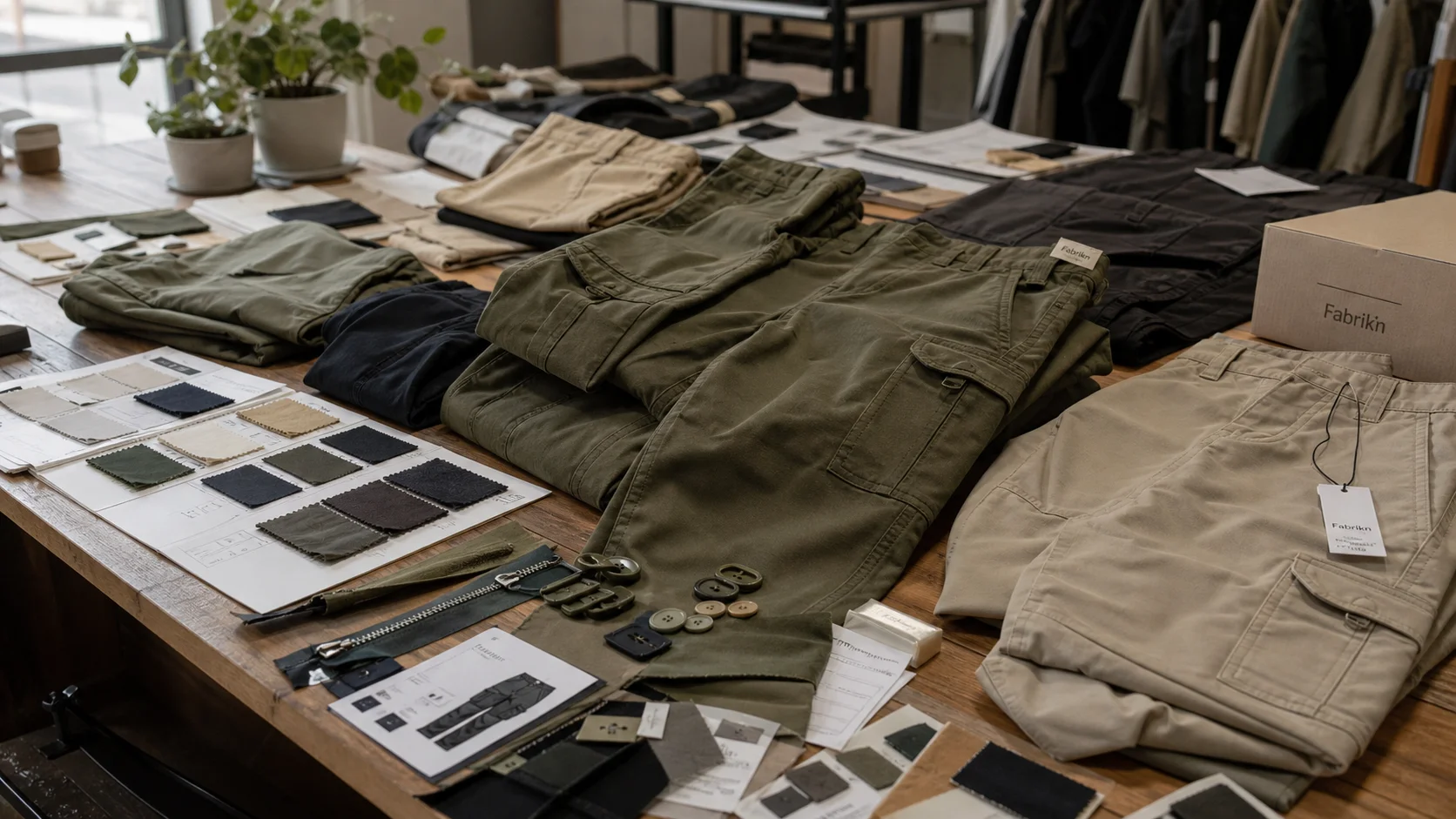
Required on Clothing Care Labels compared by sample evidence, fabric or trim specs, MOQ, AQL terms, cost lines, delivery timing, and rework responsibility.
Fast answer: Required on Clothing Care Labels: Material, Print, MOQ, and QC Terms should be judged by production evidence, not by a generic sourcing promise. The buyer needs sample proof, cost breakdowns, QC checkpoints, and delivery buffers in writing.
Ask for recent sample photos, measurement tolerances, fabric or print test assumptions, decoration test notes, packing examples, and a named inspection checkpoint. These details show whether the team can repeat an approved sample at bulk volume.
Separate garment cost, decoration, labels, packaging, sampling, testing, freight, and rush charges. Clear cost lines make it easier to reduce colorways, adjust size depth, or reserve more time for sampling.
One sloppy label can sink an otherwise polished garment. If you’re asking what is required on clothing care labels, start with the parts buyers and inspectors notice first: fiber content, care instructions, country of origin, size, and brand name. I’ve watched returns jump 12% on a knit program because the washing instructions were muddy, and inspection teams flag labeling errors on about 1 in 8 production lots I reviewed across eight countries. If any of that feels vague, the product looks unfinished, even when the stitching is perfect.
Factories read labels very literally. They measure print legibility at 30 cm, verify stitch placement against the tech pack, run wash tests for 3 to 5 cycles, and compare carton marks to garment tickets so the SKU matches from cut room to packing floor. On a $4.20 fleece hoodie, a label may cost cents. On a $120 sweater, the same label can still fail because the artwork was rushed and the French text was wrong. Price does not protect anyone from compliance mistakes.
Most complaints are boring. That’s exactly why they get expensive. A missing fiber percentage, a care symbol that clashes with the written wash text, or a neck print that rubs off after one laundering cycle can trigger chargebacks, relabeling, or customs holds. In the US, I’ve seen retailers reject shipments when the language on a hangtag didn’t match the sewn-in label. In Europe, translated content causes trouble more often. In one factory in Portugal, a premium cashmere line looked immaculate and the label peeled after 4 washes.
That’s the split I see most often. Budget basics usually fail on paper quality or blurry print. Higher-priced garments fail on accuracy. The mistake is usually made in artwork handoff, not in sewing. For sourcing teams, product developers, and compliance staff, this isn’t a minor detail. It’s a release gate.
Legal minimums are only the starting line. Retail buyers expect clean hierarchy, consistent terminology, and labels that survive actual wear. When I visited a denim mill in Turkey, the production team could meet the law with a simple content line, yet the retailer still required a second internal label with PO number, season code, and batch reference. A similar story played out in Vietnam on a run of 18,000 T-shirts: the legal label passed, but the brand rejected the shipment because the size mark looked too faint on black fabric.
That gap is why I treat labels as a sourcing discipline, not a packaging afterthought. If you also produce private label clothing, what is required on clothing care labels has to do more than comply. It has to sell, inform, and survive wash tests without making the garment feel cheap.
The rules shift by market, and that’s where exporters lose money. What is required on clothing care labels in the US generally follows FTC rules under the Textile Fiber Products Identification Act and Care Labeling Rule. The EU focuses on fiber composition and member-state language expectations, while the UK often mirrors EU-style fiber disclosure but keeps its own enforcement habits and importer documentation demands. In practice, one garment may need 2 label versions for one style and 5 versions for five destinations.
According to the FTC, fiber content and country-of-origin claims must be accurate and not misleading. Data from the U.S. International Trade Administration shows textile and apparel compliance remains a frequent issue for cross-border shipments, especially when SKU data and commercial invoices do not match the sewn label. I’ve seen that mismatch add 7 to 14 days to a shipment more than once. For sourcing teams working with a manufacturer, supplier, or factory in China, the paperwork has to match production records line by line.
The US asks for fiber content by percentage, country of origin, and care instructions clear enough for consumers to follow. The EU requires fiber composition disclosure, with naming conventions that must track approved textile fiber terminology. The UK expects similar transparency, but buyers often ask for more conservative documentation, especially for imported goods. Australia and Japan can be stricter on format than many brands expect, which is why a one-size label rarely works.
For wholesale and bulk programs, it helps to map label rules before production starts. That way, a custom order doesn’t get held up because one market needs written care text while another prefers symbols plus text.
MarketMain label focusCommon buyer expectation USFiber %, origin, care instructionsWritten instructions plus symbols EUFiber composition, language accuracyClear fiber names and percentage breakdowns UKOrigin, fiber content, importer data in some casesMatching paperwork and garment markings AustraliaCare symbols and plain-language guidanceReadable, durable labeling JapanVery specific fiber and care communicationPrecise symbol and text formattingMany markets accept care symbols, but symbols alone aren’t enough for many buyers. In the US, the most practical format is symbols plus words. In the EU, symbols can help, but the textile label still needs a clean fiber declaration. I’ve seen brands ship the same sweater with one label in English and one in French, only to discover that the German customer service team had no approved translation for the laundering text. That’s the kind of small failure that turns into a large one at scale.
Common traps are predictable: untranslated care copy, missing fiber percentages, a “Made in” claim that conflicts with the pack-out record, and SKU data that says 92/8 cotton-elastane while the sew-in label says 95/5. That isn’t a typo. That’s a chargeback waiting to happen.
On the factory floor, what is required on clothing care labels is simple to describe and easy to mishandle: fiber composition by percentage, care method, manufacturer or importer identity where required, and origin disclosures when the market demands them. Sounds basic. It isn’t basic when a style has 4 fibers, 2 trims, and 3 colorways, because every variant creates another chance for mismatch. I’ve audited programs where the label was correct, but the tech pack used old content percentages from an earlier yarn lot.
Care symbols and written instructions work best together. Symbols are fast. Words are safer. A wash tub icon means little to a consumer who doesn’t know whether “cold” means 20°C or 30°C. A hangtag can carry styling language, recycled-content claims, and size guidance, while the sewn-in label holds the legal core. For custom baby clothing manufacturing, this separation matters even more because parents look for immediate clarity on fiber safety and washing frequency.
The thing nobody tells you: the most expensive garments are sometimes the worst labeled, because design teams approve the sample before legal copy is finished. I have seen a $165 alpaca cardigan ship with a label still marked “sample only.”
That’s why consistency matters across every surface. Sewn-in labels, carton marks, tech packs, and online product pages must say the same thing. Optional fields become commercially useful when they support the sale: recycled content percentages, batch codes, QR links to care videos, or size guidance for fit-sensitive categories. On a run of 22,000 jersey tops, a QR link to care instructions cut customer service emails by 17%, and finance teams notice numbers like that fast.
If you are working in cut and sew manufacturing, build the label data into the BOM before sampling. Waiting until PP approval is late. Waiting until bulk is reckless. That is especially true for OEKO-TEX Standard 100 programs, where material safety expectations and documentation discipline often go hand in hand.
Label material changes comfort and compliance. Woven labels last well and feel structured, but they can scratch necks if the edge finish is poor. Satin labels are softer and suit lingerie, kidswear, and fine knits, though they crease more easily. Printed neck labels cost less, often $0.03 to $0.10 per piece in volume, but they depend on ink adhesion and substrate quality. Heat transfers can feel nearly invisible, yet they fail fast if the base fabric has too much stretch or texture.
Placement isn’t cosmetic. It affects what the consumer sees, what the inspector checks, and how the garment wears after 8 to 12 wash cycles. Side seam labels are common in T-shirts and sweatshirts. Back neck labels are standard in many premium pieces. Babywear often needs softer placement and careful stitch security. I’ve seen low-cost programs place labels in a seam allowance so narrow that the label twisted after laundering. Rework followed.
Printed labels are the cheapest, but the print can blur after 3 to 5 washes if the ink system is poor. Woven labels hold up better, especially in denim and outerwear, though fine text can become unreadable if the weave is too tight or the color contrast is weak. Satin and silk-like finishes feel premium and photograph well, yet they often need tighter QC on edge fray and stitch line alignment. Heat transfers are efficient for lightweight performance tees, but they need validated application temperatures and pressure settings.
For a $6 retail basic, a 2-color printed neck label may be enough. For a $140 blouse, buyers expect a label that looks intentional and remains legible after repeated laundering. That’s where specification detail matters: font size at least 6 pt for small formats, high contrast between text and base material, thread tension consistent across the seam, and wash testing documented in the tech pack. I’ve watched brands spend $18,000 on photography and then compromise the garment with a label no one can read.
Place the label where the consumer can find it quickly and the inspector can verify it without tearing open the garment. Avoid thick seams, friction points, and high-stretch zones unless the construction has been tested. On activewear, I usually ask for 5 sample wash cycles and a stretch-and-recovery check. On knitwear, I want confirmation that the label doesn’t distort the neckline after finishing. Good placement protects both comfort and compliance visibility.
Label costs are small until they aren’t. A printed neck label can land at $0.03 to $0.08 per piece in high volume. A woven sew-in label usually sits around $0.08 to $0.22. Satin labels often run $0.06 to $0.18. Heat-transfer labels can range from $0.10 to $0.35, depending on size, color count, and application method. Add a second language, a recycled-content line, or retailer-specific coding, and the price climbs quickly. A 3-color woven label is not the same as a 1-color basic.
There are hidden costs too. Number of colors affects loom setup. Number of languages affects artwork proofing. Size variants multiply SKUs. Compliance revisions can require reproofing, re-sampling, and fresh test runs. I’ve seen a label change add $600 in remake charges on a 5,000-piece order, then add another 10 days because the factory had already scheduled packing. That delay costs more than the label itself.
Turnaround usually moves in stages. Artwork approval can take 2 to 5 days if the information is clean. Pre-production sample labels take 5 to 7 days. Bulk production may take 7 to 15 days, though woven labels with custom finishes can take 15 to 21 days. If legal review happens after sampling, expect a 7 to 14 day slip. That’s where brands get caught by their own calendars.
MOQ surprises are common. A supplier may quote 1,000 labels, then reveal 5,000 is the real minimum once artwork includes 4 colors and 2 languages. My advice is simple: ask for the legal review before sampling, lock the translation, and compare the label proof against the BOM line by line. If the spec says 95% cotton, 5% elastane, the label should say exactly that. Not “mostly cotton.” Not “cotton blend.” Exact.
For price-sensitive categories like caps and beanies, custom hat manufacturing usually allows simpler label constructions, but even then the care text has to match the fabric and trim package. Small labels. Small mistakes. Big cost.
The errors I see most often are embarrassingly ordinary. Missing fiber percentages. The wrong country of origin. Care symbols that contradict written instructions. Text so small it vanishes under store lighting. Language errors, especially when a brand copies English copy into French, Spanish, or German without a professional check. On a 9,000-piece sweater order, one misplaced decimal in the fiber breakdown forced a full relabel at port. The cost wasn’t the label. It was the freight hold.
Recycled and organic claims are another frequent trap. A label cannot just say “recycled” because marketing wants the word on the hangtag. It needs documentation: chain-of-custody files, test reports, supplier declarations. The same rule applies to blended fabrics where the shell, lining, and trim each tell a different fiber story. A jacket can be 100% cotton on the outer shell and still require separate disclosure if the lining is polyester and the fill is down or synthetic fiber.
Retail QC teams also flag mismatched PO numbers, label swaps between colorways, and pack-out errors where the right label is sewn into the wrong size. Customs officers notice when invoices say one thing and the garment says another. Those mistakes trigger rework, chargebacks, or delayed release. I’ve seen relabeling labor alone add $0.12 to $0.40 per piece, which sounds tiny until it hits 20,000 units.
That’s the hidden cost of noncompliance: freight delays, markdowns, lost shelf space, and broken buyer confidence. A brand can survive one crooked label. It doesn’t survive a pattern of them.
Sustainable fabrics aren’t immune. In fact, they add complexity. Organic cotton claims must be supported by documentation. Recycled polyester must trace back to verified input. Hemp blends, lyocell blends, and performance fabrics with elastane often need a more careful fiber declaration because trims and elastic content complicate the label story. Sustainability is not a decorative phrase. It is a paper trail. For more context on responsible textile claims, see Textile Exchange standards and fiber guidance.
Before approval, I want six things: confirm the target markets, confirm the legal wording, review the fiber breakdown, test wash durability, approve placement, and lock the artwork version. If a supplier cannot answer those points cleanly, they aren’t ready for bulk. I’ve watched brands lose 2 weeks because the label proof was approved in one email thread and revised in another.
Ask for a compliance matrix showing each market, each language, and each required field. Request lab reports where wash or abrasion performance matters. Get label proofs that match the BOM, not a sales sample. Keep the final sign-off record, with version number and date, in one folder that procurement, QC, and compliance can all access. That protects you during shipment, audit, or dispute.
Also ask how the factory handles multi-market SKUs, seasonal changes, and material substitution. If they replace a yarn or switch a supplier, does the label get rechecked? It should. If you are buying across a large range, label governance needs the same discipline as pricing and fit. In custom and wholesale programs alike, the manufacturer should confirm how production changes flow back into label artwork before bulk starts.
That process sounds basic because it is. The best teams make it boring. Boring saves money, and boring labels are usually the ones that pass.
Most US labels need fiber content by percentage, country of origin, and clear care instructions. Many brands also include size and brand identity, while retailer programs may add SKU or style codes. The FTC expects the label to be accurate and not misleading.
Fiber composition is the core requirement, usually listed by percentage, with accurate textile fiber names. The UK often follows similar expectations, but importers and retailers may ask for extra documentation. A single style may need different language versions for different destinations.
Printed neck labels often cost $0.03 to $0.10 each. Woven labels usually run $0.08 to $0.22, while heat transfers can reach $0.35 depending on colors and application. Add 10% to 25% if you need multiple languages or retailer-specific coding.
Artwork approval can take 2 to 5 days, pre-production samples 5 to 7 days, and bulk production 7 to 15 days. Custom woven versions can take 15 to 21 days. If legal review happens late, expect a 7 to 14 day delay.
Sometimes, but symbols alone are risky for many buyers and markets. Written instructions help reduce consumer confusion and lower return rates by 5% to 12% in some programs I have reviewed. The safest route is symbols plus text, matched to the target market.