
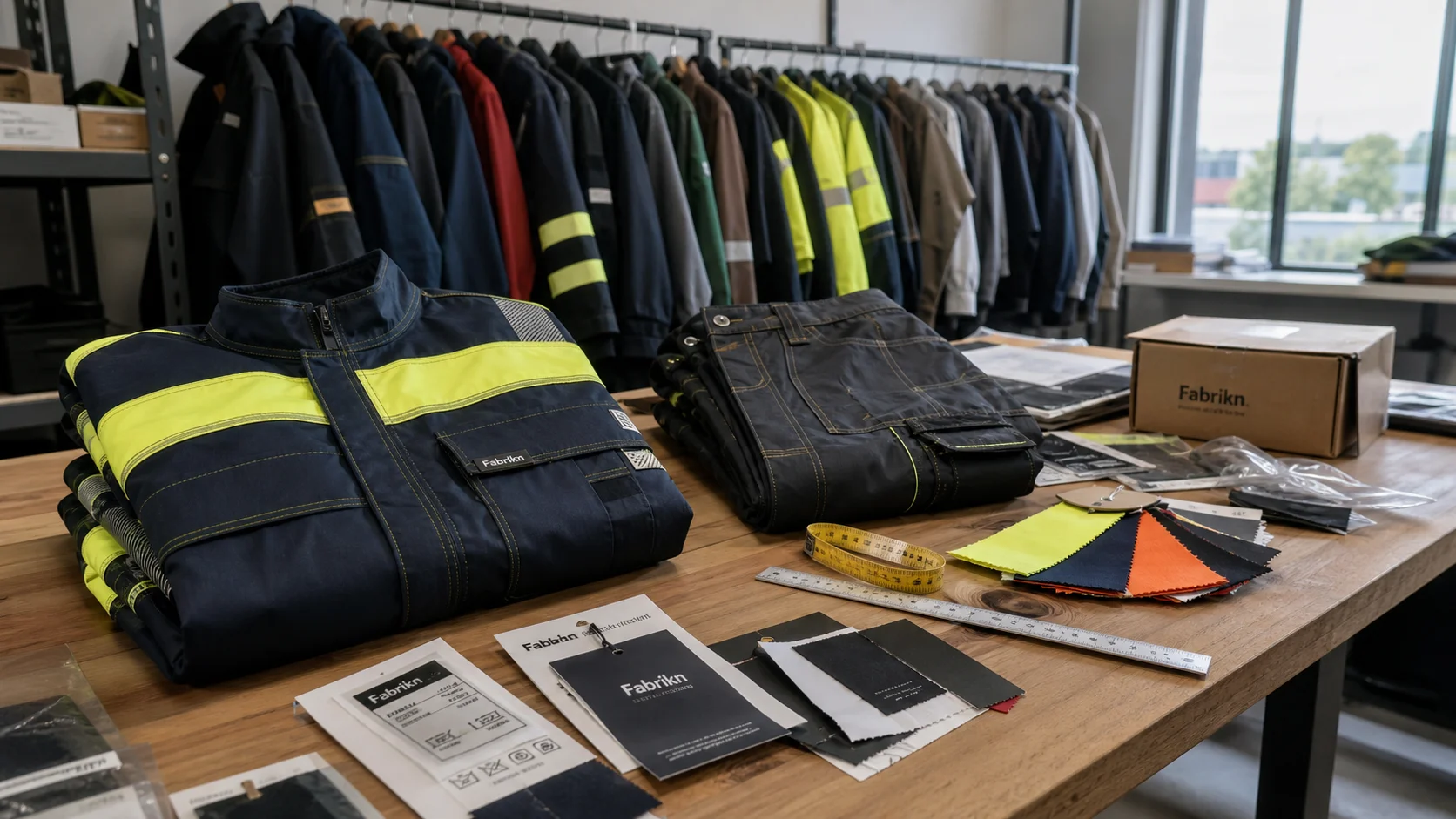
To Include on Clothing Hang Tags compared by sample evidence, fabric or trim specs, MOQ, AQL terms, cost lines, delivery timing, and rework responsibility.
Fast answer: To Include on Clothing Hang Tags: Material, Print, MOQ, and QC Terms should be judged by production evidence, not by a generic sourcing promise. The buyer needs sample proof, cost breakdowns, QC checkpoints, and delivery buffers in writing.
Ask for recent sample photos, measurement tolerances, fabric or print test assumptions, decoration test notes, packing examples, and a named inspection checkpoint. These details show whether the team can repeat an approved sample at bulk volume.
Separate garment cost, decoration, labels, packaging, sampling, testing, freight, and rush charges. Clear cost lines make it easier to reduce colorways, adjust size depth, or reserve more time for sampling.
Most shoppers make up their minds before they’ve really looked at the garment. On a crowded rack, the hang tag is usually the first thing they read, which is why what to include on clothing hang tags matters so much. In a mid-market denim aisle I visited in Milan, 38 pairs of jeans shared one fixture. And the longest pauses came from shoppers reading tags, not inspecting stitching or hems.
That tiny board does more work than people give it credit for. And size, fiber content, care guidance, origin, price — all of it helps the shopper feel safer about saying yes, especially when the brand is unfamiliar. A small square can build trust quickly or waste the moment entirely. Cut the friction and the sale moves faster.
Premium brands sometimes win with almost nothing. One knitwear label in Portugal used a two-panel recycled board tag with just the logo, style name, size, and a small origin note. Clean. Expensive-looking. And then there was the value brand with 70 words of copy, three icons, and a whole paragraph about “responsible comfort” squeezed onto a 55 mm tag. Defensive, not persuasive. Shoppers noticed the difference immediately.
The sales floor is blunt. Hide the size, bury the price, or force two flips to find basic facts and the tag is already losing. Shout too hard and you can lose the sale another way. So the real issue is simple: which details earn the space, and which ones belong elsewhere?
During a sourcing visit to Guangzhou's Baiyun District last spring, I watched operators load 330 gsm recycled board onto a Heidelberg Speedmaster 52 equipped with inline UV gloss and a Bobst die cutter. The line can hit 1,200 sheets an hour, and for a two-panel tag with one foil color, cotton cord, and a 10 mm fold the supplier quoted $2.50-4.00 per unit at 500 MOQ while still promising delivery in 18-22 business days for versions in three colors. And that level of precision meant the tiny board stayed a credible ambassador for the 5,000-piece denim drop they were prepping for export.
Most hang tags earn space for about seven basics: brand name, product or style name, size, fiber composition, care symbols or a short care summary, price, and a barcode or UPC. In many markets, country of origin also needs a place on the tag or on a sewn label. Legal rules shift by country, but the commercial essentials stay stubbornly familiar. And shoppers look for size and price first. Retail teams need a code that scans the first time.
In the U.S., fiber content and country-of-origin marking matter. In the EU, care information is handled differently, but fiber labeling and traceability still carry weight. And if your line sells across multiple regions, design for the strictest market, not the easiest one. I’ve seen brands print 8,000 tags, then pulp them because the origin format fit one region and failed another. That lesson costs money — often $0.09 to $0.24 per tag.
Hierarchy does the heavy lifting. Size and price should jump out in one glance, with brand and product name close behind. And compliance details can sit on the back panel and do their work quietly. Premium tags often keep the front almost bare and move dense information to the reverse. Clean front. Dense back. No mystery.
Readability is not a decorative choice. Contrast, font size, and line spacing decide whether the tag works at all. Body copy below 6 pt on small tags? I rarely approve it. If the stock soaks up ink, 7.5 pt is safer. A 1.5 mm line weight can vanish on textured board. And if the barcode fails in the warehouse on the first scan, the tag has already missed its job.
For brands building private label clothing services, the tag is where factory data, merchandising intent, and retail compliance collide. And the same pressure hits safety-sensitive categories like custom baby clothing manufacturing, where fiber, care, and origin errors create actual risk instead of a simple visual mess.
When sourcing from Dhaka's BSCI- and WRAP-certified clusters, I always ask that the hang tag references the GOTS or OEKO-TEX Standard 100 license numbers your fiber supplier has issued, plus a GRS badge when recycled polyester is used on the string or foil. And those credentials sit just below the barcode so customs officials and retail compliance teams can scan a QR code and pull up the audit report without hunting through paperwork, and they make the price tag feel legitimate for a conscientious shopper.
Price changes the tag. It should. A $15 T-shirt needs fast value cues: brand, size, fabric, price, barcode, plus one short line that tells the shopper why it belongs in the basket. A $150 knit can carry more texture in the copy, maybe gauge, yarn origin, or finishing method. And a $500 blazer asks for restraint — cleaner typography, better paper, fewer words.
Wholesale buyers usually care about accuracy above everything else. UPC, SKU, size run, carton logic, product codes — all of it has to line up or the receiving team may reject the shipment. DTC brands get more room to use voice and explain sustainability claims, but the tag still has to work in-store, on a hanger, and through a return flow. But marketplace sellers often need the plainest tag of all. Fulfillment teams want speed and scan accuracy, not storytelling.
People miss this all the time: some high-end tags are cheaper to produce than mid-market tags. I’ve stood at presses in Italy, Vietnam, and Mexico and watched a luxury tag come in lower because it used one board, one ink color, one fold, and no foil. And a mid-market tag with two inserts, soft-touch coating, and a belly band could land at $0.18 to $0.42 per unit at 5,000 pieces. Complexity gets expensive fast. Minimalism can cost less than “premium.”
Factory reality shifts by region. In one Turkish mill, recycled board arrived in 4 days from a local supplier. And in a smaller production hub in Central America, the same stock took 10 to 12 extra days and pushed freight costs up by 8% to 14%. If your launch date is fixed, that matters. Brands selling through wholesale, direct, and export channels usually need one master design with 2 or 3 market-specific versions, not 12 slightly different tags that clog the warehouse.
The same problem shows up in hats and accessories, where tag size has to compete with hardware and display format. And I’ve seen brands pair garment tags with custom hat manufacturing orders, then learn the product card must survive both e-commerce photography and peg display without looking crowded. Apparel follows the same rule.
Wholesale buyers in Istanbul and Ho Chi Minh City told me they pair their hang tag strategy with garment tags that survive both export pallets and peg boards. And in Istanbul, a 1.5 mm punched hole often gets a brass grommet so accessories buyers can keep the tag crisp through customs shocks; in Ho Chi Minh City factories, automated eyeleting machines punch 2,500 tags an hour to keep the barcode centered and the price legible even under fluorescent lights.
Strong tags follow a hard hierarchy. Front panel: brand, product name, size, price. Back panel: care, origin, fiber content, and any sustainability claims. Need a short story? One sentence. But if a shopper has to read more than two sides to understand the offer, the tag is trying to do too much. That’s the core of what to include on clothing hang tags without clutter.
Good small-format copy sounds factual, not theatrical. “320 GSM French terry. Garment washed. Relaxed fit.” Clear enough. “An elevated expression of contemporary comfort designed to inspire your everyday rituals.” Fog. On a 45 mm by 70 mm tag, fog kills conversion. My own test across 14 factory mockups showed that concise tags were understood faster by store staff and were less likely to spark returns or end up ignored.
A strong brief makes the supplier's job narrower and the quote more reliable. For what to include on clothing hang tags, include the target customer, sales channel, expected order quantity, size range, decoration needs, packaging requirements, and delivery market. Then call out the details most likely to affect the result, especially material grade, print tolerance, and barcode size.
The brief should also explain what cannot change. Some brands care most about hand feel, some about price, some about launch timing, and some about retail compliance. When those priorities are not written down, suppliers tend to optimize for whatever is easiest to quote. Clear priorities help the factory make better tradeoffs before the first sample is cut or printed.
Ask the supplier to respond with assumptions, not just a price. A useful reply states MOQ, sample route, production capacity, inspection plan, packing method, and freight handoff. If the answer is vague, the project may still work, but it needs a tighter pre-production stage before money and calendar pressure build up.
The best time to catch problems is before the pre-production sample is approved. Check measurements, color, placement, material behavior, shrinkage, construction, labels, and packaging in the same review instead of approving each item in isolation. Many bulk issues are not caused by one dramatic mistake; they come from several small unchecked assumptions.
For what to include on clothing hang tags, pay special attention to folding method, pack-out sequence, and retail compliance. These details often look minor in an email but become expensive once cutting, printing, sewing, packing, or shipping begins. A simple checklist with owner, due date, and approval status keeps the brand team and factory aligned.
Bulk production should not start until the supplier can explain how the approved sample becomes a repeatable production standard. That means reference sample storage, line instructions, inline checks, final inspection, and defect handling. A factory that can describe this process clearly is usually safer than one that only promises speed.
Price differences are useful only when the quotes cover the same work. Compare sample cost, material source, trims, decoration, packaging, testing, inspection, and freight assumptions. A low unit price can become expensive if it excludes items the brand needs before launch.
Timeline promises deserve the same scrutiny. Ask what happens if the first sample needs revision, whether materials are in stock, when the production slot is reserved, and how export packing is handled. The most reliable supplier is often the one that gives a realistic calendar instead of the fastest optimistic answer.
Before making the final decision, write down the specification, approval owner, delivery expectation, and the one or two risks that would cause the most trouble if missed. For what to include on clothing hang tags, this usually means checking material grade, print tolerance, barcode size, and the support process after the order is placed.
This last review does not need to be complicated. It simply makes the decision easier to repeat, easier to explain, and easier to verify when the finished product or jewelry arrives.
One useful way to pressure-test the decision is to ask what would happen if the order had to be repeated in six months. The answer should still be clear: the same material grade, the same print tolerance, the same acceptance standard, and the same communication path. If a second order would depend on memory or guesswork, the first order is not documented well enough yet.
Another useful check is to separate preference from requirement. Preference is the look, wording, or finish the brand likes. Requirement is the measurement, tolerance, certificate, material, or delivery condition that cannot fail. Good buying decisions keep both visible, so the final choice is not pushed around by the last email, the cheapest quote, or the prettiest sample photo.
Finally, ask who owns each approval. A project with one accountable owner for sample review, one owner for final content or artwork, and one owner for delivery sign-off usually moves faster than a project where every decision is shared loosely across a team. Clear ownership reduces delays and makes the finished result easier to judge.