
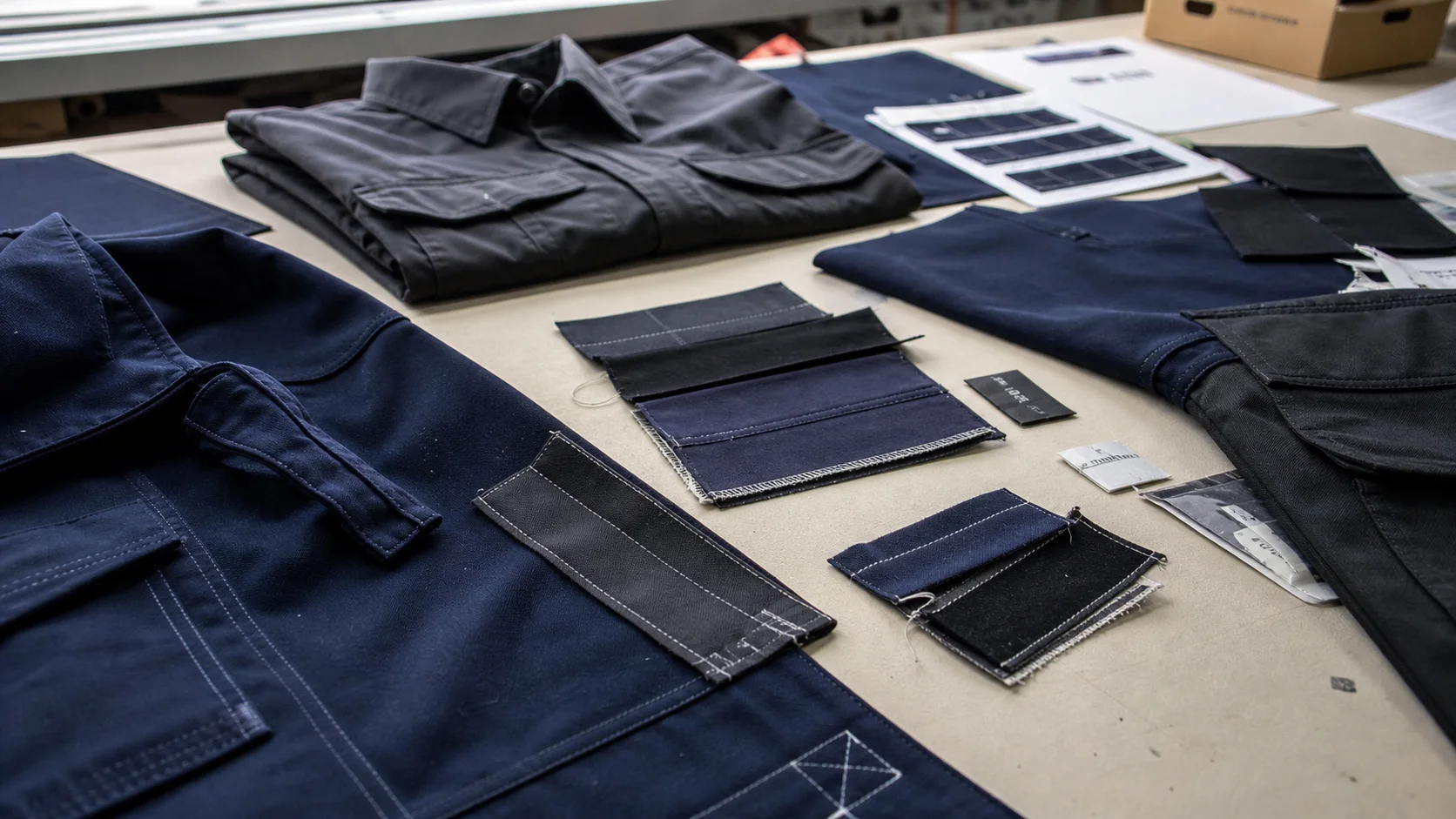
A sourcing-focused outline for security contractors evaluating workwear uniform size grading, fit consistency, cost impacts, and MOQ risks before placing...
Workwear Size Grading Review for Security Buyers - Fabrikn production reference
Security contractors buy uniforms under a different set of pressures than fashion retailers. The uniform must look consistent across a large team, survive shift work, allow movement, support radios or ID systems, and fit staff with very different body shapes. A clean size grading plan is not a cosmetic detail. It affects staff presentation, replacement stock, wearer comfort, order accuracy, and the total landed cost of the program.
For buyers sourcing from a workwear uniform manufacturer, size grading is one of the first areas to review before confirming bulk production. A factory can offer an attractive unit price and still create problems if its grading rules are too narrow, inconsistent, or copied from casualwear blocks that do not suit security duties. Tight shoulders, short shirt lengths, oversized trousers, poor waist grading, or sleeves that become too long in larger sizes can create complaints across the contract.
Security buyers should treat size grading as a commercial risk area, not just a technical pattern issue. A poor grading system increases returns, urgent reorders, field alterations, and staff dissatisfaction. It can also damage the contractor’s image in front of property managers, event operators, transport clients, and corporate facilities teams.
Good grading does not mean offering every possible size. It means building a controlled size range that matches the workforce profile, garment function, fabric behavior, and the buyer’s budget. That balance is especially important where minimum order quantities, color requirements, reflective trims, badges, embroidery, and contract deadlines all compete for attention.
Purchasing judgment: if a manufacturer cannot explain how its security shirt, trouser, jacket, and vest sizes are graded, do not approve bulk production based only on a medium sample. Ask for the grade rule, full measurement chart, and selected size set samples before committing.
Size grading is the method used to increase or decrease a base pattern into a full size range. In practical terms, it determines how much the chest, waist, hip, shoulder, sleeve, inseam, thigh, rise, and body length change from one size to the next. In workwear, the grading method must protect movement and durability as sizes move up and down.
A manufacturer normally starts from a base size. For men’s or unisex security uniforms, this might be M, L, or 40 chest depending on the market. For women’s fitted garments, the base size might be 10, 12, or M. The pattern maker then applies grade increments. A shirt may increase by 4 cm in chest circumference between sizes, while a trouser waist may increase by 5 cm or 2 inches depending on the size system.
The issue is that not all body areas should grade at the same rate. Shoulders may increase less than chest. Sleeve length may increase gradually rather than dramatically. Trouser rise may need controlled grading so larger sizes are comfortable without becoming baggy. If a manufacturer uses basic fashion grading without workwear adjustments, the garment may look acceptable on one sample model and fail across a real workforce.
Alpha sizing is easier for stock control, but it is less precise for trousers and formal shirts. Numeric sizing improves fit but creates more SKUs, higher inventory exposure, and often higher MOQ pressure. Dual sizing reduces SKU count but can look loose or inconsistent, especially for front-of-house security roles.
A security uniform range often includes polo shirts, woven shirts, tactical shirts, trousers, softshell jackets, bomber jackets, hi-vis vests, knitwear, caps, belts, and sometimes body armor covers. Each garment needs a different grading review because the wearer’s movement and presentation requirements vary by role.
Polo shirts are common for guarding, retail security, campus teams, and event staff. They need enough chest and bicep ease for long shifts, radio use, and arm movement. A too-tight polo looks unprofessional and may shrink further after washing. A too-loose polo can look casual and may distort embroidered logos.
Typical fabric specs include 180–240 gsm cotton pique, polyester-cotton pique, or moisture-wicking polyester. Polyester-rich polos normally hold dimensions better than cotton-rich polos, but they may feel warmer unless the knit and finish are selected carefully. Buyers should check shrinkage tolerance, colorfastness, collar recovery, and logo placement across sizes.
Woven shirts need closer control. Sleeve length, collar size, chest ease, shoulder slope, and body length affect daily comfort. Security staff may wear shirts tucked in, so the body length must not grade too short in larger sizes. If epaulettes, pen pockets, radio loops, or badge tabs are included, their placement must remain balanced across the full size range.
Common fabrics include 100% polyester, polyester-cotton poplin, polyester-viscose blends, and stretch shirting. Stretch fabric can improve comfort, but it should not be used to hide poor grading. Buyers should still request garment measurements after wash and check whether fusible interlinings, collars, and cuffs remain stable.
Trousers create the highest fit risk in many uniform programs. Waist, seat, thigh, rise, knee, hem width, and inseam combinations all matter. Security workers may stand for long periods, climb stairs, sit at control desks, patrol outdoors, or carry small equipment. The pattern must provide enough seat and thigh ease without looking oversized.
Numeric waist sizing with two or three inseam options gives the best fit but creates more SKUs. Alpha-sized trousers are easier to manage but often produce more wearer complaints. Elasticated side waists can reduce size pressure, yet they may look less formal. The right choice depends on the contract environment.
Security jackets are often worn over shirts, polos, knitwear, or light body armor. Size grading must allow layering. A jacket approved only over a thin sample shirt may become tight in winter use. Buyers should define whether the jacket fit is “shirt fit,” “sweater fit,” or “layering fit.” That decision changes chest, shoulder, sleeve, and armhole measurements.
Common materials include 150–300 gsm softshell, polyester oxford with PU coating, quilted lining, fleece lining, or waterproof breathable laminates. Trim specifications may include YKK or equivalent zippers, reflective tape, detachable hoods, storm flaps, badge holders, and internal pockets. Each trim adds cost and inspection points.
Vests often use dual sizing because they are worn over other garments. That can work for general security use, but front desk, concierge, and corporate security roles may require a sharper fit. Hi-vis garments also need reflective tape alignment to remain compliant and visually consistent. Size grading should not distort tape position or pocket access.
Security contractors should plan the size range before negotiating bulk cost. A common mistake is to ask for a low unit price first, then add extended sizes, extra inseams, women’s cuts, and replacement stock later. That sequence usually causes delays and price changes.
A practical first step is to review workforce data without relying on assumptions. Buyers can collect current uniform issue records, returned garment data, alteration notes, and wearer feedback. If the contract is new, build a size forecast using recruitment profiles and allow a buffer for unusual sizes. The buyer should avoid over-ordering slow-moving sizes, but under-ordering extended sizes creates operational headaches and can leave staff without compliant uniforms.
Extended sizes often cost more because they use more fabric, may require separate patterns, and sometimes fall outside standard production markers. Larger outerwear sizes can increase fabric consumption noticeably, especially with quilted linings or waterproof shells. That does not mean buyers should avoid extended sizing. It means the cost should be visible in the quotation rather than discovered after the order is placed.
Minimum order quantities are directly affected by size grading, color, fabric, trims, and logo method. A manufacturer may quote a total MOQ for a style, but the real issue is often MOQ per color, per fabric, per trim setup, or per size ratio. Security buyers should clarify this early.
Uniform Item Typical MOQ Range Size Grading Cost Pressure Buyer Risk Polo shirts 100–500 pieces per color Moderate; extended sizes increase fabric use and logo placement checks Shrinkage, collar shape, logo distortion, inconsistent length Woven shirts 200–800 pieces per color Higher if collar sizes, sleeve lengths, or women’s cuts are added Tight shoulders, short tails, pocket misplacement Trousers 300–1,000 pieces per fabric/color High due to waist and inseam SKU complexity Poor rise grading, inconsistent inseam, seam stress Softshell jackets 100–500 pieces per color High because larger sizes consume more shell and lining fabric Restricted arm movement, zipper waviness, sleeve length variation Hi-vis vests 300–1,000 pieces per color/spec Moderate if dual sizing is used Reflective tape misalignment, loose fit, compliance labeling issuesThese MOQ ranges are indicative, not universal. A factory using stock fabric may accept lower quantities. Custom-dyed fabric, special reflective tape, non-standard pocketing, contrast panels, and bespoke packaging can push MOQs higher. A security contractor ordering for multiple sites may reduce risk by consolidating demand into one approved specification rather than letting each site order slightly different uniforms.
There is a tradeoff between SKU precision and inventory control. More sizes improve wearer fit but increase leftover stock. Fewer sizes simplify purchasing but can create poor fit and higher complaints. For a security contractor, the best answer is usually a controlled core range plus planned support for outlier sizes. That gives most staff a reliable fit without turning the uniform store into an unmanageable warehouse.
Buyers should be careful with unusually low quotes that do not mention extended sizing. The missing cost often returns later as a surcharge, production limitation, or downgraded fabric. A clearer supplier conversation at the quotation stage is usually cheaper than repairing problems during rollout.
A full measurement specification is the buyer’s main protection against uncontrolled grading. It should include the finished garment measurements for each size, the measuring method, and the tolerance allowed in production. For workwear, tolerances must be realistic. Too tight a tolerance may be impractical for bulk sewing. Too loose a tolerance makes the spec nearly meaningless.
Measurement charts should state whether dimensions are taken flat or as full circumference. They should also state whether the garment is measured before wash, after wash, or both. This matters for cotton-rich polos, shirting, and stretch fabrics. A shirt that fits at delivery but shrinks after five industrial washes is not properly approved.
Security buyers should request the manufacturer’s grade rule, not just the finished chart. The grade rule shows how each measurement changes between sizes. If chest increases are reasonable but sleeve lengths jump too much, the issue can be corrected before bulk cutting. If trouser waist grading is acceptable but the rise barely changes across larger sizes, comfort problems are likely.
Sampling is where size grading problems should be found. Approving only one attractive sample is not enough for a security uniform program. The sample process should move in stages so corrections are controlled and documented.
Sample Stage Purpose Buyer Action Common Risk Proto sample Check design, fabric direction, construction concept, and general fit Review base size against required spec Approving style before confirming function Fit sample Correct body measurements and movement ease Fit on relevant wearer profile or mannequin standard Ignoring range of motion Size set sample Review grading across selected sizes Check small, base, large, and extended sizes Only checking medium or large Pre-production sample Approve final fabric, trims, logo, packaging, and workmanship Sign off before bulk cutting Late trim changes affecting fit or durability Shipment sample Compare bulk output with approved sample Retain for future reorders and dispute control No reference sample for repeat ordersFor security contractors, size set sampling is particularly important. A reasonable minimum is to review the base size, one smaller size, one larger size, and one extended size. For trousers, include at least one larger waist and one shorter or longer inseam if the program uses inseam variations. For jackets, test the garment over the intended underlayers.
Wearer trials can be useful, but they should be structured. Ask staff to test sitting, walking, reaching, bending, radio use, pocket access, belt compatibility, and wash performance. Casual comments such as “feels fine” are not enough. A short feedback sheet helps buyers identify whether the issue is grading, fabric, construction, or personal preference.
Approval records should include dated comments, revised measurement charts, fabric references, trim cards, logo artwork, and photos of approved samples. This is not paperwork for its own sake. It prevents the common problem where a reorder arrives slightly different and nobody can prove which version was approved.
Size grading cannot be reviewed separately from material choice. Fabric stretch, recovery, shrinkage, thickness, and drape all influence fit. A grading rule that works in a lightweight polyester-cotton poplin may not work in a heavier ripstop. A trouser pattern approved in stretch twill may feel restrictive if switched to non-stretch fabric.
Trim selection also affects fit and service life. Zippers should be strong enough for repeated use, especially on jackets. Buttons should not crack during laundering. Reflective tape should remain attached and aligned. Elastic should recover after repeated wear. Waistband fusing, pocket bags, hook-and-loop closures, badge tabs, and drawcords should be reviewed as part of the garment specification.
Construction choices can improve or weaken grading performance. Gussets, action backs, articulated knees, side waist elastication, and shaped seams may improve movement. They also add cost and sewing complexity. A contractor outfitting mobile patrol officers may justify these features. A contractor supplying static reception guards may prefer cleaner formal styling and lower garment bulk.
Logo application needs special attention across sizes. Embroidery may pucker on lightweight knits or stretch fabrics. Heat transfers must be tested for wash durability. Woven badges need consistent placement, especially if pocket positions grade. Reflective branding should not interfere with compliance tape. For more structured support on specification development, buyers can review Fabrikn’s uniform manufacturing capabilities at https://fabrikn.com/services/.
Inspection should confirm that the approved grading has been followed in bulk production. Many uniform problems are not visible from a carton count. They appear when staff start wearing the garments. A practical inspection plan reduces that risk before shipment.
AQL inspection can be useful, but the buyer should define measurement checks clearly. If only appearance defects are counted, size grading defects may pass unnoticed. Measurement audits should include critical points such as chest, waist, inseam, body length, sleeve length, and shoulder width. For trousers, rise and thigh measurements are often where comfort issues hide.
Shade variation is another risk. If larger sizes are cut from a different fabric roll, the uniform team may look inconsistent when standing together. This matters for front-facing security contracts. Buyers should ask how the manufacturer controls fabric lots and whether shade bands are used during cutting.
Packaging errors can also undermine the rollout. A correct garment in the wrong size bag creates distribution confusion. Site-level packing can help larger contractors, but it must be checked carefully. Size stickers, barcodes, wearer names, and carton labels should be specified before packing begins.
Purchasing judgment: do not let the inspection plan focus only on stitching and stains. For security uniforms, measurement consistency, size labeling, shade control, and logo placement are just as important as general workmanship.
Security contractors need a supplier that can manage repeatable sizing over time. One successful first order is useful, but the real test is whether the manufacturer can reproduce the same fit six months later when the contractor needs replacements, new starters, or an expanded site rollout.
Buyers should ask whether patterns are digitally stored, whether approved measurement charts are version-controlled, and whether the supplier keeps reference samples. If the supplier changes fabric mills, trims, or production lines, the buyer should require notification before production. Small changes can affect fit. A slightly heavier fabric may reduce comfort. A different waistband elastic may change trouser fit. A new collar interlining may alter shirt appearance.
The best sourcing decision is not always the lowest price. A low-cost uniform that needs frequent replacement or causes fit complaints can be more expensive across the contract. On the other hand, over-engineering every garment with too many sizes, trims, and special cuts can create unnecessary cost and stock complexity. The goal is a reliable specification that fits most wearers well and gives the buyer a process for managing exceptions.
A sensible sourcing route is to standardize the core garments first: shirts or polos, trousers, and outerwear. Once those are stable, add optional pieces such as knitwear, caps, rainwear, or tactical accessories. This prevents the team from approving too many styles before the base fit is reliable.
Contractors comparing manufacturer options should also assess communication speed, technical documentation, sampling discipline, and willingness to discuss realistic tolerances. A supplier that pushes for bulk approval before size set review may not be suitable for a serious security program. Buyers can start a structured discussion with Fabrikn through https://fabrikn.com/contact-us/ or review company background at https://fabrikn.com/about-us/.
Before placing a bulk security uniform order, buyers should confirm the technical and commercial details that directly affect size grading. This checklist is intended for purchasing teams, operations managers, and uniform coordinators who need a practical review before committing cost.
Lead time depends on more than sewing capacity. For security uniform programs, the main drivers are fabric availability, dyeing, trim sourcing, sampling rounds, logo approval, size set corrections, testing, and packing requirements. A basic stock polo with embroidery may move quickly. A custom-dyed softshell jacket with reflective trim, multiple sizes, and site-level packing will take longer.
Typical production lead times may range from 3–6 weeks for simple garments using available fabric, 6–10 weeks for custom workwear styles, and 10–14 weeks or more where fabric development, testing, or complex trims are involved. These ranges are only planning references. Buyers should ask the manufacturer to break down the schedule by fabric, trims, sampling, bulk cutting, sewing, finishing, inspection, and shipping.
Size grading affects lead time when samples require correction. If the base size is approved but the extended size fails, the pattern must be revised before bulk cutting. Rushing this step is a false economy. Once bulk fabric is cut, fixing grading problems becomes expensive or impossible.
A phased rollout can reduce risk. The buyer may approve a pilot quantity for one site, monitor wearer feedback, then place the larger order. This approach can be useful for long-term contracts, although it may raise unit cost if the first order is below the manufacturer’s preferred MOQ. The tradeoff is cost versus risk control.
A workwear uniform manufacturer size grading review for security contractors should be treated as a core sourcing task. The goal is not to create a complicated technical file for its own sake. The goal is to buy uniforms that fit consistently, present the security team professionally, and remain repeatable across new starters, replacement orders, and contract expansions.
Security buyers should focus on the practical controls: a clear size range, a complete measurement chart, realistic grade rules, size set samples, fabric and trim specifications, and inspection checks that include measurements. MOQ and cost negotiations should account for extended sizes, women’s blocks, trouser inseams, logo setup, and replacement stock from the beginning.
The strongest purchasing position is a balanced one. Avoid vague “standard sizing” promises, but do not create unnecessary SKUs without a workforce reason. Approve the fit before bulk cutting, keep reference samples, and build a reorder process that protects consistency. That is how security contractors reduce uniform complaints, avoid avoidable cost, and maintain a professional appearance across every site.
Get a free quote from Fabrikn — your trusted B2B clothing manufacturer with 10+ years of experience. MOQ as low as 200 pieces.
Get a Free Quote →Size grading is the process of increasing or decreasing a base garment pattern into a full size range. For security uniforms, it controls measurements such as chest, waist, hip, shoulder, sleeve, inseam, rise, and body length. Good grading helps the uniform fit different staff while keeping the same professional appearance.
Many contractors use XS to 4XL for polos and jackets, with extended sizes up to 5XL or 6XL where needed. Trousers often require waist sizes from about 28 to 46 inches, with larger sizes depending on the workforce. The best range should be based on staff data, current issue records, and contract requirements.
Extended sizes can increase cost because they use more fabric and may require separate pattern work or production handling. The impact is usually higher for jackets, trousers, and lined garments than for simple polos. Buyers should ask suppliers to show any extended-size surcharge clearly in the quote.
Typical MOQs may range from 100–500 pieces for polos or softshell jackets, 200–800 pieces for woven shirts, and 300–1,000 pieces for trousers or hi-vis garments. Actual MOQ depends on fabric availability, color, trims, logo method, size range, and whether the design is custom or based on stock materials.
Trousers involve waist, seat, thigh, rise, knee, hem, and inseam measurements. Staff also move, sit, climb stairs, and wear belts or equipment. A small grading error in rise or thigh can create discomfort even when the waist size seems correct.
Separate blocks are worth considering when the workforce includes enough women to justify the additional SKUs and sampling. Women’s shirts and trousers based only on smaller men’s grading often fit poorly. The buyer should balance fit improvement against MOQ, inventory, and budget.
Buyers should normally review a proto sample, fit sample, size set sample, pre-production sample, and shipment sample. At minimum, do not approve bulk production without checking the base size and selected sizes above and below it, including an extended size if extended sizes are part of the order.
Fabric affects shrinkage, stretch, drape, and wearer comfort. A pattern that works in stretch twill may feel tight in non-stretch fabric. Cotton-rich knits may shrink more than polyester-rich fabrics. Buyers should confirm fabric specs and test shrinkage before final approval.
The main risks are incorrect measurements, wrong size labels, shade variation, poor logo placement, weak seams, faulty zippers, reflective tape misalignment, and packing errors. Inspection should include measurement checks across multiple sizes, not just visual workmanship review.
Use workforce size data, approve a complete measurement chart, check size set samples, run structured wearer trials, and keep replacement stock in the most common sizes. Clear issue records also help improve future size ratios and reduce leftover inventory.