
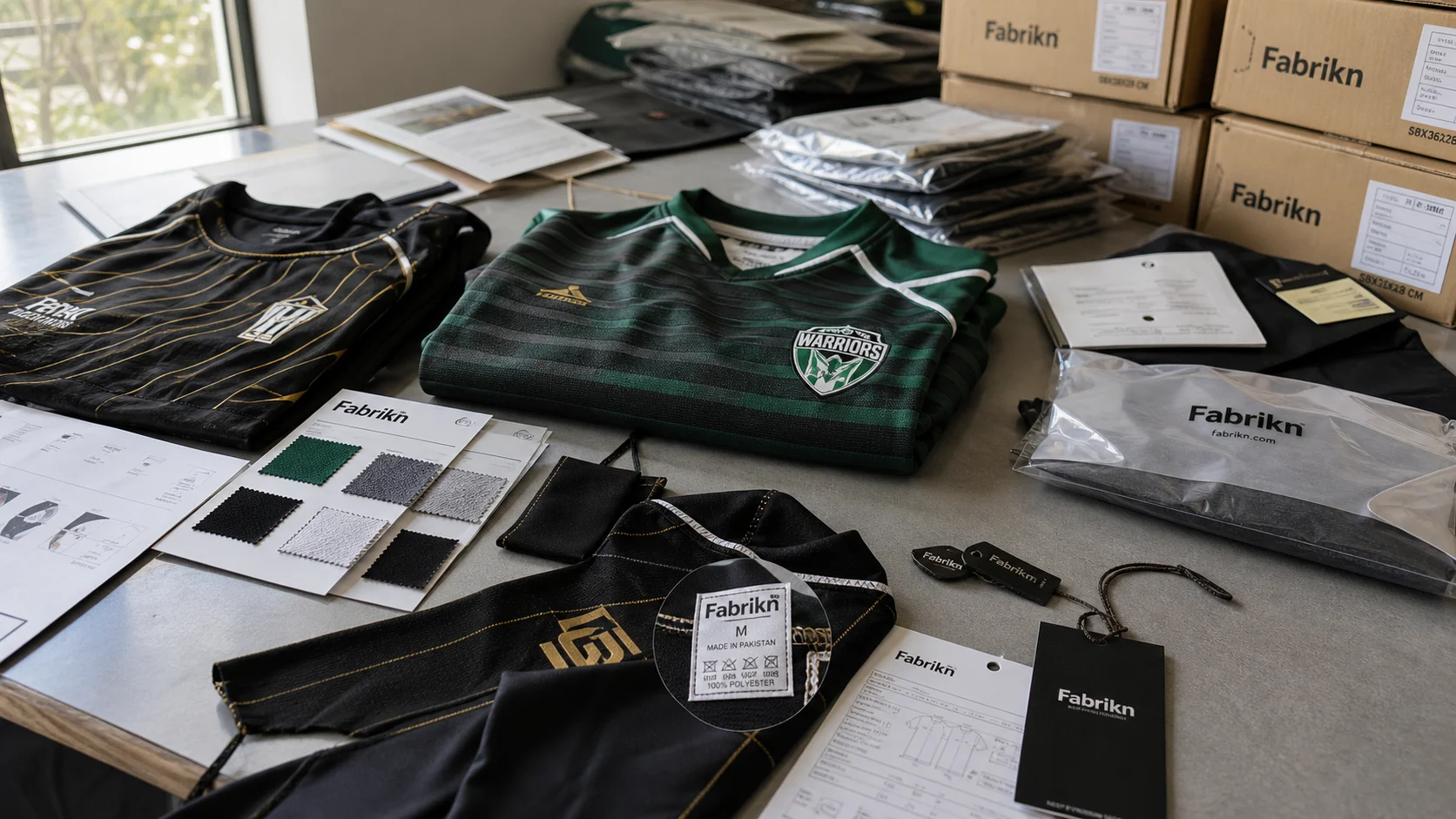
Apparel Grading and Marker Making with checks for samples, fit, MOQ, QC evidence, pricing terms, and delivery risk.
Fast answer: Apparel Grading and Marker Making: Size Rules, Fabric Yield, Cost, and Speed should be judged by production evidence, not by a generic sourcing promise. The buyer needs sample proof, cost breakdowns, QC checkpoints, and delivery buffers in writing.
Ask for recent sample photos, measurement tolerances, fabric or print test assumptions, decoration test notes, packing examples, and a named inspection checkpoint. These details show whether the team can repeat an approved sample at bulk volume.
Separate garment cost, decoration, labels, packaging, sampling, testing, freight, and rush charges. When every cost line is visible, it becomes easier to reduce colorways, adjust size depth, or reserve more time for sampling.
I once watched a fleece hoodie vanish from size M in 48 hours, then creep back in waves at XL because the grade rules were built from one sample fit and nobody stress-tested the armhole or body length at scale. That is where an apparel grading and marker making service stops being a back-office line item and starts shaping returns, margin, and brand trust for a manufacturer, factory, or supplier.
Grading scales a base pattern across sizes while keeping silhouette, balance, and ease intact. A good grader does not just add 1 inch here and 1.5 inches there; they protect the garment’s shape as the size run expands. Across XS to XXL, a 0.5-inch mistake in shoulder slope can pull a sleeve forward, distort the neckline, and make the same style feel off even when the numbers look close on paper. In e-commerce, that drift turns into returns fast.
Marker making carries the same weight, even if fewer people talk about it. A marker plan decides how pieces sit across fabric width, how much dead space remains, and whether a roll of jersey gives you 82% efficiency or 89%. On a run of 20,000 units, that seven-point gap can mean several thousand dollars in fabric alone. I have seen brands chase a $0.18 sewing saving while losing $0.40 to $0.70 per garment in waste. That math is backward.
Factory audits keep showing the same thing. On cut-and-sew basics, a marker efficiency difference of 3 to 7 points changes gross margin materially, especially on cotton tees, French terry 320 GSM hoodies, and 100% polyester sports sets. In a $6.20 FOB hoodie program, saving 2% fabric can matter more than negotiating a $0.12 labor cut, because fabric usually carries the larger share of total cost.
When I visited factories in Vietnam, Bangladesh, and Portugal, I saw something else too. Silent profit leaks rarely come from one dramatic mistake; they come from tiny mismatches. A grade rule ignores shrinkage. A marker fails to account for nap. A size chart gets copied from a competitor. A sample is approved too quickly. Brands often blame manufacturing for fit inconsistency, but the error usually begins much earlier, in pattern logic.
According to ISO, measurement consistency and documented process control are central to repeatable product quality. Dry wording, sure. But it is the difference between a one-time customer and a refund request.
For brands comparing custom cut and sew manufacturing partners, this is why grading and marker work should be treated as part of production planning, not as a separate admin task.
The standard workflow starts with base pattern review. A pattern engineer checks the tech pack, size spec sheet, POM list, stitch details, fabric width, and shrinkage allowance before any grading begins. If the base size is unstable, everything downstream becomes guesswork. I have seen teams jump straight into grading and then spend 2-3 extra rounds fixing neck width, inseam balance, and crotch depth. That is a self-inflicted delay.
Next comes grade rule creation. This is where the team defines how much each measurement shifts between sizes. A women’s woven blouse might need 0.5 inch across the bust and 0.25 inch at the shoulder, while a men’s relaxed hoodie may need 1.0 inch at the chest but only 0.125 inch at cuff opening. Shrinkage allowance matters too. A 3% knit shrink and a 1% woven shrink do not get treated the same, and fabric width data changes the marker strategy before bulk cutting ever starts.
Then the team tests the grade. Good factories build a size set file, check tolerances, and compare the graded patterns against fit comments. If the sample room says the size L is too long by 1.5 cm or the hip ease is 4 cm short, the grader revises the rule rather than patching one size by instinct. That distinction saves time later.
Marker planning comes after the patterns are stable. Solids are the easiest case. Prints need motif alignment. Stripes need balance and matching at side seams. Directional fabrics, such as brushed fleece or nap fleece, require one-way layout and often sacrifice efficiency to maintain appearance. Plaids can be brutal; I have seen factories lose 6 points of yield simply because they tried to force a plaid match into a marker planned for solids.
Fastest is not always cheapest. The teams that slow down for two review gates usually produce fewer reworks, fewer correction rounds, and shorter total lead times. A marker plan approved in 24 hours can be more expensive than one approved in 72 hours if the first version causes a full re-cut.
Buyers should expect clear deliverables: graded patterns, size set files, marker plans, consumption reports, and written approval comments. If a supplier cannot produce those files, the process is still informal. I would rather see a disciplined workflow than a promise of speed. You can pair that process with cut and sew manufacturing only after the grading logic is locked.
For sourcing teams building a wholesale or bulk program in China or elsewhere, the safest production schedule is the one that allows a full review of grading, marker efficiency, and sample fit before fabric is committed.
Pricing usually splits into two structures: flat fee per style or per-size-set pricing for grading, and separate charges for marker making tied to style complexity, size run, and fabric type. In my audits, simple tee grading might land at $25-$60 per style, while more technical outerwear can run $80-$180 once the engineer has to manage multiple panels, lining, and seam allowances. Marker making may add another $15-$75 depending on fabric width, print matching, and revision count.
Low-tier service is often priced for speed, not depth. You may get a basic grade and one marker draft in 24-48 hours, but limited commentary and little tolerance analysis. Mid-tier service tends to include 1-2 revision rounds, a checked size chart, and a more careful consumption estimate. Premium service usually adds pattern-engineering review, fit commentary, and tighter approval checks, often within 3-5 working days rather than same-day turnaround.
The cost drivers are easy to map. More sizes increase labor. A six-size run is not the same as a ten-size run. Fabric width changes the marker geometry. A 44-inch width knit wastes differently from a 60-inch woven. Digitizing adds cost if paper patterns have to be converted. Print matching, stripes, and nap fabrics increase both planning time and waste. Revisions after fit comments can double the effective fee if the buyer keeps changing the base size after approval.
Region matters, but not in the simplistic way people assume. Hourly rates in parts of South Asia can be far lower than in Europe, yet the total cost may rise once communication gaps, sample rounds, and rework are counted. In Portugal or Turkey, hourly rates are higher, but pattern-master depth and faster feedback can cut one whole sampling cycle. That can erase the difference. I have seen a $90 grading job in one region become a $240 job after three rounds of fixes, while a $160 job elsewhere finished cleanly in one pass.
Fabric savings can offset service fees. On an order of 30,000 knit tops, a marker improvement of 2% might save enough yardage to pay for the entire grading and marker package. That is why buyers should compare total landed cost, not the invoice line for pattern work alone.
For new brands that need a tighter cost structure, I often suggest pairing the service with private label clothing services so the fit and cost plan are aligned before fabric is booked. If the supplier gives you a reliable quote, ask them to get a free quote only after you have the tech pack ready.
Quality is measurable. I look first at grade rule accuracy, size tolerance consistency, marker efficiency percentage, and first-pass approval rate. If a supplier cannot tell me their average marker efficiency on similar styles, I assume they have not tracked it. On basic knits, 85%-88% is common. On complex woven styles, 78%-82% may be normal. What matters is whether the number is documented and repeatable.
Red flags appear quickly. A grader using intuition instead of measurement logic usually produces odd jumps between sizes. Ignored fabric behavior shows up in hems that wave after wash or collars that twist after enzyme wash versus stone wash. Rushed markers leave wide gaps, poor grain direction, or pattern pieces forced into awkward positions. Seam allowance changes without matching grade updates are another warning sign. You do not want a factory that trims 0.25 inch off one size and leaves the rest untouched.
Casualwear is forgiving, but not infinitely so. A T-shirt can tolerate slight ease variation, though the shoulder and neckline still need discipline. Tailored garments demand more precision because sleeve head, lapel roll, and waist suppression all interact. Performance apparel is its own category. Stretch recovery, bonded seams, and compression zones can turn a small grading error into a production headache. A 1 cm misread in a leggings rise is not minor when the fabric has 18% spandex.
Buyers should ask for size spec sheets, grading comments, yield reports, and a sample marker before bulk signoff. If the team cannot show before-and-after examples of a revised nest, that is a warning sign. Premium price does not guarantee precision. I have visited modestly priced factories in Asia that outperformed luxury suppliers because the QC desk stopped work at the first mismatch, not the fifth.
The cleanest sign of quality is boring consistency. Same measurements. Same fit. Same marker logic. Month after month.
For verification standards tied to materials and chemical safety, buyers can also review OEKO-TEX guidance alongside factory QC records.
Asia, Europe, and nearshore suppliers behave differently. In many Asian hubs, the service is fast and the CAD capability is strong, especially for high-volume basics and denim. Europe often brings deeper pattern-master expertise and tighter communication on fit nuance, but hourly costs are higher. Nearshore factories in Mexico, Morocco, and Eastern Europe can be a good middle ground for brands that need 3-7 day feedback loops and fewer timezone delays.
Basic knits get the easiest efficiency gains because the pieces are simple and the fabric behaves predictably. A tee in single jersey may gain 4-6 points of marker efficiency with a smarter nest. Structured garments demand more grading intelligence. Jackets, tailored trousers, and pleated skirts need better pattern logic because multiple panels interact with balance and hang. The harder the garment, the less forgiving the price sheet becomes.
Price point changes the service model. Budget brands want throughput. They may accept one fit sample, one grading round, and a lean marker draft. Mid-tier DTC labels usually ask for stronger revision control and more measurement checks because their return rate is visible in Shopify data within days. Premium fashion labels want fit fidelity, multiple prototype rounds, and flexibility when the designer changes silhouette after the first sample.
Here is a simple comparison I use in buying meetings:
The counterintuitive part is that some higher-cost factories deliver lower total landed expense. They cut sampling from 3 rounds to 1 or 2, and they reduce fabric loss enough to offset their fee. Data from Trade.gov and sourcing benchmarks shows that time and waste often matter more than nominal labor price. A supplier charging $140 for grading may save you $500 in fabric and freight if they get the marker right the first time.
For sustainability-minded wholesale programs, checking material standards through Textile Exchange can help align production choices with fiber sourcing goals.
I start with questions about process, not promises. Ask which CAD software they use, how many in-house pattern engineers they have, what turnaround they commit to, and how revision policy works after fit comments. Ask whether the same person who grades your base size also reviews the marker. If the answer is no, find out who signs off.
Then request before-and-after examples from styles close to yours. If you make rib-knit polos, do not accept a marker example from a woven blazer. If you sell French terry sets, ask for graded nests from a similar GSM and fabric width. A 60-inch loopback fleece marker tells you more than a polished brochure. When I work with buyers, I insist on a test order with one style, one fabric width, and one size range before anything scales.
Never outsource to a team that only traces patterns. Tracing is not grading. A real pattern engineer understands fit language, shrinkage, balance, and how a small measurement shift changes the way the garment hangs. Contracts should state who owns the files, how many revisions are included, whether approval must be written, and who pays if fit failures force a re-cut. Those details stop arguments later.
If you need a larger run, compare their sample system against their bulk system. A factory can look competent on one size and still fall apart across 6 or 8 sizes. That is why I often recommend checking the product range first; you can browse our product catalog to sanity-check category fit before you send a tech pack.
For custom apparel, MOQ planning matters too. A supplier that can handle small runs for development and larger bulk programs for production is usually easier to grow with than one that only wants either tiny samples or huge wholesale commitments.
Start by cleaning up the tech pack. Finalize the base size spec, confirm fabric data, define grade rules, and gather measurement tolerances in centimeters and inches. Attach fit photos, reference garments, and wash standards. If your tee shrinks 4% after wash, say so. If your knit relaxes 2 cm after wear, document it. Unknowns create expensive revisions.
Schedule a pre-production review with pattern, merchandising, and sourcing teams before placing the order. That meeting should cover sample calendar, approval gates, target marker efficiency, and who signs off on each step. I also track first-pass sample approval, marker efficiency, and size-related return rate after launch. If returns rise above 8%-10% in one size, the grade rules deserve another look.
The cheapest quote often becomes expensive once samples, re-cuts, and markdowns enter the ledger. I have seen brands save $60 on grading and lose $6,000 in obsolete stock. Fix the pattern logic early. Fix the marker before bulk fabric is cut. Then move.
It usually includes base pattern review, grade rule creation, graded size files, marker nesting, consumption estimates, and revision comments. Many factories also provide a sample marker and size spec sheet. For a 5-size run, expect the workflow to take 3-7 working days if the tech pack is complete.
Basic styles often range from $25-$60 for grading and $15-$40 for marker making. Technical garments can reach $80-$180 for grading and $40-$75 for markers, especially when there are multiple revisions or print matching. Complexity, size count, and fabric width drive the final price.
Simple knit styles can be completed in 24-72 hours. Structured garments, larger size runs, or styles needing fit corrections usually take 5-10 working days. If a supplier needs digitizing or a second fit round, add another 2-4 days.
Check grade accuracy, marker efficiency, first-pass approval rate, and the clarity of their revision notes. Ask for a sample size spec, a graded nest from a similar product, and a yield report. A good provider can explain why their marker saves 2%-5% fabric.
Yes. It is especially useful for private label programs because it keeps fit consistent across repeats and reduces fabric waste on replenishment orders. For a 6-size private label run, a strong grade can prevent returns and cut sampling rounds from 3 to 1 or 2.