
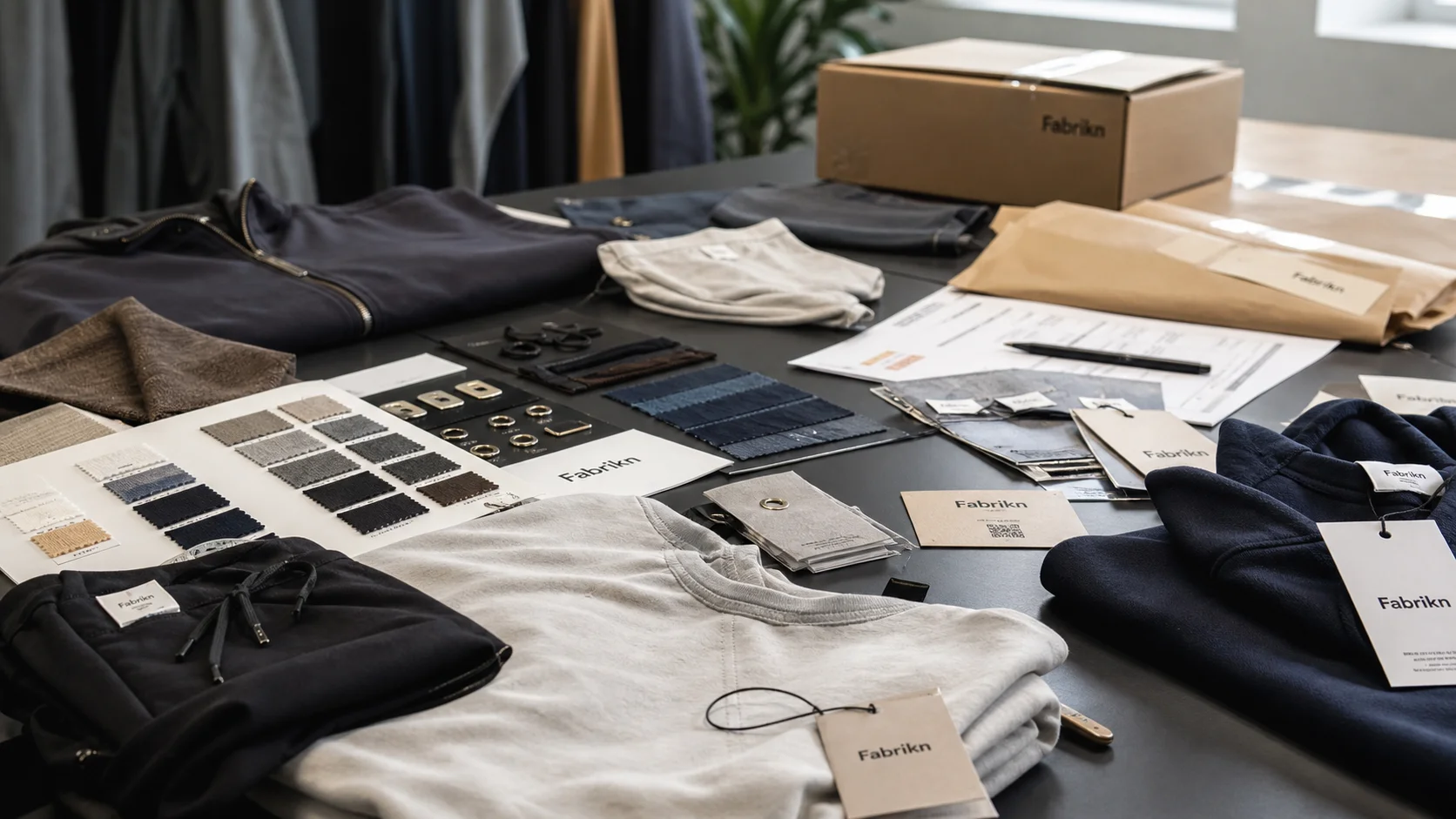
Apparel Manufacturer for Streetwear Brands compared by sample evidence, fabric or trim specs, MOQ, AQL terms, cost lines, delivery timing, and rework...
Fast answer: Apparel Manufacturer for Streetwear Brands: Sample Evidence, MOQ, Capacity, and Rework Terms should be judged by production evidence, not by a generic sourcing promise. The buyer needs sample proof, cost breakdowns, QC checkpoints, and delivery buffers in writing.
Ask for recent sample photos, measurement tolerances, fabric or print test assumptions, decoration test notes, packing examples, and a named inspection checkpoint. These details show whether the team can repeat an approved sample at bulk volume.
Separate garment cost, decoration, labels, packaging, sampling, testing, freight, and rush charges. Clear cost lines make it easier to reduce colorways, adjust size depth, or reserve more time for sampling.
I have watched $68 hoodies fall apart in a sample room before they ever reached a cart. The brand had taste, references, and a polished deck, but the apparel manufacturer for streetwear brands they chose could not keep a kangaroo pocket aligned within 6 mm. That tiny miss turned into a visible defect once the order reached 1,200 pieces.
After 200+ factory visits across eight countries, one thing beats the sales pitch every time: the first sample. It shows whether the manufacturer can turn a tech pack into reality, whether stitch density holds at 10-12 SPI, whether trims are stocked locally or chased for 3 weeks, and whether the fabric shrinks 4% or 8% after wash.
Streetwear fails early, not late. Founders love blaming bulk production, but the prototype already carried the warning signs: sloppy rib recovery, print placement off by 1.5 cm, neck rib twisting after one wash, and a pattern maker who had never graded an oversized tee from XS to XXL.
Premium factories move faster in revision, which catches people off guard. In Vietnam and Portugal, a strong sample room can turn a corrected pattern in 3-5 days. Budget factories may take 10-14 days, then still miss the correction. Pattern skill is the difference. A factory that understands boxy silhouettes, dropped shoulders, and stacked sleeves knows how a 320 GSM French terry hoodie should hang before approval.
Small defects become expensive at scale. A 2 mm shoulder imbalance disappears on one sample and jumps out on 5,000 units. A slightly weak coverstitch can create 3% returns, and even that hurts when gross margin sits at 55% and the reorder window is only 4 weeks.
I have seen the same pattern with private label clothing. Brands assume the label drives the business, but the sample room decides the risk. If the factory cannot control shrinkage, trim sourcing, and measurement tolerance within ±1 cm, the model starts leaking before launch.
A true apparel manufacturer for streetwear brands is not just a cut-and-sew factory for cotton basics. Streetwear asks for heavyweight knits, enzyme washes, pigment dye, puff print, embroidery, applique, garment dye, and boxy silhouettes that still fit cleanly across 5 or 6 sizes. A basic supplier can stitch a T-shirt. An apparel manufacturer for streetwear brands has to understand how a 400 GSM hoodie behaves after washing and pressing.
The technical gap is wide. Streetwear production depends on pattern making, grading, printing, embellishment, dyeing, washing, and QC all working together. If one step is weak, the garment shows it. Embroidered logos pucker when stabilizer choice is wrong. Cargo pockets drift 8 mm between left and right legs when the pattern team treats them like work pants, not fashion product.
This is where category specialization matters. A factory strong in tees may fail on fleece. A knit specialist may be weak on woven cargos. A facility that does cut and sew manufacturing for fashion brands usually understands custom panels, rib engineering, and assembly order better than a general T-shirt shop. For more technical pieces, I have also seen overlap with custom sportswear manufacturing, especially in performance streetwear using mesh, interlock, and bonded seams.
MOQ changes by product type. A basic tee might start at MOQ 300-500 pieces per color in Asia, while an oversized hoodie with custom dye and embroidery may need 500-1,000 pieces per style. In Turkey and Portugal, smaller runs of 150-300 can work, but the unit price rises sharply. An apparel manufacturer for streetwear brands built for 10,000-piece runs is rarely the right partner for a 250-piece drop.
Price point matters too. Entry-level streetwear needs simple construction, fewer trim variations, and more standard fabrics. Premium streetwear uses custom labels, heavier yarn counts, chain-stitched details, and tighter wash control. If a manufacturer cannot explain why French terry 320 GSM feels different from 400 GSM brushed fleece, keep walking. The factory should speak in fabric weights, shrinkage percentages, seam types, and bulk production realities, not slogans.
Before I pay a deposit, I ask for five documents: business license, export history, client references, audit reports, and production photos from the last 90 days. A real factory usually shares them within 24-72 hours. A broker often stalls, edits screenshots, or sends generic workshop images that could belong to anyone.
Then I inspect samples like an auditor, not a fan. I check seam strength by pulling side seams and shoulder seams, collar recovery after stretch, print durability after a 3-wash rub test, shade consistency across panels, and sizing tolerance against the tech pack. For a hoodie, I want measurement variance within ±1 cm on key points. For a T-shirt, I want collar width, body length, and chest width consistent enough that a size run does not drift out of spec.
Data matters. According to AATCC testing standards, colorfastness and dimensional stability are measured, not guessed. If a factory cannot produce wash test results, shrinkage reports, or print adhesion data, they are asking you to trust hope. That is a bad procurement strategy.
Here are the red flags I watch for: vague timelines like “about 20 days,” refusal to review a tech pack, no comments on fabric shrinkage, no photo evidence of previous bulk orders, and no third-party inspection option. If they say MOQ 100 but cannot tell you the fabric source or the dye house, they are probably reselling someone else’s capacity.
One more filter: ask how they handle revisions. A competent factory can usually correct a sample in 1-2 rounds. A weak one needs 4 rounds and still misses the fit. That gap costs money, because every extra round adds sampling fees, shipping, and lost time. On a 500-piece first order, two bad rounds can erase the margin on the whole launch.
I have seen founders rely on email alone. Bad idea. If the supplier is in another country, get a video call, request a live factory walk-through, or hire a third-party inspector for $150-300 per visit. That spend is tiny compared with a $12,000 bulk mistake.
Cost varies less by continent than by capability. In China, an apparel manufacturer for streetwear brands might price a heavyweight tee at $4.50-7.50 ex-factory, a hoodie at $9.50-18, and a heavyweight sweatshirt at $11-22 depending on fabric, print, and trim pack. Vietnam often sits close to China on mature programs, while Turkey can be stronger on speed and smaller MOQ but higher on labor. Portugal usually sits at the premium end, especially for low-volume, high-detail production. Los Angeles can be excellent for short runs, but labor pushes unit costs far above Asia.
The spread is real. A 220 GSM tee in China may cost $2.20-3.80 for simple construction, while the same piece in Los Angeles can reach $7-12 before shipping. A 400 GSM hoodie with embroidery, woven label, and wash treatment can range from $12-20 in Asia, $18-28 in Turkey, and $24-40 in Portugal or the U.S. depending on fabric sourcing and labor mix.
Low MOQ orders usually cost 15-40% more per unit. Why? Because the factory absorbs setup time across fewer pieces. Screen setup, pattern adjustments, wash trials, and trim procurement do not shrink just because the order is small. A 300-piece order may carry the same pre-production burden as a 3,000-piece order, which is why a 250-piece run rarely looks cheap on paper.
Premium streetwear pricing also changes the math. If your retail target is $65-95 for a hoodie, your landed cost needs discipline. At a $14 factory price, $2.50 packaging, $1.20 labels, $3-6 shipping, and 12-18% duty or customs overhead in some markets, the margin can tighten fast. Entry-level streetwear can survive simpler trims and lower GSM. Premium streetwear needs better quality fabric, better washes, and tighter QC from the supplier and production team.
Hidden costs catch brands off guard. Sampling can run $40-150 per piece. Dye tests and lab dips may add $30-120 per color. Rework can add $0.50-2.00 per unit. Air freight for a rushed 500-piece drop can blow past $1,000 in a week. If a manufacturer quotes only sewing, you are seeing half the bill. In my experience, the bill for a streetwear launch is often 20-35% higher than the first quote once all fees are counted.
One more regional nuance: a factory may offer a low headline price, then add costs for custom yarn dyeing, special washes, or branded hardware. I have seen a $8 hoodie quote turn into $13.60 after trim upgrades and wash trials. Transparency beats optimism.
For sourcing context and compliance expectations in international trade, the U.S. International Trade Administration’s guidance at trade.gov is a useful starting point.
Streetwear timelines break in three places: sampling, fabric sourcing, and finishing. A sample can take 7-21 days depending on complexity. Bulk production often needs 30-60 days in Asia, 45-75 in Europe if special fabrics or washes are involved, and 2-6 weeks more for shipping depending on the route. Air freight cuts transit to 3-7 days, but your margin pays for that shortcut.
MOQs differ by category. Tees often start at 300-500 pieces per style per color in China or Vietnam, hoodies at 500-1,000, cargos at 300-600, and heavily washed items may need 800 or more because the dye and wash house wants efficient batch sizes. In Portugal or Turkey, you can sometimes go lower, but only if you accept a higher unit price and fewer fabric choices.
A realistic timeline starts with a 3-5 day tech pack review, then 1-3 weeks for sample development, 1-2 weeks for revisions, 1-3 weeks for fabric booking, 2-6 weeks for bulk production, and 1-4 weeks for shipping and customs. That means a first drop can take 8-16 weeks from first contact to warehouse receipt. If the brand waits until the marketing campaign is ready, it is already late.
Delays usually come from four points: fabric sourcing, wash development, print approval, and inspection. A custom pigment dye can add 7-10 days. A screen print with 6 colors may need multiple approvals because registration and hand feel are not visible on the first strike-off. Inspection can slow a shipment by 2-5 days if the factory missed a measurement or packing rule.
Advance planning cuts pain. Place fabric reservations early, lock artwork before production starts, and approve the lab dip before cutting. I have seen brands lose a drop because they approved the sample in week 6 but did not place the bulk order until week 10. Inventory did not fail. Timing did.
For founders, the smartest move is to plan each release 90 days ahead for Asia or 45-60 days ahead for Turkey, Portugal, or Los Angeles. That buffer covers revisions, freight, and one inevitable surprise.
Quality control is not a final checkpoint. It starts before cutting. A competent apparel manufacturer for streetwear brands should run pre-production approval, inline checks, final inspection, and packaging audit. On bulk orders, I look for AQL 2.5 or better on major defects, with measurement tolerances tight enough to keep sizing consistent across 500 or 5,000 pieces.
For streetwear, shrinkage matters as much as stitching. A hoodie that shrinks 5% in body length after wash can wreck fit. Colorfastness should survive at least 3 home washes without obvious bleeding or fading. Print adhesion should pass rub testing and wash testing, especially on puff print, discharge print, and plastisol graphics. The factory should know the standards and be able to show test reports, not just say “good quality.”
Factory type shapes the outcome. A specialist streetwear facility usually delivers better fit consistency than a general cut-and-sew shop, especially on oversized silhouettes and mixed-fabric pieces. A low-cost factory can still produce acceptable work, but the defect rate tends to rise when wash treatments, embroidery, and heavy GSM fabrics all appear in one order. One bad bulk run can erase a season’s profit faster than weak sell-through.
Data from OEKO-TEX supports the value of controlled chemical testing, especially for brands selling to sensitive skin markets or major retailers. If your supplier cannot discuss fabric testing, azo dyes, or formaldehyde limits, you are buying blind.
For sustainable sourcing and fiber traceability, Textile Exchange standards for responsible materials can help brands evaluate claims from a supplier before they place bulk orders.
My 30-day action plan is simple. Days 1-3: define product specs, choose fabric weights, and build tech packs. Days 4-7: request quotes from three factories, each with the same spec sheet and target MOQ. Days 8-14: order samples, ask for lab dips and print strikes, and compare fit against one approved reference garment. Days 15-21: run wash tests, measure shrinkage, and negotiate terms. Days 22-30: inspect sample corrections, confirm lead time, and issue the first purchase order only after approval.
Shortlist factories by capability, MOQ, communication, and compliance. If one can do 300-piece tees but not 600-piece hoodies, that is not a full-fit partner. If response time is 5 days instead of 24 hours, expect production friction later. I prefer factories that answer in numbers: 400 GSM, 12 days, ±1 cm, MOQ 500.
Use the first email to ask for export history, product photos, sample cost, bulk MOQ, and lead time. Attach a tech pack, reference photos, desired fabric, and target retail price. Then compare three quotes on the same sheet. That removes guesswork.
The last gate is sample approval. Sign only after the sample matches the spec, the factory confirms fabric availability, and the QC plan is documented. I have seen brands rush this step and regret it for 6 months. Do not.
An apparel manufacturer for streetwear brands handles pattern making, sampling, cutting, sewing, printing, embroidery, washing, QC, and packing. For a hoodie or oversized tee, that means managing fabric weight, shrinkage, trim sourcing, and fit grading, not just assembly. A strong factory can usually turn 1 sample into bulk production with 1-2 revision rounds.
For a basic hoodie, factory pricing often ranges from $9.50-18 in Asia, $18-28 in Turkey, and $24-40 in Portugal or the U.S., depending on fabric, wash, embroidery, and MOQ. Low MOQ orders usually add 15-40% per unit. Shipping, labels, and customs can add another $3-8 per piece.
A typical timeline is 7-21 days for sampling, 30-60 days for bulk in Asia, and 3-7 days for air freight or 2-4 weeks for ocean shipping. Special washes, custom dyeing, and print approvals can add 1-3 weeks. A first drop often takes 8-16 weeks from tech pack to warehouse.
Low MOQ options are more common in Turkey, Portugal, and Los Angeles, where factories may accept 150-300 pieces per style, though unit costs rise. In China and Vietnam, 300-500 pieces is more common for tees and 500-1,000 for hoodies. Always confirm whether the MOQ is per color or per style.
Yes, if the factory already handles knitwear, stretch fabrics, prints, and technical finishing. Many streetwear programs overlap with custom sportswear manufacturing because both require fit control and performance testing. Still, ask for separate sample proof on heavyweight fleece, woven cargos, and any garment dye or wash process before committing.