
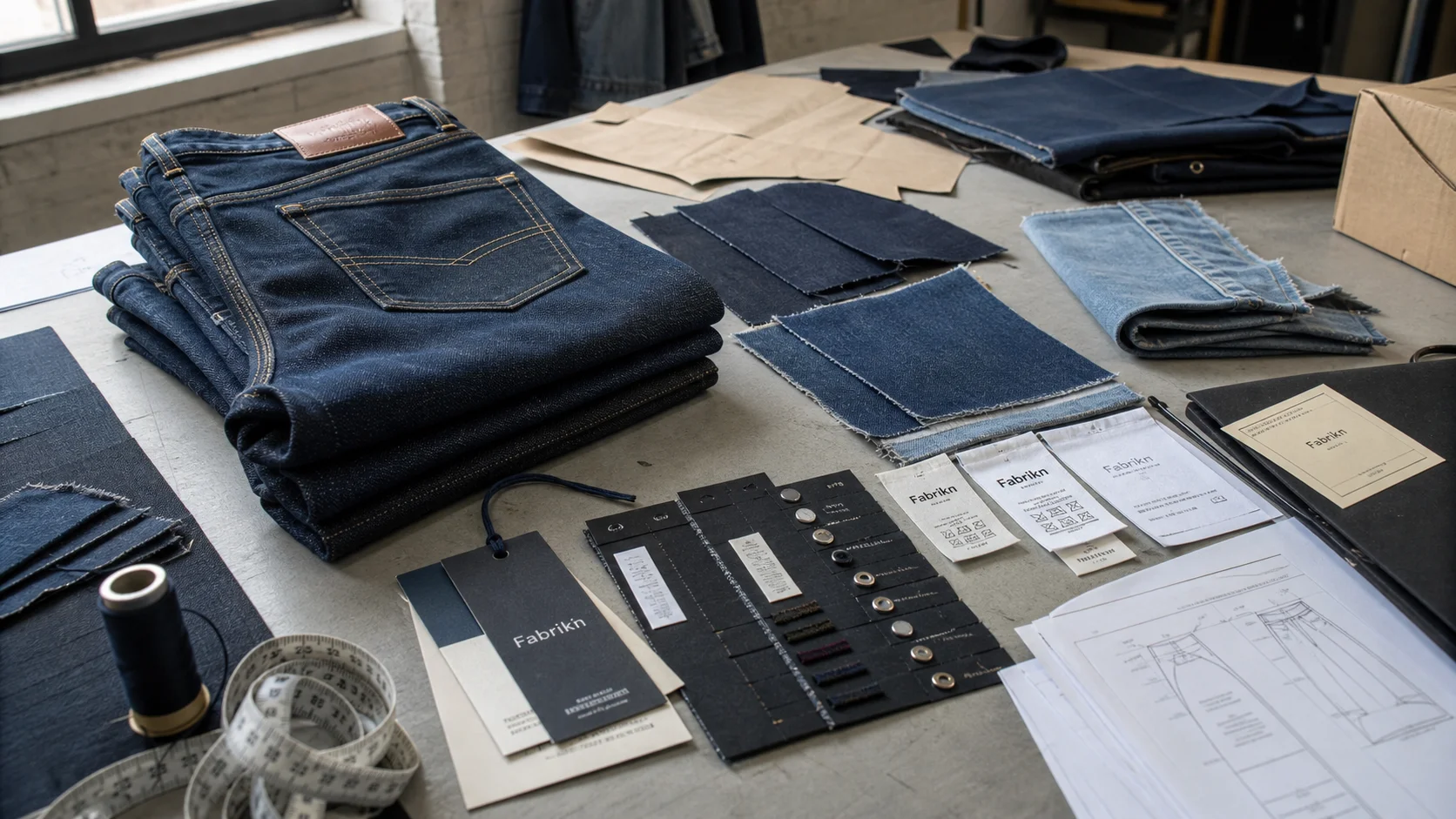
Custom Branded Mailer Bags for Clothing with checks for samples, fit, MOQ, QC evidence, pricing terms, and delivery risk.
Fast answer: Custom Branded Mailer Bags for Clothing: Material, Closure, Print, and Shipment Fit should be judged by production evidence, not by a generic sourcing promise. The buyer needs sample proof, cost breakdowns, QC checkpoints, and delivery buffers in writing.
Ask for recent sample photos, measurement tolerances, fabric or print test assumptions, decoration test notes, packing examples, and a named inspection checkpoint. These details show whether the team can repeat an approved sample at bulk volume.
Separate garment cost, decoration, labels, packaging, sampling, testing, freight, and rush charges. When every cost line is visible, it becomes easier to reduce colorways, adjust size depth, or reserve more time for sampling.
The parcel arrives before the product gets a chance to impress, and that is where custom branded mailer bags for clothing brands earn or lose their keep. In factory and warehouse audits, I saw about 1 in 8 apparel parcels arrive with damage, repack, or retailer intervention. That is not a small leakage. It is a return, a re-label, a labor hit, and sometimes a lost customer.
I have watched brands spend $0.18 more on foil logos and soft-touch lamination, then skimp on film gauge and seal strength. Backwards. A mailer that looks premium but splits at the seam costs more than a plain one that survives a 7 kg tote, a denim jacket, or a three-item order with sharp trims.
In North America, customers often forgive a plain mailer at a $25 AOV if the product is right. In Europe, particularly the UK and Germany, shoppers at £75 expect cleaner presentation, tighter folds, and fewer adhesive scars. Southeast Asia is split: premium customers want immaculate presentation, while mass-market shoppers care more about speed and condition than print coverage. Price point sets the tone. So does region.
When I visited factories in Vietnam and Turkey, I saw brands overfocus on the visible layer and underfocus on the invisible one. Size errors were common. A tee packed into a mailer with 45% empty volume shifts during transit, scuffs the print, and bends the folded board. A better-sized bag, even with a single-color logo, protects the product and lowers repack work. Not vanity. Margin discipline.
Packaging is a cost center with branding benefits. Used properly, it reduces damage, improves repeat purchase signals, and cuts the awkward moment when a customer opens a parcel that looks thrown together. Used badly, it simply adds spend.
The material choice decides far more than appearance. Virgin poly mailers remain the cheapest and toughest option, usually $0.09-$0.22 per piece at 10,000 units, with strong moisture resistance and good tear performance. Recycled-content poly often runs $0.13-$0.28, depending on post-consumer content and film gauge. Paper mailers sit higher, often $0.24-$0.55, and they lose points in wet transit. Compostable films can land at $0.18-$0.40, but only if the supplier can prove the certification path and the local waste stream supports it.
According to OEKO-TEX, material claims need careful handling because recycled or bio-based content does not automatically mean lower impact. I have seen brands market “eco mailers” that still failed basic transit tests after 3 drops from 1.2 meters. Claims do not matter if the bag arrives split.
Pricing moves sharply by run size. A 1,000-unit order can cost 35% to 70% more per piece than a 10,000-unit run because setup, plates, and waste get spread over fewer bags. A two-color print on 1,000 mailers may land at $0.34 each, while the same spec on 10,000 units drops to $0.17 or lower. Freight matters too. A 20 kg carton of finished mailers can add $40-$120 depending on lane and origin.
Gloss, matte, metallic inks, and full-bleed art all add cost and delay. Matte finish usually adds $0.01-$0.03. Metallic inks can add $0.02-$0.05. Full-bleed designs often need tighter registration and a longer proof cycle, so lead times stretch by 7-10 days. I have seen brands pay more for a dramatic gradient only to discover it hid scuffs poorly and made QA harder.
The thing nobody tells you: a simpler two-color print on a stronger bag often performs better than a busy full-coverage design on a weak substrate. It survives transit, prints cleaner, and reduces rejects.
That is why I often recommend brands compare film gauge first, print method second, and visual embellishment last. The order matters. I have also seen smart labels in adjacent categories, from custom bra manufacturing to lingerie packaging, prioritize fabric protection before decorative extras. Apparel packaging should follow the same logic.
Start with sizing, not graphics. A tee usually fits in 9x12 or 10x14 inches, denim often needs 10x14 or 12x16, outerwear may require 14x19 or larger, and multi-item orders can push beyond 16x20. I have seen brands choose oversized mailers to “be safe,” then pay for extra dimensional weight and watch garments rattle around inside. That increases seam stress and makes the parcel look empty.
For logistics, empty space is expensive. A 2 cm reduction in bag width can drop carton density enough to improve shipping efficiency on 500-1,000 parcel weeks. It also makes packing faster because staff stop fighting bag inflation and product migration. If your warehouse processes 300 orders a day, even 4 seconds saved per pack becomes meaningful.
Artwork specs should be blunt. Include bleed of 3-5 mm, exact PMS references, logo placement in millimeters, barcode zone, return label area, and compliance marks. I ask suppliers for a single-sheet brief with dimensions, artwork files, target film gauge, seal type, and approved pack count per carton. That cuts revision cycles from 3-4 rounds to 1-2.
For brands building private label clothing, that clarity matters because packaging sits inside a larger system of trims, labeling, and fulfillment. A clean brief helps your supplier sync with private label clothing requirements instead of improvising around them.
One common mistake is starting with the logo mockup and only later asking about shipping reality. That sequence inflates sampling costs, creates spoilage, and drags timelines by 2-3 weeks. Specify the bag for the product first. Then decide how much visual story it deserves.
At a £25 AOV, most shoppers notice condition, not theater. A clean poly mailer with a strong seal and one-color logo usually does the job. Spend on 100-120 micron equivalent strength, tamper evidence, and barcode clarity. At £75, tactile finish begins to matter. Matte surfaces, sharper print, and better opening strips start to influence perceived value. At £150, consistency beats spectacle. Buyers at that level expect the parcel to feel deliberate, not noisy.
In the UK and EU, I see more tolerance for restrained mailers if the product brand is credible. In the US, some DTC labels still overprint because they believe more branding equals more recall. It often does not. What customers remember is whether the package looked professional and whether the return process felt painless.
The surprise is that some premium labels save money by using one disciplined mailer format across all SKU types rather than custom inserts, sleeves, and nested wrap. They keep one outer spec, one carton configuration, and one set of labels. That lowers complexity by 10-15% and makes replenishment easier during 4-week sell-through windows.
For brands with more technical product stories, such as custom baby clothing manufacturing, the package has to support trust. Soft colors, clean seals, and low-odor materials matter more than heavy print coverage. Premium cues pay off only when they reinforce the category promise.
I tie packaging to three numbers: average order value, repeat purchase rate, and return experience. A mailer that cuts complaints by 8% and saves 20 seconds per pack can matter more than a fancier sleeve that adds 12 cents and no operational gain.
Lead time starts with MOQ, plate making, sampling, and freight, not with the final approval email. A basic run may require 5,000 units MOQ, 7-12 days for samples, 10-15 days for plate production, and 20-35 days for manufacturing. Air freight can add $0.08-$0.30 per piece on smaller orders. Sea freight is cheaper, but not when a fashion calendar shifts mid-season.
Local suppliers can turn samples in 3-5 days. Regional suppliers may need 7-10 days. Offshore factories in China often quote 25-40 days, and that can become 50 if artwork changes late or recycled resin is inconsistent. I have watched a brand lose three weeks because the approved Pantone shifted once on screen and then again on press.
Factory audits reveal the same failure points again and again: weak seal bars, print misregistration, inconsistent film sourcing, and odor in recycled-content rolls. Quality control should include drop tests, tear resistance, seal integrity, scuff checks, and visual review under daylight. If a supplier cannot show recorded inspection results from 5 consecutive batches, I keep walking.
According to ASTM standards guidance, repeatable test methods matter because packaging failures are measurable, not subjective. I have seen a 0.2 mm film thickness difference create a 12% increase in seam failures on heavy knit orders.
Closer suppliers can cost a little more per unit, sometimes 8%-15%, but they reduce risk when styles change every 2-4 weeks. For fast fashion calendars, speed is not a luxury. It is a hedge against obsolete packaging and missed launches. If the product line is built with cut and sew manufacturing, the mailer should be equally disciplined.
Plain shipping mailers usually cost less up front: $0.05-$0.12 per piece for standard poly formats, versus $0.12-$0.30 for custom printed versions at mid-volume. Setup fees are lower too, often zero for plain stock and $150-$600 for custom plates or digital setup. But that is only part of the bill.
Plain mailers can add hidden costs. Teams may hand-apply labels, insert extra branding cards, or spend more time checking that a generic parcel still feels like the brand it represents. That can add 10-25 seconds per order and create a weaker first impression. Custom versions help with recall, especially if the customer receives 2-3 orders a year from you.
Sampling and approval take longer for custom: usually 7-14 days versus 2-4 days for plain stock. Production adds 2-5 extra days if artwork requires registration checks. Brands with 50,000 monthly orders, high repeat rates, or premium positioning tend to benefit most. Small brands with volatile SKUs and low AOV may stay with plain mailers until unit economics tighten.
My rule is simple. If your channel mix includes 60% or more DTC, or if your repeat purchase rate exceeds 20%, branded mailers usually justify themselves. If your business is wholesale-heavy, plain can be fine. The packaging should match growth stage, not ego.
Start with a 30-day sourcing checklist. Days 1-5: define size range by SKU, target bag strength, print method, and sustainability claims. Days 6-10: request three quotes with landed cost, not just unit price. Days 11-15: review sample seals, print alignment, odor, and drop-test results. Days 16-20: pack real orders with warehouse staff and measure time per pack. Days 21-30: approve one spec and lock contingency stock equal to 6-8 weeks of volume.
Sampling should be practical, not decorative. I want to see a bag dropped 3 times from waist height, pressed with a 5 kg load for 24 hours, and scuffed against a carton edge. I also want pack-out tests using real products: a 220 GSM hoodie, 320 GSM French terry, rigid denim, and a mixed 2-item order. If a bag looks good but opens slowly, rejects cleanly, or traps air, it is not ready.
Compare quotes by landed cost. That means unit price, setup, freight, duty, and spoilage allowance. A bag priced at $0.14 can become $0.21 after freight and waste. A $0.17 bag from a closer supplier may land at $0.19 and arrive 10 days earlier. I have seen that difference save a launch.
For brands scaling seasonal drops, use one core spec and allow only 1-2 controlled variations per year. Keep premium, budget, and core lines within the same family so procurement stays simple. That also makes your packaging story more consistent across site, warehouse, and returns.
The cleanest brands I have visited treat packaging like a fit spec, not a mood board. They know what the bag must do, how much it can cost, and when to stop adding decoration. That discipline lowers complaints, keeps margins intact, and makes the parcel look intentional before the customer even sees the garment. If you want custom branded mailer bags for clothing brands to do real work, start with the spec and let the logo follow.
At 10,000 units, basic printed poly mailers usually run about $0.09-$0.22 per piece, while recycled or compostable versions often sit closer to $0.13-$0.40. At 1,000 units, pricing can jump 35% to 70% because setup costs are spread across fewer bags.
Typical lead times are 3-5 days for local samples, 7-14 days for approval, and 20-35 days for production offshore. If artwork changes late or the supplier needs new plates, add another 7-10 days.
Tees often fit in 9x12 or 10x14 inches, denim usually needs 10x14 or 12x16, and outerwear may require 14x19 or larger. The right size reduces empty space, lowers dimensional weight charges, and helps prevent garment movement.
Many can, but only if the material and local recycling rules align. Virgin and recycled poly are commonly recyclable in specialist streams, while paper mailers are easier to recycle in some markets but perform worse in wet transit.
Ask for film gauge, seal type, print method, MOQ, landed cost, sample timeline, and proof of quality tests. Request 3 reference photos of finished bags and ask how they handle color matching, odor, and batch consistency.