
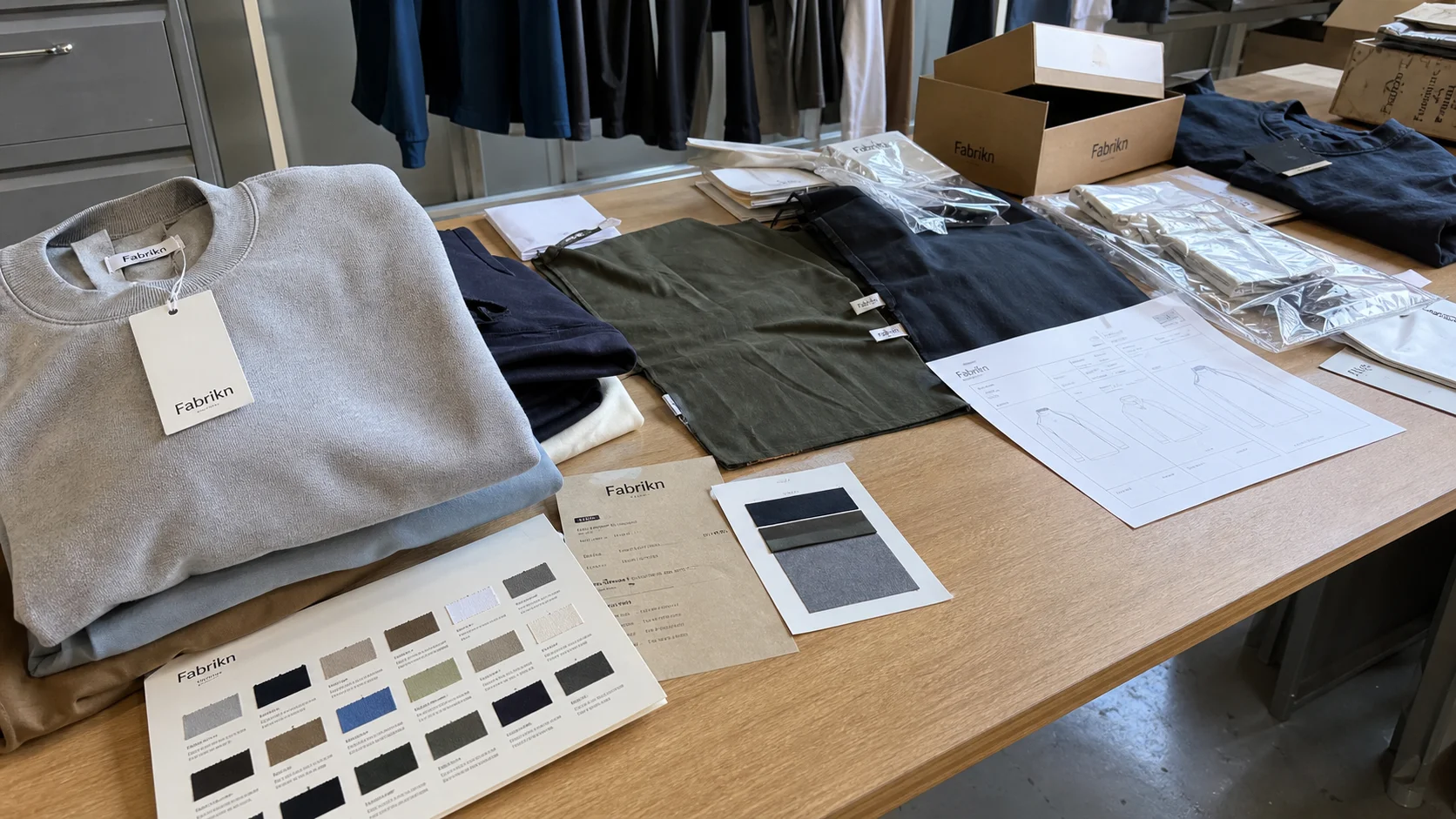
Logo Poly Mailers for Clothing with checks for samples, fit, MOQ, QC evidence, pricing terms, and delivery risk.
Fast answer: Logo Poly Mailers for Clothing: Film, Print, Seal, and Shipping should be judged by production evidence, not by a generic sourcing promise. The buyer needs sample proof, cost breakdowns, QC checkpoints, and delivery buffers in writing.
Ask for recent sample photos, measurement tolerances, fabric or print test assumptions, decoration test notes, packing examples, and a named inspection checkpoint. These details show whether the team can repeat an approved sample at bulk volume.
Separate garment cost, decoration, labels, packaging, sampling, testing, freight, and rush charges. When every cost line is visible, it becomes easier to reduce colorways, adjust size depth, or reserve more time for sampling.
At 6:40 a.m. in a Guangzhou packing room, I watched 14 workers finish 3,000 units before lunch. That kind of speed is exactly why custom poly mailers with logo for clothing earn their keep: they save labor, shave postage, and set the tone in the first 10 seconds after purchase. The difference between a flat mailer and a carton was not abstract. It was 9 seconds per order, 2 extra hand motions, and one less tape gun clogging the line.
On lightweight apparel, a poly mailer often ships at 80-160 grams before product, while a small carton can add 180-320 grams. That gap matters because carrier pricing jumps fast once a parcel crosses a dimensional threshold. On routes I’ve audited in the US and UK, switching from cartons to mailers cut outbound cost by $0.60-$1.40 per order on tees and babywear, and by $1.20-$2.80 on folded knits that did not need crush protection.
Logo placement changes behavior. A centered mark on the front flap reads before the package is opened, so the brand enters memory at the exact moment the buyer is handling the order. I’ve seen this with private label clothing services for brands ordering 500-2,000 units: a strong logo, a clean matte finish, and tight print registration made a $0.18 mailer feel more deliberate than a $0.60 carton with sloppy tape seams.
And here’s the awkward part. Cheaper packaging can look more premium if print quality, opacity, and seal consistency are controlled. A glossy overprint with a crooked seam looks cheap at any price. A crisp 1-color logo on a 2.5 mil mailer can look sharper than a box that costs four times as much, especially for direct-to-consumer fashion where the parcel is handled once and judged in seconds. For a brand producing through cut and sew manufacturing, packaging should match the discipline of the garment itself.
Most custom mailers start with LDPE, low-density polyethylene, because it is flexible, printable, and cheap to extrude. Recycled polyethylene appears in blends ranging from 10% to 100% PCR, though not every supplier can keep opacity stable at high recycled content. I’ve seen 2.25 mil recycled mailers with uneven haze, and I’ve seen 3 mil virgin LDPE mailers that looked cleaner and sealed tighter. Material quality changes tear resistance, customer trust, and the probability that a sharp garment tag punctures the sidewall in transit.
Thickness is usually quoted in mils or microns. A 2 mil bag works for lightweight tees and socks. A 2.5-3 mil mailer is safer for hoodies, rib knits, and denim shorts. Once you move toward 4 mil, the unit price rises because resin usage climbs and extrusion slows. Seal type matters too: a standard self-adhesive strip is fine for most ecommerce, but double adhesive seals and tamper-evident closures add cost and improve return handling.
Printing changes the math quickly. One-color logo printing is usually the cheapest custom option because plate setup is limited and ink coverage is light. Two-color printing adds registration checks, more waste at startup, and a higher reject rate if the film stretches. Full-coverage designs, especially when the back side carries messaging or pattern work, can lift the unit price by 15%-40% depending on run size and color count. For smaller orders, tooling and plate fees often cost more than the print itself.
MOQ is not random. Factories often set 3,000-10,000 piece minimums because they need to cover film extrusion, flexo plate setup, and freight consolidation. I’ve visited plants in Vietnam and eastern China where a 1,000-piece order was accepted only because it piggybacked on a larger roll run. Freight matters as well. A pallet of 10,000 flat mailers can ship in 1-2 cartons if compressed well, but oversized packaging can double the cube and add $80-$240 in inland handling.
For buyers comparing private label clothing services, the spec sheet should show resin type, thickness tolerance, seal width, and print coverage. Those four lines explain most of the price gap. Data from ISO packaging and material testing standards is useful here, because repeatable thickness and seal integrity are not marketing claims. They are measurable controls that affect every parcel leaving the warehouse.
T-shirts, knitwear, denim, and outerwear do not ship the same way. A folded 180 GSM tee can fit into a 10 x 13 inch mailer with very little dead space, while a brushed French terry hoodie at 320 GSM usually needs 14 x 19 inches or more if you want the fold to lie flat. Add a 6-inch mismatch and you create void space, movement, and crease pressure. That is where damage starts, not in the truck, but on the packing table.
For tees and underwear, I usually see 0.5-1 inch of clearance around the fold as enough. For denim, the package needs a stiffer wall and a wider gusset, because rivets and seam allowances can punch through thin film. For outerwear, especially puffers with zippers and toggles, a mailer can work only if the bag is 3 mil or thicker and the garment is wrapped in inner tissue or a garment bag. Otherwise, the chance of scuffing rises sharply during high-volume sorting.
I spent two days in a warehouse in northern Italy where premium knitwear was being packed into mailers one size too large. Labor time dropped by 4 seconds per piece, but the carrier billed dimensional weight on 38% of orders because the parcels ballooned beyond the threshold. That is the trade-off. A slightly larger mailer can make packing faster, yet in some markets it pushes postage up by $0.90-$2.20 per shipment. If you sell mid-priced apparel, that can wipe out the savings from the faster line.
Closure strength deserves more attention than most buyers give it. A weak adhesive strip may hold for 24 hours in a cool room and fail after 48 hours in a hot depot. I ask for peel tests, puncture resistance data, and a photo of the actual seal width, which should usually sit near 1 inch for retail clothing. In the UK and EU, I’ve seen parcel rules reward compact packaging, while some US carriers punish packages that are just 1-2 inches too deep.
Here’s what most people miss: the best size is not always the smallest. For babywear, a 12 x 16 inch mailer can reduce packing errors and creasing versus a tighter 10 x 13 option, even though the bigger bag costs 2-4 cents more. That is why brands working on custom baby clothing manufacturing often gain more from fit control than from squeezing every millimeter out of the package.
The difference between per-unit cost and landed cost is where buyers get fooled. At 1,000 units, a plain stock mailer might cost $0.09-$0.14 each, but once you add freight, sampling, and local handling, the landed number may land near $0.16-$0.24. A one-color logo mailer usually runs $0.13-$0.22 at that volume, and a full custom printed mailer can reach $0.24-$0.42 before inland transport. Small runs carry the heaviest setup burden.
At 5,000 units, the curve improves. Plain stock mailers can drop to $0.07-$0.11, one-color logo mailers to $0.10-$0.16, and full custom prints to $0.18-$0.30, depending on thickness and closure type. Sampling may add $40-$120, plate fees another $60-$250, and freight from factory to fulfillment center $180-$650 depending on origin. I have seen brands ignore those line items and then wonder why a “cheap” quote becomes the most expensive choice on their ledger.
At 10,000 units, economies of scale start showing properly. A basic custom mailer with a 1-color logo and standard adhesive can land around $0.09-$0.14 all-in if freight is managed well. Two-color jobs usually sit $0.12-$0.19, while full-coverage premium finishes, matte lamination, or high-opacity recycled film often end up at $0.20-$0.34. The extra cents can pay back if the bag lifts perceived value, reduces return abuse, or strengthens repeat purchase rates by even 2%-3%.
There is also a quiet regional split. In South Asia, labor may be cheaper, but export packing and longer transit can add 10-18 days and a few hundred dollars in buffer freight. In North America, unit prices are higher, yet 1,000-3,000 unit orders can arrive in 3-7 days and save inventory risk. Europe often sits in the middle on price, with stricter compliance paperwork but shorter intra-regional shipping for brands selling across multiple EU markets.
If your brand uses private label clothing services, package economics should be calculated alongside garment margin, not after it. A $0.08 difference per mailer is small until you multiply it by 20,000 orders. Then it becomes $1,600, which is enough to fund better print control, stronger seals, or a second sample round.
I never approve a supplier based on price alone. I inspect print consistency, seal strength, puncture resistance, lead times, and compliance documentation, because low quotes often hide thin film, poor ink alignment, or a factory that cannot hit the promised ship date. In one plant visit in Zhejiang, 11% of the sample bags had visible registration drift and 7% failed a simple peel test after a hot-room hold. That is not a bargain. That is a future complaints file.
Asia still offers the broadest MOQ flexibility, with some plants willing to start at 1,000-3,000 units if they can combine jobs. North American suppliers can move faster, often in 7-15 days, but unit costs are usually 20%-45% higher. European factories tend to sit between the two on labor and compliance, though they often require stronger documentation and may price small custom runs at a premium. The best choice depends on volume, freight, and how quickly your inventory turns.
When I audit a factory, I ask for the material declaration, the film thickness tolerance, and a packaging test report. I also want to see sealed samples from 2-3 production batches, not just the perfect showroom bag. Weak seals show up as splitting at the corner; smudged ink usually means the film surface was not treated correctly; inaccurate dimensions often come from poor die control. These defects are boring to discuss, and expensive to ignore.
For brands scaling from sample runs to production, the packaging supplier should be able to coordinate with your cut-and-sew partner and your logistics team without drama. That is especially true for apparel programs that carry multiple sizes and seasonal drops. If your product team is already managing cut and sew manufacturing, a supplier who understands packing tolerances can save a week of back-and-forth and a lot of rework.
Recycled, recyclable, and compostable are not the same claim. Recycled content means the bag contains post-consumer or post-industrial resin, usually 10%-80% in commercial apparel packaging. Recyclable means the material can enter an existing collection stream, though that depends on local infrastructure and contamination rates. Compostable claims are the weakest for shipping mailers, because many facilities cannot process them in a meaningful timeframe, and buyers often confuse “biodegradable” with actual disposal performance.
Weight matters more than many brands admit. A 2.5 mil mailer uses less material than a 4 mil alternative, which cuts resin use and transport emissions. Switching to a heavier “green” mailer can raise material impact by 20%-35% without improving outcomes if the parcel now tears or needs an extra insert. That is why the cleanest sustainability win is often eliminating excess packaging, not buying the most expensive alternative film.
Data from Textile Exchange guidance on recycled input claims shows how verification matters across supply chains, and packaging should be treated with the same skepticism. I’ve visited factories where “eco” bags were simply downgraded from bright-white virgin film to cloudy recycled film, with no proof of resin origin. That is marketing, not evidence. Third-party certifications, resin traceability, and test documents matter more than a green tint or a leaf icon.
For buyers who want to validate claims beyond packaging, OEKO-TEX standards for material safety can also be a useful reference point for broader textile sourcing decisions. One more thing: a sustainable bag that increases damage rates is not sustainable. If 3% of orders arrive split or dirty, the emissions saved in material may be erased by replacements, customer service labor, and reverse logistics. For fashion brands, especially those selling limited drops, the best result is usually the lightest bag that still protects the garment and holds print quality for the full transit cycle.
Start with sizing, artwork, and shipment method, in that order. Then request the dieline, Pantone references, material spec, seal type, and test results before you pay a deposit. I usually recommend a 7-14 day sample stage, followed by 3-5 days for revisions, then production in 10-20 days if the factory has film in stock. If a supplier cannot name those milestones clearly, I move on.
Ask for a photo of the first printed sheet, a thickness report in microns, and proof of closure strength. Confirm the MOQ, plate fees, and whether freight is included from factory to your warehouse. Then compare landed cost, not just unit cost. The cheapest quote is rarely the cheapest landed result, especially once you factor in damage claims, delays, and reorders.
For international buyers, it is also smart to review basic import guidance from the U.S. Department of Commerce trade resources before placing a large order. If your supplier is in China, ask for production photos, a batch traceability sheet, and a shipping carton count so customs and receiving are easier to verify. That extra documentation can prevent costly surprises at the warehouse dock.
At 1,000 units, expect roughly $0.13-$0.42 per bag depending on thickness, print coverage, and seal type. At 10,000 units, many orders land in the $0.09-$0.34 range before final freight and local handling.
Most folded tees fit well in 10 x 13 inch or 12 x 15 inch mailers. Leave about 0.5-1 inch of clearance so the garment lies flat without excess void space.
Sampling usually takes 7-14 days, and production often takes 10-20 days after approval. Add 3-7 days for domestic freight in some regions, or 2-5 weeks for international shipping.
Yes, if the supplier can document the recycled content and maintain seal strength and print clarity. Ask for a material declaration, thickness tolerance, and proof that opacity still protects customer privacy.
Small MOQs of 1,000-3,000 units are often easier to find in Asia or with domestic converters that already stock film. Compare setup fees, freight, and lead times before choosing the lowest unit price.