
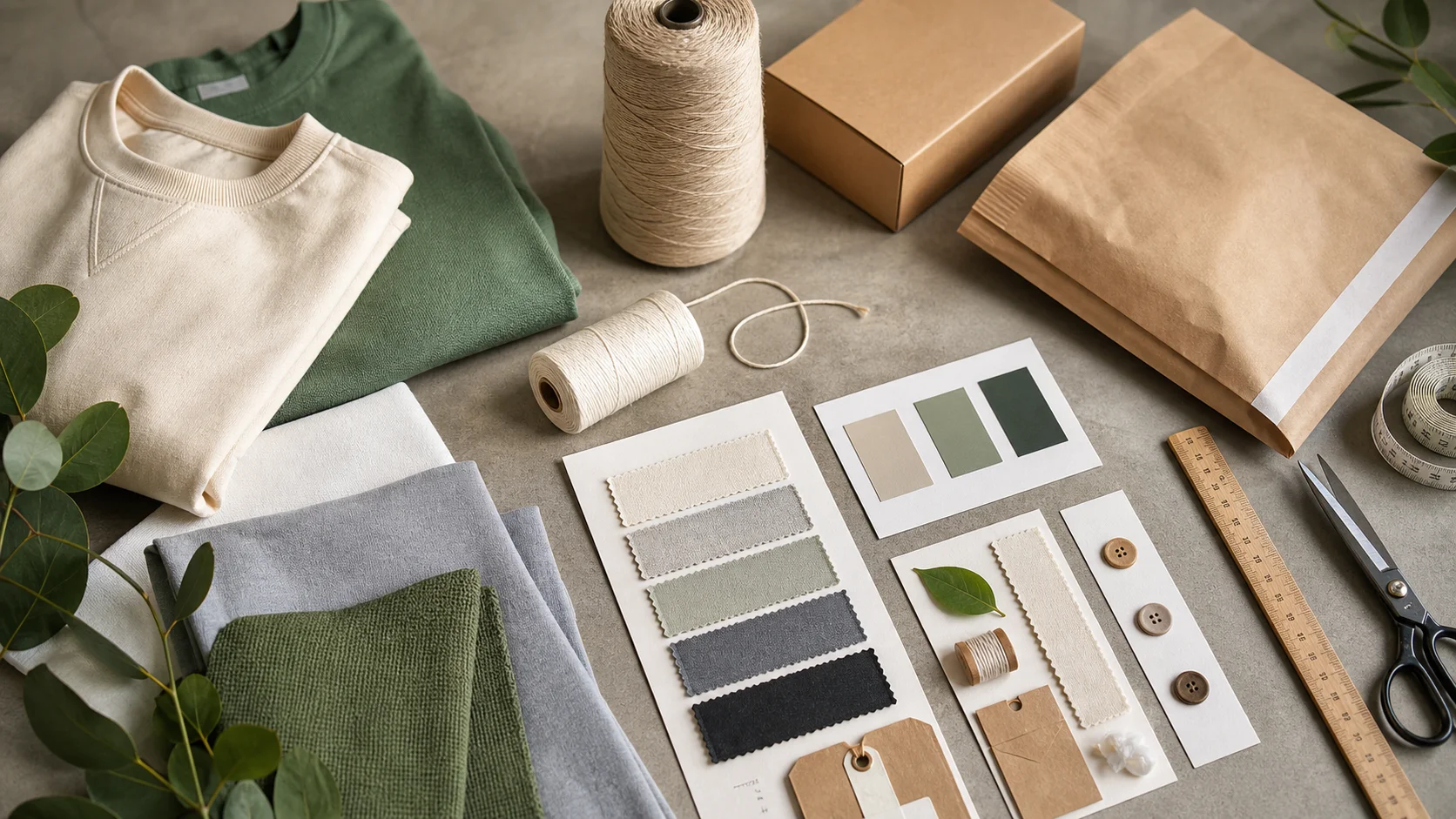
Debossed Logo Apparel Boxes with checks for samples, fit, MOQ, QC evidence, pricing terms, and delivery risk.
Fast answer: Debossed Logo Apparel Boxes: Board, Die, Quality, and Cost should be judged by production evidence, not by a generic sourcing promise. The buyer needs sample proof, cost breakdowns, QC checkpoints, and delivery buffers in writing.
Ask for recent sample photos, measurement tolerances, fabric or print test assumptions, decoration test notes, packing examples, and a named inspection checkpoint. These details show whether the team can repeat an approved sample at bulk volume.
Separate garment cost, decoration, labels, packaging, sampling, testing, freight, and rush charges. When every cost line is visible, it becomes easier to reduce colorways, adjust size depth, or reserve more time for sampling.
Run a finger across the lid, and the sale starts before the ribbon comes off. In factory visits, the debossed logo on apparel packaging boxes that won buyers were rarely the loudest. They felt controlled, weighty, intentional. Before anyone read a brand name, the package had already said something. That first tactile cue usually lands within the first 2-3 seconds of unboxing.
Across price points, the pattern holds. A $25 tee in a plain kraft carton feels honest and functional. A $120 jacket in a rigid board box with a clean deboss, 2.5 mm board thickness, and tight corner wrap feels like a purchase that survived several decisions. Same logo. Different result. Texture does work that ink cannot.
Premium categories have known this for years. Debossed and embossed finishes show up constantly in fragrance, leather goods, and prestige apparel because they create a physical brand cue without piling on decoration or extra ink. Clean lines. Less clutter. That also fits a sustainability story better than a box buried under finishes.
Here’s the part most people miss: a simple deboss can look more expensive than foil when the box structure, board thickness, and pressure are exact. A small Paris knitwear label switched from metallic hot stamp to blind deboss on 1,500 boxes. Rejection fell from 11% to 3%. The box looked more deliberate, not less.
That is why tactile packaging can lift retention and giftability. Customers keep boxes that feel authentic, and they photograph boxes that look restrained but expensive. In a market where return rates on apparel can sit at 20-30% and repeat purchase margins are thin, those details matter more than brands like to admit.
The production chain starts in artwork, not the press. A designer may send a crisp digital logo at 300 dpi, but the factory needs vector lines, a rule map, and a die spec that matches the box board. From there, the shop builds a magnesium or brass die, runs a proof, and adjusts pressure until the indentation depth reads cleanly across the full panel.
Material choice decides how much detail survives. Coated paperboard, usually around 350-450 gsm, holds finer edges than soft recycled stock because the surface fibers are tighter. Rigid board at 1.5-3.0 mm can take a deeper impression, while corrugate often loses subtle detail unless the face liner is smooth and the flute profile is low. Grain direction matters too. If the grain fights the die, the mark can look fuzzy on one side and sharp on the other.
Press settings matter just as much. Temperature, dwell time, and registration tolerance all shape consistency across 500 units or 10,000 units. On one factory floor in Vietnam, a team reduced pressure by 8% and improved edge clarity immediately because the original setting was crushing the board instead of shaping it. Best-looking debosses usually come from conservative depth, not aggressive compression.
Digital proofing can mislead. A monitor cannot show how a 0.4 mm indentation catches matte light or how a soft recycled liner rebounds after pressure. That is why physical white samples matter before decorated sampling. Measure the box in millimeters, not optimism.
In one plant I visited, the difference between pass and reject came down to moisture content of 6-8%. Slightly damp board flattened under the die and lost its crispness. If your supplier also handles cut and sew manufacturing, ask how they separate fabric handling from carton storage. Humidity control is not glamorous. It protects the line.
Debossing rewards simplicity. Thin lines under 0.3 mm, tiny serif type, and crowded crests tend to disappear once the die compresses the board. Think bold shapes, not decorative clutter. A logo that looks elegant on screen can turn into mush on a 400 gsm sleeve if the counter spaces are too tight.
Placement changes everything. A lid deboss reads like a signature. A front-panel deboss feels more commercial and is easier to stack in transit. A sleeve deboss can look refined, but only if the sleeve wraps tightly and the closure does not interrupt the mark. Matte boards amplify negative space, so the empty area around the logo matters more than the logo itself. On black or natural kraft, shadows do half the branding work.
Oversized marks can backfire. A 90 mm logo on a shallow 0.2 mm impression can look cheaper than a 35 mm mark with proper relief. Brands oversize the panel because they want visibility, then wonder why the box feels flat. Depth, not scale.
Physical approval is non-negotiable. Digital mockups flatten everything, and office lighting lies. A deboss that looks dramatic under a spotlight can disappear in daylight, while a careful blind deboss can look richer in a retail stack. I prefer to review at least 2 physical samples, one under cool light and one under warm light, before signing off.
For brands building coherent packaging across multiple products, align the box with the rest of the line. If you already use clothing packaging solutions, keep the same logo scale rules across inserts, tissue, and carton lids. Consistency is what makes the mark feel expensive.
Costs move fast once tooling enters the quote. For 500 units, a deboss die can add $120-$250, and unit pricing often lands around $1.20-$2.40 depending on board and region. At 2,000 units, the same die cost spreads out, pushing unit pricing closer to $0.65-$1.35. By 10,000 units, the box may drop to $0.38-$0.82 per piece if the artwork stays simple and the board spec is stable.
Finishes change the bill quickly. Deboss alone is usually the cheapest tactile option. Add foil and you can add $0.18-$0.55 per unit, depending on coverage and metallic film. Soft-touch lamination often adds $0.22-$0.60, and spot UV can tack on another $0.15-$0.40. Print-only alternatives may look cheaper at first, but they do not always deliver the same perceived value at retail.
Labor markets matter too. Higher-wage production centers in parts of Europe or North America may charge more for die setup, inspection, and hand-fold checks, while export factories in China, Vietnam, or India often quote lower unit costs with 3-4 week longer lead times if the order needs export packing and extra QC. A 7-day domestic schedule can cost 18-25% more than an overseas run, even before freight.
The cheapest quote can be a trap. A factory may bid low because its board stock is soft or its tolerance is loose, then reject 8-12% of the run after the press room starts. That wasted material often erases the savings. Ask for defect policy, overrun allowance, and a sample of the exact board caliper before trusting the number.
Last year I worked with a brand that compared three suppliers at 500, 2,500, and 8,000 units. The middle quote looked 14% higher until we realized the lowest bid excluded die ownership, export cartons, and a second inspection pass. The middle option was cheaper once all 3 charges were counted.
Sampling tells only half the story. A beautiful pre-production sample can hide weak consistency across a 2,000-unit run, especially if the operator used a slower press speed or hand-adjusted pressure for the proof. Factories should test depth uniformity, edge clarity, board cracking, scuff resistance, and drop performance. If one corner collapses after a 60 cm drop, the box failed before it reached the customer.
Rub tests matter more than many buyers expect. A debossed lid can shed powder or transfer ink from adjacent packaging if the board coating is unstable. I’ve watched a plant in Guangzhou ship boxes that looked perfect on the table but scuffed badly after 25 rub cycles with a cotton cloth. The issue was a weak top coat, not the logo itself.
Transit creates its own damage profile. Boxes stacked 8-10 high in a carton can compress under humidity, and a deboss that seemed crisp in the showroom can flatten after 2 weeks in a warehouse. That is why I ask for compression checks, not just visual approval. A rigid box can survive a showroom demo and still fail under pallet pressure.
Some plants focus almost entirely on appearance and under-test shipping performance. I see this more often in rigid box production than in folding carton lines. Domestic factories sometimes inspect more tightly at the unit level, while export plants may rely on AQL sampling and be less strict on cosmetic variation. The same $0.90 box can arrive with wildly different standards attached.
If your team also manages apparel development, connect the packaging QC to the product side. A brand using private label clothing services should sync carton approval with garment bulk approval so the first delivery does not split across mismatched timelines. The box and the clothing need the same release discipline.
Data from ASTM shows why standard test methods matter: if suppliers use different drop and compression protocols, you cannot compare quotes or quality fairly. That is where many buying teams get fooled.
Debossing can support a cleaner packaging strategy because it often replaces ink-heavy decoration with a physical mark. Less ink means fewer layers to manage, and that can help recyclability if the rest of the structure stays simple. For apparel brands trying to trim waste, a restrained deboss on recycled board can look more honest than a laminated box pretending to be premium.
Board choice makes the difference. Recycled fiber stock usually has a softer hand and can compress beautifully, but only when the die is tuned correctly. FSC-certified virgin fiber board takes detail more cleanly and gives a sharper edge, though it can feel less grounded if it is over-coated. Hybrid stocks sit in the middle. Recycled board at 400 gsm can outperform glossy virgin stock at 450 gsm when the surface finishes cleaner and the logo holds more character.
Coatings and adhesives are the hidden problem. A full soft-touch wrap, heavy foil, and aggressive glue can make recycling more difficult than the tactile branding is worth. Water-based adhesives, minimal lamination, and no more coating than the board truly needs are the smarter path. Data from Textile Exchange repeatedly shows that material choice drives a large share of footprint decisions, and packaging should not ignore that logic just because it is smaller than the garment.
There is a regional sourcing wrinkle too. Some mills in Southeast Asia offer 30-40% recycled content at better pricing, but replenishment can take 4-6 weeks longer than local stock in Europe or the US. That matters if you reorder often or run color drops every month. Premium feel comes from consistency as much as from material origin.
The thing nobody tells you: recycled board often looks more premium than heavily coated virgin stock once the deboss is dialed in. If the die pressure is wrong, though, the same board looks tired fast. Sustainability does not excuse bad tooling.
For brands that want a cleaner chain from product to package, sourcing the box alongside clothing packaging solutions can reduce duplicate freight, duplicate approvals, and extra sample waste. That is a practical win, not a moral lecture.
Before you request samples, define the box style, target quantity, logo depth, board type, target cost, and shipping terms. A supplier cannot quote cleanly if half of those variables are missing. Brands should prepare a one-page spec sheet with dimensions in millimeters, target weight in gsm or mm, and a realistic lead time, usually 3-5 weeks for sampling and 4-8 weeks for production.
Use a three-step approval sequence. Start with a digital proof to lock size and placement. Then approve a white sample or plain structural sample to confirm board strength and fit. Only after that should you sign off on the final decorated sample. If the supplier skips the middle step, ask why. The missing step is often where the expensive mistake hides.
Compare suppliers on more than price. Ask who owns the die, what happens if 3% or 5% of the run is defective, whether carton strength is tested, and how late delivery is handled. A lower quote that misses the ship date by 10 days can disrupt an entire product launch. I would rather pay 12% more for a factory with a clean defect policy than chase savings that arrive with excuses.
Brand and product teams should also work with the apparel manufacturer early. If your garment line already uses cut and sew manufacturing, packaging should be aligned before bulk fabric is cut. That avoids last-minute size changes, mismatch between box dimensions and folded garments, and the extra freight cost of redoing inserts.
Lock artwork early. Die revisions often add 2-4 days, and on some presses they add another $60-$180 in change fees. That is small compared with a full reprint, but it is still money and time you could save. If you need a quote fast, get a free quote with the board spec and logo file attached before anyone starts guessing.
For 500 units, expect roughly $1.20-$2.40 per box plus a die charge of $120-$250. At 2,000 units, pricing often falls to $0.65-$1.35 per box, and at 10,000 units it can reach $0.38-$0.82 depending on board, region, and finish.
Sampling usually takes 3-5 weeks, and production can take 4-8 weeks after approval. If the supplier needs a new die or the board stock is imported, add 1-2 weeks. Freight time is separate.
Rigid board at 1.5-3.0 mm gives the strongest tactile result, while coated paperboard at 350-450 gsm holds finer detail for lighter boxes. Recycled stock can work well too, but the die pressure must be tuned carefully to avoid fuzzy edges.
Yes. Deboss plus foil is common in premium apparel packaging, but it raises cost and complexity. Expect an added $0.18-$0.55 per unit for foil, plus more risk if the board is soft or the registration tolerance is tight.
The lid is usually the strongest placement because it reads first in unboxing. Front panels work well for shipping visibility, and sleeves suit smaller marks. I usually recommend a 30-45 mm logo for refined branding, unless the box is very large.