
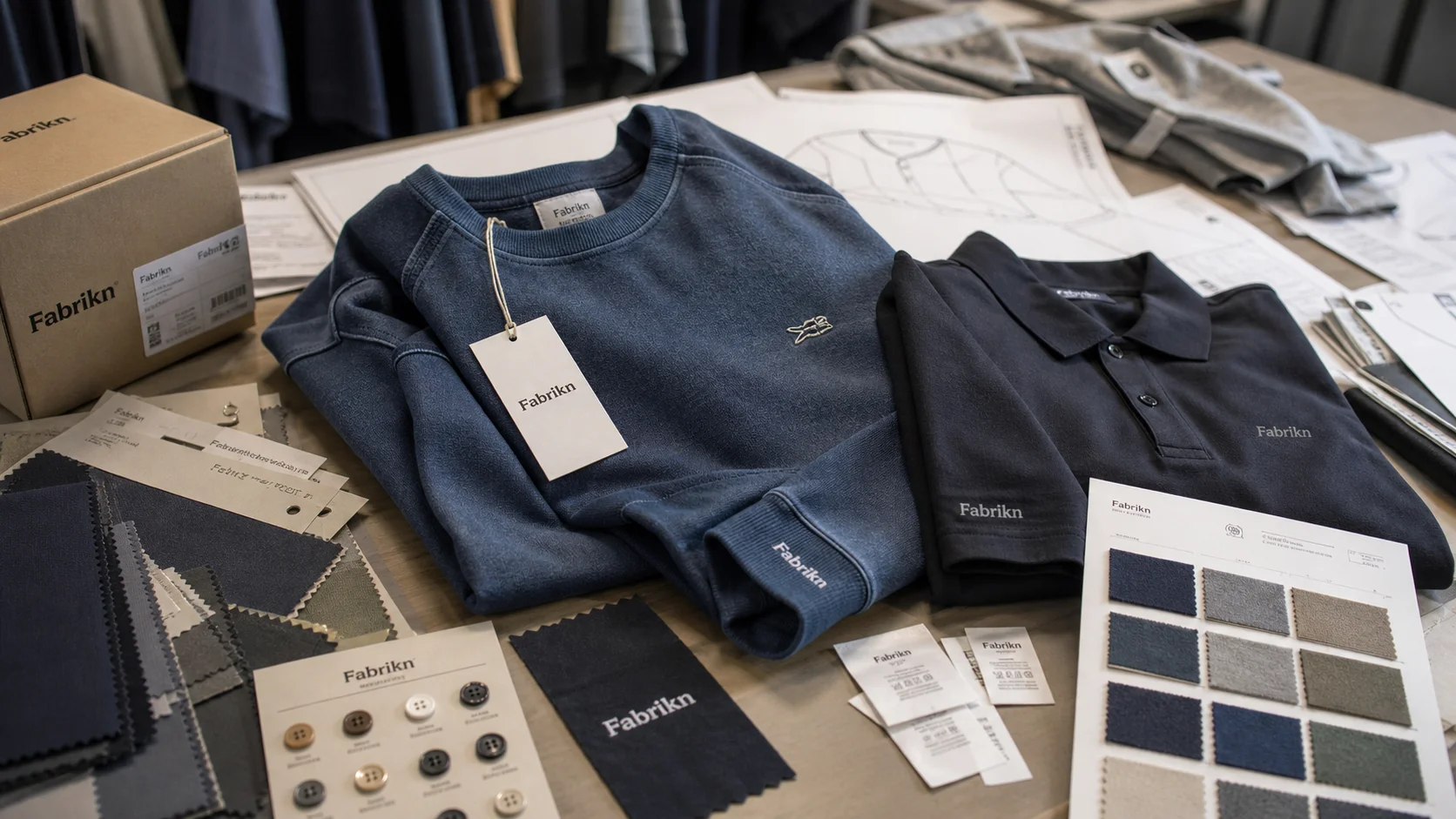
OEM Clothing Manufacturer for Startups with checks for samples, fit, MOQ, QC evidence, pricing terms, and delivery risk.
Fast answer: OEM Clothing Manufacturer for Startups: Tech Pack, MOQ, Samples, and IP Control should be judged by production evidence, not by a generic sourcing promise. The buyer needs sample proof, cost breakdowns, QC checkpoints, and delivery buffers in writing.
Ask for recent sample photos, measurement tolerances, fabric or print test assumptions, decoration test notes, packing examples, and a named inspection checkpoint. These details show whether the team can repeat an approved sample at bulk volume.
Separate garment cost, decoration, labels, packaging, sampling, testing, freight, and rush charges. When every cost line is visible, it becomes easier to reduce colorways, adjust size depth, or reserve more time for sampling.
A promising tee can turn into an expensive lesson before the first carton leaves the factory. Cheap on paper. Costly in the hands. That first order bites hardest when an OEM clothing manufacturer for startups quote hides sampling, trims, cartons, and rework outside the number that caught your eye.
Eight countries. More than 200 factory visits. Same trap, over and over. A founder fixes on unit price, then learns the sample fee is $120 per round, a woven neck label adds $0.08, polybags cost $0.06 each, and carton charges add another $0.35 per piece. Two sample rounds at 500 units can wipe out the margin on the launch. Cash flow takes the punch.
Small tech-pack mistakes can turn a 500-unit run into dead stock. A 2 cm body-length error, a collar spec with no tolerance, or a fabric that shrinks 5% after wash can make 80 pieces unwearable. When size grading drifts by 1.5 cm across three sizes, returns rise and sell-through slows almost overnight.
Cheaper factories can still cost more once defects pile up. A Turkish workshop charging $4.80 for a French terry hoodie with 1.8% defects can beat a lower-cost supplier at $3.60 with 7% defects, two extra air shipments, and three weeks of delay. South Asia often wins on labor, but not always on total landed cost. In Bangladesh, labor can sit below $0.45 per garment on basics, while a nearby knit specialist may charge $0.85 and still deliver better consistency.
Startups rarely fail on design alone. Cash timing gets them. Weak minimum-order assumptions get them too. The gap between sample-room optimism and bulk reality is where a lot of brands quietly break.
A founder who budgets for 300 units but must order 800 to unlock fabric pricing has not built a plan. She has built a bill.
OEM means the factory makes your product to your specifications. You own the concept, fit, branding, and sales plan. The factory owns execution: pattern translation, cutting, sewing, finishing, and often sourcing if you allow it. That split decides who carries the risk.
ODM is different. The factory already has a design and may only adjust fabric, color, or logo placement. White-label goes narrower still: pick from ready-made stock and put your brand on it. For a founder with a strong point of view on silhouette or fabric handfeel, OEM gives more control than either option. It also demands more discipline.
I usually see an OEM clothing manufacturer for startups work best once a brand has sold one or two test drops, has enough capital for two or three sample rounds, and needs differentiation that a generic catalogue cannot deliver. If your idea is a boxy sweatshirt in 320 GSM French terry with enzyme wash and dropped shoulders, an OEM clothing manufacturer for startups is the right tool. If you only need 200 units fast, private label clothing services may be enough for the first proof of demand.
Here’s the document stack a serious factory expects: a tech pack, graded size chart, artwork files in AI or EPS, a reference sample, trim callouts, target cost, and packaging instructions. On children’s styles, I’ve seen factories ask for stricter labeling and testing, which is why some founders move into custom baby clothing manufacturing only after they have a compliance budget and clearer forecasts.
When files are thin, the manufacturer guesses. Guessing is expensive. A clean tech pack can cut sample rounds from three to two and save 10-14 days. It also keeps your quote honest, because the factory cannot hide a surprise zipper, ribbing upgrade, or embroidery surcharge inside vague wording.
MOQ means minimum order quantity, but the number changes by category. Tees may start at 200-500 pieces. Denim often begins at 300-800. Knitwear, with its yarn and gauge constraints, may sit at 500-1,000. Outerwear and technical garments can jump to 1,000-plus because pattern complexity and material waste are higher. A factory that can make 250 polos may refuse 250 padded jackets for good reason.
Smaller factories can be more flexible on 200-500 units because they run shorter lines and adapt faster. Larger mills may demand 1,000 units, yet they often offer tighter color consistency, steadier lead times, and better repeatability. I’ve seen a 600-unit run in Vietnam beat a 300-unit run in Guangdong because the first factory booked fabric early and held a 96% on-time rate across six months.
Sample fees matter too. Some factories charge $50-$150 per sample for basics, while tailored outerwear can reach $200-$400. Ask whether that fee rolls into bulk if you place the order. Development charges, pattern work, and grading can be refundable, partially refundable, or gone for good. Get that answer in writing before you send fabric money.
Red flags are usually loud. Vague lead times. Refusal to show workmanship records. Big promises on sourcing without naming mills. Silence on defect rates. If a factory will not discuss what happens when 5% of the run fails QC, walk away. Good partners can tell you how they handled a 300-piece lot with 12 seam failures and where the repair cost landed.
I prefer factories that can quote by construction, not by mood. If they can explain why a flatlock seam adds $0.18, why rib cuffs lift cost by $0.12, and why a metal zip on a hoodie adds 2-3 days, they understand the business.
Sampling is the first bill. Bulk is the second. Then come fabric, trims, labor, packaging, freight, duties, and compliance testing. For an OEM clothing manufacturer for startups order, I budget sampling at $80-$400 per style, grading at $40-$120, and testing at $120-$450 depending on fiber content and market. A basic tee may cost $2.20-$4.50 ex-factory in South Asia, $3.00-$6.50 in Southeast Asia, $4.20-$8.00 in China, $5.50-$10.00 in Turkey, and $6.00-$12.00 in nearshore production.
Those numbers shift fast once the order shrinks. A 1,000-piece run spreads setup costs better than a 300-piece run. Air freight can add $0.90-$2.40 per unit on light styles and far more on coats. A $3.80 hoodie in a lower-cost region can land at $7.10 after rework, rushed freight, and corrected labels. I’ve seen that pattern enough to distrust the cheapest quote first.
The five biggest drivers of unit cost are fabric weight, construction complexity, decoration method, order volume, and packaging spec. A French terry 320 GSM hoodie costs less than a brushed fleece 420 GSM hoodie in some factories, but add embroidery, woven labels, custom hangtags, and folded tissue, and the price climbs quickly. Enzyme wash is usually cheaper than stone wash, yet it still changes shrinkage and appearance enough to require another approval round.
South Asia often offers the lowest labor, Southeast Asia balances cost and consistency, China provides depth of supply, Turkey shortens transit into Europe, and nearshore options reduce delay for U.S. or EU brands. If you need private label clothing services for a rapid first drop, that route can lower development spend, but it rarely matches OEM on fit control.
Factories love to quote factory price only. Founders should insist on a landed estimate. The difference between ex-works and delivered can be 18%-35% once freight, duties, and inspection are added.
For brands that care about responsible sourcing, useful references include Textile Exchange standards for sustainable fibers, OEKO-TEX product safety certifications, and U.S. trade guidance on duties and market entry.
A realistic calendar starts with tech-pack review, then sample round 1, revisions, final approval, fabric booking, bulk cutting, sewing, finishing, QC, and shipment. For a simple jersey tee or sweatshirt, I’ve seen 6-10 weeks work if the factory has yarn and trims in stock. Denim, coats, and technical garments usually need 12-20 weeks because wash trials, hardware, and seam sealing take longer.
Every extra sample round can add 7-14 days and increase development cost by $50-$200. Holiday closures stretch the calendar too. Chinese New Year can slow a 30-day step into 45 days. Eid, Golden Week, and mill maintenance periods do similar damage. A founder who signs off late by three days often loses two weeks in production because the fabric booking window closes.
When I visited a cut-and-sew workshop in Vietnam, the best schedules came from brands that approved trims before sampling. That is why I tell founders to read about cut and sew manufacturing before they promise a launch date to investors or retail buyers.
Lead time is not just sewing time. It is fabric development, lab dips, strike-offs, and the gap between “approved” and “approved in writing.” If your dye house needs 5-7 days for lab dips and your factory needs two days to relabel cartons, those days belong in your calendar from the beginning.
I set a hard rule for new brands. Add 20% buffer to every promised delivery date, then protect it. If you need stock for a March launch, close approvals by early January. Anything later invites panic freight and expensive mistakes.
A small brand can inspect quality without a giant QC team. Use an inline check after the first 20%-30% of garments are sewn, a pre-production sample before bulk, and a pre-shipment inspection before cartons close. That sequence catches problems while the factory still has time to fix them. It is cheaper to reject 40 sleeves on the floor than 400 in the warehouse.
Your standards should be measurable. Stitch density on knits can sit around 10-12 stitches per inch depending on construction. Shrinkage tolerance should usually stay within 3%-5%. Color fastness should meet the market standard your buyer requires, and seam strength should be tested on stress points like armholes and crotch seams. Measurement variance of 1 cm may be acceptable on a tee, while tailored trousers may need tighter tolerance.
The failures I see most often are boring and brutal: neckline twisting, inconsistent grading, labeling errors, and shade variation across dye lots. In one factory in India, 62 out of 1,200 tees failed because the neck rib relaxed differently after wash. In another, a $28 knit dress came back with a size label swapped on 17 units. Cheap mistakes become expensive returns.
Use an AQL-style acceptance framework even on small runs. For 300-500 units, I like a 2.5 major defect threshold and clear photo evidence for anything disputed. Record front, back, close-up stitching, label placement, and measurement shots on the same day. If a factory pushes back, ask for the inspection report before approving shipment.
Factories that welcome scrutiny are usually safer. Those that dodge photo requests usually know why.
Start by freezing your product range. Two styles, maybe three. Build a tech pack for each, set target cost, and decide your preferred MOQ before you email anyone. Then request quotes from three factories and compare sample timelines, not just price. A $4.10 quote with a 10-week delay may cost more than a $4.70 quote with a 4-week sample window.
Ask direct questions before sending a deposit. What is the sample fee, and does it credit against bulk? What is the defect policy? Who buys replacement fabric if shade variation appears? What payment terms apply: 30/70, 50/50, or staged by milestone? I also ask for documented workmanship records from the last three months, because polished sales decks do not sew garments.
Build a simple comparison matrix with six columns: MOQ, sample cost, communication speed, fabric access, QC transparency, and payment schedule. If one factory answers emails in two hours and another in two days, that difference will matter during approvals. If one can source 200 GSM loopback in five days and another needs 21, your launch date changes.
Negotiate with precision. Split deposits. Share sample costs. Simplify packaging from rigid boxes to folded polybags. Ask for first-run fabric stock commitments if your reorder risk is high. I’ve seen startups save 8%-12% simply by removing decorative extras that customers never notice.
Before you commit, make sure the factory can quote, sample, and ship without guessing. If the answers are clear, send the deposit. If they are slippery, keep your cash. If you need a starting point, get a free quote and compare it with two others before you sign anything.
An OEM clothing manufacturer for startups makes garments to your specifications. You provide the design, fit, branding, and target cost, while the factory handles pattern conversion, sampling, cutting, sewing, finishing, and packing. For most basics, expect two or three sample rounds and a bulk lead time of 6-12 weeks.
Costs vary by category, region, and order size. Basic tees may run $2.20-$6.50 per piece, while hoodies often land at $4.50-$10.00 before freight and duties. Sampling usually adds $80-$400 per style, and smaller runs of 200-300 pieces usually cost more per unit than 1,000-piece orders.
Simple jersey styles can move from tech pack to shipped cartons in 6-10 weeks if materials are available. Denim, outerwear, and technical garments often need 12-20 weeks. Every extra sample round can add 7-14 days, especially when fabric booking or lab dips are delayed.
Yes, but MOQ depends on the garment. Tees may start at 200-500 units, while jackets and technical styles may require 1,000 or more. Smaller factories are usually more flexible, but larger factories often deliver better consistency and stronger repeat production once you scale.
Ask for MOQ, sample fees, lead times, payment terms, defect policy, and whether development charges are refundable. Request proof of workmanship, fabric sourcing options, and a clear QC process. Compare at least three factories side by side so you can judge speed, transparency, and true landed cost.