
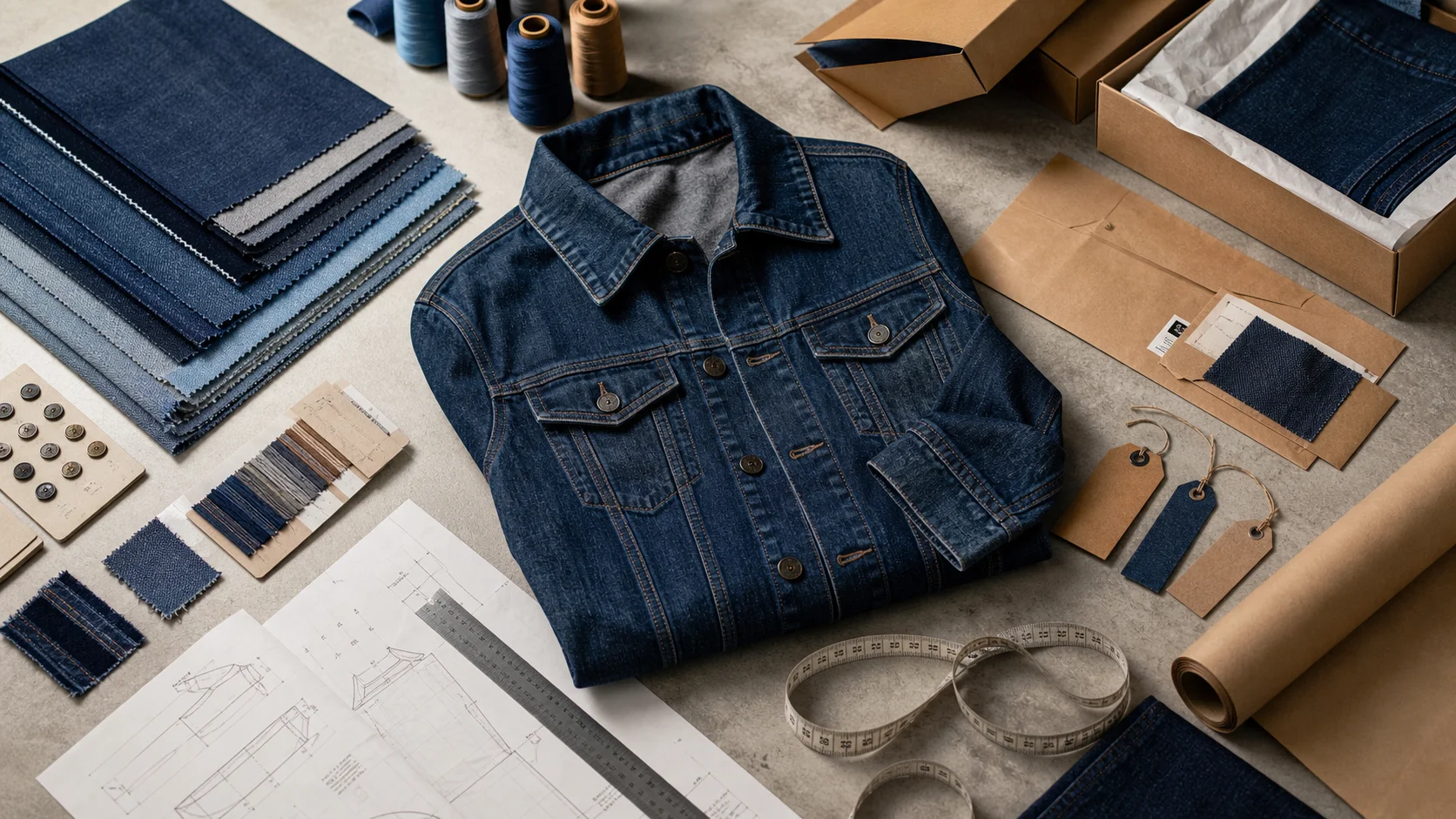
Recycled Cardboard Apparel Shipping Boxes with checks for samples, fit, MOQ, QC evidence, pricing terms, and delivery risk.
Fast answer: Recycled Cardboard Apparel Shipping Boxes: Board, Print, and Freight should be judged by production evidence, not by a generic sourcing promise. The buyer needs sample proof, cost breakdowns, QC checkpoints, and delivery buffers in writing.
Ask for recent sample photos, measurement tolerances, fabric or print test assumptions, decoration test notes, packing examples, and a named inspection checkpoint. These details show whether the team can repeat an approved sample at bulk volume.
Separate garment cost, decoration, labels, packaging, sampling, testing, freight, and rush charges. When every cost line is visible, it becomes easier to reduce colorways, adjust size depth, or reserve more time for sampling.
I once watched a brand ship 20,000 orders a month out of a 48,000-square-foot fulfillment center, and one dented carton on a luxury knit set did more damage than a week of paid ads could fix. A box that arrives crushed at the corner makes a $78 order feel like a $28 mistake. Recycled cardboard apparel shipping boxes are not a side detail. They are the first product a customer touches.
Unboxing still drives repeat orders because apparel is tactile before it is visual. A rigid mailer with a clean crease, a crisp lid, and a controlled print surface tells the buyer the garment inside was handled with care. By contrast, soft board that caves in at the edges sends a cheaper signal, even if the fabric is excellent. I have seen customers forgive a slightly delayed parcel far more often than a box that looks beaten up on arrival.
Factory visits tell a better story than the marketing copy.
Recycled content changes stiffness, print behavior, and crush resistance in transit, but not in a neat linear way. A 60% recycled fiber blend with proper calendering often outperforms a thinner virgin board in compression tests because the fiber network is denser and the board is built for load, not just appearance. That surprised me the first time I compared two runs side by side, one from a boutique supplier in Italy and one from a high-volume mill in Vietnam.
Boutique fashion boxes and mass-market e-commerce mailers live very different lives. A luxury carton may travel 3-4 days by air and courier from Milan to London, then sit on a retail shelf or hotel concierge desk. A DTC mailer can move through 2-3 hubs, get dropped 4-6 times, and spend 10-18 days in mixed humidity conditions before anyone opens it. Those routes punish weak glue, thin corners, and poor die-cut tolerances.
At a corrugated plant outside Ho Chi Minh City, I saw recycled board with a 32 ECT rating hold its shape better than a cheaper virgin sheet that looked prettier under showroom lights. Compression is not romance. It is math. And on the floor, math wins.
Most buyers hear “cardboard” and assume one material. In reality, recycled cardboard apparel shipping boxes are usually built from single-wall corrugated, double-wall corrugated, or folding carton board, and each one behaves differently under load, print, and humidity. For a 1.2 kg blouse order, a single-wall mailer may be enough. For a 4.5 kg denim bundle, double-wall can be the difference between a neat delivery and a crushed corner.
Recycled content usually ranges from 30% to 100%. At the lower end, you get more predictable whiteness and slightly cleaner print reproduction. At the high end, you may gain better sustainability claims, but you also need tighter control over fiber consistency and moisture. Price responds to that range too. A 100% recycled sheet can cost 8-15% more if the mill has to sort fibers harder, or 5-10% less if the supplier has stable recovered stock and simpler print requirements.
Buyers should read GSM, ECT, and burst strength without jargon haze. GSM tells you board weight per square meter. Higher GSM often means more material, but not always more strength. ECT, or edge crush test, measures how well the board resists stacking pressure. Burst strength measures resistance to puncture and rupture. According to ASTM International, standardized test methods matter because two boards that look similar can perform very differently under compression and humidity.
Coatings and inks matter just as much. Water-based inks are common for apparel packaging because they keep recyclability cleaner than heavy plastic laminations. A matte aqueous varnish can protect print and still allow the box to enter standard recycling streams in many markets. Foil stamping looks premium, but it complicates recovery. I have seen brands spend $0.18 more per unit on a finish that added zero measurable sell-through.
For buyers evaluating recycled cardboard apparel shipping boxes, the practical question is not whether the board is recycled. It is whether the stack of numbers matches the route, the product weight, and the brand promise. I would rather approve a plain 32 ECT mailer with sharp print than a glossy carton that fails at the first humid warehouse in Rotterdam.
Price comparisons get muddy because buyers compare unit cost and ignore failure cost. A small run of 500 boxes might land at $1.10-$1.60 per unit for recycled stock with simple one-color print, while a virgin board version may sit at $0.95-$1.40. At 5,000 units, recycled can move down to $0.42-$0.78, and virgin may land at $0.40-$0.72. At 50,000 units, the spread tightens again because tooling, freight, and print complexity dominate the bill.
What changes the math is damage rate. If a cheaper box produces 2.5% transit damage and the recycled option cuts that to 0.8%, the repair is not theoretical. On 10,000 shipments with an average order value of $64, that difference can erase more than $1,000 in replacement, reshipment, and customer service labor. Dimensional weight matters too. A box that adds 0.2 kg of billed weight can lift freight cost by $0.60-$1.90 depending on lane and carrier.
I tracked this across three regions. In Asia, board and converting are usually cheaper, but freight can add 12-22% to landed cost on smaller orders. In Europe, recycled fiber content is easier to source consistently, and closer mills reduce transit emissions, yet labor and energy push unit prices up 8-18% versus comparable Asian runs. In North America, domestic lead times are shorter, often 7-12 days quicker on repeat orders, but the base box price can run 10-20% above offshore supply. Data from the U.S. International Trade Administration shows why freight and trade routing still shape packaging economics more than many buyers expect.
The carbon picture is less clean than brands usually claim. Recycled board typically reduces virgin fiber demand, but carbon savings depend on collection, pulping, and shipping distance. A recycled box moved 9,000 miles by ocean freight may still outperform a local virgin box on carbon, yet not by as much as the marketing sheet suggests. I have seen a 14% lighter virgin mailer beat a recycled alternative on total emissions once air freight entered the equation. That is the uncomfortable part nobody likes to put on a slide. For sustainability benchmarks and chain-of-custody context, Textile Exchange standards and guidance are a useful reference point.
For a brand scaling from 2,000 to 25,000 monthly shipments, the right decision is usually not “recycled or virgin.” It is “which board, which route, which failure rate, and which margin.” That is where the numbers stop being ideological and start being operational.
T-shirts and basics need restraint, not brawn. A single cotton tee folded to 11 x 8 x 1 inches does not need a heavy double-wall carton. A 24-pt folding box or lightweight corrugated mailer can keep costs down while protecting presentation. If your SKU is a 180 GSM jersey tee, I would focus on fit and print clarity before chasing a thicker board that adds freight without adding value.
Denim is another story. A pair of 13.5 oz jeans, or a 2-piece denim bundle, compresses into a dense block that pushes box corners hard. For those orders, I usually look for stronger edge crush numbers, reinforced corners, and a box size that leaves just 0.25-0.5 inches of play. Outerwear is heavier still. A wool coat can weigh 1.8-2.8 kg with tissue and hang tags, so the carton needs structure plus a clean insert system to stop shifting.
Luxury garments need shelf appeal and tamper evidence. A magnetic closure may look beautiful, but it can add $0.70-$2.50 per unit and complicate recycling. A better approach is often a well-printed rigid mailer, a paper seal, and a tailored insert. In private label clothing services, box consistency matters as much as the garment finish, which is why I often pair packaging specs with product development, not after it. If your team is building a premium range, align it early with private label clothing services so carton dimensions and brand standards are set together.
Subscription packs and direct-to-consumer bundles need size discipline above all else. Every extra half-inch can trigger higher shipping charges and more void fill. I have seen a brand cut shipping cost by 11% simply by trimming box depth from 4 inches to 3 inches and removing a second layer of paper filler. Small change. Large impact.
On a factory floor, I look at three things before I look at the sample room: board storage, die-cut precision, and glue consistency. If recycled sheets are stacked against a damp wall or stored under open roof panels, moisture content creeps up and boards warp before they are even converted. That one mistake can ruin a batch of 8,000 cartons before printing starts.
Die-cut precision matters because apparel boxes fail at the folds, not the fantasy renderings. A corner that is off by 1.5 mm may not seem serious on a drawing, but on the line it creates weak closures and rubbing at the print edges. Glue consistency is the quiet killer. Too little adhesive and the flap opens in transit. Too much and the board buckles, especially on lighter recycled stock.
Good suppliers run compression, drop, vibration, and humidity tests. Compression checks how much stacking load the carton can handle. Drop tests usually cover 6-10 drops from different angles. Vibration tests simulate trucking. Humidity exposure, often at 65%-85% relative humidity, reveals whether recycled fibers lose rigidity faster than expected. When I visited a plant in Poland, a batch passed dry compression at 28 ECT and failed after humidity conditioning because the corner score was too deep.
The failure points are predictable: warped edges, weak corners, print rub-off, and lids that drift after a few temperature cycles. The suppliers worth keeping document recycled-content verification, batch numbers, and test reports. Some even tie each production lot to an incoming fiber certificate and a finished-goods QC sheet. That traceability matters when a retailer asks where a claim came from. It also keeps procurement honest, which is useful because packaging claims can drift just as fast as fabric claims in a busy season. For brands managing box specs alongside garment sourcing, it helps to work with a partner that can also handle cut and sew manufacturing, so product and packaging are approved on the same schedule.
Packaging price is driven by four levers: board grade, print coverage, finishing, and order volume. If you want a 2-color print on recycled kraft with no coating, costs stay lean. If you ask for full-bleed art, foil, soft-touch varnish, and a custom insert, the price can jump 25%-40% before freight is even counted. Tooling matters too. A new die may cost $180-$650, and proofing can add another $35-$120 depending on the plant.
MOQ patterns differ by region. Domestic suppliers may accept 250-500 units for a prototype run, though the per-unit cost can be high. Offshore plants often want 1,000-3,000 units minimum for standard jobs and 5,000+ for efficient pricing on custom prints. For a recurring order, MOQ is less painful because setup costs spread out. For a launch, it can decide whether the box program stays in budget or gets cut entirely.
Lead times move in bands, not fantasies. Sample approval can take 3-7 days for local suppliers and 7-14 days offshore. Mass production usually needs 10-20 days for domestic runs and 18-35 days abroad. Ocean freight adds another 18-35 days depending on lane, port congestion, and customs. Seasonal peaks around Q3 and Q4 can stretch every number by 20%-30%, and rush fees are common when fashion calendars get crowded.
I worked with a brand last year that moved from a 14-day domestic carton cycle to a 29-day offshore cycle to save $0.08 per box. The trade looked smart on paper until they hit a 6,000-unit restock order during peak holiday freight. They paid more in air expedite than they saved on the box. That is why a good buyer treats packaging like inventory, not stationery. If you need a starting point for supplier conversations, you can get a free quote and compare board options before you lock the spec. For compliance checks, many teams also review OEKO-TEX certification resources when packaging sits alongside textile claims.
Your RFQ should read like a specification sheet, not a wish list. Include internal dimensions, board grade, recycled percentage, print files, ink type, finish, closure style, target ECT or burst strength, and test requirements. If the product is fragile or heavy, state the garment weight too. A 320 GSM French terry hoodie behaves differently from a silk blouse, and the carton should reflect that.
Ask for samples that mirror production, not showroom versions. I want the same recycled fiber blend, the same print method, and the same glue line. A sample made on premium stock can hide flaws that appear later in mass production. Red flags are easy to spot: vague recycled-content claims, missing test data, inconsistent carton measurements, and quotes that omit tooling or freight. If a supplier cannot tell you whether the board is 70% or 100% recycled, they probably do not know either.
The thing nobody tells you: a slightly smaller box with tighter tolerances often looks more premium than a larger, heavier carton, even when both use the same art. That is useful, because box discipline lowers shipping charges and cuts void fill at the same time. If you want a quick product view before you brief vendors, you can also browse our product catalog and map packaging sizes to actual SKUs. For buyers scaling sourcing in China, it also helps to clarify whether you need a supplier, a factory-direct program, or a hybrid model before requesting wholesale or bulk pricing.
Choose the lightest carton that survives route testing, supports your print standard, and keeps claims honest. Sustainability earns trust only when the numbers hold up. Recycled cardboard apparel shipping boxes should protect margin, reduce waste, and survive the truck, not just the pitch deck.
They are usually made from single-wall corrugated, double-wall corrugated, or folding carton board with recycled fiber content between 30% and 100%. The exact mix affects stiffness, print quality, and crush resistance. Buyers should ask for board grade, recycled percentage, and test data, not just a sustainability claim.
Small runs often land around $1.10-$1.60 per unit, mid-volume orders can drop to $0.42-$0.78, and large contracts may go lower depending on print and finish. Freight, tooling, and MOQ can move the final number by 15%-30%. The cheapest quote is rarely the lowest total cost.
Sample approval usually takes 3-14 days, depending on region and revision count. Production can take 10-35 days, with ocean freight adding another 18-35 days. Seasonal peaks can extend everything by 20%-30%, especially before Q4 shipping surges.
Yes, if the board grade and box design match the load. Denim bundles and coats usually need stronger edge crush ratings, reinforced corners, and tighter dimensional control than T-shirts or blouses. A box should be chosen for product weight and fold volume, not just outer dimensions.
Ask for recycled-content verification, batch traceability, and finished-goods test reports. If possible, request mill certificates or third-party documentation tied to the production lot. A supplier should be able to state the recycled range clearly, such as 70%, 90%, or 100%, without changing the answer from one email to the next.