
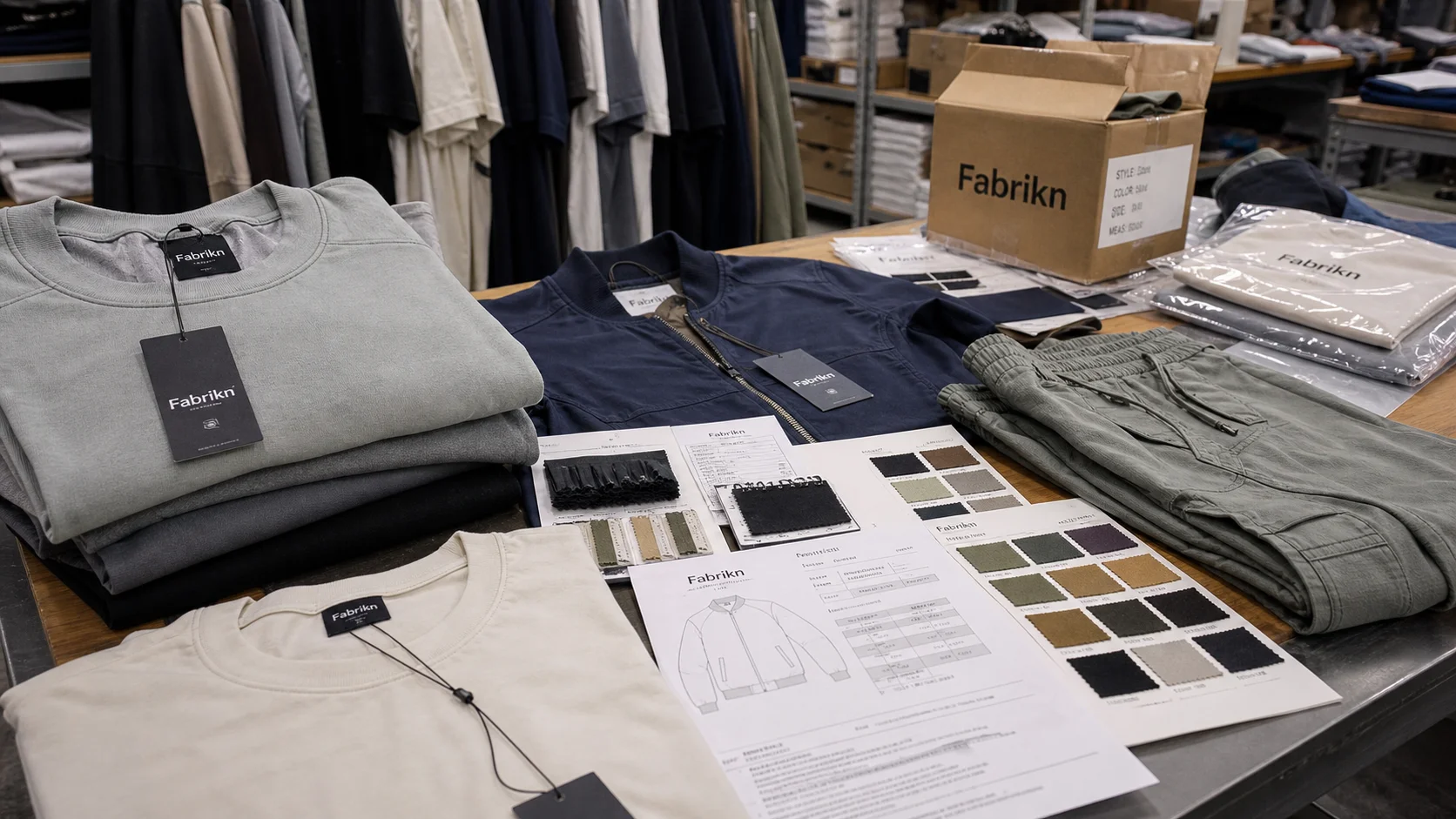
Screen Printing on Garment Bags with checks for samples, fit, MOQ, QC evidence, pricing terms, and delivery risk.
Fast answer: Screen Printing on Garment Bags: Costs, Quality, Timelines should be judged by production evidence, not by a generic sourcing promise. The buyer needs sample proof, cost breakdowns, QC checkpoints, and delivery buffers in writing.
Ask for recent sample photos, measurement tolerances, fabric or print test assumptions, decoration test notes, packing examples, and a named inspection checkpoint. These details show whether the team can repeat an approved sample at bulk volume.
Separate garment cost, decoration, labels, packaging, sampling, testing, freight, and rush charges. When every cost line is visible, it becomes easier to reduce colorways, adjust size depth, or reserve more time for sampling.
In a Guangdong sample room I visited last year, 3,000 clear garment bags sat in tidy columns, each one costing barely a few cents. Then the same bag came back from the press with a black logo, a size mark, and a care icon. Screen printing on garment bags changed nothing about the weight, but it raised the perceived value immediately.
That is why screen printing on garment bags keeps winning orders across apparel, suit, and dry-cleaning programs. Buyers are not paying for decoration. They are paying for legibility, durability, and packaging that survives 30 to 45 days in transit without looking cheap on arrival. A plain bag can pass a warehouse check and still fail retail because it reads like commodity stock. A printed bag signals ownership before a hanger even leaves the carton.
In sample rooms, I keep seeing the same pattern. Plain bags get judged by what they lack. Printed bags get judged by what they communicate. A logo, a size marker, or a barcode reduces handling errors and cuts loose components that can fall out in transit. No insert card to bend. No adhesive label to peel. No extra sleeve to misplace. Fewer parts, fewer complaints.
There is a cost story buyers miss. A rigid insert can add $0.08 to $0.20 per unit, depending on board weight and print area, while a simple two-color screen print often lands well below that once setup is spread across 5,000 to 20,000 pieces. In one factory audit, a printed outer bag improved shelf recognition enough to reduce relabeling labor by 12% on a 40,000-piece order. That matters more than most merch teams admit.
I have seen premium brands ask for garment packaging that feels expensive without becoming heavy or wasteful. A clean print handles that. It supports garment packaging branding, helps with traceability, and gives merchandising teams a surface they can standardize across 2 colors, 3 sizes, or 8 SKUs. The bag becomes part of the product story, not just protection. If your range already uses clothing packaging solutions, print is often the fastest way to improve presentation without inflating freight.
Screen printing is simple in principle and unforgiving in practice. Ink is pushed through a mesh stencil onto a bag surface, then cured so it bonds to the substrate. On film-based bags, the surface energy and slip additives matter as much as the artwork. On woven or nonwoven garment bags, texture changes ink laydown and can blur thin lines if the mesh count is wrong.
I have seen the best results on LDPE, HDPE, PP, and coated nonwoven bags with smooth enough surfaces for controlled ink transfer. PE film usually takes print cleanly with the right flame treatment or corona treatment. PP can be excellent, but only if the factory matches the ink system to the resin. PVC-free alternatives may print well too, though some need slower line speeds and longer flash times. Premium garment bags for fashion brands often use one bold logo and a size callout. Mid-tier retail packaging tends to ask for 1 to 3 colors. Budget dry-cleaning bags usually need only a logo, barcode, and service mark.
The thing nobody tells you: some lower-cost substrates print cleaner than pricier recycled blends. I have compared recycled film runs where inconsistent post-consumer content caused mottling and pinholes, while a cheaper virgin LDPE bag held a sharper edge and fewer rejects. Recycled content is not the villain. Inconsistent feedstock is. That showed up in one factory as a 7% scrap rate on recycled film and less than 2% on a simpler non-recycled bag at the same 12,000-piece volume.
Screen printing does its best work with bold graphics, care marks, size indicators, and barcodes. It is less suited to photographic detail, soft gradients, or hairline text under 6 pt. If a buyer wants a high-resolution image or variable-data personalization, sublimation printing services may fit better on the garment itself, but not usually on polymer bag stock. For packaging, simple usually wins.
In factory terms, screen printing on garment bags succeeds when the brief is clear: one logo, one size line, one compliance mark, and one stable substrate. The process is not glamorous. It is practical. And practical usually ships better.
Material choice drives everything. LDPE gives you flexibility and decent ink adhesion after treatment, with the bonus of good fold resistance. HDPE is stiffer and can hold shape better, but the print can look slightly less rich if the surface is too slick. PP often delivers a cleaner, crisper logo when the ink and curing profile are matched well. Nonwoven garment bags feel more premium in hand, yet their texture can swallow fine detail unless the artwork is simplified.
Ink selection matters just as much. Solvent-based inks usually dry fast and hold up well to abrasion, but they require stronger ventilation and tighter handling controls. Water-based inks reduce odor and can be easier on worker exposure, though they may need more controlled curing time and line speed. UV-curable systems can be efficient on certain coated surfaces, with curing measured in seconds rather than minutes, but they are not universal. On one line in Vietnam, a UV setup ran 1,200 to 1,500 bags per hour on glossy PP. The same artwork on textured nonwoven slowed to 700 to 900 bags per hour because the surface demanded heavier ink deposit.
Finish choices carry business consequences. Matte finishes look calmer and more premium on fashion packaging. Glossy finishes boost visibility in warehouse light and help logos pop from 2 meters away. Opaque white underbases are essential on dark films when a brand mark must stay legible after folding and compression. In factory visits, I check three things: rub resistance, fold-line cracking, and print hold after cartons are stacked 6 to 8 high for transit simulation.
There is also a sustainability angle that is more practical than sentimental. When brands simplify art from 4 colors to 1 or 2, ink waste drops, rework rates fall, and fewer cartons are rejected for color mismatch. In one Chinese factory, moving a design from 3 screens to 1 screen cut press downtime by 18% and reduced spoilage by almost 600 pieces over a 20,000-piece run. That is not theory. That is less landfill and less money burned.
For brands building private label clothing services, the print spec should sit beside the garment spec. Packaging is part of the product, not an afterthought. If the bag is too glossy, it can look cheap. If the logo is too small, it disappears in transit. The right balance is usually simpler than marketing wants and more exact than production expects.
For buyers comparing sustainable packaging standards, it also helps to review guidance from Textile Exchange and packaging compliance references from trade.gov before finalizing a custom brief with a manufacturer or supplier.
Pricing for screen printing on garment bags breaks into five pieces: film art prep, color separations, screen setup, per-unit print charge, and curing or drying. A simple one-color logo on a standard poly bag may carry a setup fee of $25 to $80 per color, then a print charge that falls as volume rises. Add a second color and the setup grows fast because each screen needs registration, proofing, and test pulls.
Small runs are expensive because the fixed costs do not disappear. At 500 to 1,000 pieces, a factory may quote $0.12 to $0.30 per printed bag for a basic design, and that can rise if the bag is oversized or if the artwork needs tight alignment. Mid-volume private label runs around 5,000 to 10,000 pieces usually look better, with unit pricing often landing between $0.04 and $0.12 once setup is diluted. Large export orders above 25,000 pieces can get leaner still, especially if the same screen is reused across multiple SKUs.
Location changes the math. In China, labor and energy costs are usually lower than in Western Europe, but compliance checks and freight timing can offset part of that advantage. In Turkey or Eastern Europe, you may pay more per print but gain shorter transit and easier communication. In Bangladesh or Vietnam, labor can be competitive, yet I have seen longer lead times if a factory is juggling garment production and packaging on the same line. A low quote can hide a 5% defect allowance or a slower 3-week handoff.
Compared with digital print, screen printing is cheaper for simple graphics at medium and high volumes. Heat transfer works for smaller runs or complex imagery, but it adds labor and can peel if folding is aggressive. Woven labels feel more permanent, though they add sewing time and often cost more per bag once attachment is counted. For a clean branded outer bag, screen printing usually wins on total landed cost, not just unit price.
Hidden costs show up late. Buyers forget overage for spoilage, then scramble when 300 of 10,000 bags are rejected. They underestimate color matching reprints. They overlook freight charges tied to bulky bag dimensions, which can climb faster than the print bill itself. If the packaging design adds 2 mm of bulk per bag, carton density drops and shipping math changes. That is how a cheap quote becomes a costly order.
When I walk a factory floor, I start with registration. Are the colors aligned within 1 to 2 mm, or does the logo drift from bag to bag? Then I check opacity. On dark film, does the white underbase actually cover, or can you see the substrate bleeding through at the edges? I also look at edge sharpness, because fuzzy type is usually the first sign that the mesh count or ink viscosity is off.
Testing should be simple enough for production teams to repeat. A tape test checks whether the ink lifts. A rub test shows how the mark holds after friction. Light exposure checks matter if the bags sit in a bright warehouse for 30 to 60 days. Compression simulation tells you whether stacked cartons crush the print into cracks. I have seen a brand approve a sample that looked perfect flat, then lose 20% of the logo detail after the bags were folded and packed into 50-piece bundles.
Compliance checks matter too. Ask for restricted substances screening, recycled-content documentation, and packaging waste disclosures where relevant. According to OEKO-TEX, chemical safety claims should be backed by test data, not supplier memory. For export programs, I also cross-check packaging claims against the buyer’s own sustainability language so there is no mismatch between marketing and the carton label.
Common failure points are boring but expensive. Weak curing leaves a print that smudges during packing. Ghosting on dark films appears when the underbase is undercooked. Inconsistent density often means the press operator adjusted pressure mid-run. Artwork placed too close to seams can warp after folding. I specify tolerances in plain language: 2 mm registration tolerance, no visible rub-off after 20 strokes, no cracking at the fold line after 3 bends. Clear language gets cleaner pricing.
When factories know exactly what pass or fail means, they can quote honestly and produce faster. Vague instructions create rework. Rework creates delay. Delay creates freight pain.
There is no universal winner, only the right tool for the order size. Screen printing is strongest for simple branding on medium to large runs. Adhesive labels are quick, but they can peel in humid storage or curl on cold film. Sewn labels are durable on textiles, yet they make little sense on a plastic outer bag and add labor. Insert cards create a premium feel, but they are easy to separate from the product and they raise pack-out time. Digital print wins on short runs and variable graphics, especially when a buyer needs 50 unique SKUs, not 50,000 identical bags.
At 300 to 1,000 units, digital print may beat screen printing because you avoid setup fees. At 5,000 to 20,000 units, the balance usually flips. Screen print setup gets diluted, and the per-unit cost drops sharply. Labels stay cheap up front, then become expensive if there is a peel problem, a mismatch in art placement, or a retail rejection. I have watched a buyer save $700 on labels and lose more than $3,000 in relabeling and returns.
Here’s the practical tradeoff table I use in sourcing meetings. Setup cost versus unit cost. Durability versus design flexibility. Packaging weight versus presentation value. If the bag only needs a logo, a size mark, and a barcode, print is usually the cleanest choice. If the design changes every week, digital may be smarter. If the bag is part of a premium presentation and the order is small, an insert or specialty label can still make sense.
Counterintuitively, the cheapest-looking option can cost more once damage, relabeling, or retail rejection is counted. I have seen plain bags rejected because the store team could not identify size or program at a glance. One printed mark would have solved the issue for less than a penny in added ink on a large run. That is why packaging should be priced as a system, not as a line item.
For brands already using screen printing services on apparel or packaging, the real question is not which method is trendy. It is which method protects margin, reduces handling errors, and keeps the product presentation consistent from factory to store.
Start with a tech pack that leaves no room for guessing. Define substrate, size, thickness, print area, color count, finish, and pack-out method. If the bag is PE film, write the gauge and resin type. If it is PP or nonwoven, state the surface finish and whether corona or flame treatment is required. Add artwork files in vector format, and specify whether the logo should be 1 color, 2 colors, or a full block print.
I ask factories to sample in a fixed sequence: strike-off first, then color standard, then pre-production sample, then final sign-off. That sequence saves time. It also exposes weak controls before the bulk order starts. If the strike-off looks wrong, do not approve the bulk. If the color standard drifts by eye or by lab value, fix it before production. A 2-day delay at sample stage is cheaper than 2,000 rejected bags later.
Comparing suppliers means looking beyond unit price. Ask for defect rates by order type, documented curing controls, and how they pack printed bags to prevent scuffing. Ask how often screens are cleaned, how changeovers are managed, and whether backup ink is stocked for urgent reprints. I also check delivery reliability over at least 3 orders, not one. A factory that hits one sample promise can still miss a bulk deadline by 10 days.
Questions that save time: What is the MOQ? What is the print speed per hour? How long does changeover take? What is the backup plan if the first ink batch fails adhesion? How many extra pieces are included for spoilage, usually 2% to 5% depending on complexity? Those numbers matter because they tell you whether the quote is honest.
My sourcing rule is simple. The best factory is not the cheapest quote. It is the one that holds color, hits deadlines, and cuts scrap. That is true whether the order is 1,000 garment covers or 100,000 retail bags. If you want the order to move cleanly, specify the packaging first and negotiate price after the process is fixed. For buyers seeking a factory, manufacturer, or wholesale supplier in China, the brief should be complete before you request bulk pricing.
For basic one-color work, small runs can cost about $0.12 to $0.30 per bag once setup is included, while larger runs often drop to $0.04 to $0.12 per piece. Two colors, oversized bags, and tighter registration increase the rate. Setup fees usually add $25 to $80 per color.
Most orders take 7 to 14 days after artwork approval and deposit, though complex jobs can take 3 to 4 weeks. Sampling can add 2 to 5 days. Freight time is separate and may add another 5 to 20 days depending on origin and destination.
LDPE, HDPE, and PP usually print well when treated correctly, and coated nonwoven bags can also work for bold logos. Recycled blends can be fine, but inconsistent feedstock may cause pinholes or uneven coverage. Simple artwork performs better than fine gradients on all of these materials.
Request a strike-off, then test registration, opacity, rub resistance, and fold-line cracking. A tape test and a simple compression simulation are usually enough to catch weak curing or poor ink adhesion. Ask for a tolerance of 1 to 2 mm on logo placement.
Yes, especially at 5,000 pieces or more. Labels and inserts may look inexpensive at first, but they add attachment labor, can peel or separate, and often increase rework. Screen printing usually wins for simple branding because the setup cost is spread across a larger order.